Navigating the dining scene in the Maldives often brings unexpected sticker shock and strict religious laws around alcohol and pork. Balancing a $3 local island breakfast with a $300 private resort dinner means understanding exactly how this dual-tier hospitality system works before you order your first meal. This guide covers what to eat, where to drink, and how to budget across both worlds.
The quick version: on local (inhabited) islands you eat cheap, authentic Maldivian food and there is no alcohol. On private resorts and liveaboards you pay a heavy premium but can drink freely. Most savvy travelers split their trip between the two, a strategy we break down further in our guide on choosing between a Maldives resort and a local island.
Traditional Maldivian Cuisine: What to Eat
Maldivian cuisine, also called Dhivehi cuisine, leans on three core ingredients: tuna, coconut, and starches like rice and flatbread. The flavor profile borrows heavily from Sri Lankan and Indian cooking, using curry leaves, cumin, chili, and cardamom. Almost every traditional plate revolves around fish in some form, so confirmed vegetarians should read the dietary section below carefully.
The National Breakfast: Mas Huni
Mas huni is the undeniable staple of Maldivian mornings. The dish is shredded smoked tuna (valhomas) mixed with freshly grated coconut, finely chopped onion, chili, and a sharp squeeze of lime. You eat it by scooping the mixture into a warm, thin flatbread called roshi. A plate of mas huni paired with sweet black tea runs around $3 to $5 at local guesthouses and cafes.
Hedhikaa (Short Eats) at Local Tea Shops
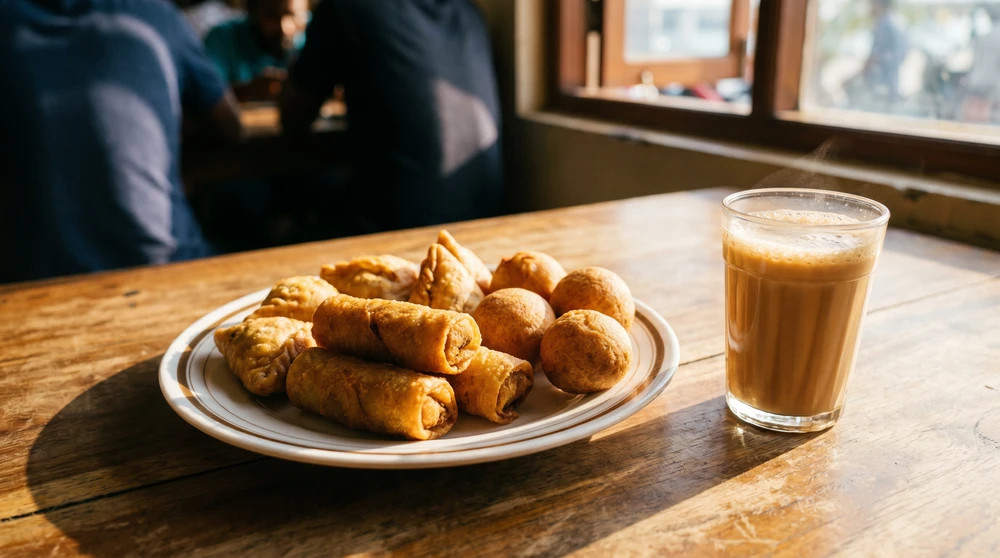
Hedhikaa refers to a spread of savory, bite-sized snacks traditionally eaten during afternoon tea, usually around 4 PM at a local tea shop, or sai hotaa. Common varieties include bajiya (pastries filled with spiced tuna and coconut), gulha (deep-fried dough balls stuffed with smoked fish), bis keemiya (a samosa-like roll filled with egg, cabbage, and tuna), and masroshi (flatbread wrapped around a tuna filling). Bought off the glass counters, these cost mere cents, usually $0.20 to $0.70 per piece. Sitting down for hedhikaa with strong black tea is one of the most genuine local experiences you can have, and a window into daily island life that no resort buffet replicates.
Garudhiya and Seafood Staples
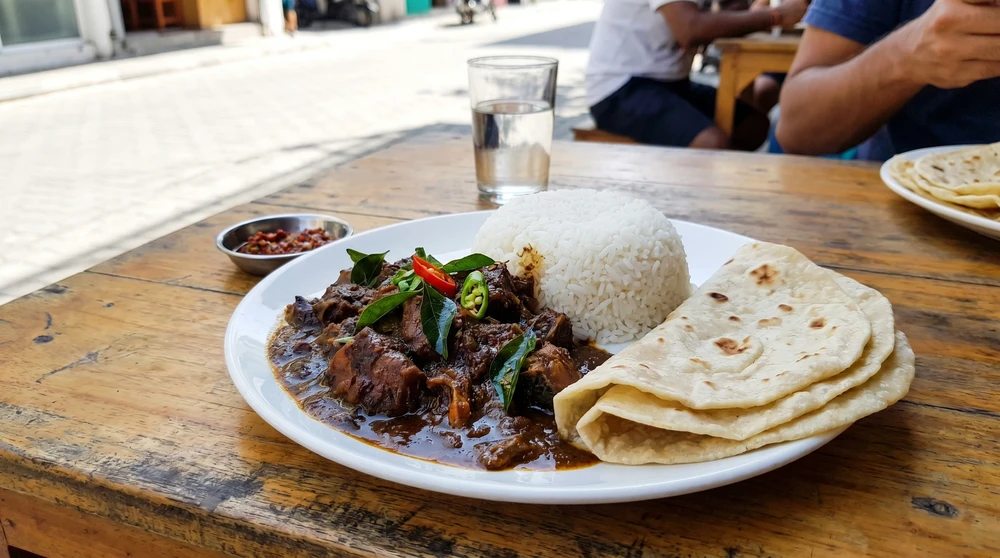
For lunch and dinner, locals turn to garudhiya, a remarkably simple, clear fish broth made from skipjack tuna, water, and salt. You pour the umami-rich broth over steamed rice and mix it with fresh lime, chili, and raw onion. Fihunu mas, a whole reef fish or tuna marinated in chili paste and grilled over an open fire, is another standout for seafood lovers, typically served with rice and a side of chili paste. A hearty plate of tuna curry (mas riha) with rice costs roughly $4 to $8 at a local cafe.
If you want to take the flavors home, joining a hands-on Maldivian cooking session or a local market food walk is a memorable way to understand the cuisine beyond the resort menu. Browse Maldives food and cooking experiences
Resort Dining vs. Local Island Food Costs
Because the Maldives is an archipelago in the middle of the Indian Ocean, resorts must import almost every single ingredient by sea or air. That logistical reality drastically inflates resort dining prices compared to those on locally sourced menus on inhabited islands. The gap is the single biggest factor in your overall food budget, and it ties directly into your broader Maldives trip cost.
Understanding Resort Meal Plans
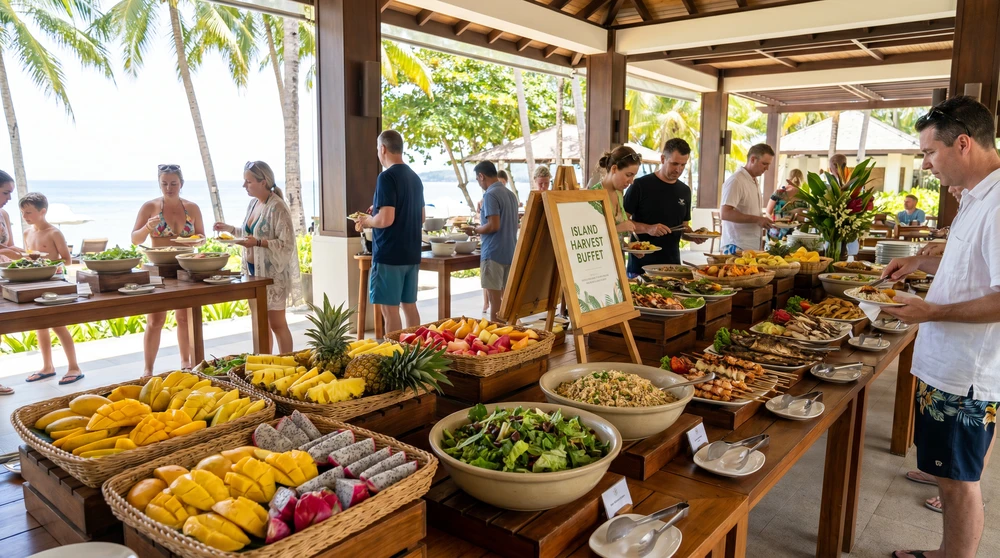
Choosing the right meal plan dictates your entire budget. Resort menus rarely display the final price, because a 10% service charge and 16% GST are added to the check. The four standard plans break down as follows:
- Bed & Breakfast (BB): Breakfast buffet only, usually included in the room rate. Best for travelers who want maximum flexibility or are on a short stay.
- Half Board (HB): Breakfast and dinner, with drinks extra. Roughly $60 to $150+ per day on top of the room. Best for most travelers, leaving room for a light lunch snack.
- Full Board (FB): Breakfast, lunch, and dinner, with drinks extra. Roughly $80 to $200+ per day. Best for families and heavy eaters who want predictable food costs.
- All-Inclusive (AI): All meals plus selected alcoholic and non-alcoholic drinks. Roughly $150 to $400+ per day. Best for drink lovers who want zero surprise costs at checkout.
Eating on a Budget on Local Islands
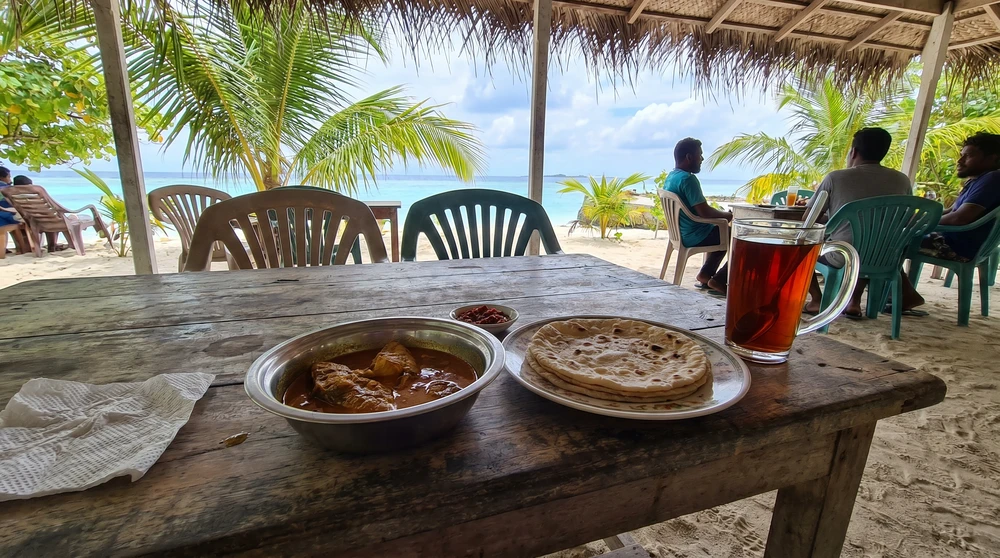
If you stay on inhabited islands like Maafushi, Hulhumalé, or Fulidhoo, you skip the resort premium entirely. Local cafes, known as hotaa, serve simple, highly authentic meals in a relaxed setting, often plastic chairs and sandy floors. A massive plate of tuna curry with rice costs between $4 and $8. Splitting your vacation between a local island and a luxury resort is the most effective way to balance your budget while experiencing the full culinary spectrum.
Alcohol Rules and Drinking Etiquette
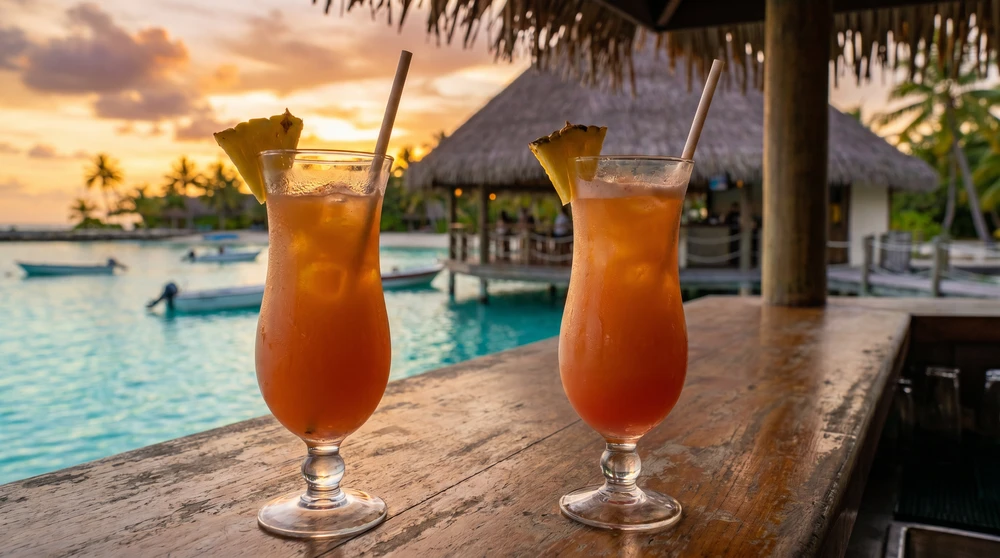
The Maldives is a 100% Islamic nation, and the laws governing alcohol are rigid, strictly enforced, and tied directly to your location. Alcohol is completely illegal on local islands and in the capital, Malé. It is served only at private resorts and licensed liveaboards, which operate under a special tourism license. Expect a heavy premium, with a standard resort cocktail easily costing $18 to $30.
There is one rule that trips up first-timers: you cannot import alcohol, and customs confiscates duty-free bottles on arrival. The same applies to pork. We cover the full import ban and customs process in our Maldives visa and entry requirements article, and the practical realities of staying on a dry island in our guide to whether the Maldives is safe. In short: never pack alcohol or pork in your luggage, and do not carry a resort bottle back to a local island.
Drinks on Dry Islands
With alcohol off the table on local islands, cafe culture revolves around tea, coffee, and fresh juices. Fresh lime soda and coconut water are ideal for rehydrating in the tropical heat. Resorts serve heavily priced mocktails, but local spots will press fresh mango or pineapple juice for a fraction of the cost.
On the question of tap water: it is desalinated across the islands, and resort tap water is technically potable. Even so, drinking bottled or filtered water is standard practice to avoid stomach discomfort from the unfamiliar mineral balance. Most luxury properties provide complimentary glass bottles daily.
Dietary Restrictions: Halal, Vegan, and Allergies
Finding halal food requires zero effort. All meat served on local islands is strictly halal, and pork is banned outright. Resorts with international clientele do import pork for their breakfast buffets, but it is heavily regulated, clearly labeled, and prepared at separate cooking stations.
Vegetarians and vegans can navigate local menus by focusing on coconut-based vegetable curries such as pumpkin, eggplant, taro, or mugu soup. The catch: dried fish (masmirus) and fish stock often sneak into dishes that look vegetarian, so explicitly state "no fish paste, no egg, no dairy" when ordering. High-end resorts keep detailed allergy profiles and routinely cater to gluten-free, nut-free, and strict vegan diets without issue.
Local Dining Etiquette and Dress Code
Eating with your hands is entirely customary in the Maldives. Locals use their fingers to mix rice with curry and roll it into bites. If you follow the tradition, use only your right hand to eat and pass plates, as the left hand is considered unclean in Islamic culture. Cutlery is always available if you ask.
When walking from your guesthouse to a local cafe, respect the community dress code. Swimwear, bikinis, and shirtless outfits are restricted to designated bikini beaches. To eat at a local restaurant, women should cover shoulders and knees, and men should wear a t-shirt and shorts reaching the knee. For the full breakdown of what is acceptable where, see our Maldives dress code guide.