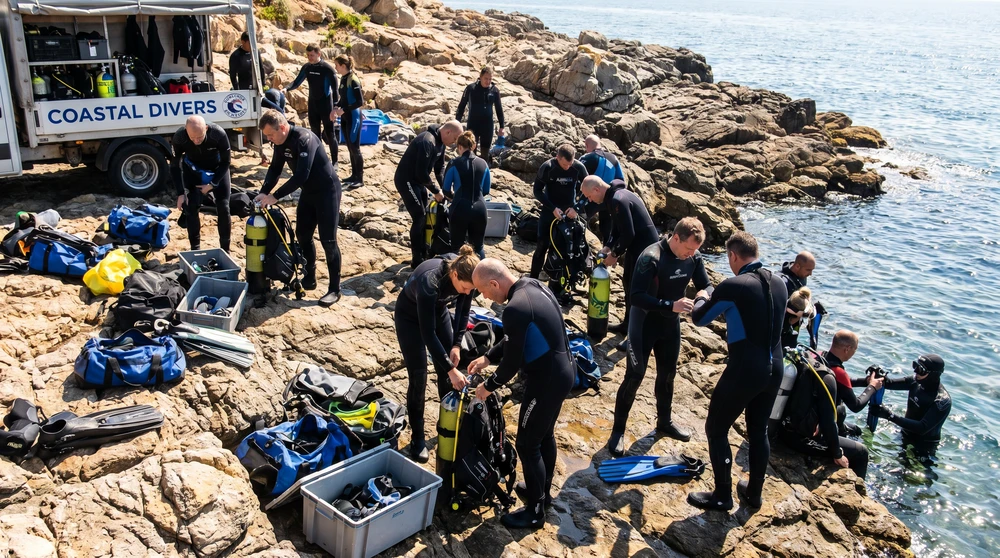
Climbing steep stone stairs in full scuba gear under the intense Mediterranean sun is the hidden tax of shore diving in Malta. Knowing which sites require a 15-minute surface swim and which allow a simple giant stride from a boat completely dictates your dive plan. Managing your air consumption around these physical logistics ensures you actually enjoy the deep historic wrecks rather than burning through your tank on the approach. Malta is one of Europe's top wreck-diving destinations, and a little planning goes a long way before you ever touch the water.
Why Malta Dominates European Wreck Diving
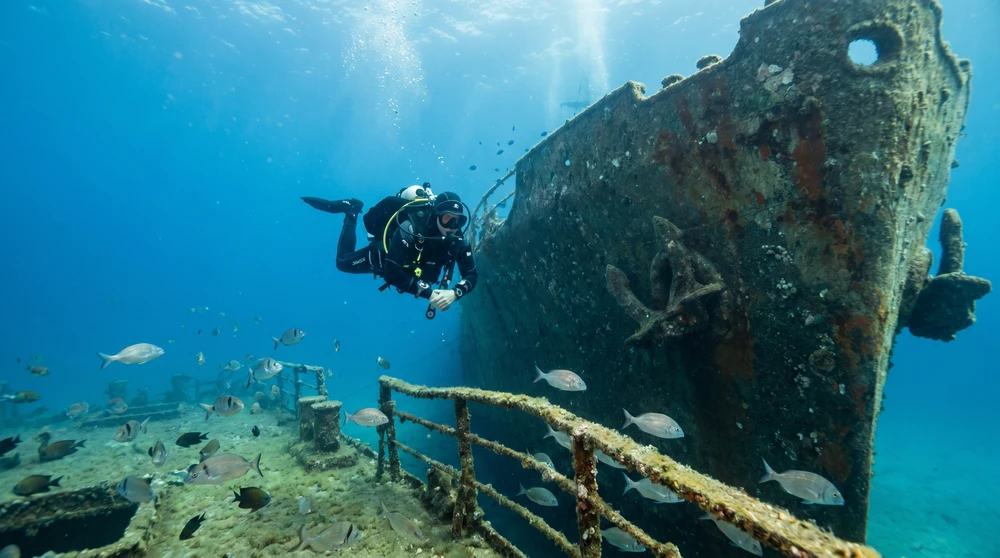
The Maltese archipelago built its underwater reputation by deliberately scuttling decommissioned vessels since the 1990s. The seabed now holds one of Europe's highest densities of artificial reefs and historical WWII casualties. Visibility consistently stretches past the 30-meter mark, making the sheer scale of these submerged giants visible long before you reach the deck.
Recreational limits max out around 40 meters, capturing a massive chunk of the patrol boats and tugboats. Technical divers pushing past 50 meters gain access to Heritage Malta's protected sites, including deep aircraft and submarines. You pay a specific conservation fee through accredited dive centers to visit these restricted historical zones.
Diving runs essentially year-round here, though most visitors target the May to October window when seas are calmest and visibility peaks. You will need an Open Water certification or equivalent for fun dives, while complete beginners can still get wet through a guided Discover Scuba experience.
5 Must-Dive Wrecks in Malta
Um El Faroud (Zurrieq)
The 110-meter Libyan oil tanker is the undisputed focal point for advanced divers visiting the south coast. Um El Faroud was scuttled off Wied iz-Zurrieq in 1998 and later snapped in half during a winter storm, creating a dramatic split right before the engine room. The wreck rests upright on sand, with the main deck around 25 meters and the propeller down at roughly 36 meters.
Penetrating the engine room requires excellent frog-kicking skills; a single clumsy fin stroke ruins the visibility for everyone behind you. Parking at the Blue Grotto entry point fills up immediately after sunrise. Arriving early saves you from hauling heavy gear across uneven pavement before tackling the steep descent to the water. The surface swim takes about 10 to 12 minutes through heavy boat traffic, so stay submerged between 5 and 10 meters on your approach.
Patrol Boat P29 (Cirkewwa)
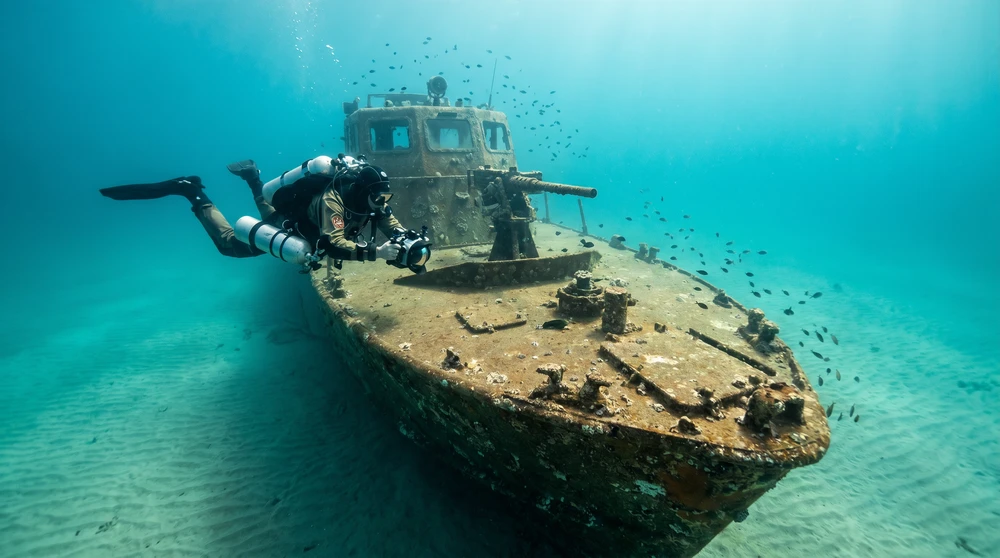
Sitting upright on a bright sandy bottom at 34 meters, this former Maltese Maritime Squadron patrol boat offers a highly photogenic profile. P29 was a Kondor-class vessel of East German origin before serving Malta's Armed Forces, and it was scuttled as an artificial reef in 2007. The 52-meter ship retains its mast and a replicated machine gun deck, with the highest point reaching around 12 meters. Swimming from the entry point at Susie's Pool takes about 8 minutes.
Springtime dives often reveal long, white pouches hanging from the handrails. These are squid eggs, and shining a dive light through them occasionally exposes the developing embryos inside.
Tugboat Rozi (Cirkewwa)
Scuttled in 1992, the 40-meter Tugboat Rozi rests right next door to the P29. The main ship structure sits at 34 meters, completely stripped of its engine and propeller. The most iconic wide-angle shot actually happens 30 meters away from the bow.
- The Anchor: Swimming out to the original anchor at 32 meters adds another few minutes to your bottom time.
- Marine Life: The sandy stretch between the bow and the anchor frequently hides white monkfish and flying gurnards.
- Air Management: Factor in the deep swim back to the reef wall; your no-deco limit drops rapidly here.
Patrol Boat P31 (Comino)
Beginners and Open Water divers finally get a dedicated wreck dive off the coast of Comino. The P31 is the sister ship to the P29 but sits at a highly manageable maximum depth of 18 meters. Because you access this site via boat near the Blue Lagoon, you completely bypass the tiring surface swims and rocky shore entries.
An entire hour of bottom time is entirely possible here. The shallow depth makes it an ideal spot to mount a macro lens and hunt for nudibranchs roaming the hull.
Tugboat II (Sliema)
Located just off the urban rocky beach of Sliema, this 30-meter training wreck acts as the perfect check dive. The maximum depth reaches 20 meters, placing it squarely in the comfort zone for novice divers. A lush Posidonia seagrass meadow surrounds the approach, harboring Mediterranean damselfish and heavily camouflaged common octopus.
The swim from Exile Bay takes roughly 12 minutes. Turn your dive at half-tank to ensure a comfortable and safe return journey along the reef. Guided shore and boat trips to these wrecks are easy to arrange in advance through Organized Malta dive and snorkel excursions.
Best Cave and Reef Dives in Gozo and Comino
Blue Hole (Dwejra, Gozo)
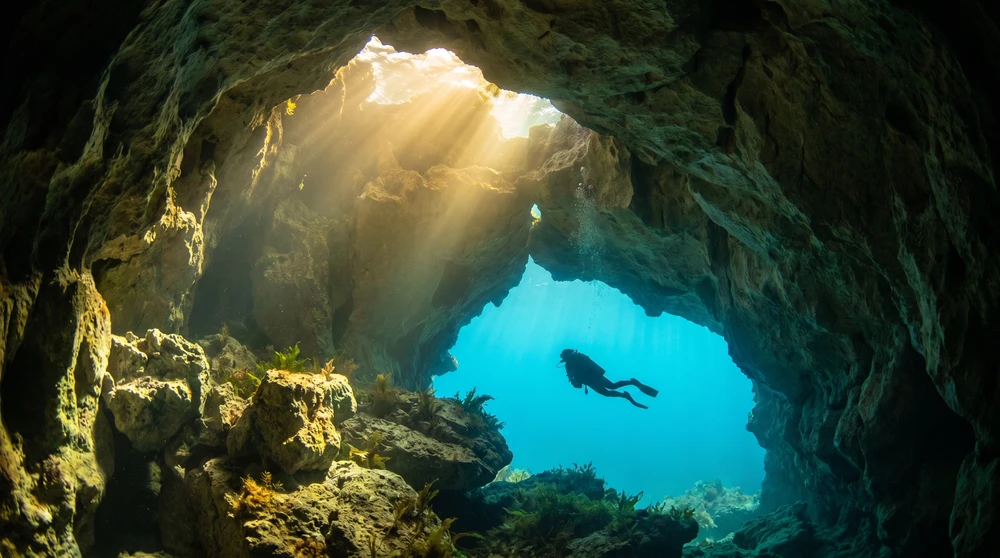
Carved directly into the limestone cliffs of western Gozo, the Blue Hole serves as both a dive site and a gateway to the Azure Reef. You drop into a sheltered 15-meter deep natural pool before passing through an underwater archway into the open sea. The topography features massive boulders and sharp drop-offs left behind by the collapse of the Azure Window.
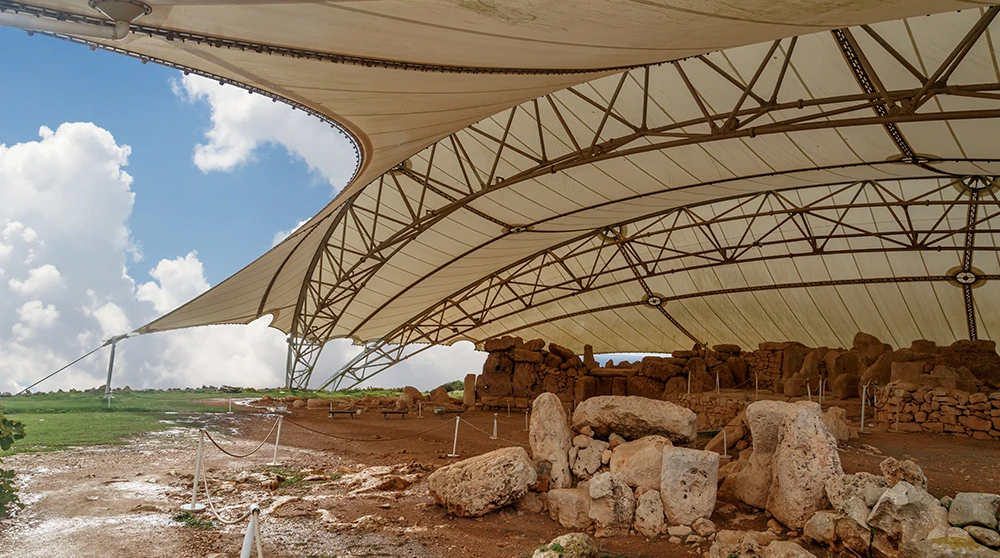
Gozo is a serious dive area in its own right, and many divers pair underwater days with the island's land attractions like the prehistoric Ggantija Temples. Reaching the more remote Gozo and southern shore sites is far simpler with your own wheels, so Renting a car for the island runs is worth weighing against daily dive-van pickups.
Santa Marija Caves (Comino)
This shallow, 10-meter cavern system on Comino's north shore offers an easy introduction to overhead environments. Two of the main caves communicate via a wide underwater arch. Heavy boat traffic and swells occasionally stir up the fine white sand, dropping visibility drastically.
Snorkeling in Malta Without a Boat
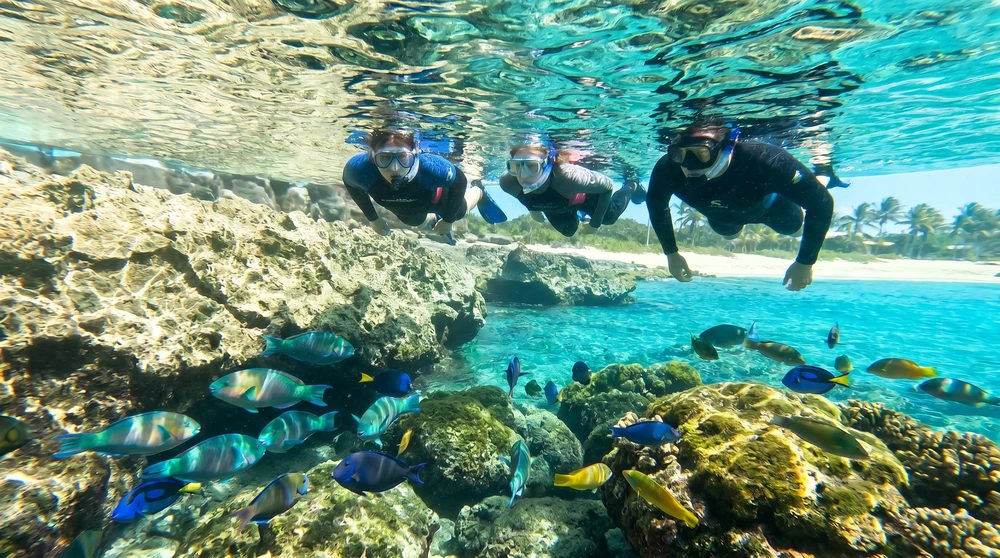
Not every visitor wants a tank on their back, and Malta rewards snorkelers with shore-accessible clear water. Ghar Lapsi on the south coast is the most family-friendly shore snorkel, with a sheltered inlet and shallow caves. The Coral Gardens beside the Blue Hole in Gozo sit only about 4 meters deep and are reachable straight from the rocks.
On Gozo, Hondoq ir-Rummien and Xlendi Bay both offer gin-clear water, rocky walls, and easy entries. The famous Blue Lagoon on Comino is stunning but realistically requires a ferry or boat trip rather than a shore walk.
Essential Logistics for Divers
Best Time to Visit Malta for Scuba Diving
Water temperatures swing wildly depending on the month, directly impacting your thermal protection strategy.
- Spring (April to May): Temperatures hover around 16°C to 19°C. A semi-dry suit or a thick 7mm wetsuit with a hood is mandatory.
- Summer (July to August): The sea warms up to around 26°C, but the islands are packed with tourists and parking at dive sites becomes a nightmare.
- Autumn (September to October): The absolute sweet spot. Water temperatures peak near 26°C after absorbing the summer heat, and the heavy tourist crowds have vanished.
Choosing a Base: Sliema vs. St. Paul's Bay
Basing yourself in **Sliema** provides immediate access to major dive centers, equipment storage, and the Tugboat II shore dive. The central location means dive vans can easily reach the Cirkewwa sites in the north or the Zurrieq wrecks in the south within 45 minutes. Avoid the heavy traffic bottlenecks around St. Paul's Bay if you plan on doing daily shore dives across different corners of the island.