Most visitors arrive at Coral Lagoon expecting a sandy beach and a leisurely swim, only to face a rugged walk across ankle-rolling limestone and a sheer drop into open water. This collapsed sea cave on Malta's northern tip rewards anyone who comes prepared, but it punishes the unprepared with sharp rock, strong currents, and a single tricky exit. Before you set out, you need the right footwear, a hard look at the wind direction, and a realistic plan for getting back out of the water.
Here is the quick logistics snapshot before the details below.
- Entry fee: Free, no tickets or gates
- Safest wind window: South or Southwest; avoid North and Northwest winds
- Nearest parking: L-Ahrax campsite, a 5 to 10-minute walk to the rim
- Terrain: Sharp, uneven limestone, thick-soled shoes essential
- Key hazards: No exit ladders, strong currents, seasonal jellyfish
What Exactly Is Coral Lagoon (Dragonara Cave)?
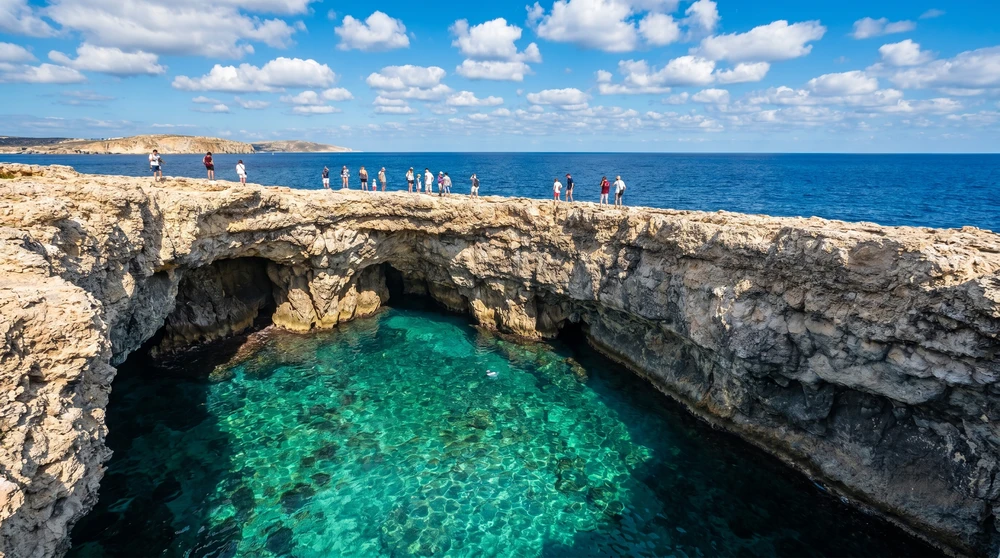
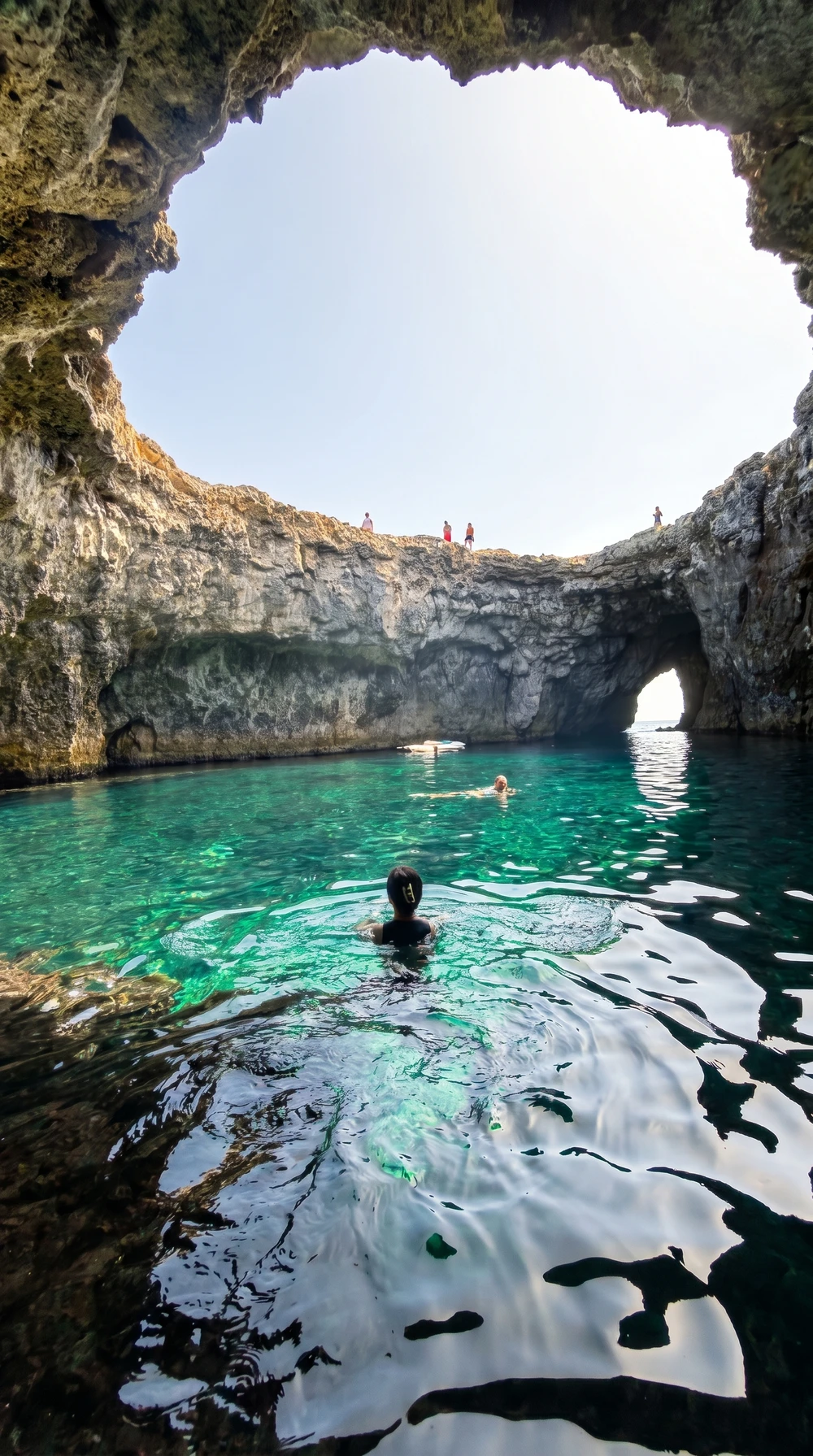
Forget the standard beach setup. Coral Lagoon, locally known as Dragonara Cave, is a massive geological collapse on the L-Ahrax headland near Mellieha. Centuries of sea erosion hollowed out the limestone shelf until the roof caved in. The result is a sheer, circular crater dropping straight into turquoise Mediterranean water.
Inside, the acoustics amplify the crashing waves. The only natural connection to the open sea is a narrow, arch-like tunnel. There is no sand and no kiosks here, just raw rock and deep water.
How to Get to Coral Lagoon Mellieha
The lagoon sits on Malta's far northeast coast, roughly 10 minutes from Cirkewwa Port. You can reach it three ways, and your choice changes the whole experience.
By Land: Parking and the L-Ahrax Walk
Driving is the most practical approach. Park near the L-Ahrax tal-Mellieha campsite or the Chapel of the Immaculate Conception, where the lot is free. From the dirt parking area, it is a short 5 to 10-minute walk across razor-sharp, baseball-sized rocks. Thick-soled shoes are non-negotiable here, since flip-flops get shredded in seconds.
Relying on public transport drastically changes the logistics. The nearest bus stop is Qammieh, nearly 3 kilometers away on the main road toward the Gozo ferry. From there you face a completely unshaded, 35-minute hike along the dusty roads of the Marfa ridge, so bring heavy sun protection and enough water to handle the heat.
If you want to plan the wider trip without a car, the logic behind getting around Malta by public transport explains why the northern tip is the hardest stretch to reach by bus.
By Sea: Kayaking and Paddleboarding from Armier Bay
Paddling into the lagoon through the sea cave entrance offers a completely different perspective. You can rent single kayaks from Little Armier Bay or Armier Bay Beach for roughly 15 to 20 euros per session through established operators like Tortuga. The paddle takes about 20 to 30 minutes depending on your pace.
Avoid renting cheap, inflatable canoes from random roadside setups near the campsite. These lack stability in the open ocean and often come without life jackets or proper oars, so stick to established water sports centers on the main Armier beaches.
If the wind picks up, the chop outside the cave entrance becomes exhausting to navigate. The same sea-cave paddling skills apply along Gozo and Comino sea kayaking caves, where conditions can turn just as quickly.
By Boat: Coastal Cruises from Cirkewwa Port
Many private boat charters departing from Cirkewwa Port or Marfa Bay include the lagoon in their itinerary before crossing over to Comino. This method eliminates the hike entirely. You can anchor near the cave mouth and swim right in.
The Truth About Cliff Jumping at Coral Lagoon
Cliff jumping is the lagoon's biggest draw, but it is also where most of the danger lives. Local authorities have moved to discourage and restrict jumping here after serious injuries, and from a practical standpoint it should only ever be attempted by strong, experienced swimmers who have checked the conditions themselves.
Water Depth Realities and the Safest Launch Zone
The drop is roughly 10 meters. The deepest section of the pool sits directly below the faded warning sign painted on the rock, and the central water column stays deep enough for a jump under normal conditions.
Hitting the water elsewhere risks contact with submerged boulders. Always swim the area first to verify the depth, since tidal shifts alter the clearance from day to day.
The Exit Dilemma: The Open-Ocean Swim Route
Getting in is easy; getting out is the real challenge. There are no metal ladders or safety ropes inside the lagoon. Once you jump, you have to swim out through the narrow sea tunnel and navigate around the jagged headland to find a low-lying rock shelf to climb up.
This open-water swim exposes you to offshore currents. If the sea state changes while you are inside, the exit route turns into a washing machine of crushing waves against sharp cliffs. Pack a dive mask and swim fins, since the underwater arch is beautiful to free-dive and the fins give you essential thrust against the currents.
The same exit-and-depth caution applies at St. Peter's Pool in Malta, the island's other popular natural jumping spot.
Essential Weather Checks Before You Leave
Conditions at the lagoon can differ wildly from the rest of the island, so a quick weather read at home is not enough.
Why North Winds Make the Cave Dangerous
A calm, sunny day in Valletta does not guarantee safe conditions on the northern tip of the island. Coral Lagoon acts like a natural funnel. When the wind blows from the North or Northwest, swell surges directly into the cave opening.
This amplifies the wave height inside the confined space. If whitecaps are visible on the sea surface outside, do not enter the water. Period.
Managing Current Swells and Jellyfish Swarms
The Mediterranean's notorious Mauve Stinger jellyfish often get trapped inside the lagoon's bowl by incoming currents. Before making the jump, inspect the water column from the top edge. A pair of polarized sunglasses cuts the glare and helps spot purple blobs drifting below the surface.
Extending the Route: Marfa Peninsula's Secluded Coastline
The lagoon makes an easy half-day when you pair it with the rugged coast around it.
How to Find the Northeast Structural Blowhole
Just a few meters northeast of the main crater edge lies a hidden geological feature. A deep crevice connects to the sea cave below, functioning as a natural pressure valve. When the tide pushes hard against the coastal shelf, this blowhole erupts, shooting a cold mist of seawater high into the air. Keep your camera ready, but step back, since the surrounding rocks are notoriously slippery.
Hiking the Trail to Slug's Bay and the Immaculate Conception Chapel
After the lagoon, the surrounding L-Ahrax headland offers excellent, rugged coastal trekking. Follow the dirt paths south toward Slug's Bay, a tiny, secluded rocky inlet perfect for a quiet rest away from the crowds. The nearby Chapel of the Immaculate Conception provides a solid vantage point over the channel toward Comino and Gozo. Time your loop for late morning, when the overhead sun lights the water to its brightest turquoise and the rock shelf is dry enough to scramble safely.