Nauru is a tiny island nation in the central Pacific, but it holds a record no country has matched: the highest per-capita participation rate in Australian Rules Football on the planet. Over 30% of the entire population plays the game at some level, from junior Auskick clinics to elite district leagues. Understanding how this remote, resource-depleted island sustained such extraordinary passion for a sport born in Melbourne requires looking at colonial history, community identity, and the sheer physical toughness that Nauruan conditions demand.
How a Tiny Island Became the Ultimate AFL Nation
Australian rules football arrived in Nauru during the 1910s, carried by expatriate workers and administrators tied to the phosphate mining industry. One of the earliest recorded references dates to 1919, when a Nauruan police team of 20 players took to the field. Regular competition between local clubs followed from 1921 onward. When Nauru gained independence in 1968, the sport was formally recognised as the national game - a rare honour that cements its role far beyond recreation.
Nauruan students returning from schooling in Australia brought updated rules and tactics back home, embedding the game deeper into local culture with each generation. District-based clubs emerged to represent the island's administrative regions, turning weekly matches into genuine community events. Today, the sport is a cornerstone of social life, reinforcing interpersonal networks across districts and providing a shared identity in a country facing serious economic and environmental pressures.
The governing body is the Nauru Australian Football Association (NAFA), which affiliates with AFL South Pacific. A development arm, AFL Nauru, coordinates pathways from junior programs to national representation.
Playing on Crushed Coral: The Linkbelt Oval Experience
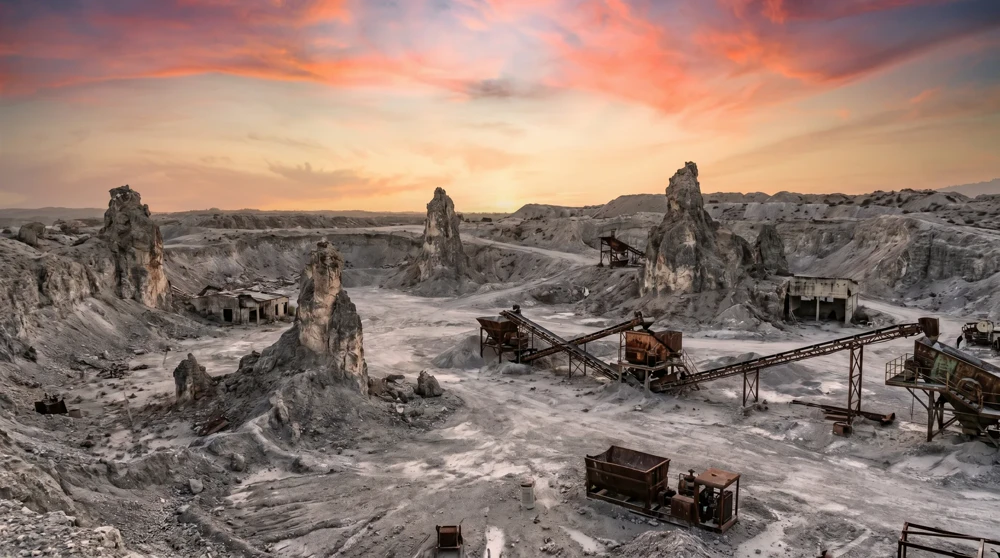
Forget lush green turf. The Linkbelt Oval in the Aiwo District is Nauru's only active stadium and the home of domestic football. The playing surface is not grass - it is hard-packed crushed phosphate dust and compacted coral, a consequence of the island's mining legacy. Pitch markings are drawn directly onto the rock surface with oil.
This environment demands extraordinary physical resilience. Players execute robust tackles on an unforgiving ground where a heavy fall means abrasions, lacerations, and joint impacts that would sideline athletes on a grass surface. Rain transforms the dust into abrasive puddles, raising the risk of cuts significantly. Athletes wear minimal protective gear and adapt their tackling technique to survive the conditions. The surface does not meet international match standards, so Nauru's national teams must travel overseas for sanctioned tournaments - an expensive and logistically complex undertaking for a country with infrequent flight connections.
Yet rather than discouraging participation, these conditions have forged a reputation for toughness.
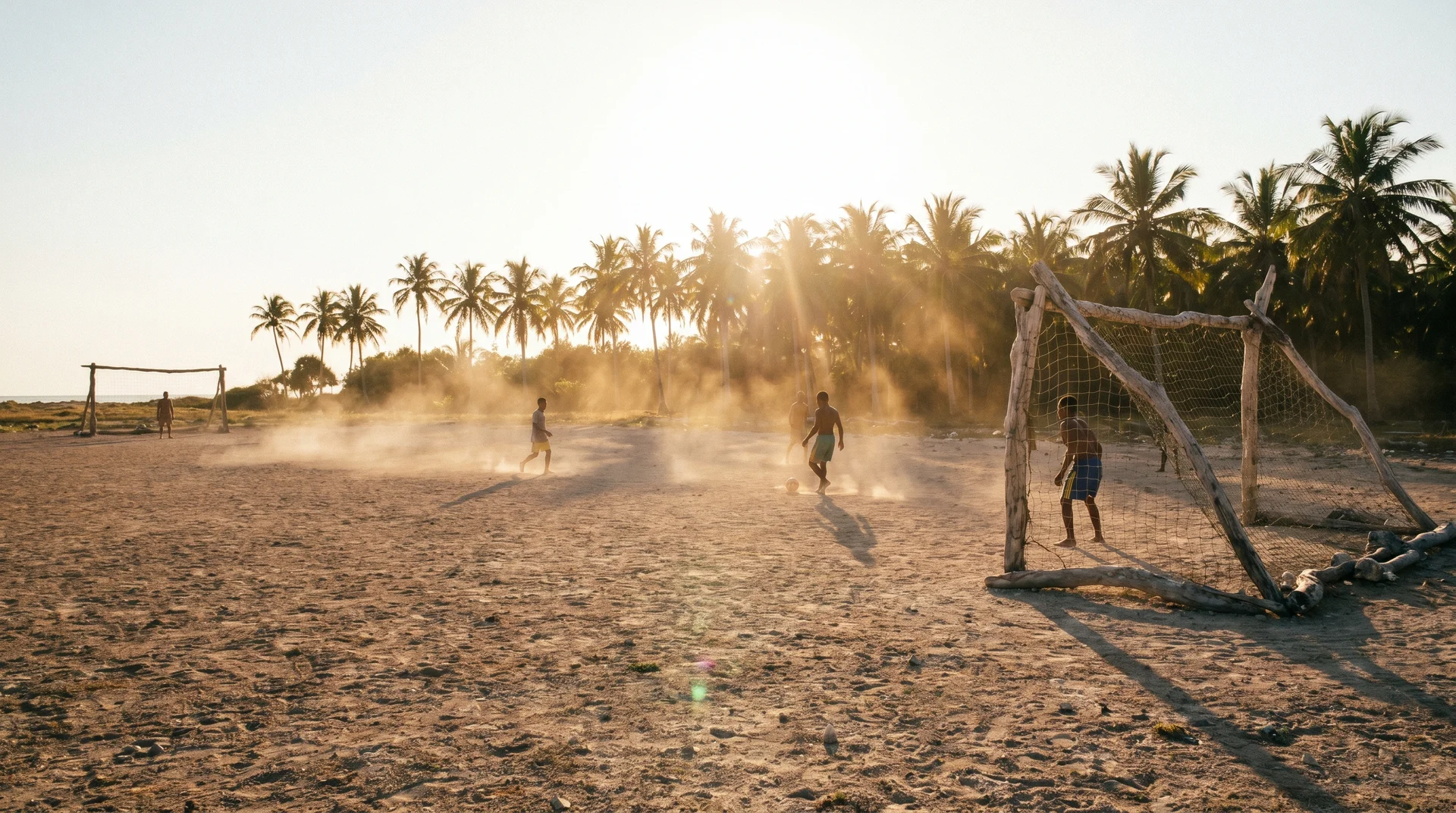
The physical demands of Linkbelt Oval separate casual participants from committed players and instill deep discipline from a young age.
Nauru's Domestic League System
The District Rivalries
The elite domestic competition, run by NAFA, features 6 senior teams representing the island's administrative districts, with a parallel 5-team reserves league. The season format involves round-robin fixtures, culminating in a grand final at Linkbelt Oval that draws enormous crowds relative to the island's population. In 1999, approximately 3,000 spectators attended the NAFA Grand Final - roughly 30% of the entire country at the time.
No single team maintains long-term dominance, partly because of the small and relatively evenly distributed population pool, and partly because strict roster structures ensure broad participation. The rivalries are genuine, turning district pride into a unifying force.
Auskick and Junior Development Programs
Grassroots development begins early. The Auskick program targets children aged 5 to 12, introducing fundamental skills, physical fitness, and teamwork. Junior competitions operate at under-15, under-17, and under-18 levels, providing a clear pathway from first kick to elite representation.
Community clinics rely heavily on donated equipment and volunteer coaches to keep costs low, ensuring financial barriers do not exclude participation.
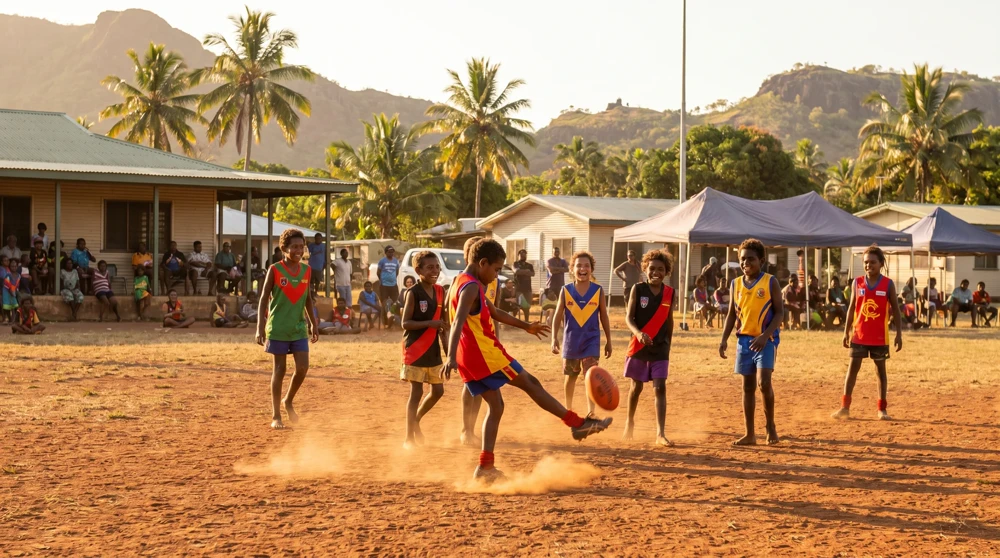
These initiatives prioritise talent identification across all genders, and female participation has grown significantly since the first women's match was held in 2015. Book a guided Nauru experience
Conquering the Pacific: The Chiefs and The Aoreni
Nauru's national sides prove that a small population is no barrier to international success.
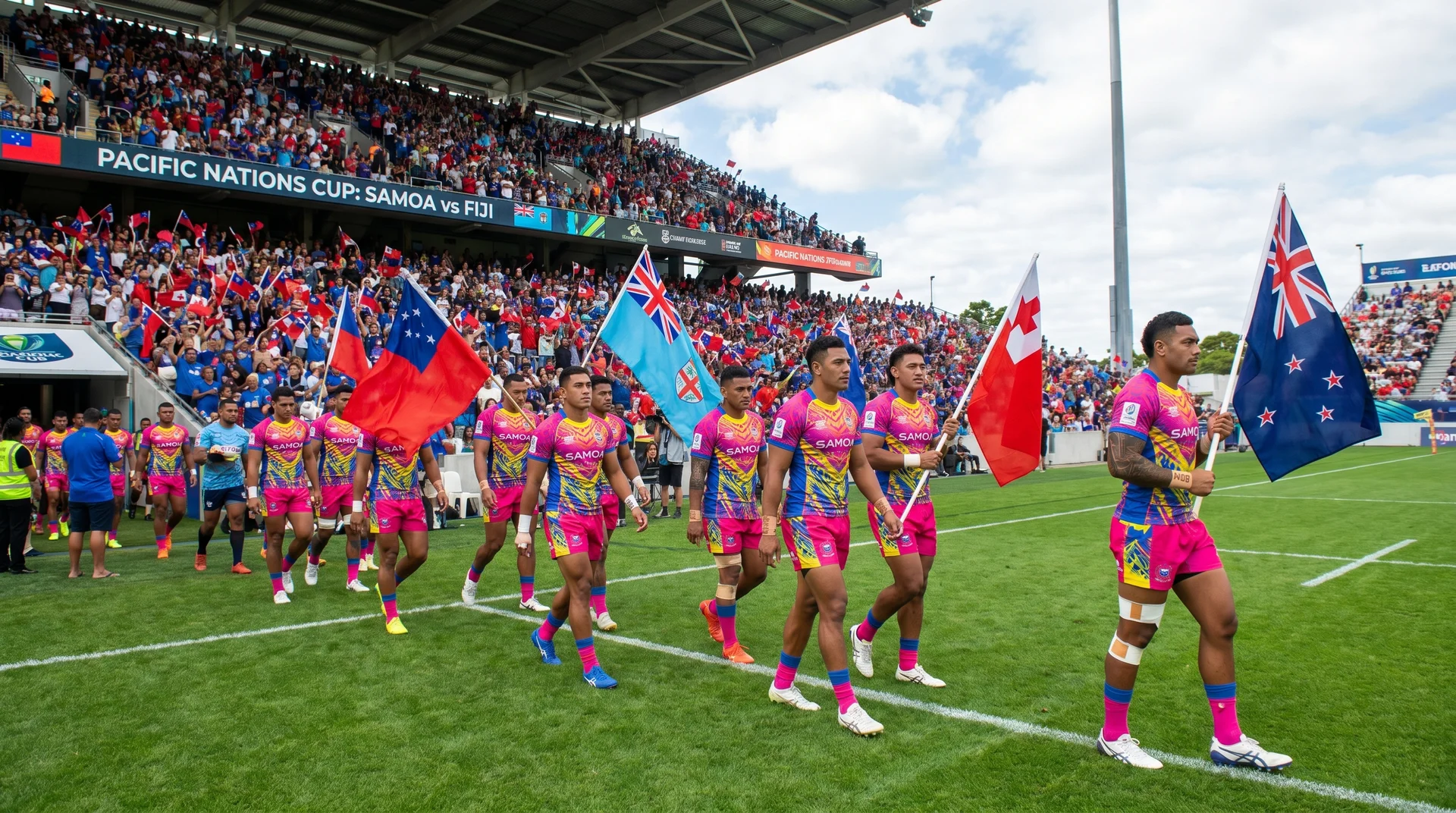
The men's national team, the Chiefs, has competed at the International Cup - the global championship for non-AFL nations - since its debut in 1976. The squad achieved an 8th-place finish at the 2002 International Cup and claimed a gold medal at the 2001 Arafura Games. Players wear colours inspired by the Nauruan national flag and are drawn exclusively from the domestic district competition. Training focuses on physical conditioning tailored to compact playing fields and preparing athletes for the very different experience of playing on grass overseas.
The women's national team, the Aoreni, made an immediate impact after their 2024 debut, winning the 2024 Pacific Cup held in Maroochydore, Queensland. This rapid rise reflects the investment in grassroots female participation over the preceding decade and positions the Aoreni as a serious force in the growing Pacific women's competition circuit.
For both squads, international exposure provides critical benchmarking against larger, better-resourced nations - and regular victories over Papua New Guinea and other Pacific rivals in test matches confirm that Nauru punches well above its weight.
Health Risks and Economic Challenges of the Game
High-contact football on crushed coral amplifies injury risks considerably. Severe skin abrasions, lacerations, lower-limb injuries such as hamstring strains, and knee ligament damage are prevalent among active players. These risks are compounded by broader public health challenges on the island, where joint problems related to diet and lifestyle interact with the mechanical stress of competitive sport. Local volunteer trainers and international sports medicine partners manage athlete welfare with limited resources.
Geographic isolation compounds every logistical challenge. Infrequent flights and high travel costs make regular international competition prohibitively expensive. Importing footballs, medical supplies, and training equipment requires careful planning and consistent external funding. Programs like PacificAus Sports - Australia's bilateral sports development initiative - play a vital role in filling these gaps, funding equipment shipments, high-performance workshops, and coaching development visits.
Despite these obstacles, the Nauruan football community operates through resilient volunteer structures and a deep collective commitment to the game. The sport's grip on the island is not the product of infrastructure or funding - it is the product of identity. For country collectors weighing up the effort of reaching Nauru, this cultural depth is often the deciding factor.
Practical Tips for Watching AFL in Nauru
If you are planning a visit to Nauru and want to catch a match, the domestic season runs across several months with weekend fixtures at Linkbelt Oval in Aiwo. Entry to local matches is typically free, and the atmosphere - even without a grass field - is genuinely electric during grand final season. Ask at your accommodation for the current fixture schedule, as official scheduling information can be difficult to find online.
Getting to Nauru requires flying via Brisbane or Fiji on Nauru Airlines - routes, schedules, and transit options are covered in the how to get to Nauru guide. The island has very limited accommodation options - the Menen Hotel is the primary choice - so booking well in advance is essential. Given the remote location and limited medical facilities, comprehensive travel insurance is strongly recommended before departure. A full cost breakdown, including visa and accommodation, is in the Nauru travel costs guide.