Nauru has exactly three places to stay across the entire island, and none of them will appear on Booking.com, Expedia, or any standard travel aggregator. This is one of those rare destinations where accommodation planning is a direct conversation with a property manager over email, sometimes weeks in advance. Knowing what each option offers, and what each cannot, makes the difference between a functional stay and an exhausting one.
- Three main accommodation options on the entire island: Menen Hotel, OD-N Aiwo Hotel, and Capelle & Partner Ewa Lodge
- All bookings require direct contact by email or phone; online aggregators do not work reliably
- Australian Dollars (AUD) are the standard payment currency; carry physical cash as card networks fail frequently
- Wi-Fi requires purchasing prepaid data vouchers at the front desk or a local Digicel SIM card
- Power outlets are Type I (Australian standard); bring adapters
- Airport pickup is available at Menen Hotel and Ewa Lodge; confirm in advance when booking
What to Expect from Accommodation in Nauru
The hospitality infrastructure here functions around one primary clientele: visiting mining contractors, government consultants, and regional aid workers. Casual tourists are a genuine novelty. This is not a complaint; it is context that shapes every expectation.
You will not find infinity pools, concierge services, or breakfast buffets. What you will find is functional air conditioning (most of the time), basic kitchenette equipment, and staff who are accustomed to guests with specific practical needs. Maintenance standards depend on recent import shipments; if a part needs replacing and the cargo vessel from Australia is delayed, it waits.
Hot water runs as a bonus rather than a baseline in some properties. Power outages occur without notice, and the major hotels maintain backup generators while smaller guesthouses rely entirely on the main grid. Keep electronics charged whenever power is running. Pack light, breathable clothing and prepare for equatorial humidity that a wall unit sometimes struggles to fully counter.
Booking needs to happen well in advance. Rooms are limited across the entire island, and the properties fill up entirely when government delegations or mining crews rotate in. Emailing three to six months ahead is not excessive.
The Three Main Hotels in Nauru
Menen Hotel
The Menen Hotel is the largest accommodation complex on Nauru and the standard choice for first-time visitors. Located in Meneng district, it sits roughly 15 minutes by car from the airport; the hotel organizes a shuttle bus to meet arriving flights, which is worth confirming by email before you land.
The architecture carries a distinct late-20th-century institutional look, originally built to host Pacific dignitaries during the phosphate boom era. Rooms have been renovated and are notably more comfortable than the building's exterior suggests: twin rooms come equipped with television, fridge, and microwave. The ocean crashes against the rocky shoreline directly across the main road, and upper-floor rooms catch both the sea views and the breeze that helps keep mosquitoes down.
On-site facilities include a restaurant that functions as one of the better dining options on the island, a bar and liquor shop, a convenience store, and one of only four ATMs on the entire island (Bendigo Bank). Internet access costs approximately $20 AUD per day, purchased at reception, or $50 for a week. Car and scooter rentals are available. The reef bar runs beach parties on Thursday through Saturday evenings, which can be convenient for socializing with other visitors, or noisy if you need early sleep.
Do not expect to swim directly in front of the hotel. Sharp coral reefs and strong currents along the Meneng shoreline make ocean entry dangerous here. For swimming, Ewa beach to the north is the practical alternative.
For nightly rates, check the official site directly, as prices vary by room type and period and the property does not list rates through third-party platforms.
OD-N Aiwo Hotel
The OD-N Aiwo Hotel occupies a central position in Aiwo district, directly opposite the Civic Centre and roughly two minutes by car from the airport, making it the closest of the three properties to the terminal. This is the most practical base for anyone with business at administrative offices, the port, or civic facilities.
The hotel offers single standard rooms in small and large configurations, plus twin standard rooms. Each comes with basic amenities: microwave, electric kettle, toaster, bar fridge, and a coffee station. The industrial backdrop of the phosphate cantilever structures dominates the skyline to the south, and the streets stay active with heavy machinery and local transport throughout the day.
The OD-N Aiwo attracts longer-stay visitors (contractors on multi-week rotations and government workers) more than short-visit tourists. It is generally the more affordable of the two main hotels, which makes it practical for budget-conscious travelers willing to trade setting for location. Carry Australian Dollars for all transactions; card systems fail island-wide without warning.
Capelle & Partner Ewa Lodge
Ewa Lodge, operated by Capelle & Partner (the island's main commercial enterprise), sits at the northern tip of the island and consistently earns the best reviews of any accommodation in Nauru. The property is ranked number one on TripAdvisor for Nauru lodging with a 4.5 out of 5 rating across dozens of reviews.
The lodge offers four studio-style rooms and additional self-catering apartments above the Capelle warehouse complex. Rooms are modern, properly air-conditioned, and come with queen beds, satellite TV, bar fridge, electric kettle, and hot water as a standard feature, not a bonus. Studio apartments add a full kitchen and laundry facilities. The steep external staircase to the second-floor rooms is worth noting if mobility is a concern.
The location delivers one major practical advantage that neither of the other hotels can match: Capelle & Partner is the island's primary supermarket, and it sits directly below the lodge. Stocking up on bottled water, imported groceries, and daily supplies requires no taxi. The Tropicana Cafe serves breakfast from 7 AM, and the Buns in the Suns bakery downstairs opens from 6 AM. A gym is available for guests.
Ewa beach sits directly across the road from the lodge, the only stretch of swimmable crushed-coral sand on Nauru. This makes Ewa Lodge the obvious choice for anyone whose trip includes any time at the beach. Starlink internet is available at the lodge, though it may require a separate purchase. Car rentals run approximately $90 AUD per day through the lodge desk. Free airport pickup and dropoff is included.
Homestays in Buada Village
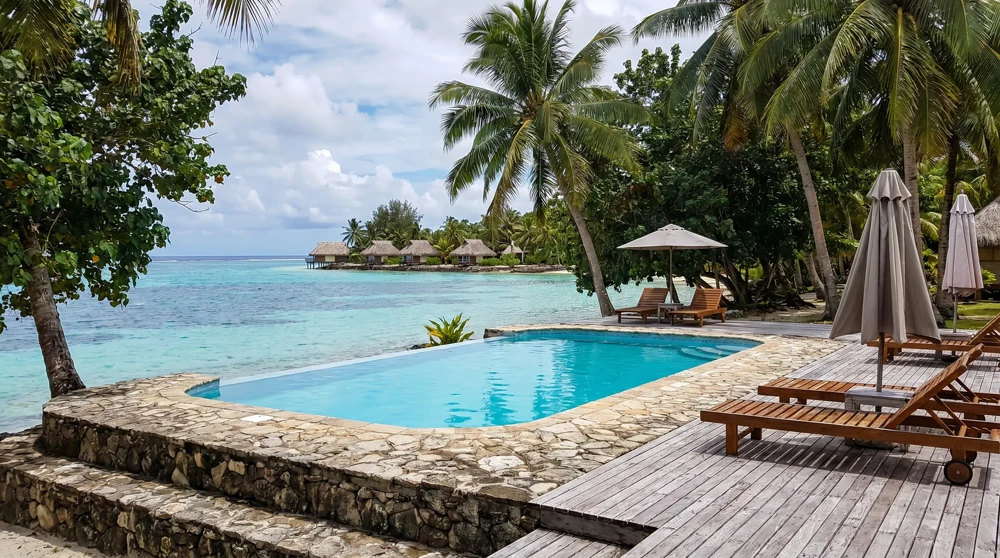
Moving inland from the coast brings you to a different Nauru entirely. The Buada Lagoon area, with its landlocked green water surrounded by dense palm forests, supports a handful of family-run homestays in the village. For a broader picture of what visiting Nauru involves day-to-day, the overview covers transport, connectivity, and how to plan your time. These operate informally, with no booking engines, no review pages, and no guaranteed availability.
Staying with a Nauruan family in Buada gives direct access to community life that neither of the two main hotels can replicate. Local hosts typically share meals of reef fish, coconut crab, and taro, and conversation tends toward the island's complex history. The air here smells of vegetation rather than phosphate dust, and the coastal winds drop almost entirely.
Availability is genuinely sporadic and requires in-country contacts or connections through the official Nauru tourism office. This option suits travelers who have already arranged their visit through a specialist tour operator rather than independent first-timers.
Internet, Power, and Practical Logistics
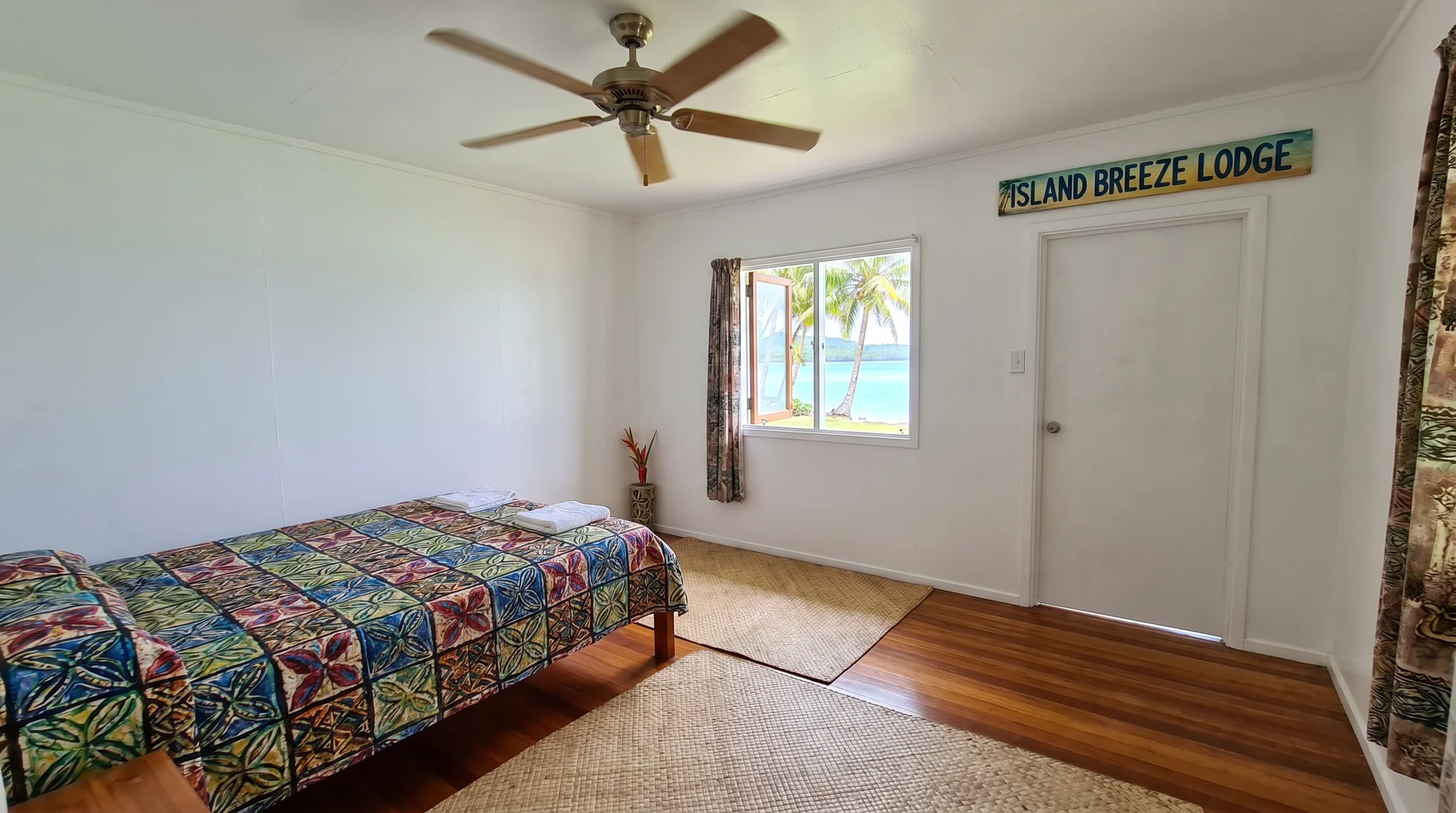
Reliable high-speed internet does not exist anywhere on Nauru. The Menen Hotel charges for access by the day or week; Ewa Lodge has Starlink but it may require separate purchase. Across the board, connections drop during heavy equatorial rain, which arrives without schedule. Purchasing a local Digicel SIM card at the airport on arrival is the most consistent solution for data access.
Power cuts happen on an unannounced basis across all districts. The major hotels maintain backup generators. Smaller guesthouses and any homestay arrangement you might find in Buada run entirely on the main grid, so charge everything whenever power is active.
All electrical outlets on Nauru use the Type I configuration, the same three-flat-pin standard found in Australia. If you are arriving from anywhere outside Australia or New Zealand, pack adapters before departure. These are not available locally.
Australian Dollars are the de facto currency across all accommodation. Electronic card systems fail island-wide with some regularity, and the ATMs (four on the entire island, one at Menen Hotel) are your backup rather than your primary option. Withdraw cash before leaving Australia if possible.
How to Book Accommodation in Nauru
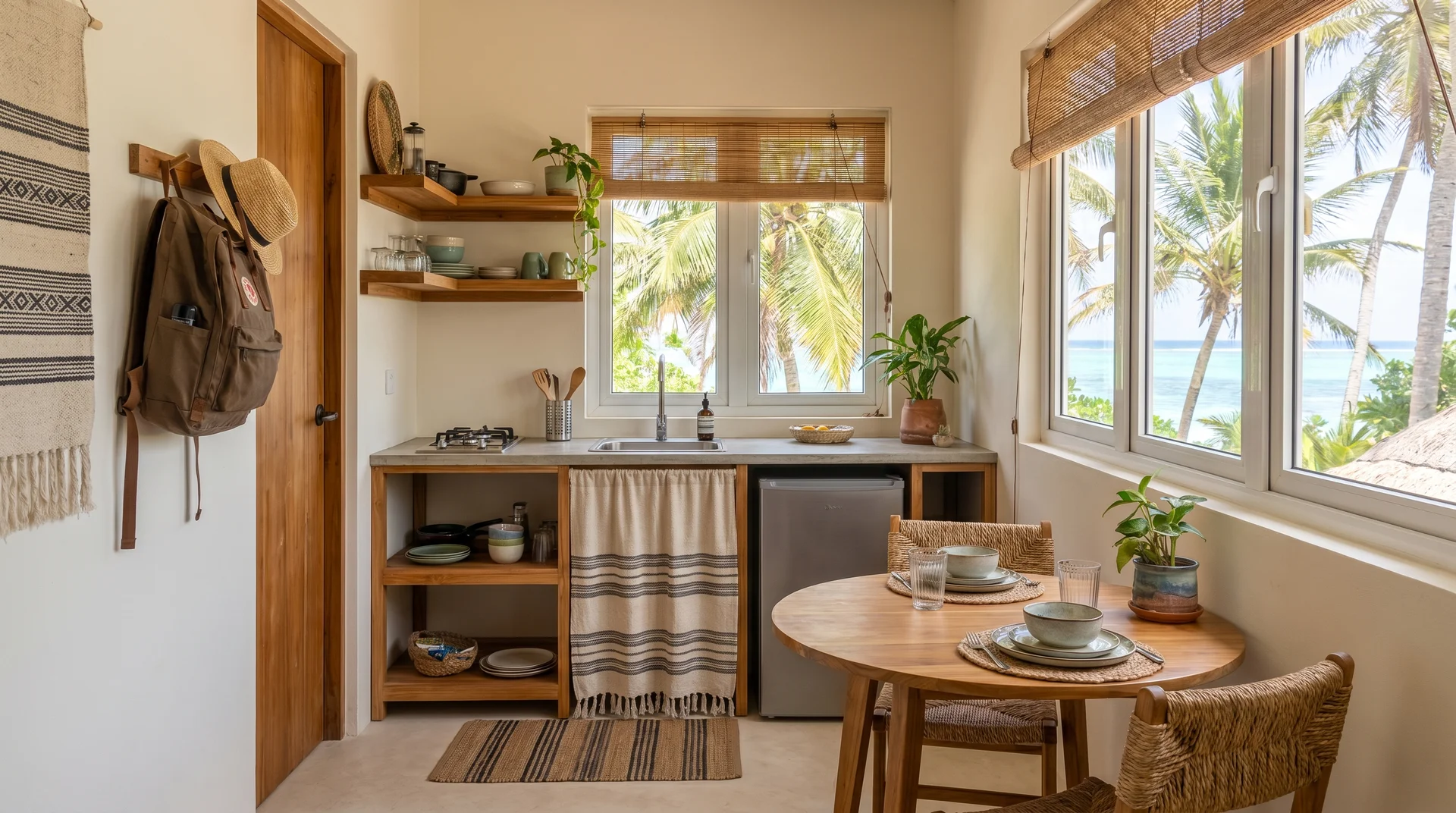
None of the three main properties appear reliably on standard booking platforms. The correct process for all of them is direct contact by email, followed by either a wire transfer payment or cash on arrival depending on the property's preference.
The Menen Hotel has an additional practical function for some visitors: the reservation confirmation they provide by email is accepted as supporting documentation for the Nauru visa application. This is particularly relevant for country collectors who need to coordinate hotel, visa, and flight logistics in the right sequence. If you need a visa (most visitors do), book the hotel first and use the confirmation in your application.
Response times vary. Allow 24 to 48 hours for email replies and confirm all arrival logistics, including airport pickup, in the reply chain rather than assuming they are automatic. Full accommodation cost context, including what to budget across flights, hotels, and daily spending, is in the Nauru travel costs breakdown. For peak periods when government delegations or contractor rotations are scheduled, rooms across all three properties fill entirely. Booking three to six months in advance for non-routine visits is the practical standard.
There is no hostel on Nauru, no camping infrastructure, and no vacation rental market. The four options (Menen, OD-N Aiwo, Ewa Lodge, and occasional Buada homestays) cover the full range of what the island offers.