Trying to cram Malta's massive WWII history into a single day trips up many visitors, especially when navigating between the sprawling capital of Valletta and the fortified Three Cities. The good news is that you can cover the island's two most important wartime sites in one afternoon if you pair the right ferry route with a clear sense of what each museum actually offers.
This guide walks you through Fort St Elmo and the Malta at War Museum, the practical details that trip people up, and the harbour crossing that links them.
Fort St Elmo & The National War Museum (Valletta)
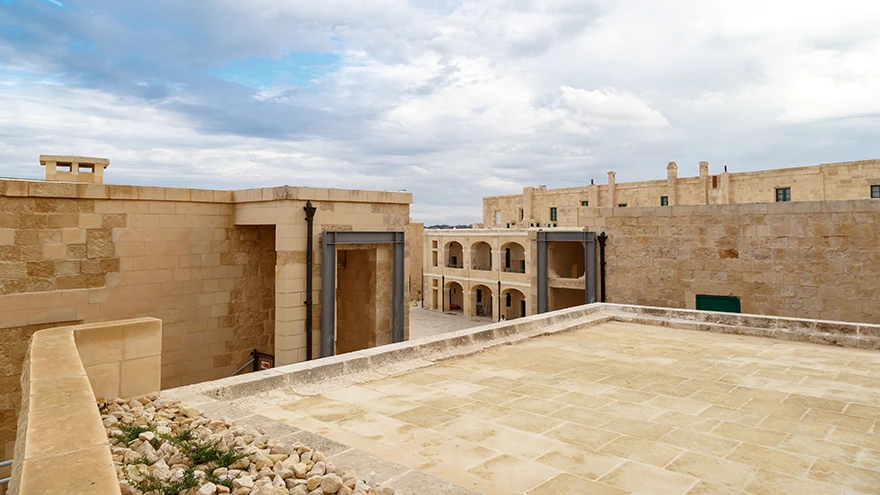
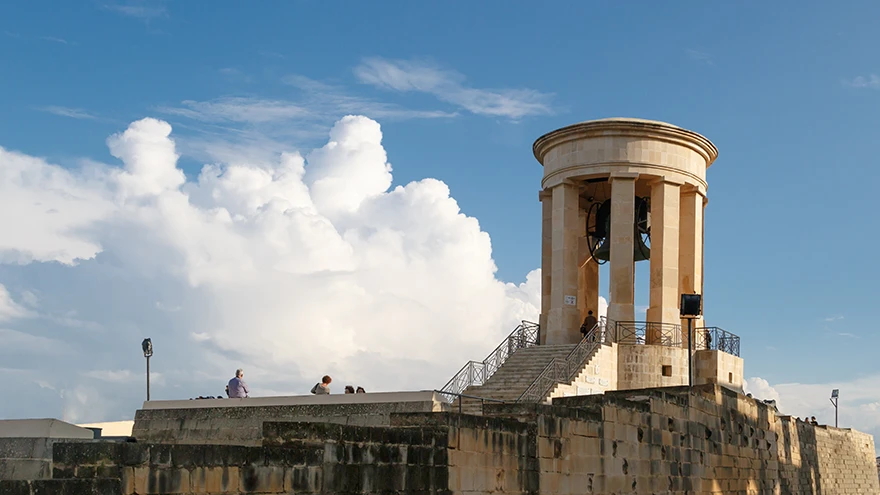
The star-shaped fortress sitting at the very tip of the Sceberras peninsula took the first aerial bombardment of the islands in June 1940. Today it houses the National War Museum, dividing 7,000 years of military history into seven distinct sections. The WWII exhibitions hold the most weight here. You walk through restored barracks and view the harbour exactly as the defenders did decades ago, and the ramparts open onto sweeping views across the Grand Harbour toward Birgu and over Marsamxett toward Sliema.
The galleries run in chronological order through a tight mix of video, photo timelines, and original kit, so start at the first numbered room and follow the sequence forward rather than wandering between sections. One cluster of displays is easy to walk past entirely: it sits through the archway on the left, marked by the carved all-seeing eye above it, so step through there before moving on.
Standard adult tickets cost €10, while seniors, youths, and students enter for €7.50 and children aged 6 to 11 pay €5.50. The site is managed by Heritage Malta, so the ticket stays valid for 30 days, and Heritage Malta pass holders enter free. The museum closes around 5:00 PM with last admission at 4:30 PM, though hours shift slightly by season. Plan on 1.5 to 2 hours to do it justice, though history buffs who read every panel and timeline can easily stretch that to three. Note that general admission only begins at noon on days when the morning In Guardia parade is staged.
If you are weighing this against the broader picture of the harbour, it helps to read up first on the historic fortifications of the Three Cities and the main sights packed into Valletta, since all three connect into one walkable cluster.
Seeing the Original George Cross & 'Faith'
Two specific artifacts inside this complex command immediate attention. The first is the surviving fuselage of the Gloster Sea Gladiator N5520, famously known as 'Faith', one of the very few aircraft defending the island during the early days of the siege.
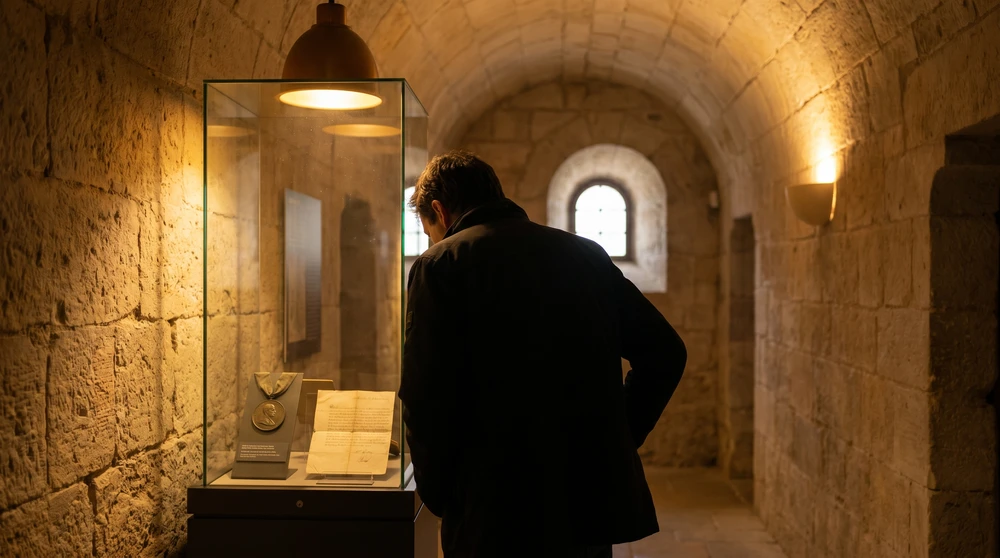
Right nearby sits the actual George Cross. King George VI awarded this highest civilian decoration for gallantry to the entire island in 1942 to honour its bravery under fire. Seeing the original cross displayed alongside the handwritten official letter puts the scale of Maltese resilience into stark perspective.
Practical Info: Tickets, Hours, and Accessibility
The grounds are expansive, which means you will do a lot of walking across uneven stone. Navigating the upper cavalier roof or the old prison cells requires climbing steep historical stairs.
An elevator does connect visitors to the final part of the museum flow, but Section 6 remains accessible only by stairs. If mobility is a concern, plan to spend your time exploring the main, easily accessible ground-floor exhibition halls, which still cover the core WWII story.
Most of the museum sits indoors and is air-conditioned, which makes it one of the more comfortable Malta sites to tour in the summer heat and one of the few that stays broadly wheelchair-friendly on the main level. The exposed upper walls are a different story, with almost no shade and a wind that can catch you off guard, so carry water, a hat, and sunscreen if you visit between June and September.
You rarely need to plan around queues here. Tickets come from the automated machine beside the entrance and walk-in entry is usually immediate, even in peak season. There are toilets, a small cafe selling drinks and snacks, and free luggage lockers on site, so you can arrive straight off the ferry without first dropping bags at your hotel.
Arriving right at opening gives you the quietest run through the galleries before tour groups build up. One or two of the seven sections are sometimes closed for restoration or over the quieter winter months, and staff reduce the ticket price to match when that happens.
Malta at War Museum & The Underground Shelters (Birgu)
Across the Grand Harbour in Birgu stands a completely different type of historical site. The Malta at War Museum, managed by the Wirt Artna heritage foundation, focuses strictly on civil defence and the grinding daily survival of the Maltese people.
Housed inside the 17th-century Couvre Porte counterguard, this former police and civil defence headquarters feels deliberately cramped and authentic. The main exhibition highlights the brutal reality of food rationing, chemical warfare preparations, and anti-aircraft defences through original uniforms, an extensive collection of gas masks, and interactive touchscreens.
Adult tickets here cost €14, with seniors at €12 and children under 16 at €7, and a family ticket covering two adults and three children runs €28. Crucially, the museum is closed on Sundays and major public holidays, opening Monday to Saturday from 10:00 AM to 5:00 PM with last admission at 4:30 PM. A separate guided War Headquarters tunnel tour is also offered for those who want to go deeper into the operations rooms.
Inside the 400-Tunnel Shelter Network
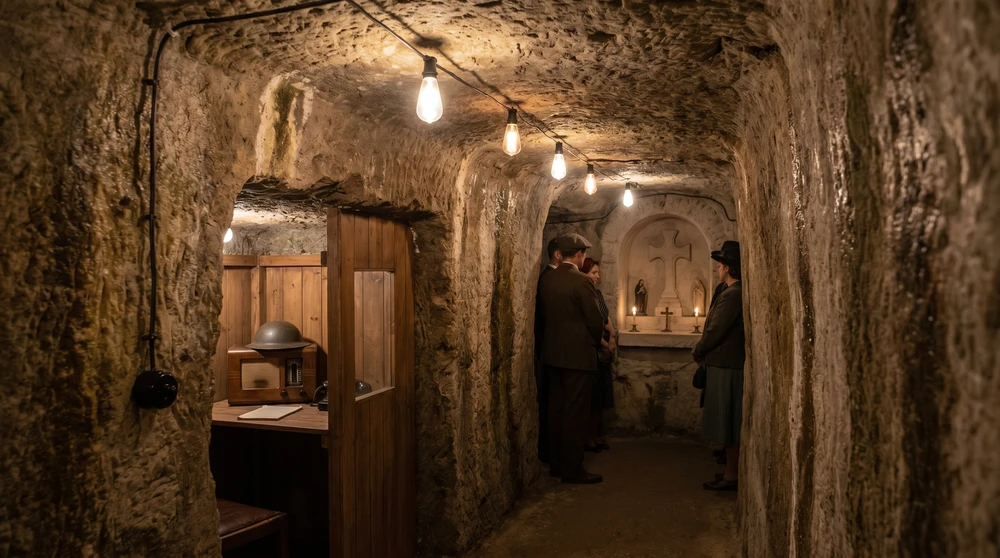
The standout feature of this museum sits entirely underground. A labyrinthine network of air-raid shelters, carved directly into the soft limestone, runs beneath the bastions. During the height of the blitz, more than 400 such tunnel systems existed across the island to protect the civilian population.
As you walk through the dimly lit corridors, the reality of the bombings hits hard. You pass reconstructed shelter warden cubicles, small underground chapels, and even a fully equipped subterranean birth room used during the heaviest raids.
Essential Tips: Hard Hats and Claustrophobia Warnings
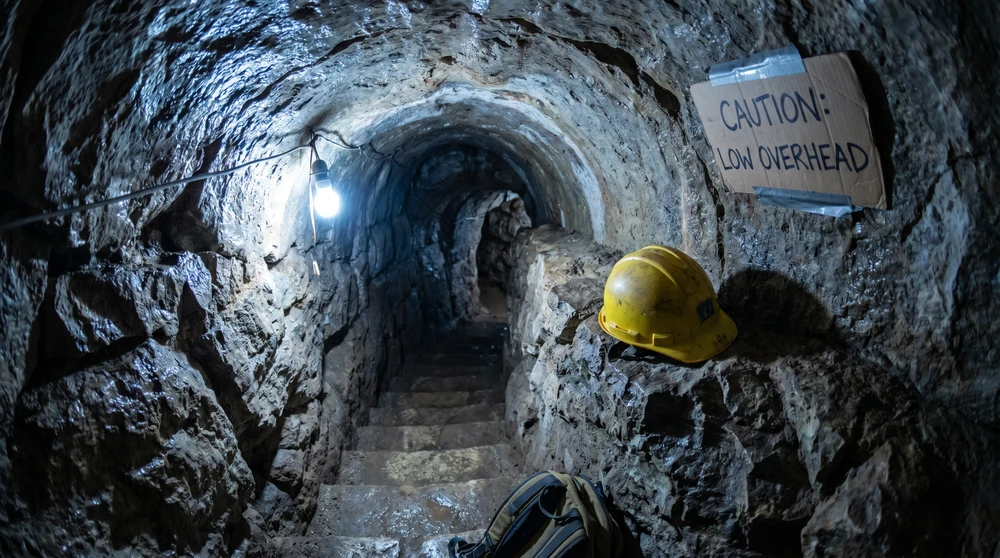
Before heading down the steps into the shelter system, grab one of the free hard hats from the basket at the entrance. The limestone ceilings drop unexpectedly low in several sections, and the rock is unforgiving on an unprotected scalp.
The connecting passageways get remarkably narrow as you move deeper into the network. If you suffer from severe claustrophobia, navigating this underground section will be highly uncomfortable, so proceed with caution or stick to the above-ground exhibits.
Valletta to Birgu: How to Connect the Two Museums
Relying on standard bus routes, such as taking a line bus from Valletta to the Birgu roundabout, eats up valuable time in heavy island traffic. The smartest way to link these two sites in a single afternoon is the harbour ferry.
After finishing your tour at Fort St Elmo, walk down to the Lascaris Wharf in Valletta and catch the quick passenger ferry across to the Three Cities. The crossing takes only about ten minutes and costs a couple of euros each way. The boat drops you right by the marina, leaving a scenic, signposted ten-minute walk straight up to the Couvre Porte Gate.
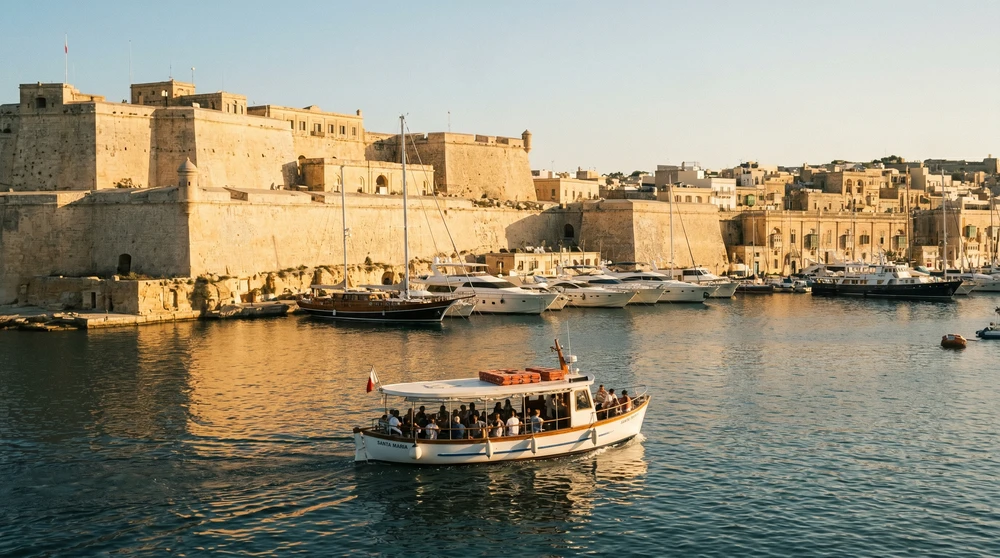
This route saves time and offers a brilliant vantage point of the grand fortifications directly from the water. For the wider picture of moving around the islands without a car, the rundown on Malta's buses, ferries, and tickets is worth a look before you set out.