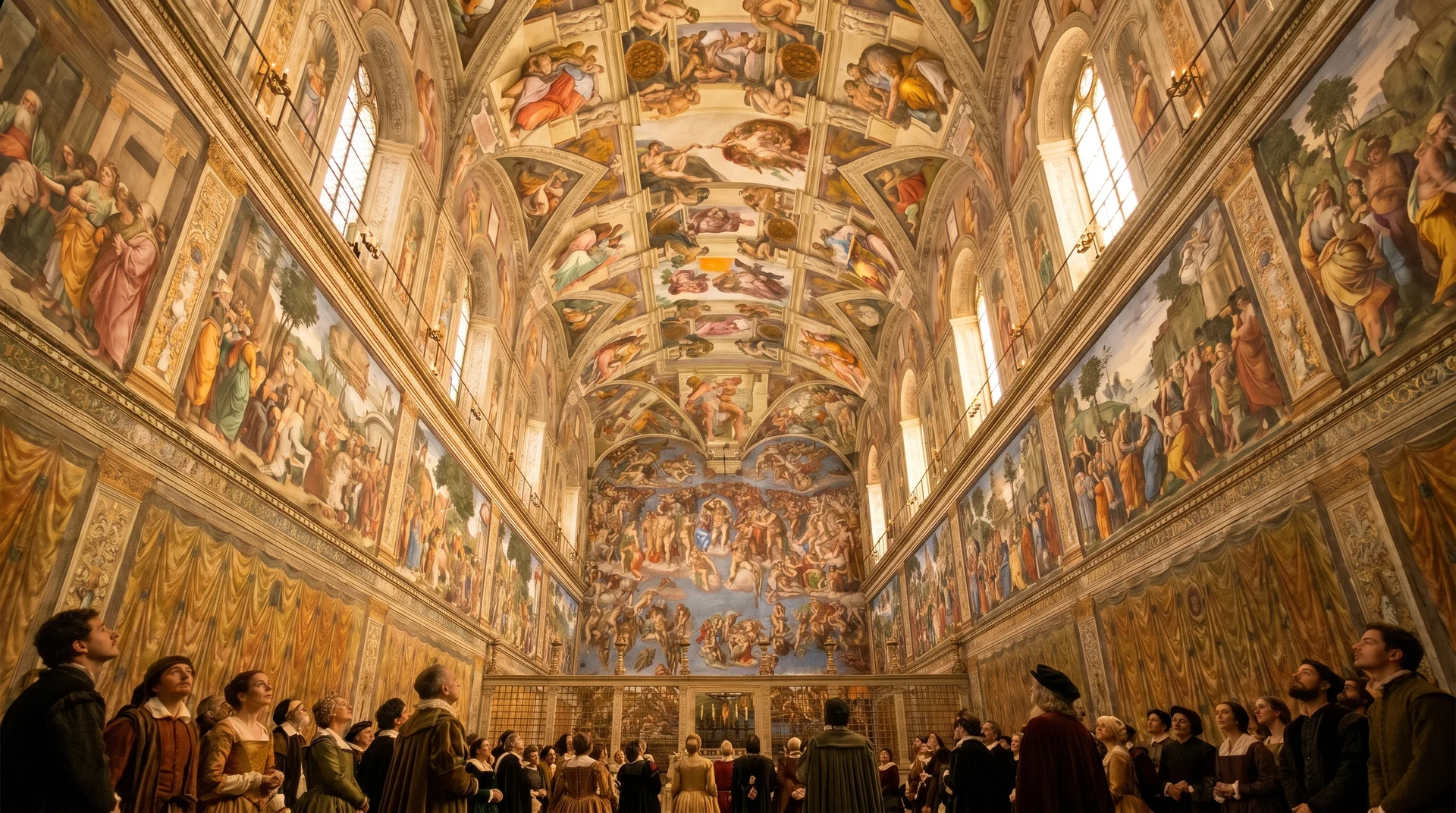
The most confusing part of crossing from the streets of Rome into Vatican City is usually a sudden panic about whether you need to show a passport or if your mobile roaming charges will spike. Stepping into the world's smallest sovereign state requires zero border checks for tourists, but this tiny walled enclave operates under entirely different laws, governance, and infrastructure than the rest of Italy.
- Status: The smallest sovereign independent state in the world
- Border Control: open borders for pedestrians, no passport or visa required
- Currency: Euro, with special Vatican-minted coins
- Official Languages: Italian and Latin
- Governance: absolute theocratic monarchy
The Historical Reason: The Lateran Treaty
The existence of this micro-state inside a massive European capital comes down to a historic compromise. Before the unification of Italy, the Popes ruled over vast territories known as the Papal States. Losing these lands created a decades-long political standoff between the Italian government and the Catholic Church, a dispute historians call the "Roman Question."
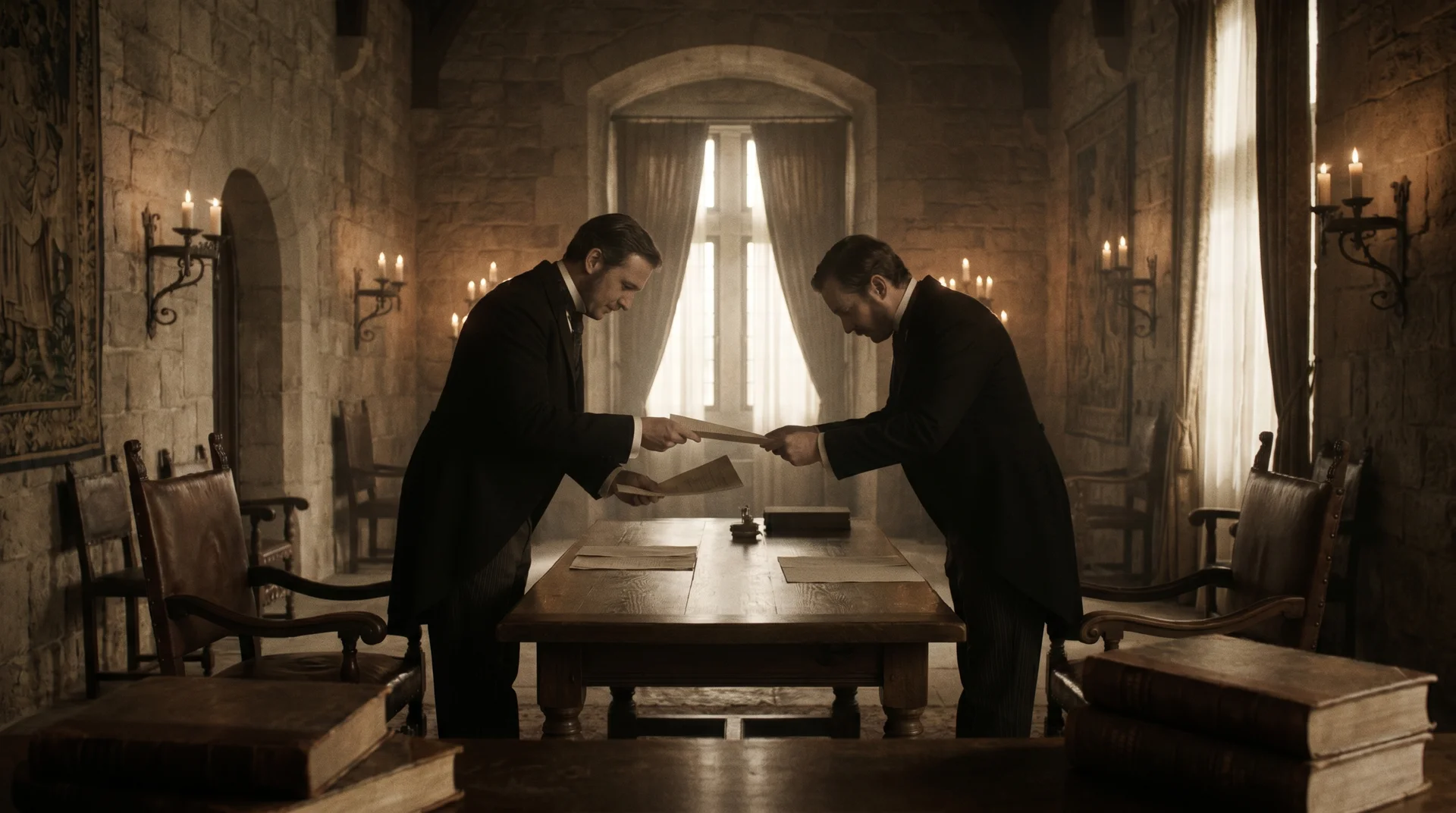
The solution arrived on February 11, 1929, when the Lateran Treaty was signed at the Lateran Palace. The agreement was negotiated between the Italian fascist government under Mussolini and Pope Pius XI, with Cardinal Secretary of State Pietro Gasparri signing on behalf of the Holy See. It granted the Pope absolute temporal sovereignty over a small patch of land across the Tiber River.
The purpose was pragmatic. Having an independent territory guarantees the Pope's freedom to govern the global Church without being subject to any other political power or national laws. Italy also paid financial compensation for the territories lost during unification. The treaty was significantly revised in 1984, but the Vatican's status as a sovereign state has remained unchanged.
Vatican City vs. The Holy See: What Is the Difference?
People often use these two terms interchangeably, but they represent very different concepts in international law.
Vatican City is the physical, geographical territory surrounded by high walls. At just 44 hectares (roughly the size of a city park), it provides the secure territorial base for operations.
The Holy See is the universal government of the Catholic Church. This is the entity that signs international treaties, maintains diplomatic relations with over 180 countries, and operates the worldwide network of embassies.
Think of the territory as the protective shell, while the Holy See is the global diplomatic and spiritual engine operating inside it.
If you are reading about a country "sending an ambassador," that ambassador represents the Holy See, not Vatican City the place.
How the World's Smallest Country Operates Today
Despite its microscopic size, this enclave possesses all the functional elements of an independent nation, including its own legal system, courts, and telecommunications network.
Border Control: Do You Need a Passport to Enter?
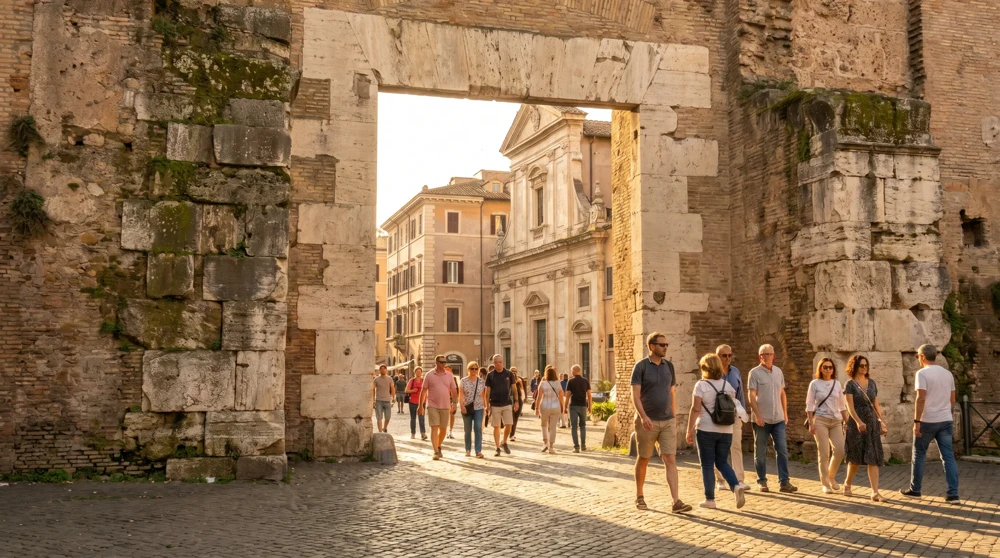
Walking into St. Peter's Square feels completely seamless. There are no immigration officers stamping documents, and no visa queues for tourists. You simply walk through the security metal detectors, much like entering an airport terminal.
No passport stamp is issued here. Vatican City does not participate in novelty stamping programs, and there is no customs checkpoint. The closest you can get to a souvenir of crossing the border is a postmark, which requires mailing something from the Vatican post office.
The state does issue its own passports. These documents are incredibly powerful, granting visa-free access to over 100 countries. Authorities strictly reserve them for diplomats, high-ranking clergy, and essential personnel who work overseas on behalf of the Holy See.
Vatican Currency and the Famous Post Office
You do not need to exchange currency when leaving Italian soil. The state uses the Euro, thanks to a special monetary agreement with the European Union. The national bank even mints its own Euro coins featuring papal imagery. These are highly sought after by collectors and rarely circulate outside the territory.
Sending a postcard from here is a genuine must-do ritual. The Vatican operates its own postal service, complete with a dedicated zip code and exclusive stamps. The internal mail system is notoriously faster and more reliable than the standard Italian postal service just outside its walls. Drop your letters in one of the bright yellow mailboxes under the colonnade to the right of St. Peter's Square. The post office is open Monday to Saturday, 08:30 to 18:30, and is accessible to all visitors, not just Catholics.
One critical detail: Vatican stamps are only valid for mail posted within Vatican City itself.
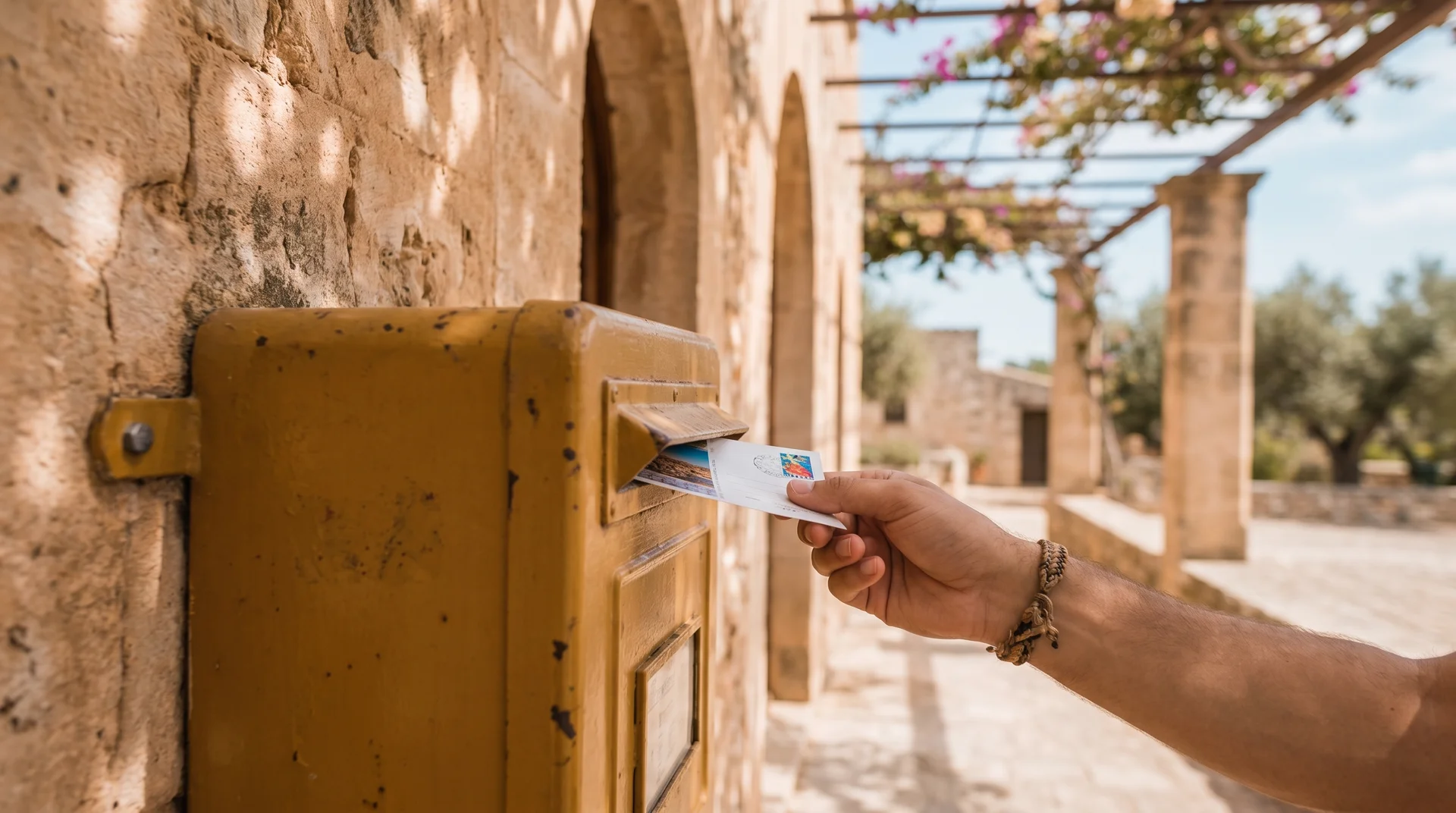
You cannot use Vatican stamps in Italian mailboxes, and Italian stamps cannot be used in Vatican mailboxes.
The Swiss Guard: The Pope's Private Army
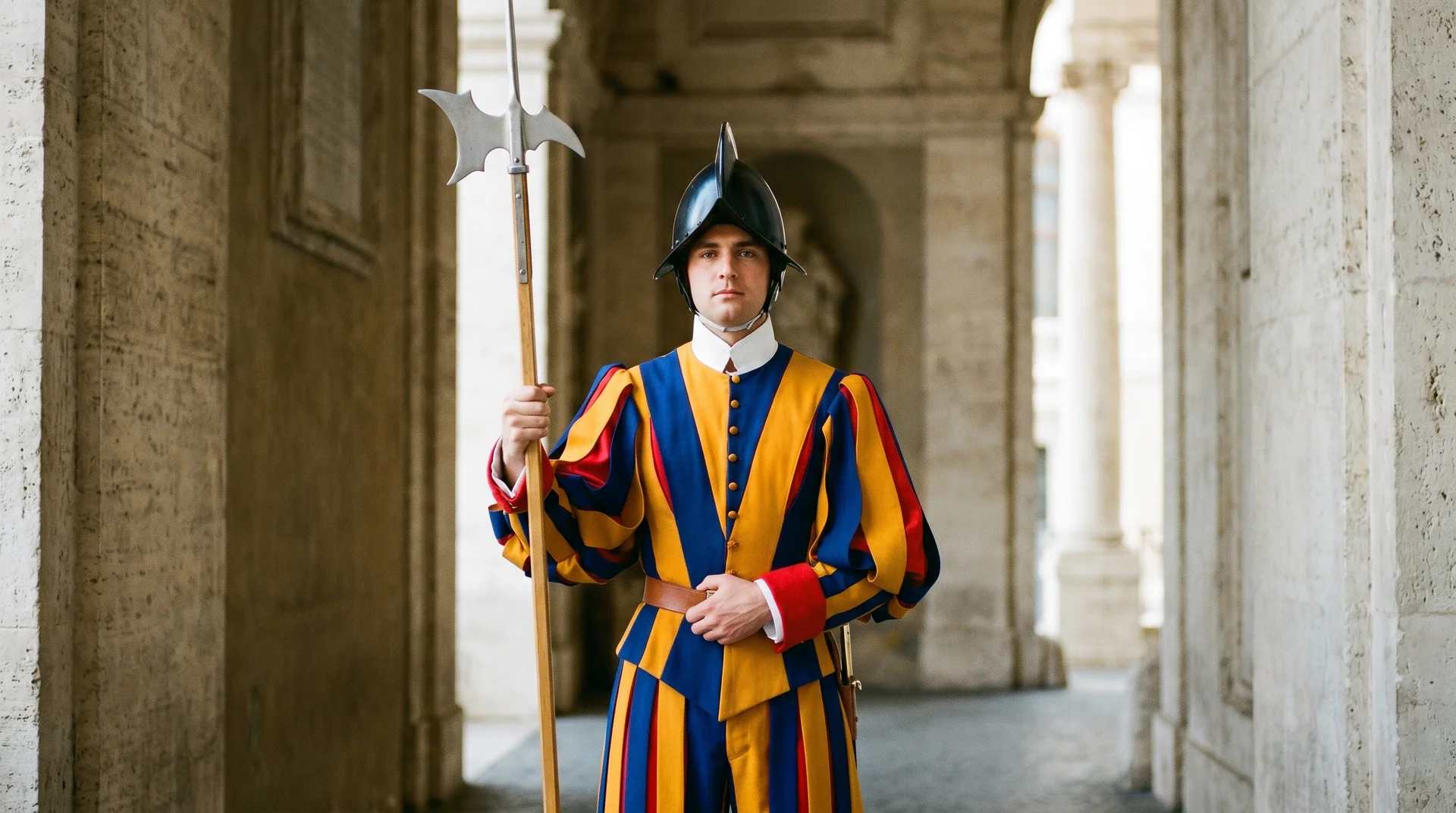
Two distinct entities handle security. The Gendarmerie manages everyday police duties and traffic control. The more visible protectors are the Pontifical Swiss Guard.
Dressed in striking Renaissance-style uniforms of blue, red, and yellow, they might look strictly ceremonial. Do not let the traditional halberds fool you. These guards are highly trained, modern military professionals responsible directly for the safety of the Pope and the Apostolic Palace. Every recruit must be a Catholic Swiss citizen, male, between 19 and 30, at least 174 cm (5'8") tall, and have completed basic Swiss Armed Forces training.
Vatican Citizenship: Who Actually Lives There?
Citizenship here is entirely functional and temporary. You cannot be born a citizen, and you cannot buy your way in. The administration grants passports exclusively based on an individual's role within the Holy See.
Once your service ends, your citizenship is revoked, and you revert to your original nationality. The permanent population is under 500 people, mostly cardinals, diplomats, and security personnel who actually reside within the territory. This functional citizenship ensures the land remains strictly a tool for the papacy rather than a permanent settlement.
For visitors curious about the deeper Roman history surrounding the Vatican, the Ara Pacis Museum is located just across the Tiber River, about a 25-minute walk from Vatican City and offers a window into the imperial Rome that existed long before the Papal States. If you plan to visit the Vatican Museums, Book a skip-the-line Vatican tour in advance, particularly between March and October when queues can stretch to three or four hours without pre-booked tickets.