Arriving at St. Peter's Square without a plan usually means spending your morning stuck in a massive security line under the open sun. Knowing exactly where the architectural illusions hide - and how the Wednesday crowds shift the entire layout - turns an exhausting wait into a seamless walk. This guide covers everything from Bernini's colonnade trick to the best time slots for a crowd-free visit.
What Makes St. Peter's Square Unique
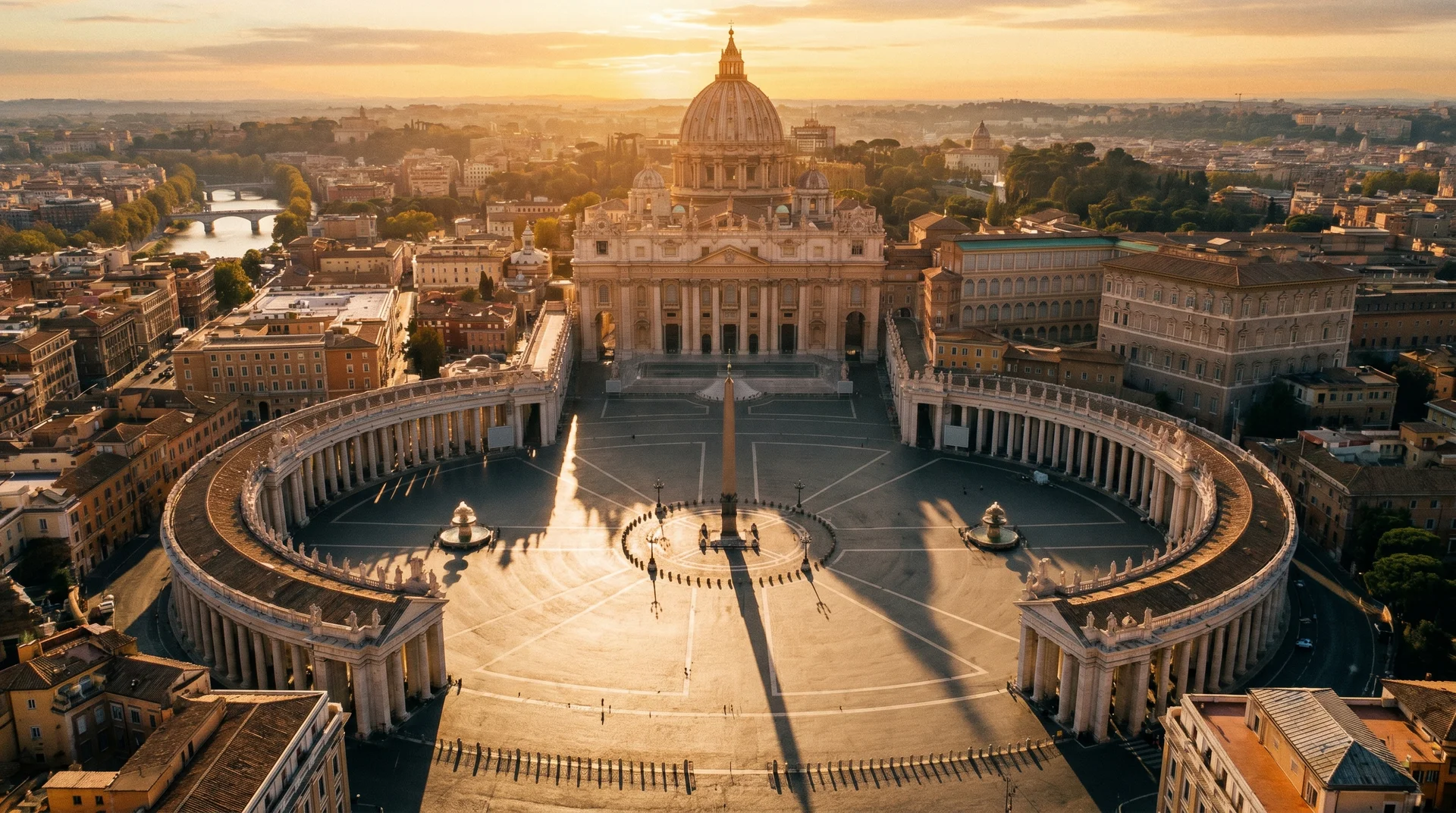
The sheer scale of the space immediately shifts your perspective. Gian Lorenzo Bernini designed the plaza not just as an entrance, but as a massive architectural embrace. The elliptical design stretches 240 meters at its widest point and relies heavily on forced perspective and precise geometry. Unlike most famous squares, this one was engineered to feel intimate despite holding hundreds of thousands of people.
If you are planning a multi-day trip, the 4 Days in Rome itinerary covers how to fit St. Peter's Square alongside the Colosseum, Pantheon, and Trastevere in a single logical route.
Bernini's Colonnade and the Optical Illusion
The colonnade consists of 284 massive Doric columns arranged in four distinct rows, all carved from Roman travertine. Construction began in 1655 under Pope Alexander VII and took eleven years to complete. The scale is immense, and the symmetry is absolute.
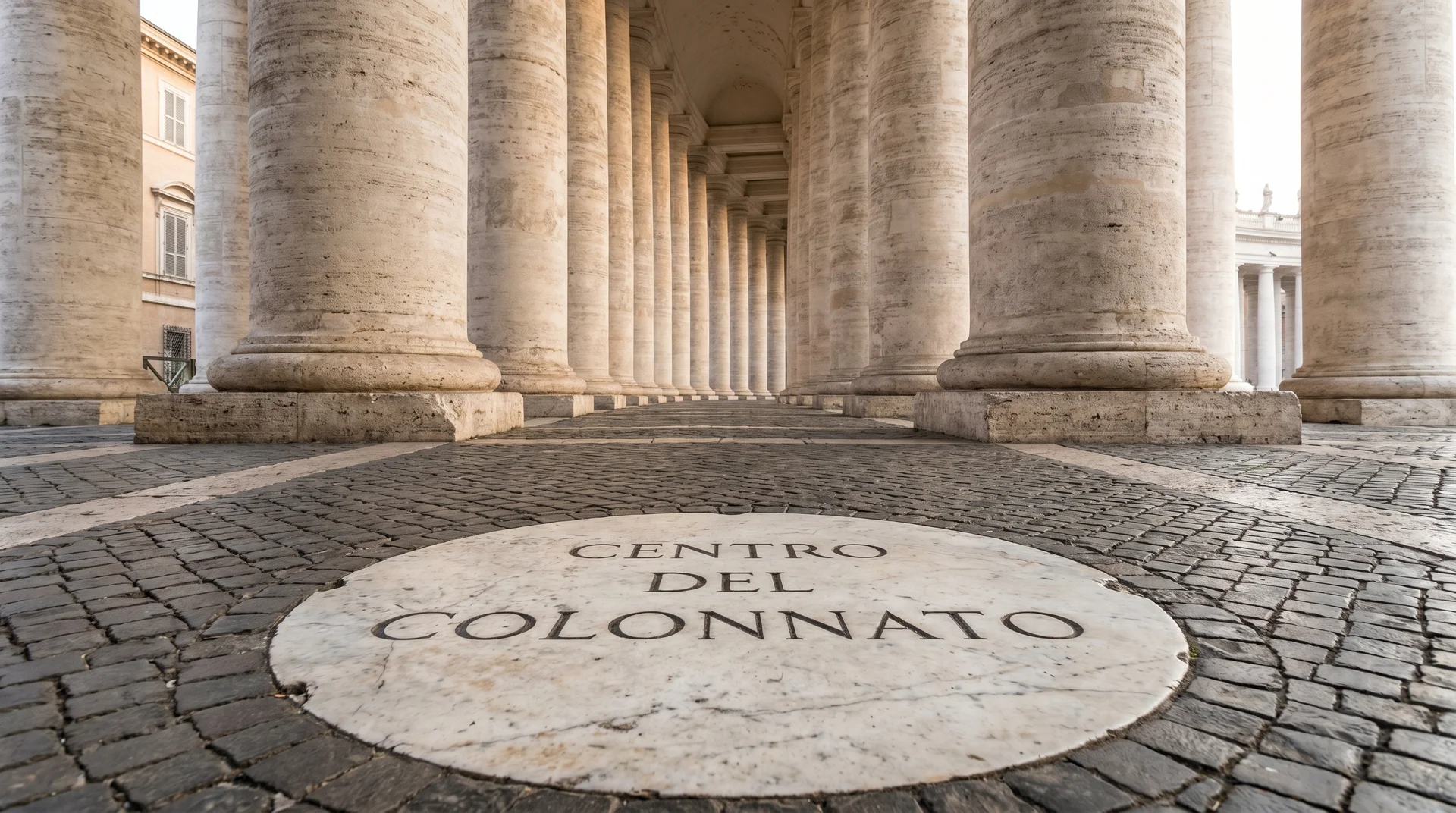
Most visitors walk past the columns without noticing the engineering trick hidden in the pavement. Look for a marble disc on the ground marked "Centro del Colonnato" - positioned between the obelisk and the fountains. Stand exactly on this spot and look toward the colonnade; the four rows of columns will perfectly overlap to appear as a single row. The outer columns disappear completely.
This illusion works because the ellipse's foci align precisely with these two paving markers. Bernini placed them intentionally so that the colonnade - his metaphor for the Church's embrace - would appear as one unified wall of stone from a single viewpoint.
The Vatican Obelisk: A Relic from Caligula's Circus
Right at the center of the square stands a towering red granite obelisk, 25.5 meters tall, with no hieroglyphs carved into its surface. It originally stood in Heliopolis, Egypt, before Emperor Caligula transported it to Rome in 37 AD to mark the spine of his circus - the same arena where early Christians were executed.
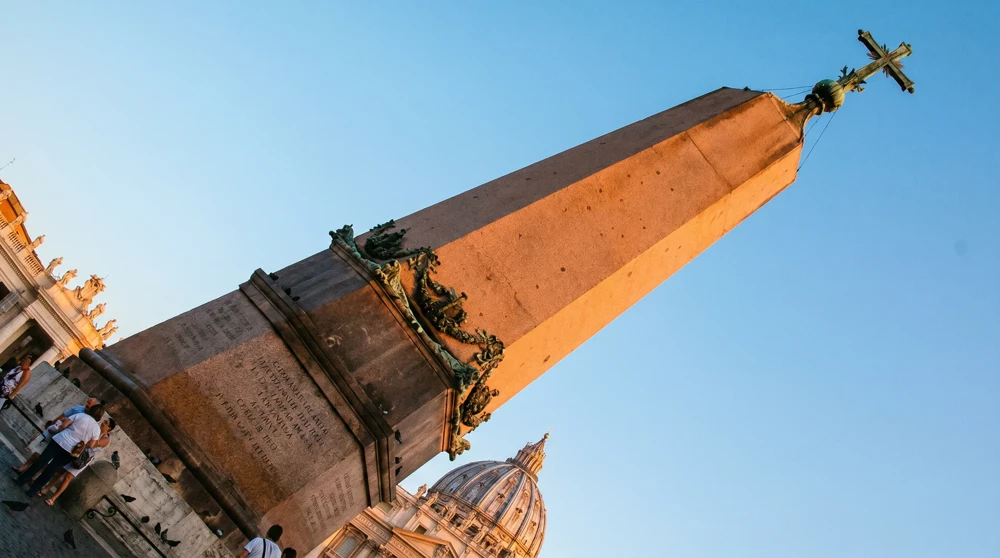
Pope Sixtus V ordered the obelisk moved to its current position in 1586. Domenico Fontana engineered the relocation, a feat that required 900 workers, 140 horses, and 47 winches. Today, the obelisk acts as a giant sundial, with shadows sweeping across the pavement markers to indicate the solstices and the zodiac signs throughout the year.
The Twin Fountains of Maderno and Bernini
Water flows constantly from the two symmetrical fountains flanking the obelisk. Carlo Maderno built the right fountain in 1614, and Bernini added the left one in 1675 to maintain the visual balance of the ellipse. The water pressure comes directly from the Acqua Paola aqueduct, operating entirely on gravity without any modern mechanical pumps.
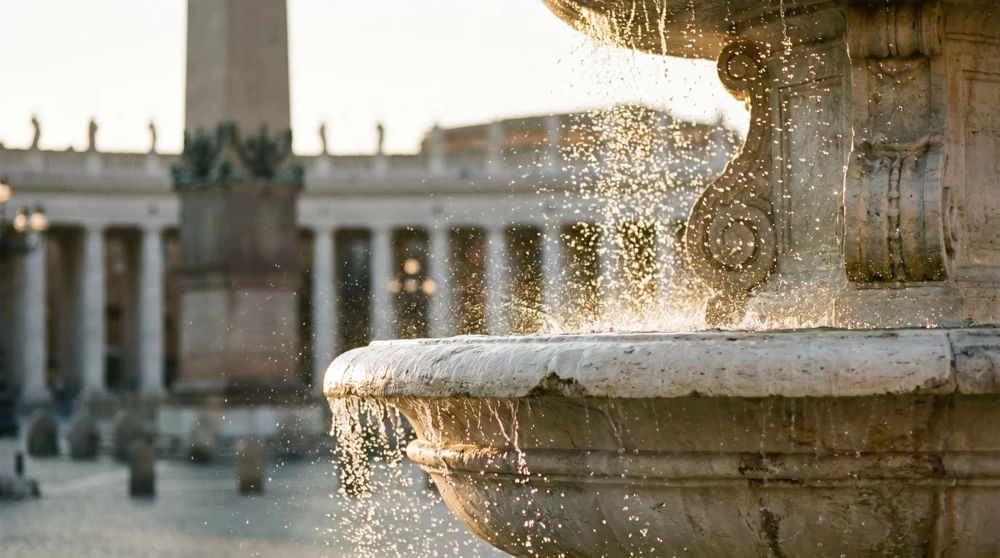
The sound of the falling water acts as a natural noise buffer against the city traffic beyond the walls. Standing close to either fountain during peak afternoon hours, the ambient sound becomes noticeably calmer than anywhere else in the square.
Best Time to Visit St. Peter's Square
Timing dictates everything about your experience here. The atmosphere changes drastically depending on the hour and the day of the week.
Early Morning vs. Late Afternoon
Arriving at 7:00 AM gives you the plaza almost entirely to yourself. The air is cool, the security lines for the basilica are virtually non-existent, and the morning light hits the facade at the perfect angle for photography. The golden hour here is genuinely useful, not just a cliche.
If mornings do not fit your schedule, aim for the late afternoon after 5:00 PM. Tour groups leave, the temperature drops, and the setting sun casts deep shadows across the travertine stones. The colonnade takes on a different quality in warm afternoon light - the individual column drums become more distinct, and the scale reads differently than it does in the flat midday sun.
Wednesday Papal Audiences: What to Expect
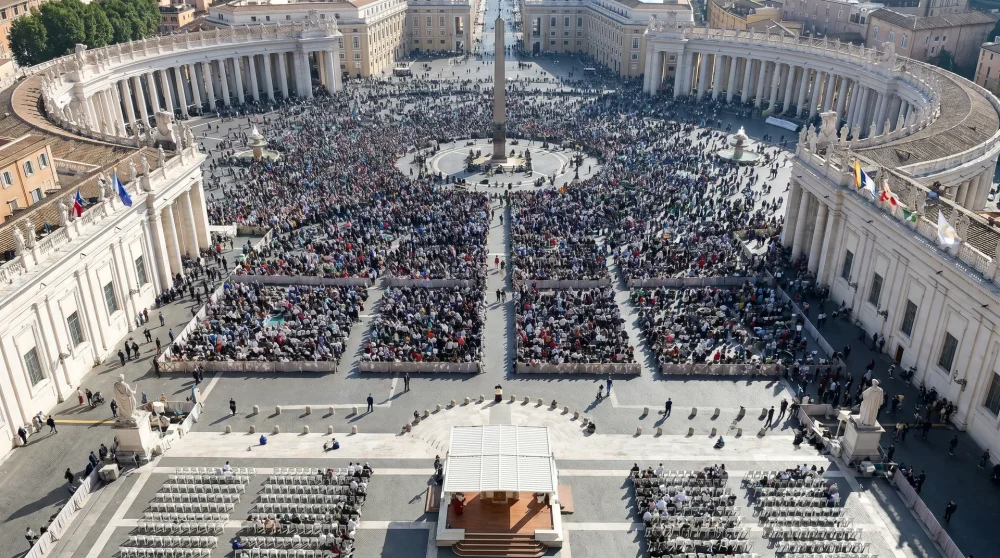
Wednesdays alter the entire dynamic of the area. Unless you hold a specific ticket for the Papal Audience, avoid Wednesday mornings entirely. The square fills up with thousands of plastic chairs, and barriers restrict movement throughout the space. The sheer volume of people makes basic navigation difficult and the colonnade illusion essentially impossible to experience from the correct paving point.
The area usually clears by early afternoon. If you arrive on a Wednesday without a Papal Audience ticket, plan your visit for after 2:00 PM.
The Sunday Noon Angelus
Every Sunday at 12:00 PM, the Pope delivers a brief address and blessing from the window of the Apostolic Palace, the papal residence that occupies the right side of the square. The appearance is free, requires no ticket, and draws a large crowd. Arrive 30 to 60 minutes early to clear security and find a good position. The address lasts only a few minutes, but the square takes on a charged atmosphere unlike any other time of the week - pilgrims and tourists sharing a moment that repeats every Sunday without exception.
On other days, glancing up at the third-floor windows of the Apostolic Palace is well worth it. Occasionally, the Pope appears at the window of the Apostolic Palace to address visitors, though appearances are announced in advance through Vatican channels.
Getting to St. Peter's Square
The most reliable route into the square is Metro Line A to the Ottaviano stop. From the station exit, walk straight down Via Ottaviano. The route is entirely flat and takes about ten minutes at a normal pace. For full details on navigating Rome's transit system, the transportation guide for Rome covers bus routes, metro lines, and airport transfer options.
If you prefer arriving on foot from the historic center, crossing the Tiber via Ponte Sant'Angelo provides a dramatic visual approach. The Castel Sant'Angelo looms directly ahead as you cross, and the basilica dome appears as you turn left along the river.
Ignore the street vendors selling "skip the line" passes on your way. Access to the square itself requires no ticket whatsoever.
Security Checks and the Vatican Dress Code
The plaza allows free movement at all hours, but entering the basilica means passing through airport-style security scanners. The queue typically forms along the right-hand colonnade. Move efficiently and have your bags open and ready for the metal detectors.
Key rules for the basilica entrance:
Shoulders and knees must be covered completely - guards enforce this at the scanner
Do not bring large luggage, tripods, or full-size umbrellas
Carry a lightweight scarf in your bag to drape over your shoulders right before the checkpoint
Failing the dress code means being turned away immediately - there is no workaround
For a complete breakdown of what to see inside, including the dome climb ticket options and how to navigate the interior without a guide, read the full St. Peter's Basilica guide.
Combining Your Visit with the Vatican Museums
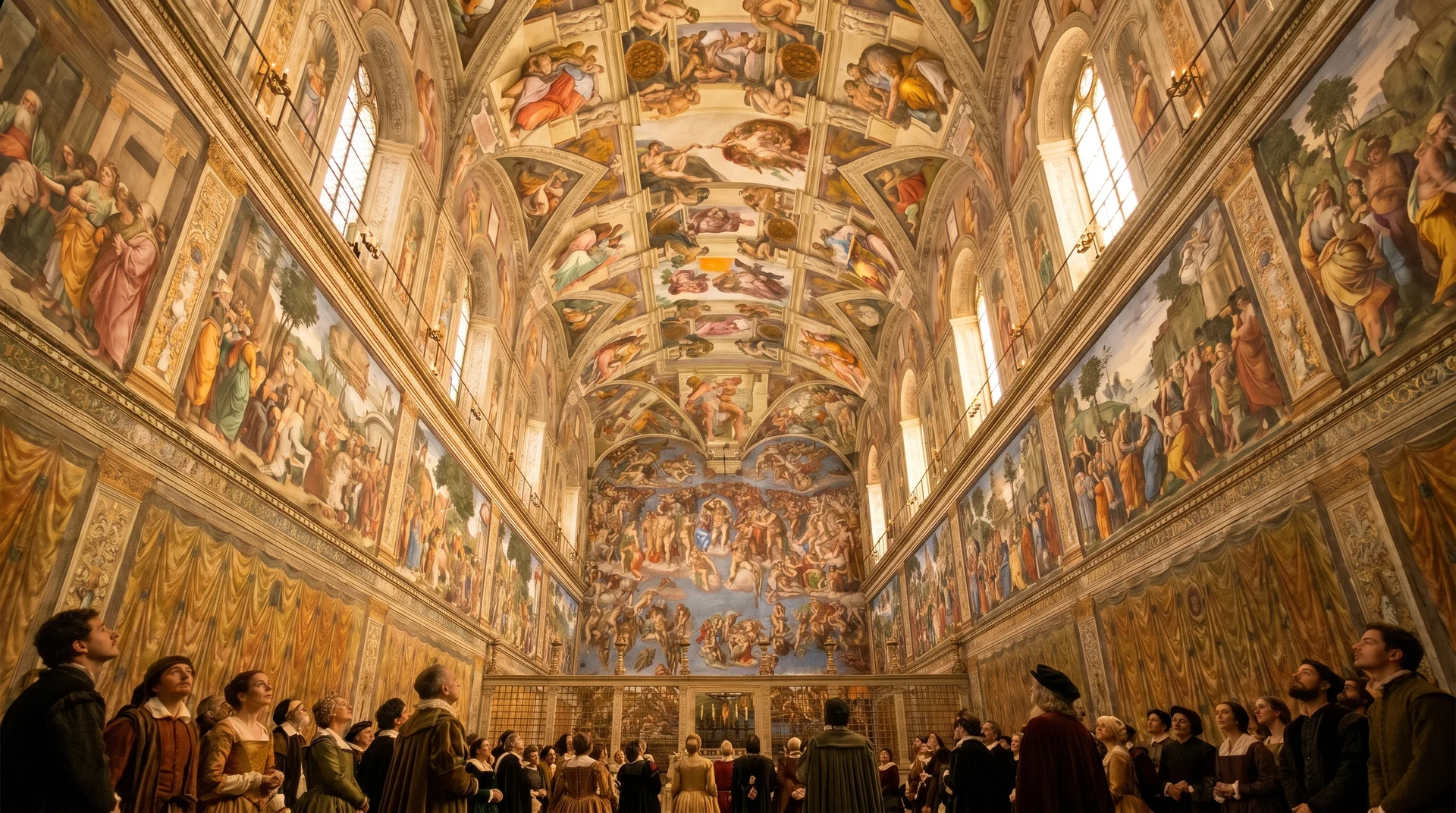
St. Peter's Square is a separate visit from the Vatican Museums and the Sistine Chapel. Many first-time visitors assume they are entering the same complex, then feel confused when they cannot find the Sistine Chapel from the basilica side.
The Vatican Museums have their own entrance on Viale Vaticano, a ten-minute walk north of the square. Tickets require advance booking - same-day entry is rarely possible during peak season. The full Vatican Museums guide covers what to expect from the queue, which galleries to prioritize, and how long the experience actually takes.
If you are mapping out all the major piazzas across the city, the guide to Rome's best squares puts St. Peter's Square in context alongside Piazza Navona, Campo de' Fiori, and Piazza del Popolo.