Staring at a 2000-year-old altar through the street windows might seem like a clever way to save money, but the harsh reflections and loud traffic completely ruin the intricate details of this imperial masterpiece.
Stepping inside the climate-controlled pavilion is the only way to decode the complex floral friezes and escape the overwhelming tourist crowds of central Rome. The carefully designed acoustic glass cancels out the city noise instantly.
- Standard Admission: €14
- Concessions (students, seniors): €8.50
- Combo Ticket (with temporary exhibition): €23
- Opening Hours: Daily 9:30 AM to 7:30 PM (Last entry at 6:30 PM)
- Nearest Metro: Spagna (Line A, followed by a 10-minute walk)
- Average Visit Duration: 45 to 60 minutes
What is the Ara Pacis Augustae?
The Roman Senate commissioned this massive marble structure in 13 BCE to celebrate Emperor Augustus returning safely from military campaigns in Hispania and Gaul. It served as a highly functional propaganda tool rather than just a religious site. The structure promoted the idea of the Pax Romana, a long period of relative peace and stability engineered by the emperor himself.
Cool air, absolute silence. White travertine walls glowing under the soft northern light. The atmosphere inside the main hall feels more like a modern art gallery than a traditional Roman ruin. You can walk entirely around the altar and even step through it, getting intimately close to the ancient carvings.
Originally, the altar stood in the Campus Martius and functioned as a giant sundial aligned with an Egyptian obelisk. Silt from the Tiber River eventually buried it for centuries. Mussolini ordered its excavation and reconstruction in the 1930s to connect his regime with the glory of the ancient empire.
The Modern Museum Building by Richard Meier
The current glass and steel enclosure replaced a decaying 1930s structure in 2006. Architect Richard Meier designed this minimalist space specifically to protect the fragile Carrara marble from the aggressive smog and humidity of modern Rome. The stark contrast between the sleek white columns and the ancient pagan altar creates a fascinating visual dynamic.
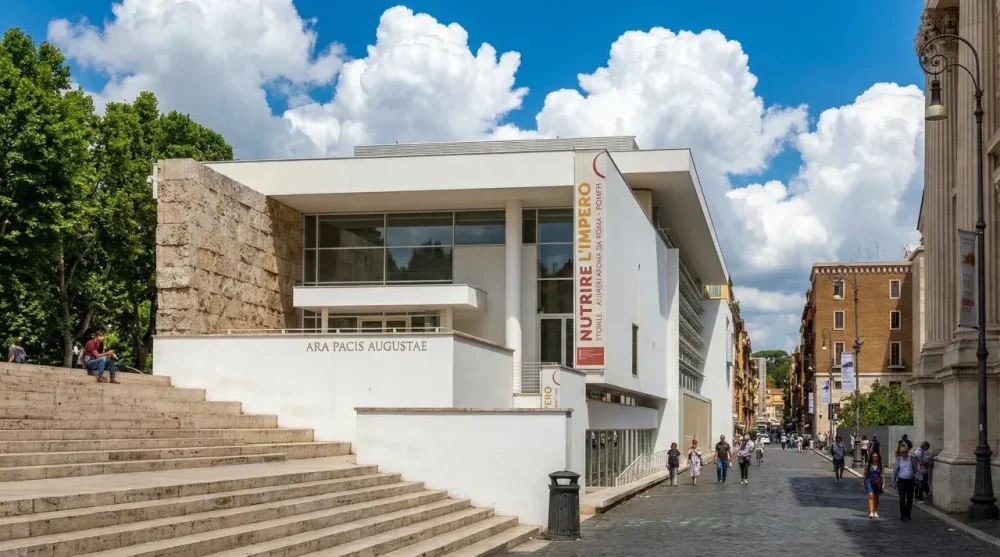
Many locals initially hated the ultra-modern design, calling it an eyesore in the historical center. The building works perfectly for its intended purpose though. The vast windows allow natural sunlight to illuminate the deep reliefs exactly as they would have looked outdoors two millennia ago. Rome's contemporary art scene extends beyond this building, the National Gallery of Modern Art sits nearby and shares this tension between historical setting and modern design.
Head down to the lower level if you want to use the restrooms or catch one of the rotating photography and art exhibitions. Keep in mind that these temporary galleries usually require the €23 upgrade.
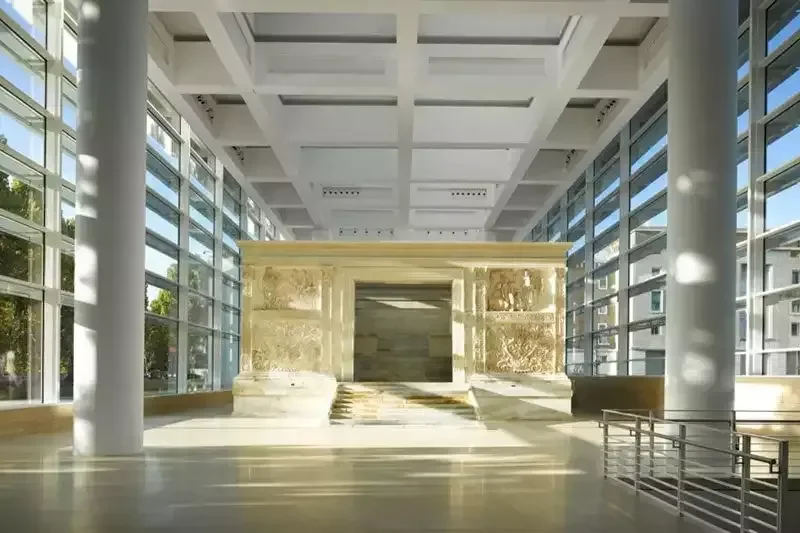
What to See Inside: Decoding the Reliefs
The sheer volume of characters carved into the outer walls can feel overwhelming without some context. The museum provides physical information boards, but they lack the depth needed to truly appreciate the political messages hidden in the stone. Grabbing the official audio guide (€4) or video guide (€6) at the entrance makes a massive difference in how you experience the space. Reviewers consistently note it transforms the visit from a quick glance to a genuinely meaningful experience.
The Imperial Family and Livia
The southern frieze acts as a who-is-who of the Julio-Claudian dynasty. You will spot Augustus, his influential wife Livia, and various priests participating in a solemn procession. The sculptors carved these figures with incredible individual detail, capturing the exact political hierarchy of the era.
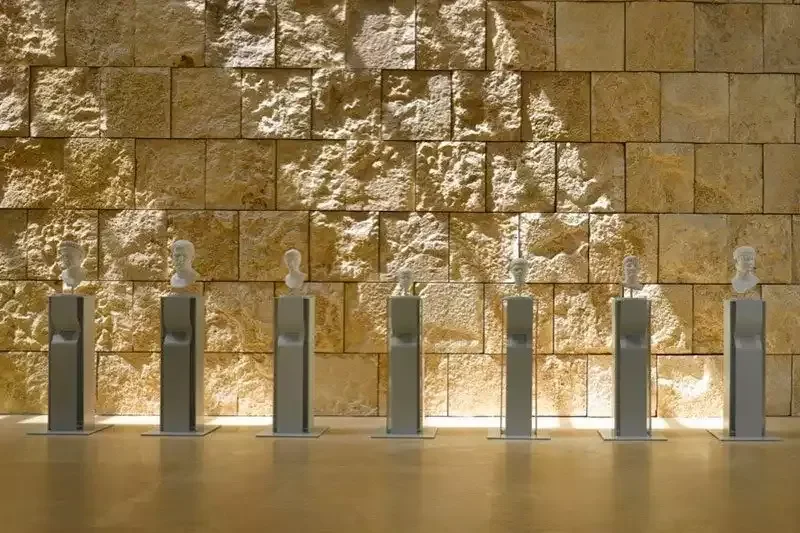
Goddess Roma and Tellus Panels
Moving to the eastern and western walls reveals the mythological foundation of Rome. One panel shows the goddess Roma sitting on a pile of confiscated weapons, symbolizing peace achieved through absolute military dominance. Another famous section depicts Tellus, Mother Earth, surrounded by lush vegetation and animals to represent the extreme prosperity brought by Augustan rule.
Ara Pacis Museum Tickets and Entrance Fees 2026
Buying your €14 ticket online in advance is highly recommended, but be prepared for a slightly chaotic entry system at the door. The ticketing queue often mixes up pre-booked visitors with walk-ins, and the staff operates on a first-come, first-served basis regardless of your time slot. Arrive early in the morning to avoid this administrative bottleneck.
Concessions (€8.50) apply to students, over-65s, and EU residents aged 18-25 with valid ID. Rome and Metropolitan City residents enter free with a valid ID card. If you plan to visit two or more museums in Rome, the Roma Pass covers the Ara Pacis as one of your free entries and typically pays for itself at the second or third stop.
Entry is completely free on the first Sunday of every month. The hall gets uncomfortably packed over capacity on these days, making it nearly impossible to see the lower panels or enjoy the intended peaceful atmosphere. Pay the standard fee on a weekday if you genuinely want to study the art without elbows in your ribs.
How to Get to the Ara Pacis
The museum sits right on the Lungotevere in Augusta, facing the Tiber River. Take the Metro Line A, get off at the Spagna station, and walk about 10 minutes west through the beautiful shopping streets. The Flaminio station is also walkable at roughly the same distance from the north.
Do not attempt to drive here under any circumstances. The area falls strictly within the Rome ZTL (Zona a Traffico Limitato), and crossing into this sector without a resident permit will trigger immediate and heavy fines.
Combining Your Visit: The Newly Restored Mausoleum of Augustus
Looking through the eastern glass wall of the museum gives you a direct view of the Mausoleum of Augustus. This massive circular tomb recently reopened to the public after sitting abandoned and overgrown with weeds for 14 years. It creates a deeply ironic historical contrast.
Augustus built the altar to celebrate his eternal peace, and he built the fortress-like mausoleum next door to house the ashes of the very family members depicted on the altar friezes. Booking a separate guided tour for the mausoleum turns a quick museum stop into a comprehensive half-day exploration of the first Roman emperor's life and death. For another dramatically sited Roman monument nearby, Castel Sant'Angelo sits along the same stretch of the Tiber and pairs well with either attraction.