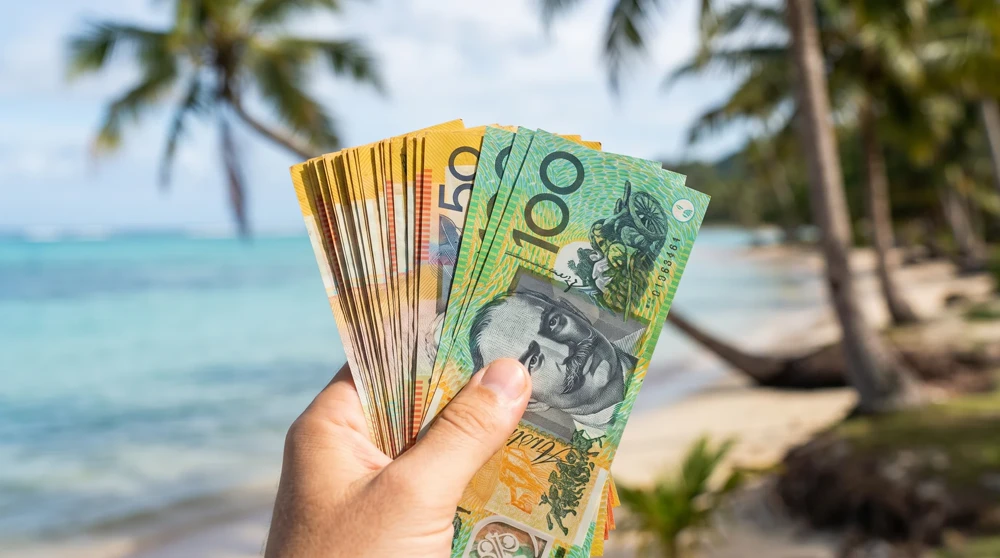
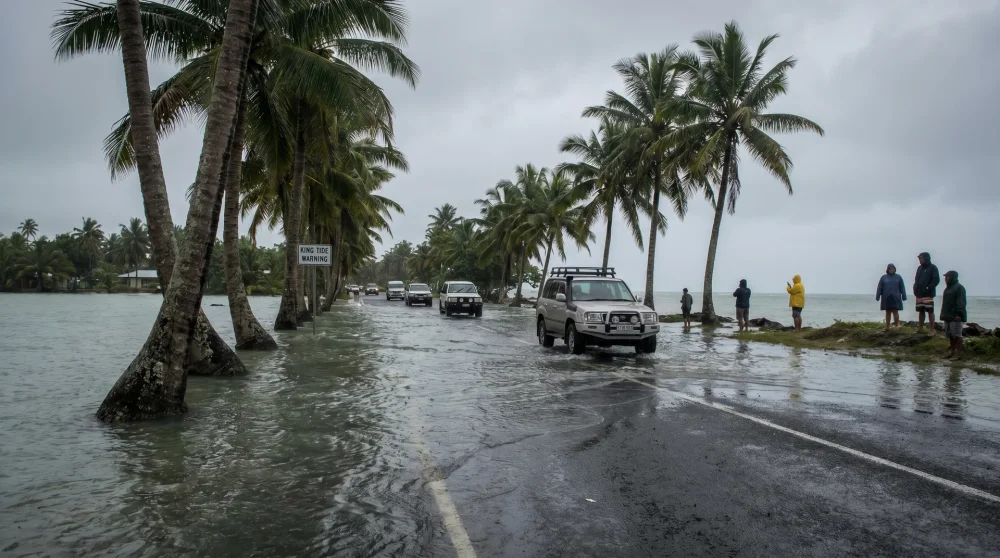
Arriving at the Fiji departure gate without physical Australian Dollars or a confirmed onward ticket guarantees immediate denial of boarding for your flight to Tuvalu. Successfully passing through Funafuti International Airport requires navigating a strict cash-only border system and highly specific biosecurity rules. Preparing your documents before landing prevents hours of administrative delays on an island with virtually no digital banking infrastructure.
- Required Currency: Physical Australian Dollars (AUD) only - zero ATMs on the islands
- Visa on Arrival: Available for most passports (US, UK, AUS) for up to one month - costs AUD 100
- Free Visa on Arrival: 30+ countries including UK, Fiji, Samoa, Tonga, Malaysia, South Korea - AUD 0 fee
- Visa Exemptions: Schengen Area and Taiwan - 90 days, no fee
- Passport Validity: Minimum 6 months from the exact date of arrival
- Mandatory Documents: Printed onward/return ticket and proof of accommodation
- Entry Route: Flights arrive via Fiji Airways from Suva or Nadi
Mandatory Passport and Validity Rules at Funafuti Airport
Border officials require a valid travel document with at least six months of remaining validity from your arrival date. Airlines flying out of Suva or Nadi will deny boarding immediately if your passport falls short by even a single day. Do not test this rule at the gate.
You must also present a printed, confirmed onward or return ticket to the immigration officer. Carrying hard copies of your hotel reservations or local homestay bookings speeds up the manual processing considerably.
The border system operates offline. Relying on your phone to show digital booking confirmations causes bottlenecks, especially since airport Wi-Fi is practically nonexistent upon arrival. Keep physical printouts in your carry-on at all times.
Tuvalu Visa Policy by Nationality
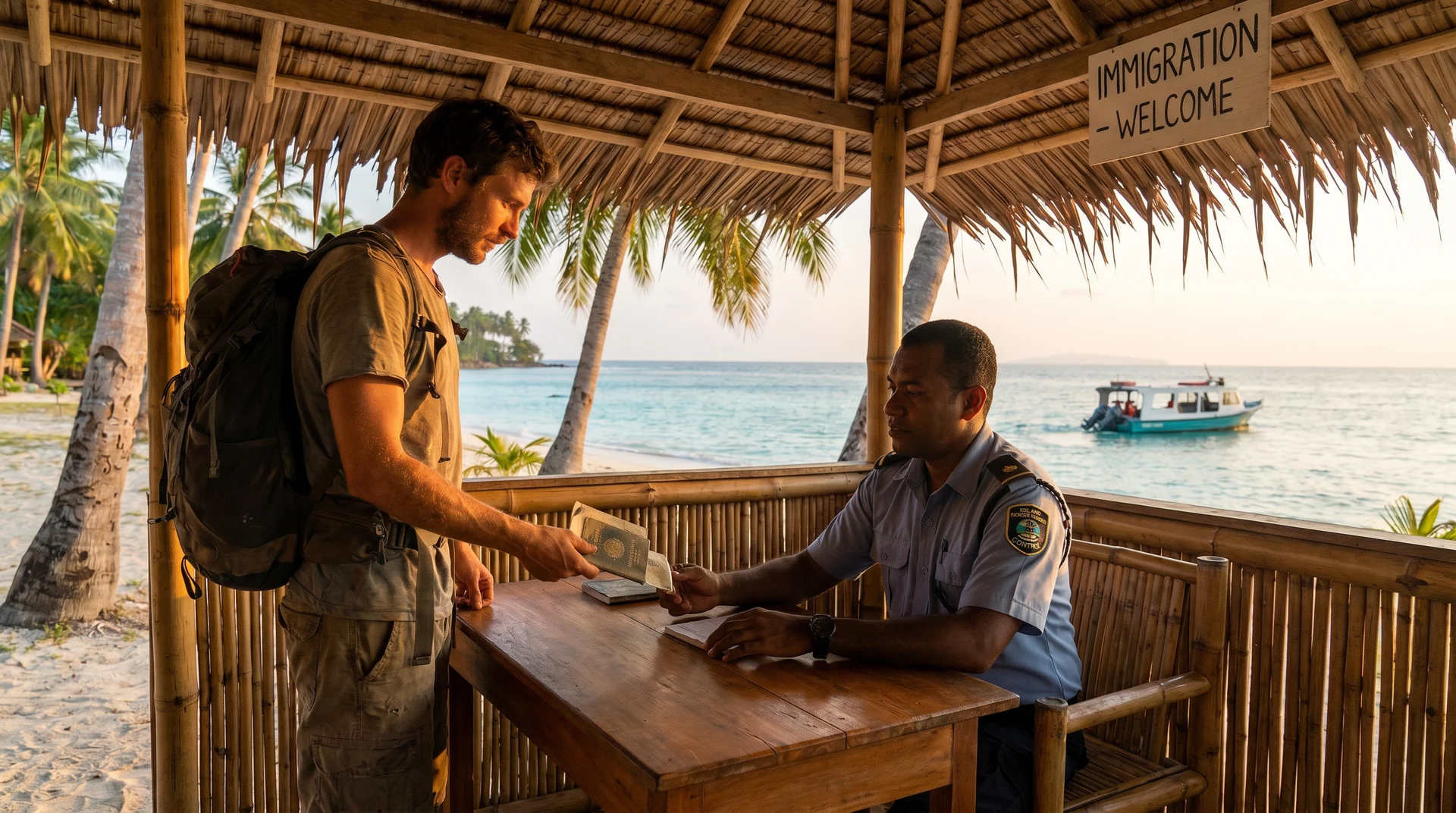
The Tuvaluan immigration framework operates on a fairly open but highly regulated system. Most travelers receive a visa on arrival valid for a maximum of one month at AUD 100. The entire clearance process takes place at the Funafuti port of entry. Before booking your flight, review the best time to visit Tuvalu to align your entry dates with the dry season.
Free visa on arrival (AUD 0) applies to citizens of 30+ countries, including the UK, Fiji, Samoa, Tonga, Hong Kong, Malaysia, Maldives, Mauritius, and South Korea. These nationals receive the same one-month entry permit without paying the standard fee.
Schengen Area passport holders (all EU states except Ireland, plus Iceland, Liechtenstein, Norway, and Switzerland) enjoy a formal visa waiver allowing a stay of up to 90 days within any 180-day period, with no entry fee. Taiwanese citizens hold a similar waiver for a 90-day stay.
Visiting for research, business, or employment completely changes your border classification. Tourism visas do not cover these activities. You must secure a specific entry and residential permit, backed by a formal sponsor or signed employment letter, before landing.
The Cash-Only Border Reality
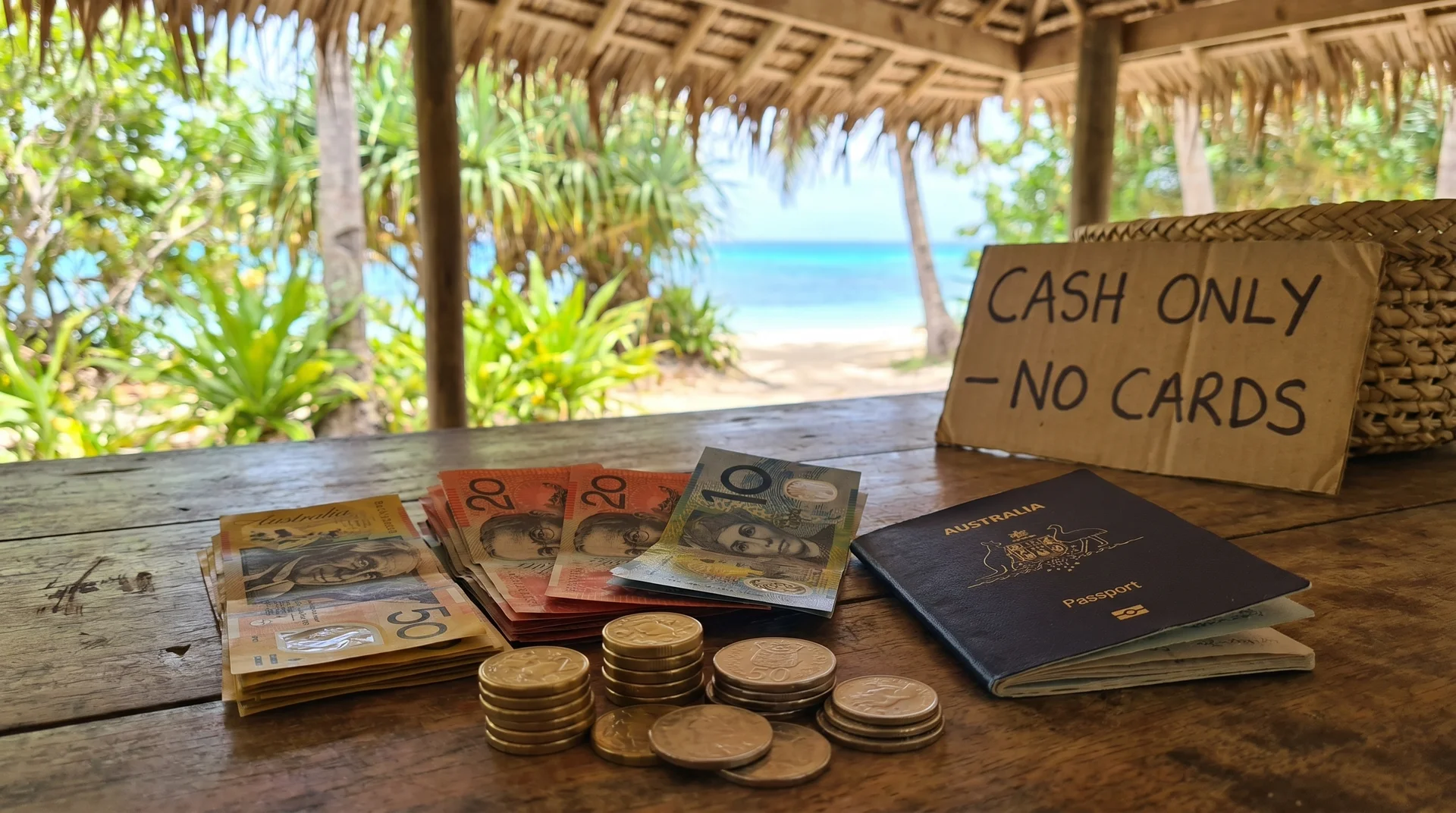
Tuvalu operates as a strict cash economy using the Australian Dollar alongside local Tuvaluan coins. There are absolutely no ATMs, credit card machines, or digital payment gateways available anywhere on the islands.
You pay your AUD 100 entry permit fee in cash immediately upon arrival. Carrying a solid reserve of physical AUD in small denominations is mandatory before boarding your inbound flight.
Failing to bring enough cash leaves you stranded at the immigration desk. Exchange your foreign currency back in Fiji or your home country, as local exchange options remain severely limited once you land.
Funafuti Airport Logistics and the Runway Siren
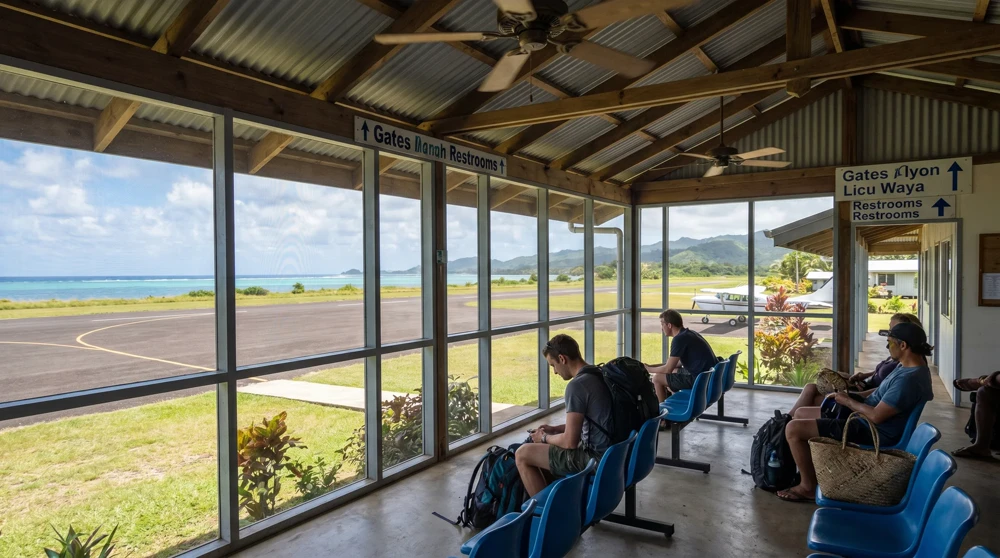
Funafuti International Airport utilizes highly unconventional infrastructure. The main runway occupies a massive portion of the island and doubles as a local public road and recreational space during non-flight hours.
When your flight approaches, loud sirens echo across the atoll. This is not an emergency. The sirens simply warn pedestrians and motorcyclists to clear the tarmac so the aircraft can land safely.
Once on the ground, expect an unhurried disembarkation process. The terminal is small, the air humid, the pace decidedly Pacific. Keep your physical documents in hand to bypass the slower queues.
Border Medical and Biosecurity Regulations
Protecting the local population from foreign viruses dictates Tuvalu's medical checks. Immigration officers may request necessary medical examinations or proof of specific medications depending on regional health alerts.
While the island has no malaria or dangerous wildlife, mosquitoes remain highly active. Packing strong repellents and reviewing standard travel tips for tropical environments helps manage the insect situation effectively.
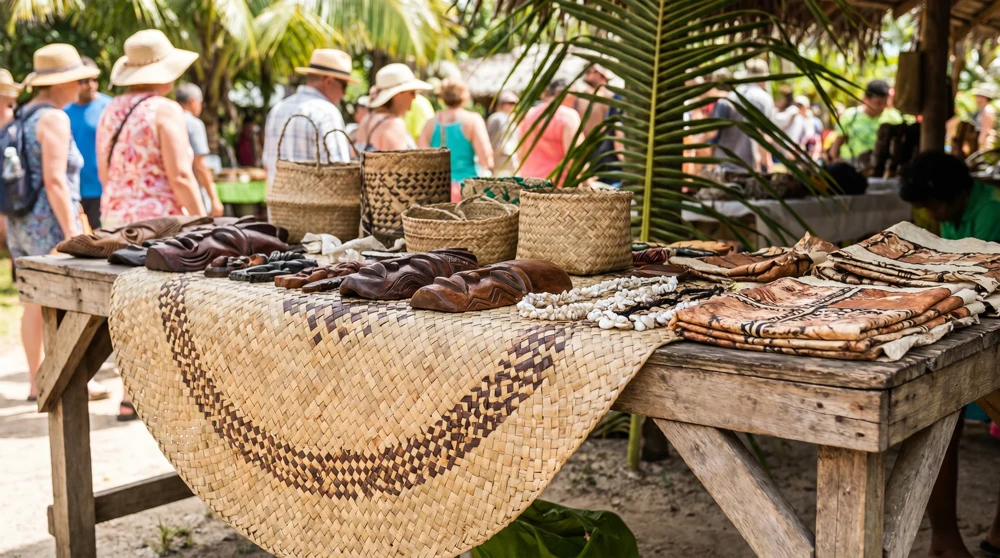
Leaving the country presents its own biosecurity challenge. If you purchase local wooden crafts from the Handicraft Center and your onward flight routes through Australia or New Zealand, ask the vendors for a formal Certificate of Authorization. Without this document, foreign customs agents will impound your souvenirs permanently.
Health and Medical Preparation
Tuvalu has a single functioning hospital, the Princess Margaret Hospital in Funafuti, with severely limited capacity. For serious injuries or illness, medical evacuation to Fiji or New Zealand is the only realistic option.
Comprehensive travel insurance with medical evacuation cover is non-negotiable. Standard policies often exclude remote Pacific nations or cap evacuation costs. Read the fine print before purchasing.
Vaccination recommendations (consult your travel doctor before departure):
- Hepatitis A and B: strongly recommended
- Typhoid: recommended
- Tetanus and diphtheria: update if overdue
- Malaria: no risk in Tuvalu
Dengue fever is present year-round but peaks during the wet season (November to April). DEET-based repellents and long sleeves in the evenings reduce exposure. There is no vaccine available.
Bring a well-stocked medical kit. Pharmacies in Funafuti carry limited inventory, and the outer islands have only basic clinic supplies. Pack prescription medications, broad-spectrum antibiotics, rehydration salts, and wound care supplies for any outer island travel.
Local Governance and Border Extensions
Staying beyond your initial visa allocation requires a formal extension from the Department of Immigration in Funafuti. Apply well before your current stamp expires. Extensions cost approximately AUD 50 and can extend your stay up to three months total.
The immigration officer holds full discretion over granting extra weeks or months. Overstaying your permitted time triggers heavy border fines and complicates any future travel back to the region.
Beyond the paperwork, border authorities expect travelers to respect local Christian customs. Most businesses shut down entirely on Sundays - a pattern that also affects your accommodation options, which you can explore in the where to stay in Tuvalu guide. Dressing modestly in public spaces, including the beaches, ensures a frictionless relationship with the local community. For context on Tuvalu travel costs including the visa fee and daily cash requirements, that guide covers every expense you will face from arrival.