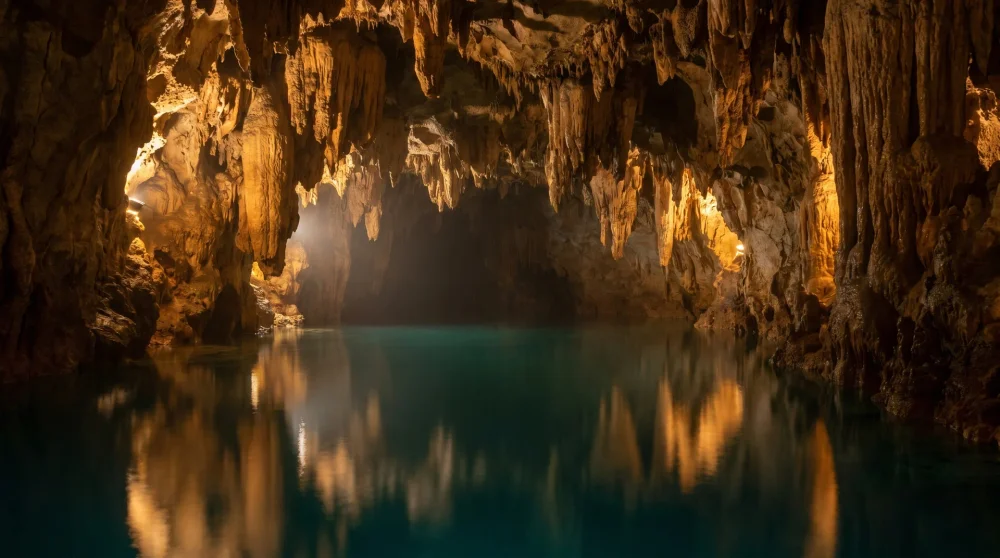
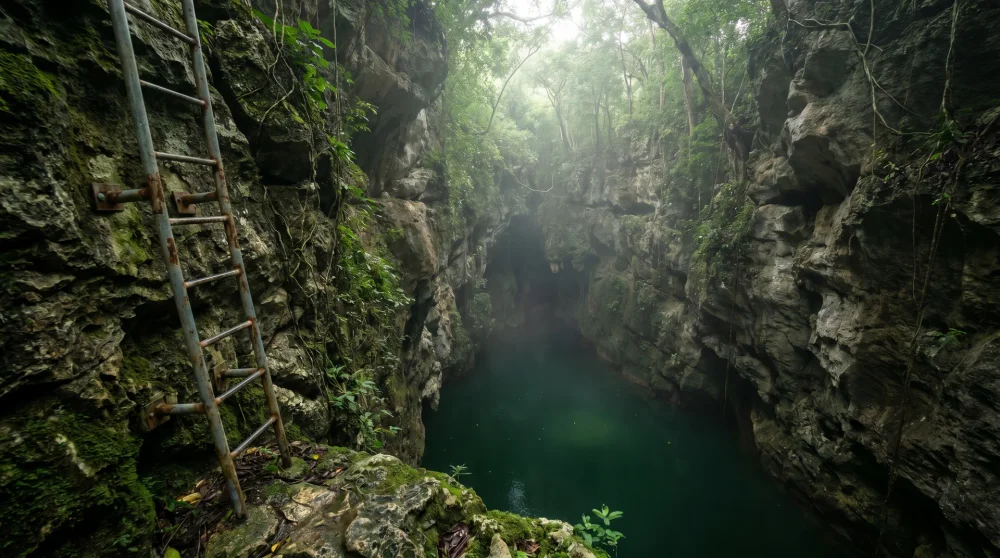
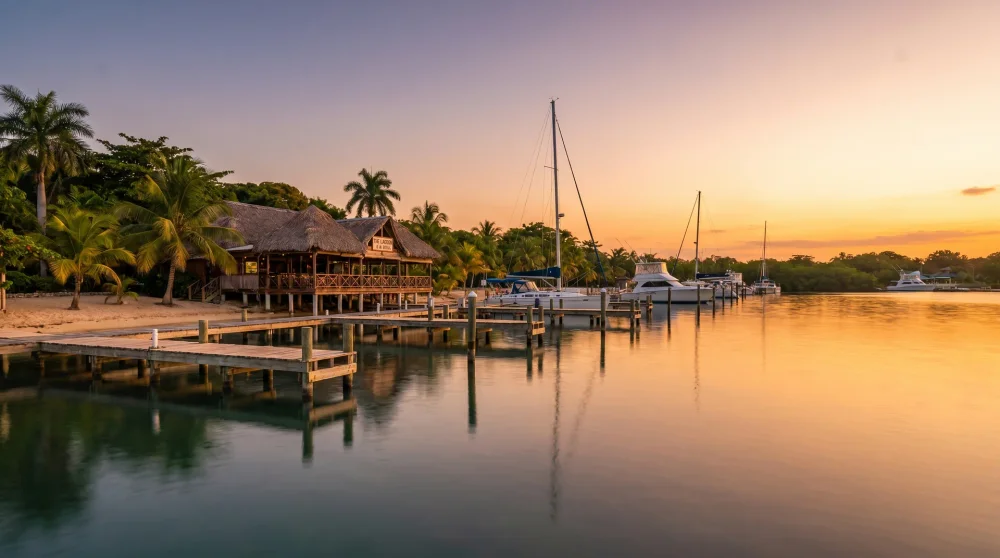
Jamaica sits on the edge of the Cayman Trench, giving its reefs an unusually dramatic structure, shallow coral gardens that plunge into deep walls just minutes from shore.
Whether you are planning your first snorkel session or your hundredth dive, the island offers distinct underwater environments across each region, from the calm bays of the northwest to the quieter, crowd-free east. This guide breaks down the best spots by area so you can pick the right site for your skill level and budget.
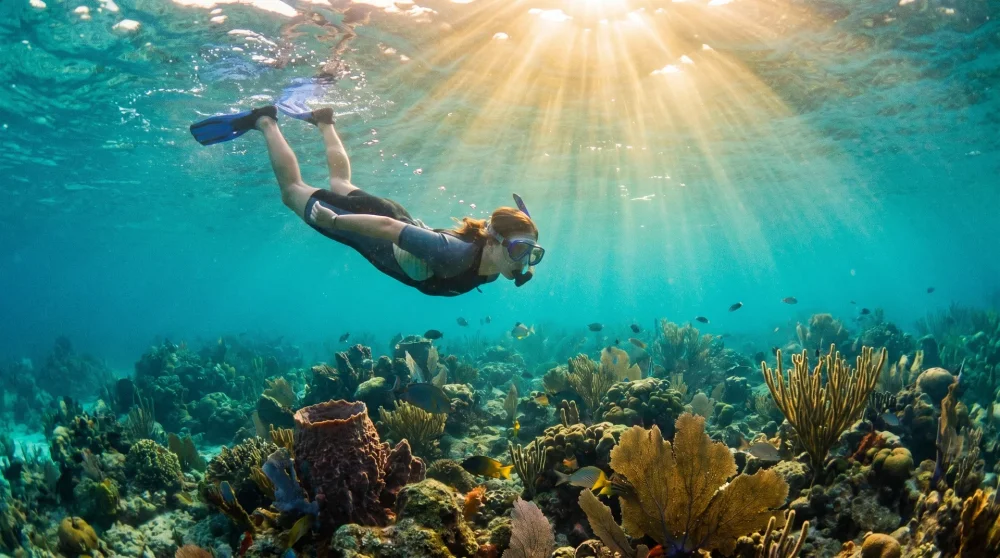
Negril: Shallow Caverns and High Visibility
The western tip of the island serves as the primary hub for calm, clear water and fascinating underwater structures. Because the area sits near the edge of the Cayman Trench, the reefs benefit from nutrient-rich currents that improve clarity and support diverse marine life. Visibility here regularly reaches 70 to 100 feet (21 to 30 meters), and water temperatures stay between 81°F and 84°F (27°C - 29°C) year-round.
The Throne Room remains the standout site for both divers and adventurous snorkelers. It features a cavern at 40 to 70 feet (12 to 21 meters) depth, where massive elephant-ear sponges create a landscape that resembles an underwater hall. Giant moray eels, stingrays, turtles, octopus, and shrimp are common sightings.
For beginners, the wide entry points and relatively shallow main chamber make it accessible with a certified guide. Advanced divers can push deeper toward exit windows at 70 feet, where nurse sharks occasionally cruise below. Snorkelers who cannot enter the cavern itself still find rich rewards on the outer reef ledges.
Seven Mile Beach offers some of the most accessible shore snorkeling on the island. The Negril Coral Reef lies roughly 300 feet from shore, reachable with a short swim. Trumpetfish, yellow grunts, sea stars, and conch appear regularly. Bloody Bay, connected to Seven Mile Beach, has reef accessible directly from the beach - no boat needed - where rays, wrasses, crabs, and sea stars are frequently spotted.
For those wanting to explore a small island ecosystem, Booby Cay sits just offshore and is accessible by kayak or paddleboard. Multi-hour trips typically include snorkel equipment and lunch, running 2 to 4 hours with multiple fish species visible around the cay's rocky edges.
Montego Bay: Protected Marine Parks
The establishing of marine protected areas here has allowed the local ecosystems to recover significantly from historical overfishing. Montego Bay Marine Park covers approximately six square miles of protected water, encompassing several beaches and the surrounding reefs. You find some of the island's most unique geological formations here, including arches and tunnels connecting different reef sections.
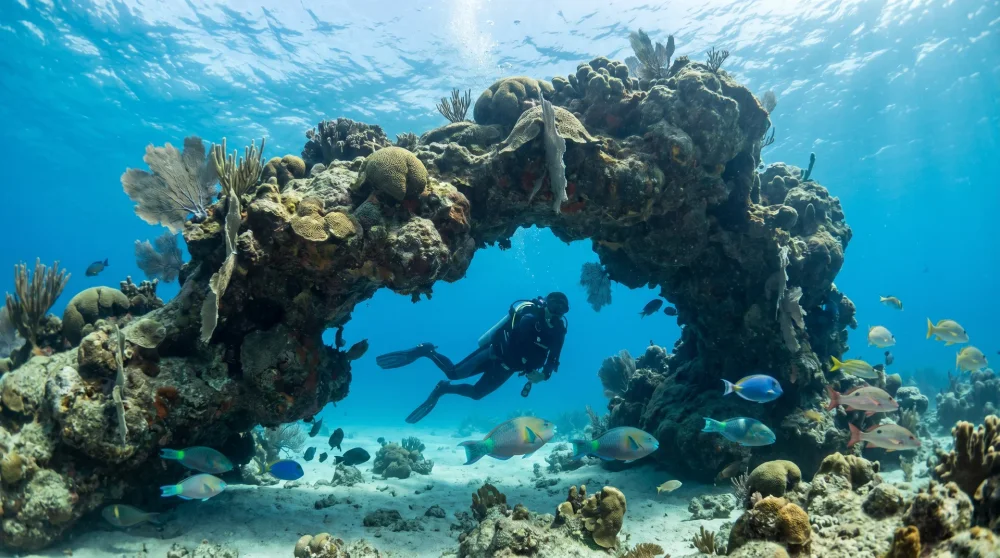
Widowmaker's Cave offers a more technical experience for advanced divers, featuring a vertical chimney that descends from 35 feet down to 80 feet (11 to 24 meters). Black coral and soft corals line the interior. If you prefer more relaxed encounters, the shallow bay areas provide frequent sightings of stingrays, eagle rays, and schools of colorful reef fish including parrotfish and butterflyfish.
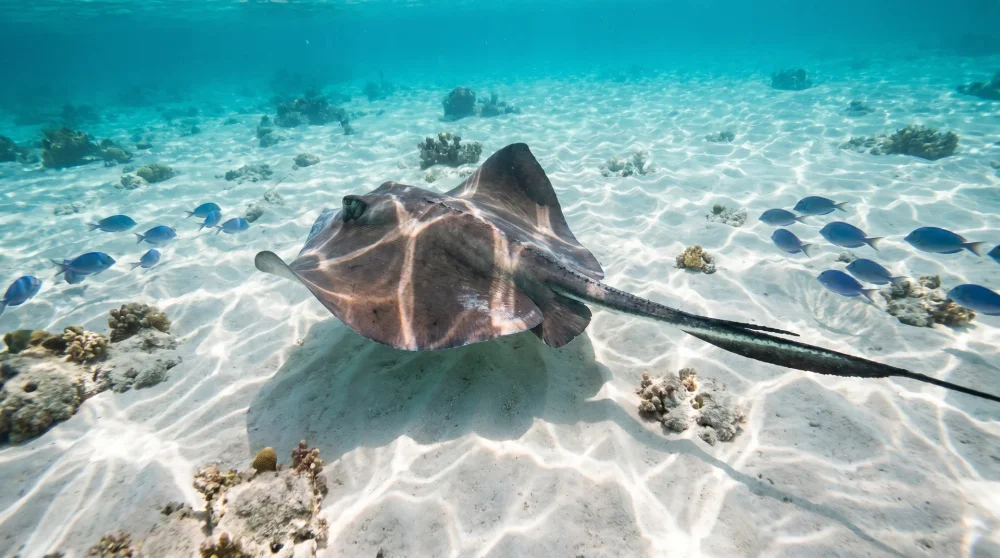
Doctor's Cave Beach is one of the most beginner-friendly entry points on the island. The entry fee is USD 6 per person and the calm, clear water is ideal for snorkelers of all ages. Blue tangs, grunt fish, and butterflyfish swim right up to visitors. The beach sits close to the marine park boundary, meaning the diversity of species here rivals more remote sites.
Coyaba Reef sits about 20 minutes by boat from the cruise port and hosts wrasse, parrotfish, butterflyfish, chromis, and octopus. Note that strong currents can develop here, so this site is better suited to capable swimmers and confident snorkelers.
Marley's Garden, at roughly 40 feet depth, features elkhorn corals and sea fans with sergeant majors and squirrelfish. Scuba divers get more out of this site than snorkelers given the depth.
Runaway Bay, located between Montego Bay and Ocho Rios, provides easy shore access with sea urchins, tropical fish, kidney coral, and brain coral visible immediately offshore. Runaway Bay Wall is accessible by boat for those wanting a dramatic drop-off experience.
Ocho Rios: Wrecks and Vertical Ridges
The coastline here is defined by shallow reefs that eventually give way to dramatic drop-offs, making it a versatile choice for mixed-skill groups. The underwater environment is lush, with staghorn corals and blackball sponges lining the ridges.
The SS Kathryn is the most prominent wreck in the area, a former mine-sweeper sunk deliberately to create an artificial reef. It sits at 20 to 50 feet (6 to 15 meters), with the upper structures shallow enough for snorkelers to observe from above. The hull is now completely covered in coral, and schools of snapper, sergeant majors, hamlets, and nurse sharks inhabit the structure. Sea snakes, lobsters, and moray eels have also been documented inside the wreck.
Devil's Reef sits just 3 to 4 minutes by boat from shore and descends to 65 to 130 feet. This is a site primarily for scuba divers, where snapper, grouper, jackfish, barracuda, turtles, and nurse sharks are commonly observed. Ocho Rios Bay Beach is accessible on foot from the cruise terminal and has a reef reachable by a short boat ride - a convenient option for cruise passengers with limited time.
For those combining diving with a wider trip, the [getting-around-jamaica|transport guide for Jamaica] covers the most efficient routes between Ocho Rios, Negril, and Montego Bay.
Port Antonio and Kingston: The Secluded East
Escaping the primary tourist corridors leads to the eastern end of the island, where the diving is dominated by long, varied sections of healthy reef and significantly fewer crowds. Port Antonio remains a quiet alternative for those who want to explore underwater without the congestion common in the western regions.
Alligator Reef, accessible from Port Antonio, features five distinct sections catering to different skill levels - from shallow snorkel gardens to deeper wall sections. Oyster Bay sits within eight miles of interconnected reefs where parrotfish, grunt, and angelfish populate the calm waters, making it ideal for beginners.
Near the capital, the sunken city of Port Royal offers a rare historical perspective. An earthquake in 1692 forced this once-prosperous city underwater, and today the ruins are integrated into the coral systems. Access to the actual ruins requires a structured guided tour and is more controlled than standard dive sites, but the surrounding Port Royal Cays provide excellent reef and wreck diving accessible to all levels. Wrecks here lie at approximately 50 feet, visible to snorkelers above.
South Coast: Off the Beaten Track
Bluefields Beach on the south coast is one of Jamaica's least-visited snorkel destinations. The entry is pebbly but transitions quickly to smooth, calm water where turtles, occasional manatees, and dolphins have been spotted alongside coral reefs and tropical fish. Moor Reef just offshore is reachable by short boat trip and extends the experience for those wanting more depth.
This stretch of coast pairs well with the [treasure-beach-jamaica|Treasure Beach south coast experience], with both sites combinable in a single day.
Unique Experiences: Luminous Lagoon
Luminous Lagoon in Falmouth is not a typical snorkeling destination but deserves mention as one of the most unusual aquatic experiences in Jamaica. Millions of bioluminescent dinoflagellates create a glowing bluish light when the water is disturbed after dark. Guided catamaran tours typically depart in the evening from Falmouth, which is about 40 minutes east of Montego Bay. There are few comparable sites in the world, and the experience requires no diving skills.
Practical Planning: Conditions, Safety, and What to Bring
The best conditions for both diving and snorkeling typically occur when the surface is calmest, allowing sunlight to penetrate deep into the water column. June through October typically offers the calmest surface conditions and the clearest water, with visibility peaking during these months. While this period overlaps with the wider hurricane season, major storms are historically less frequent during these specific months. For seasonal context, check the [best-time-to-visit-jamaica|best time to visit Jamaica] guide.
The consistent 81°F to 84°F (27°C - 29°C) water temperature means a thin 3mm wetsuit or a rash guard is sufficient for most divers. Snorkelers typically need only a rash guard for sun protection. Reputable rental shops are found in every major dive hub.
The proximity of Jamaica's reefs to the shore means most boat journeys run under 20 minutes. Several of the best sites are shore-accessible with no boat needed. Professional PADI-certified centers operate across Negril, Montego Bay, and Ocho Rios, with safety briefings covering emergency procedures, coast guard contacts, and site-specific hazards.
The PADI Discover Scuba program begins with a controlled pool session before moving to shallow, current-free reefs - suitable for children and first-timers alike. For independent travelers, Pre-booking a diving or snorkeling excursion helps secure spots at popular sites like the Throne Room and SS Kathryn, which fill quickly during peak season. Renting a car gives you flexibility to reach less-visited sites like Bluefields and Port Antonio - see the [jamaica-travel-costs|Jamaica travel costs breakdown] for budget planning.