Navigating 65 steep, uneven steps down to the underground lake in a pair of flip-flops is a guaranteed way to ruin your Jamaican excursion. The humidity is intense, and the limestone paths demand proper footwear. Sneakers and strong mosquito repellent turn a potentially uncomfortable trek into a seamless journey through one of Jamaica's most historically layered natural wonders.
Green Grotto Caves sits in Discovery Bay, St. Ann Parish, roughly 30 minutes from Ocho Rios and 40 minutes from Montego Bay, making it a natural midpoint stop on the north coast highway. The cave system stretches 1,525 meters in length and drops to around 12 meters deep, incorporating two distinct sections: Runaway Cave and the deeper Green Grotto Cave itself.
The Fascinating History: Tainos, Pirates, and James Bond
The cave system stretches far beyond a simple geological formation. The indigenous Taino people initially used these chambers for shelter long before European contact. Later, Spaniards fleeing the British invasion and runaway enslaved people seeking refuge navigated these exact same dark corridors. The cavern walls carry centuries of layered survival.
During World War II, the Jamaican government and smugglers utilized the space to store large barrels of rum safely underground. The cave's isolation and consistent cool temperatures made it ideal for that purpose.
Pop culture left its own distinct mark here. The subterranean lake served as the villain's underground lair in the 1973 James Bond film Live and Let Die, where Roger Moore and Jane Seymour's characters were suspended above a shark-infested lake. Fans of the franchise will recognize the jagged limestone backdrop immediately upon reaching the deepest accessible section. The remnants of an old nightclub, from a brief stint when a private entrepreneur attempted to operate a venue inside the cave, remain visible in certain sections today.
What to Expect on the Underground Tour
Tours operate in staggered groups, departing at regular intervals to minimize human noise impact on the delicate cave ecosystem. Guides balance geological facts with cultural history and local patois explanations, occasionally switching off the artificial lights entirely to demonstrate the absolute pitch-black reality of the deeper chambers. Most visitors find this the most memorable moment of the experience.
A guided walk is mandatory for all visitors. Navigating the limestone labyrinth of stalagmites and stalactites independently is strictly prohibited for safety and preservation reasons. Tours run continuously during opening hours, so walk-in visitors rarely wait long outside peak cruise ship season.
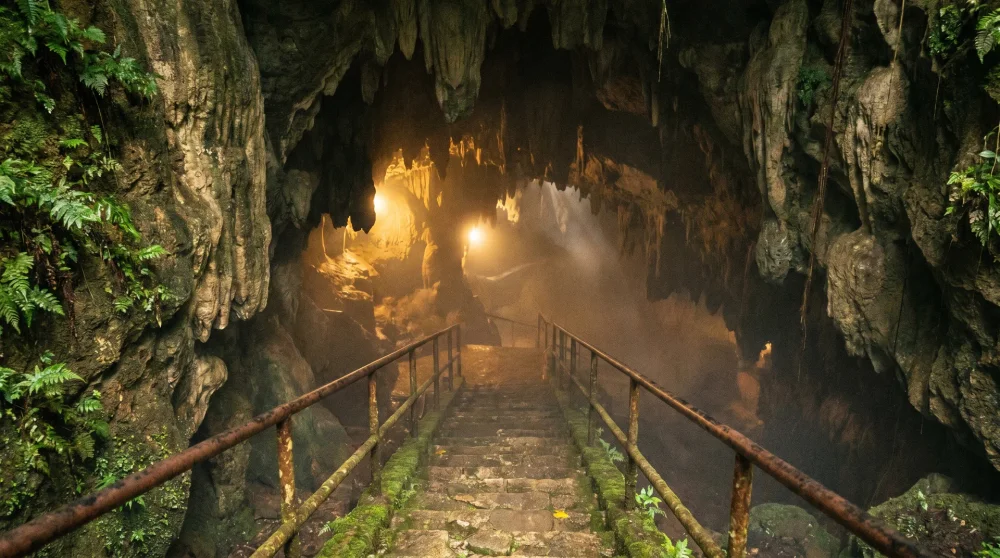
The tour involves approximately 2,500 steps total across the full route, plus the well-known 65-step descent to reach the grotto. Handrails are in place throughout, and wet sections are covered with non-slip mats. Guides maintain a manageable pace, and the overall physical demand is moderate rather than strenuous for most visitors.
An optional limbo crawl is offered at one point during the tour. It is not mandatory, and guides make this clear to older visitors and those with back issues.
At the end of the tour, complimentary punch is provided alongside a gift shop and clean restrooms on site.
The 65 Steps to the Underground Lake
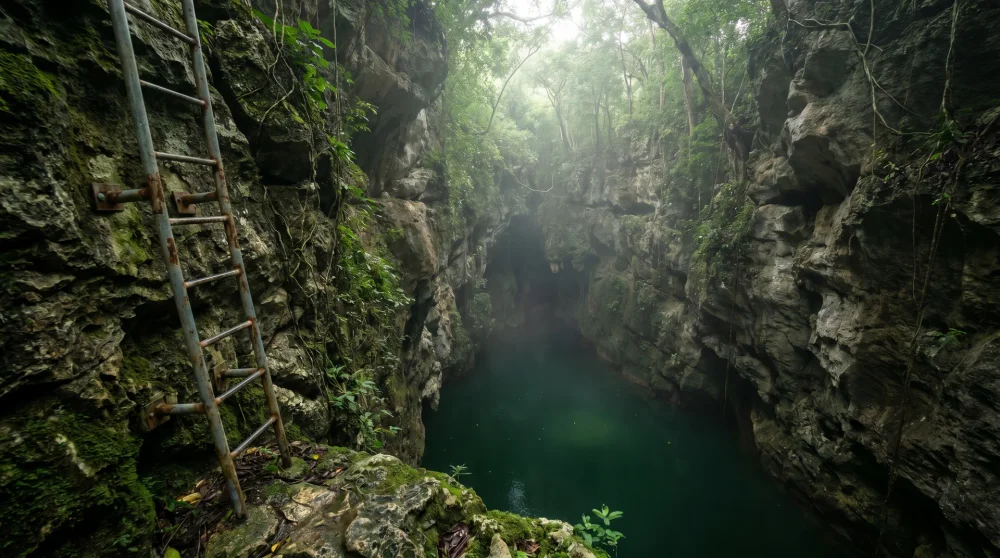
The highlight of the descent is the crystal-clear subterranean lake hidden at the deepest point of the accessible system, approximately 49 feet (15 meters) below the surface. Reaching this spot requires navigating exactly 65 steep steps into the belly of the cave.
The water is perfectly still, acting like a flawless mirror reflecting the jagged rock formations of the ceiling above. The lake sits about 19 feet deep, and visibility through the clear water reveals rock formations below the surface. Guides report that fish and small prawns inhabit the lake, though they are rarely visible from the viewing platform.
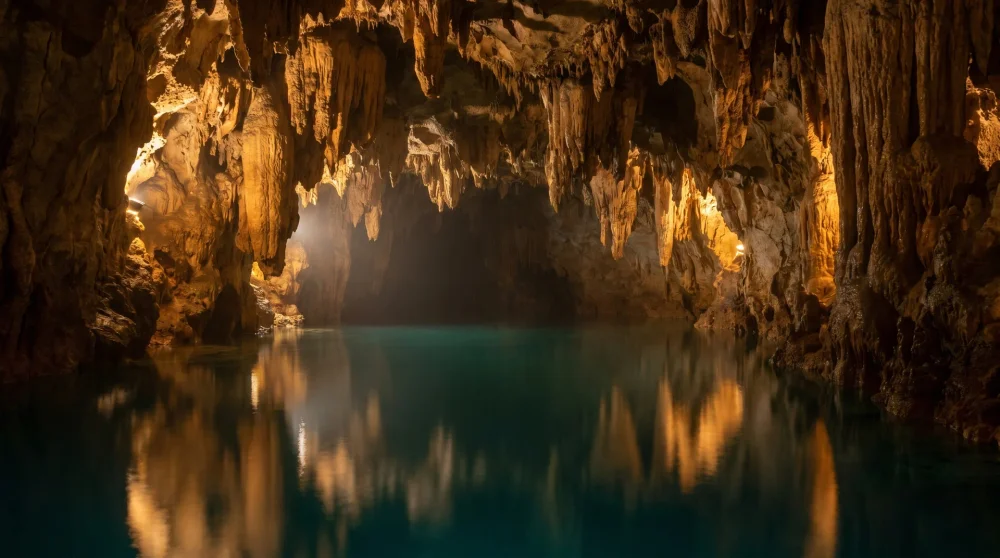
Boat tours on the lake are no longer operational due to safety protocol changes. The viewing platform remains unobstructed and visually striking. Keep in mind that climbing back up those 65 steps requires a moderate level of physical exertion, particularly in the heat and humidity.
No photography is permitted inside the caves, which catches some visitors off guard. Leave the camera in the bag before descending.
Bats, Swallows, and Cave Wildlife
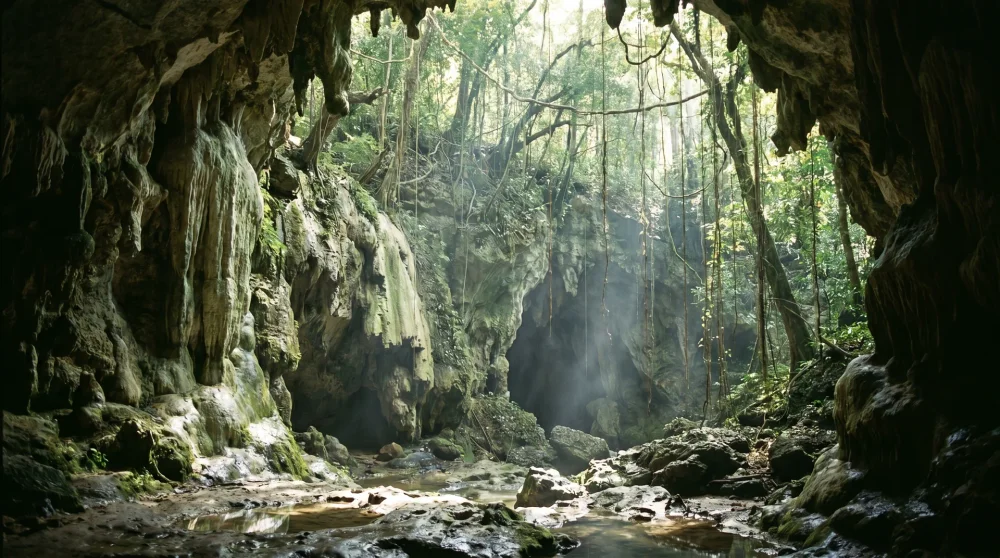
Wildlife thrives within this massive subterranean network. Swallows dart constantly around the main entrance, using the natural light filtering through the overgrown canopy outside.
Deeper inside, large colonies of bats cluster on the ceiling. The air carries the distinct, sharp scent of their droppings. Keep your mouth closed when looking upward. The bats are harmless and stay high above the walking paths, but they are a very real, active part of the cave ecosystem rather than a sanitized tourist attraction.
The algae covering sections of the cave walls give the site its name. The green tint is most visible near natural light sources close to the entrance, fading to grey as you descend into the deeper artificially lit sections.
Practical Tips for Your Visit
The environment underground differs dramatically from the breezy Jamaican coastline just down the road. A little preparation prevents minor annoyances from overshadowing the spectacular geology.
What to Wear: Sneakers vs. Sandals
Leave the beach sandals at your hotel. The terrain fluctuates constantly between smooth, damp limestone and uneven dirt paths. Sturdy sneakers with good grip are essential for slippery sections and steep staircases. Open-toed shoes leave feet highly vulnerable to insect bites and accidental scrapes against jagged lower rocks.
Lightweight, breathable clothing is smart. Avoid heavy backpacks or large bags. The narrow passageways and physical exertion make bulky items a serious burden. A light layer for the slightly cooler underground sections is worth packing if you run cold, though the cave temperature ultimately reflects outdoor conditions rather than being climate-controlled.
Dealing with Humidity and Mosquitoes
The cave environment is hot, stagnant, and extremely humid. The slightly cooler air at the entrance quickly gives way to heavy, tropical dampness as you descend further underground.
Mosquitoes treat the damp, dark corners of the cave as a prime breeding ground. Applying strong DEET-based insect repellent before entering is absolutely critical. Drinking water before the tour begins helps counteract the sweating you will experience during the 45 to 60-minute walk.
Timing Your Visit
Sunday visits are consistently recommended by frequent visitors for avoiding the worst crowds. The largest crowds arrive with cruise ships docking at nearby ports. If you are road-tripping between Ocho Rios and Montego Bay, you can read more about Jamaica cruise ports to understand when the major wave of day visitors arrives.
Morning arrivals between 9:00 AM and 11:00 AM tend to be cooler and less crowded than afternoon visits. Groups of 40 or more reportedly diminish the experience, so arriving before or after large tour buses is worth considering. Booking in advance during peak season secures your spot and reduces entrance wait time.
How to Get to Discovery Bay
The site sits directly off the A1 highway on Jamaica's north coast, providing a logical stop when traveling between Ocho Rios and Montego Bay. The entrance is approximately 3.2 km west of Discovery Bay town center.
Free parking is available on-site near the entrance gates. Rental car drivers find access straightforward from either direction on the A1. Coordinating with a local driver or booking a dedicated excursion transport is worth considering if you plan to combine this visit with nearby outdoor attractions like Dunn's River Falls or bamboo rafting on the Martha Brae.
For those building a full north coast day around natural attractions, the guide to the best waterfalls in Jamaica covers which sites pair most logistically with Green Grotto Caves given their shared St. Ann parish location.
The Right Visitor for Green Grotto Caves
For history enthusiasts and travelers seeking something beyond beach experiences, the answer is clearly yes. The combination of Taino history, colonial-era refuge stories, WWII rum storage lore, and the James Bond filming location creates a layered narrative that most cave tours simply do not offer.
The geology alone - the stalactites, stalagmites, ceiling pockets, and that perfectly still underground lake - rewards the effort of the descent. Children over four with decent mobility tend to find the experience genuinely exciting rather than merely educational.
The US$20 USD adult admission is reasonable for the guided experience provided. The mandatory guide format, despite feeling restrictive to some independent travelers, genuinely improves the visit. Historical and ecological context transforms what could be a simple geology walk into a proper window into Jamaican history.
Those building a broader Jamaica itinerary should read the 7-day Jamaica itinerary for context on how Green Grotto Caves fits into a full north coast day.