Jumping into pitch-black water while a microorganism-lit blue glow ripples off your arms sounds like science fiction. The Luminous Lagoon in Falmouth makes it real, and it is one of only four bioluminescent bays in the world where swimming is actually permitted. What most visitors do not know before showing up is that the muddy lagoon bottom, the moon phase on the night of their visit, and the difference between booking direct versus through a resort shuttle can dramatically change the experience.
What Makes the Luminous Lagoon Glow
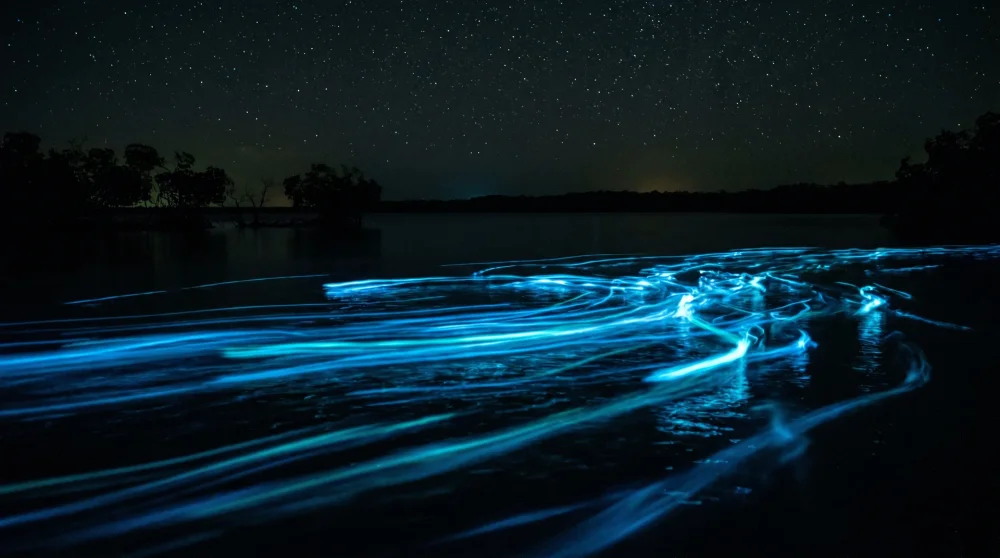
The blue light comes from dinoflagellates, microscopic single-celled organisms that produce light when agitated. The lagoon sits at the mouth of the Martha Brae River, where freshwater mixes with the salty Caribbean Sea. This unique chemistry creates ideal conditions for dinoflagellate populations to thrive in unusually high densities, which is why the Luminous Lagoon consistently ranks as one of the brightest bioluminescent bays in the world.
Every splash, every kick, every fish darting through the water disrupts these organisms and triggers their chemical light response. The more you move, the brighter you glow. Floating perfectly still, you will see almost nothing. Swing your arm in an arc and it leaves a trail like a blue comet.
The phenomenon is entirely natural and has been documented here for centuries. The lagoon also goes by the name Glistening Waters, which is the name of the marina and restaurant complex that operates the primary tour service.
How the Boat Tour Works
Tours depart nightly from the Glistening Waters marina on the northern coast in Trelawny Parish. The operation begins on land, often with a fire show or limbo performance while waiting for full darkness, since the dinoflagellates need complete darkness to be visible. The show usually starts around 7 PM but exact timing shifts with sunset.
Once darkness falls, groups board flat-bottomed boats that hold up to 30 passengers. The ride out into the bay takes only a few minutes. Your guide explains the science, points out glowing fish wakes beneath the hull, and then the boat stops in the swimming zone.
Tour duration on the water: approximately 45 to 60 minutes. That is enough time for the boat ride, a swim, and the return. Budget an additional 30 to 45 minutes for the entertainment and waiting period before boarding.
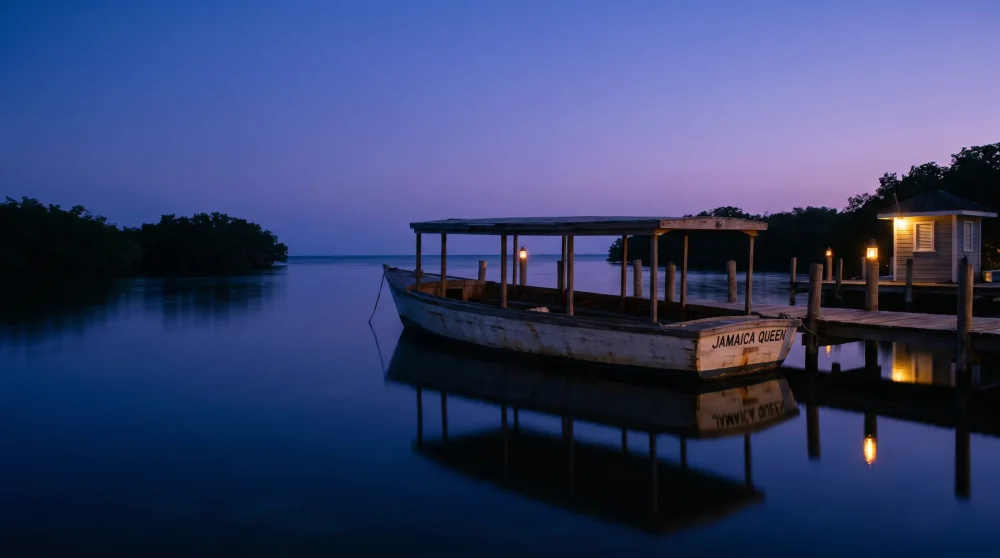
Swimming in the Bioluminescent Bay
This is the part most visitors remember longest. Stepping off the boat into dark water requires a moment of nerve, but the payoff is immediate. Every movement of your hands and legs traces glowing blue lines, and cupping the water and letting it fall through your fingers looks like pouring liquid light.
The lagoon is shallow enough to stand in most areas, ranging from 4 to 6 feet deep. Life jackets are provided for anyone who wants one, and guides stay in the water with the group.
The Muddy Bottom Reality
The floor of the bay is covered in a thick, soft silt that feels like cold pudding. Stepping barefoot into it means your feet sink several inches into the muck, which many visitors find deeply unsettling in pitch darkness. Wear water shoes. This is not optional advice. They prevent the sinking sensation, protect your feet from the squishy texture, and reduce the risk of kicking up clouds of silt that cloud the water and dim the glow around you.
For the same reason, use a gentle breaststroke rather than a hard flutter kick when swimming. Aggressive kicking churns the bottom sediment and reduces visibility for everyone nearby.
Temperature and Cold Pockets
The water generally feels warm, but you will hit distinct pockets of cold water without warning. This happens where the cooler freshwater from the Martha Brae River flows into the warmer saltwater bay. The temperature contrast is sharp enough to make you gasp the first time, but it passes within a few strokes.
Jellyfish
Jellyfish do occasionally appear in the lagoon, and a small number of visitors report stings. They are not a regular hazard, but they are present in the water at times. Ask your guide on the night of your visit whether any have been spotted. Most tours proceed regardless, but knowing what to watch for is useful.
Photography at the Luminous Lagoon
Standard smartphone cameras will produce a completely black image. The faint blue bioluminescent light is invisible to a phone camera's auto sensor. Even phones marketed for low-light photography struggle here because they are not designed for long-exposure capture in near-total darkness.
The Glistening Waters tour boats carry a professional photographer with a DSLR configured for long-exposure shots. They guide you on how to pose and splash to maximize the glowing effect, and they transfer the files to your phone after the tour. The onboard photo service is the only reliable way to get clear images of the glow. Budget for this service if photos matter to you.
If you bring your own camera, use manual mode, set ISO to 1600 or higher, and shoot with exposures of 10 to 30 seconds. You will need something stable, which is nearly impossible on a floating platform. Flash is strictly prohibited and ruins the experience for everyone by destroying dark-adapted vision.
Best Time to See the Brightest Glow
Moon Phase Matters More Than Season
The single most important factor in the brightness of the glow is moonlight. A full moon creates enough ambient light to wash out the faint blue bioluminescence almost completely. Check a moon phase calendar before booking and aim for a window within five days of the new moon. Clear skies with no moon produce the most dramatic experience.
A light drizzle during the tour is actually a beautiful bonus, as each raindrop hitting the surface creates its own pinpoint of blue light. Heavy rain during the day can temporarily reduce the dinoflagellate activity, though this effect is usually temporary.
Season and Timing
The Luminous Lagoon runs tours year-round and the dinoflagellates are present in every month. The dry season from mid-December through mid-April brings clearer skies and more consistently calm nights. Book at least a week in advance during peak season (December through April and July through August) as spots fill early.
Tours begin nightly at sunset. Arrive early enough to enjoy the restaurant or bar at Glistening Waters while waiting for full darkness.
Ticket Prices and How to Book
Direct tickets purchased at the Glistening Waters marina cost US$25 for adults and US$12.50 for children under 10. This is the cheapest way to go if you have your own transport.
Tour operators that include hotel pickup from Montego Bay or Falmouth charge considerably more, considerably more per person depending on your departure point and how many people are in your group. Resort shuttles and cruise excursion packages sit at the higher end of that range. For independent travelers already in Falmouth, booking direct makes the most financial sense.
Browse Luminous Lagoon tours to compare departure points and inclusions before committing.
Getting to the Luminous Lagoon from Montego Bay and Ocho Rios
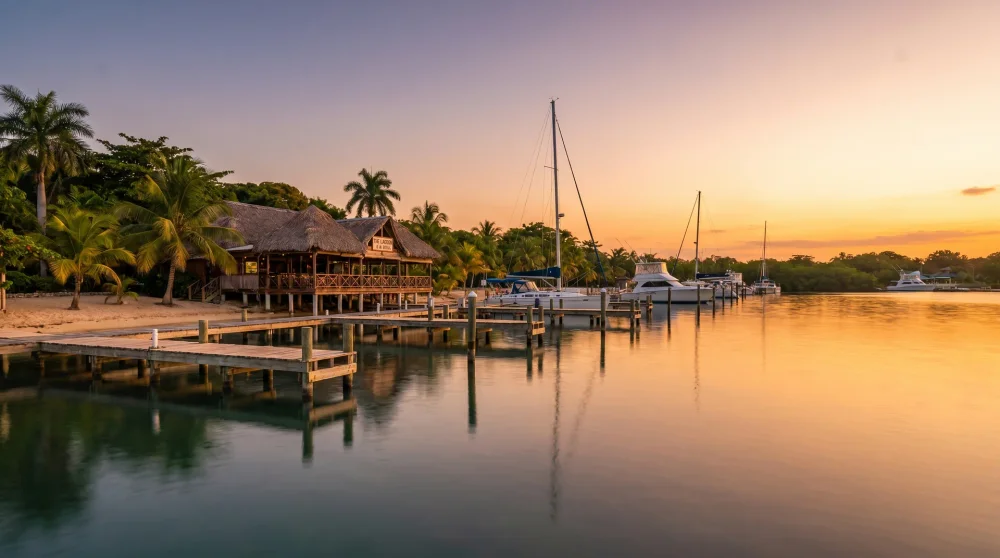
The marina sits on the A1 highway on the northern coast in Trelawny Parish. From Montego Bay, the drive takes roughly 30 minutes, making it a viable evening trip even if you are only in Montego Bay for one night.
From Ocho Rios, the drive is just over an hour, and the Luminous Lagoon is worth building into a day that includes stops along the northern coast. If you are visiting as part of a Jamaica cruise, Falmouth has its own cruise port, and the lagoon is one of the closest major attractions to the pier.
If you plan to drive yourself, book a route taxi or rent a car for the trip out. The roads back to Montego Bay after dark are unlit and unfamiliar, which makes the drive back uncomfortable for first-time visitors. A pre-arranged return transfer is the safest option. You can compare getting around Jamaica options, including route taxis and car rentals, to decide what works for your itinerary.
The Falmouth area also connects to other north coast stops. If you are combining with other Falmouth-based activities or arriving on a cruise ship, the Jamaica shore excursions breakdown covers timing and logistics for combining multiple stops in one day.
What to Bring
- Water shoes (non-negotiable if you plan to swim)
- Swimsuit worn under clothes
- Towel and dry change of clothes
- Insect repellent (mosquitoes are active near the water at night)
- Cash for tips and the onboard photographer
- Waterproof bag or dry pouch for your phone
Leave valuables at your accommodation. The boat provides no secure storage.