On June 7, 1692, a massive earthquake liquefied the sandy foundations of Port Royal and swallowed two-thirds of the city into Kingston Harbour in under three minutes. Over 2,000 people died instantly. The disaster was widely interpreted as divine punishment for the most lawless port in the Caribbean - a place that had grown fat on piracy, privateering, and rum.
Today, the sunken ruins lie a few meters underwater, and a sleepy fishing village occupies what remains above ground. In 2025, UNESCO designated Port Royal a World Heritage Site, finally giving the town the international recognition its extraordinary history demands.
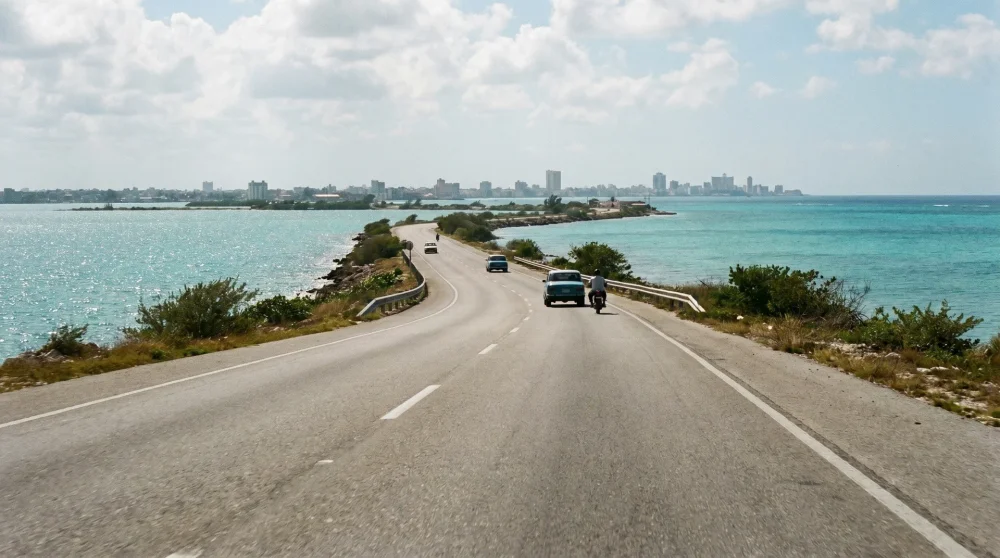
Navigating Kingston's traffic to reach the tip of the Palisadoes peninsula is often the biggest logistical challenge between you and one of the Caribbean's most compelling day trips. Plan ahead - the road runs straight down a narrow sand spit past the airport, and there is only one way in.
How to Get to Port Royal from Kingston
Getting to the end of the Palisadoes spit requires a bit of planning. The Kingston-Port Royal ferry that once crossed the harbour has been discontinued, so road transport is your only option.
JUTC Bus #98
The most budget-friendly route is JUTC Bus #98 from the downtown Kingston Transport Centre (Parade). The route winds around the harbour and straight down the Palisadoes road, passing Norman Manley International Airport along the way. The fare is roughly JMD $200-400 one way (under approx. USD $2). Bus schedules fluctuate, so allow extra waiting time at the terminal. The total journey from downtown takes 40-60 minutes depending on traffic.
Route Taxi
A route taxi from Parade to Port Royal is faster and more predictable than the bus, though slightly more expensive. Agree on the fare before boarding. Many visitors take a taxi out and the bus back, or vice versa.
Private Transfer
For a stress-free experience, a private driver from your Kingston accommodation is the most comfortable option. Book a Kingston and Port Royal tour for a guided version that includes transport and a local expert walking you through the history.
Top Things to Do in Port Royal
Once you step off the transport, the quiet fishing village atmosphere masks the sheer volume of history buried beneath your feet. Everything is within walking distance.
Fort Charles
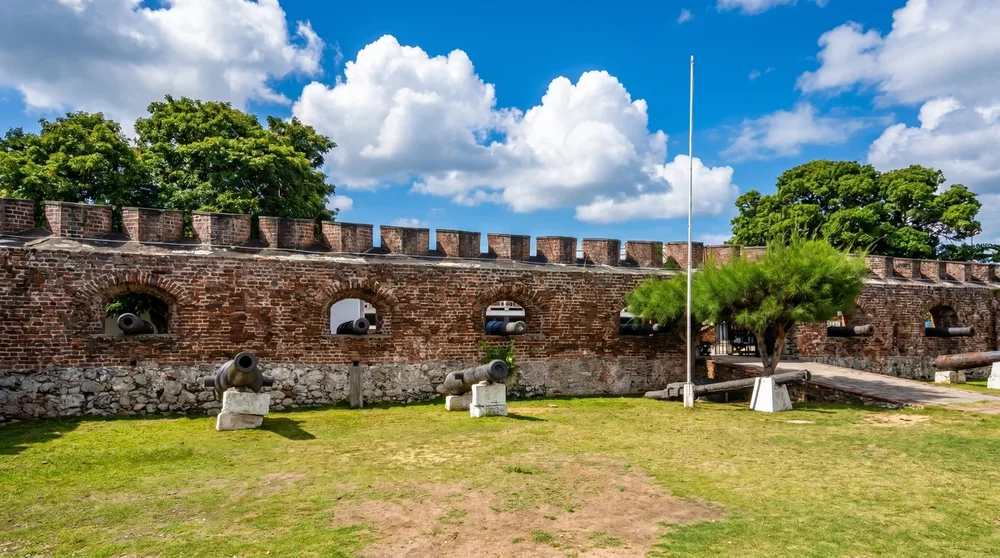
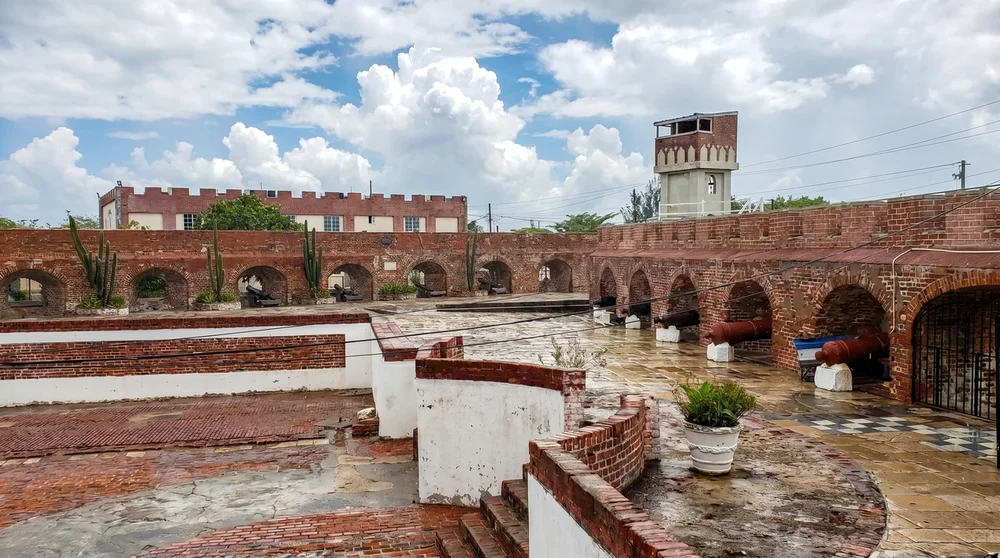
Fort Charles is the sole surviving fortress from the original English defenses built after the English captured Jamaica from Spain in 1655. The red brick walls are remarkably intact after more than three centuries, and rows of heavy cannons still point out to sea in their original defensive positions. The inner courtyard is still, shaded, and surprisingly moving - you are standing inside a structure that once guarded the richest pirate port in the world.
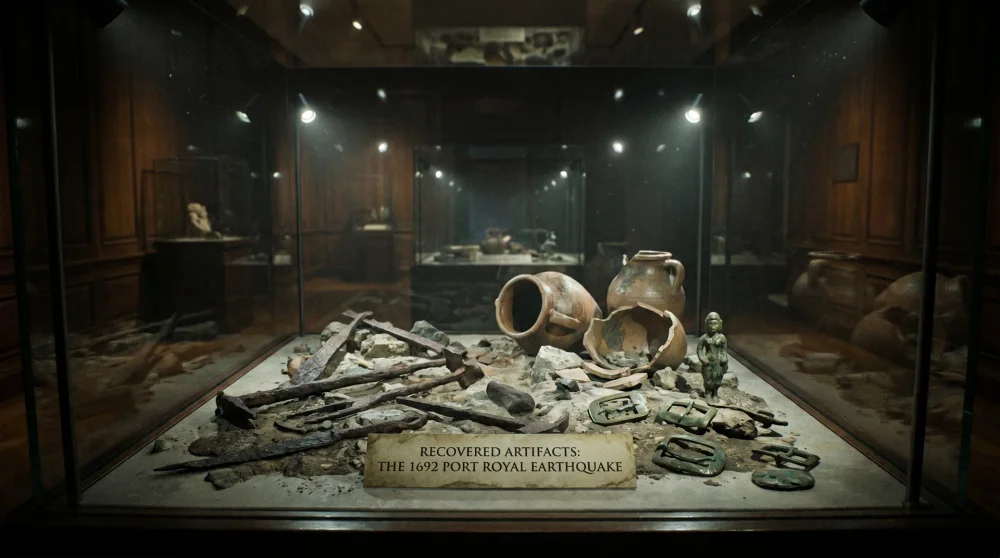
Admission is approximately approx. USD $15 for adults and approx. USD $8 for children. Hours are 9:00 AM to 5:00 PM daily, except Good Friday and Christmas Day. A small museum inside holds colonial artifacts and context on the 1692 earthquake.
The Giddy House
Located directly behind Fort Charles, the Giddy House is one of the more genuinely disorienting experiences in the Caribbean. Originally an artillery store built in the late 1800s, the building sank unevenly into the ground during the 1907 Kingston earthquake, leaving it tilted at a sharp angle.
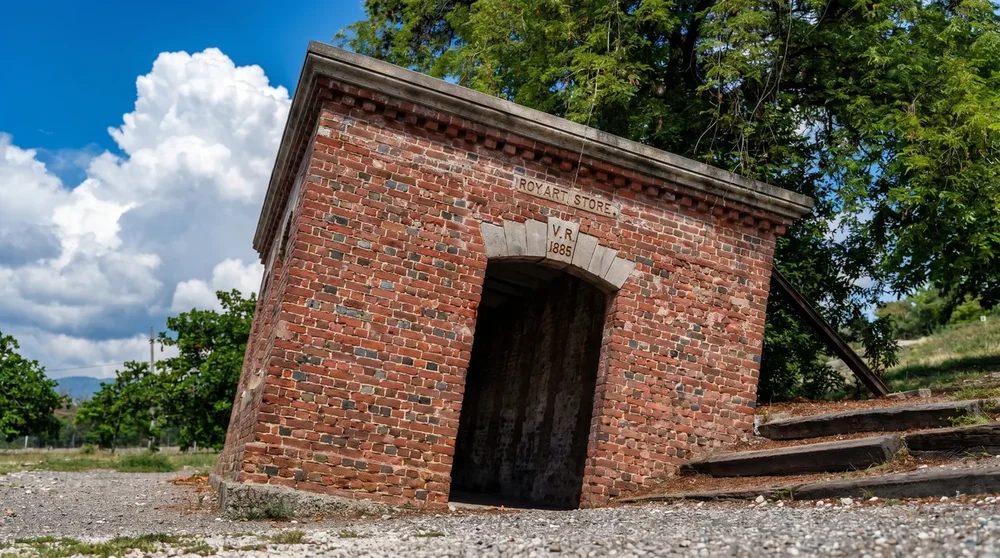
Walking through the doorway immediately throws off your inner ear. Try standing upright inside - the pull of gravity against the slanted floor creates a nauseating, deeply strange sensation that photographs cannot fully convey. Entry is included with your Fort Charles ticket.
The Old Naval Hospital
The Old Naval Hospital is one of the earliest examples of prefabricated cast-iron construction in the Western Hemisphere, assembled from components shipped from Britain in the 1800s.
The building houses artifacts recovered by marine archaeologists from the sunken city - colonial-era pocket watches stopped at the moment of the 1692 earthquake, preserved tavern items, and personal objects that make the disaster viscerally real. Note that ongoing UNESCO-funded restoration work to protect the structure from coastal erosion means some sections may be partially restricted during your visit.
The Sunken City (Dive Permit Required)
A large portion of the original pirate city lies just a few meters underwater in the harbour. Recreational diving is strictly prohibited - this is a protected underwater archaeological site.
To explore the submerged brick walls and coral-encrusted ruins, you must obtain a special permit from the Jamaica National Heritage Trust (JNHT). Casual snorkeling over the ruins is not permitted.
Lime Cay
For something completely different after the history, hire a local boat operator to ferry you out to Lime Cay, a small uninhabited island just offshore. The beach is clean, the water is calm, and it functions as a popular local weekend escape. Negotiate the price with the boat operators near the pier - expect to pay around JMD $500-800 per person for the short crossing.
Where to Eat in Port Royal
The village punches well above its size for food. Port Royal's waterfront seafood restaurants are legitimately excellent and represent one of the best reasons to make the trip. Order the brown stew fish, steamed snapper, or garlic lobster paired with bammy (cassava flatbread) and festival (sweet fried dough).
The service runs on island time, so order your food well before you hit the point of starvation, then sit with a cold drink watching the fishing boats in the harbour.
Bring cash, card machines frequently lose signal on the peninsula.
Is Port Royal Safe?
Despite its fearsome historical reputation, modern Port Royal is a quiet, tight-knit fishing community. The streets are safe to walk during daylight hours, and locals are accustomed to visitors wandering between the historical markers.
Apply standard travel common sense: keep valuables secure, stay hydrated under the intense sun, and be back at the transport point before dark. For a broader perspective on safety across the island, see our guide to Is Jamaica Safe for Tourists?.
Essential Tips Before You Go
Bring cash. Card machines frequently lose signal on the peninsula. ATMs are not available in Port Royal itself.
Sun protection is non-negotiable. The Palisadoes sand spit offers almost zero natural shade between the fort and the museum. A wide-brimmed hat, sunglasses, and high-SPF sunscreen are mandatory.
Wear solid footwear. The terrain around Fort Charles is uneven, and the slanted floors of the Giddy House require proper grip. Flip-flops lead to rolled ankles.
Arrive early. The heat radiates off the old brick structures by midday. An early morning arrival lets you finish the historical sites before peak afternoon humidity sets in.
Allow a full morning. Three to four hours covers Fort Charles, the Giddy House, the museum, and a seafood lunch comfortably. Rushing is counterproductive in this heat.
For getting around the broader Kingston area, see our Getting Around Jamaica guide. If you are making a full day of Kingston, Hellshire Beach is a natural pairing for the afternoon.