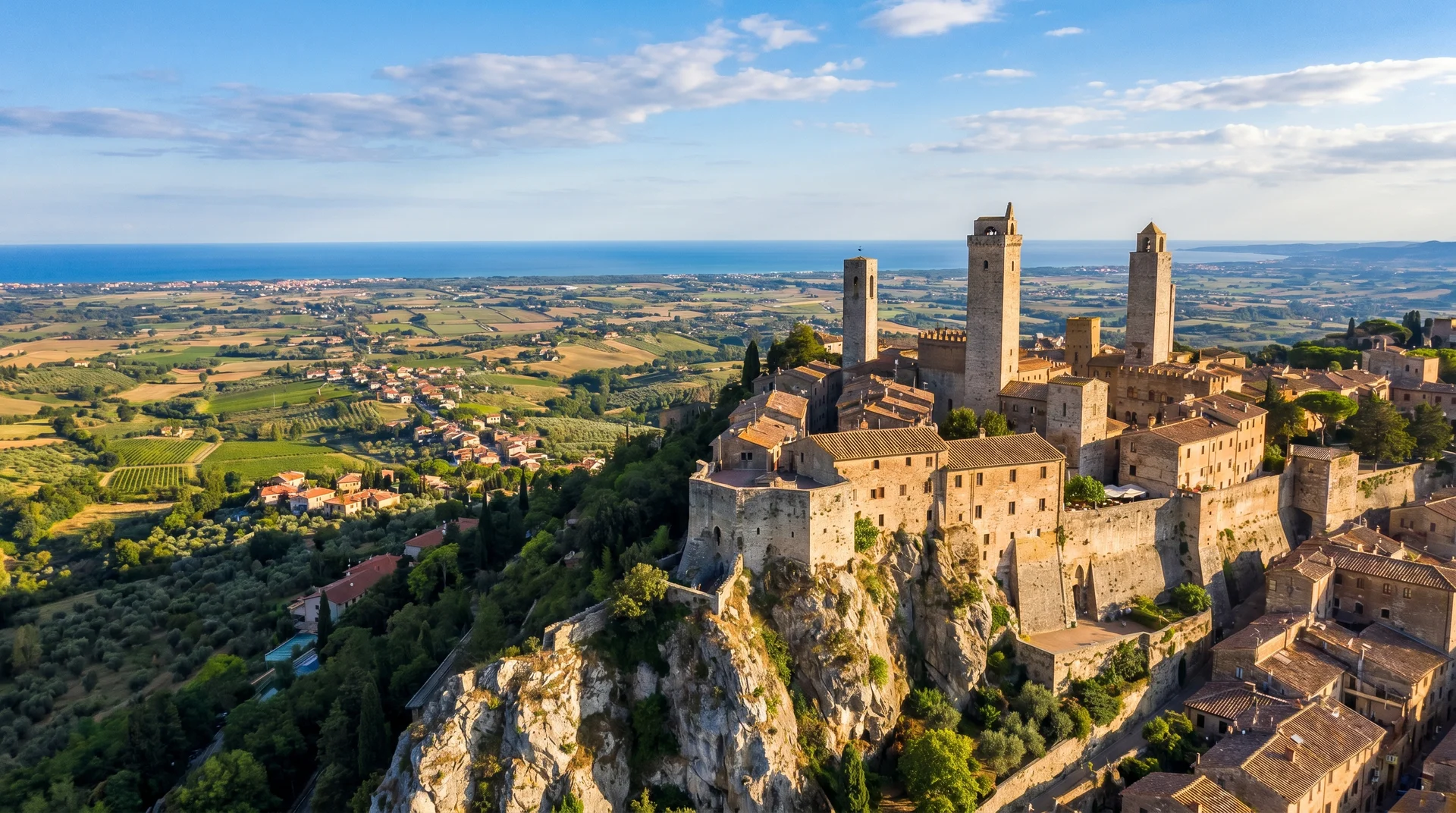
Most visitors to San Marino walk the ridgeline between the towers without knowing which ones they can actually enter, how steep the climb gets, or what happens at the very top of Guaita. Getting that wrong costs you time, uncomfortable moments, and the best view in the republic.
- Combined museum pass: €11 (First Tower, Second Tower, State Museum, National Gallery, and more)
- Two-tower ticket: €9 (First Tower and Second Tower only)
- Under-18s: free
- Summer hours (Jun 28–Sep 5): 8:30–19:45
- Winter hours (Jan 2–Mar 28, Sep 27–Dec 31): 9:00–16:50
- Last admission: 30 minutes before closing
- Time needed: 2 to 3 hours for the full circuit
- Montale (Third Tower): closed to the public, exterior visible for free
Guaita: The First Tower and the Ladder
Guaita, also known as Prima Torre, sits directly on the mountain rock with no traditional foundation. Built in the 11th century, it served as a prison until the late 1970s. The stone walls are cold, the interior layout bare and entirely functional.
The approach from the city center takes roughly ten minutes on foot. Small yellow and brown signs pointing to Prima Torre are posted on walls throughout the historic center. Follow the uphill alleys; you will not miss them.
Ticket windows sit at the entrance of Guaita itself. You can also buy your pass at the tourist information office in Piazza della Libertà before you start walking. If you want the combined museum pass for €11, buying it here saves you backtracking later.
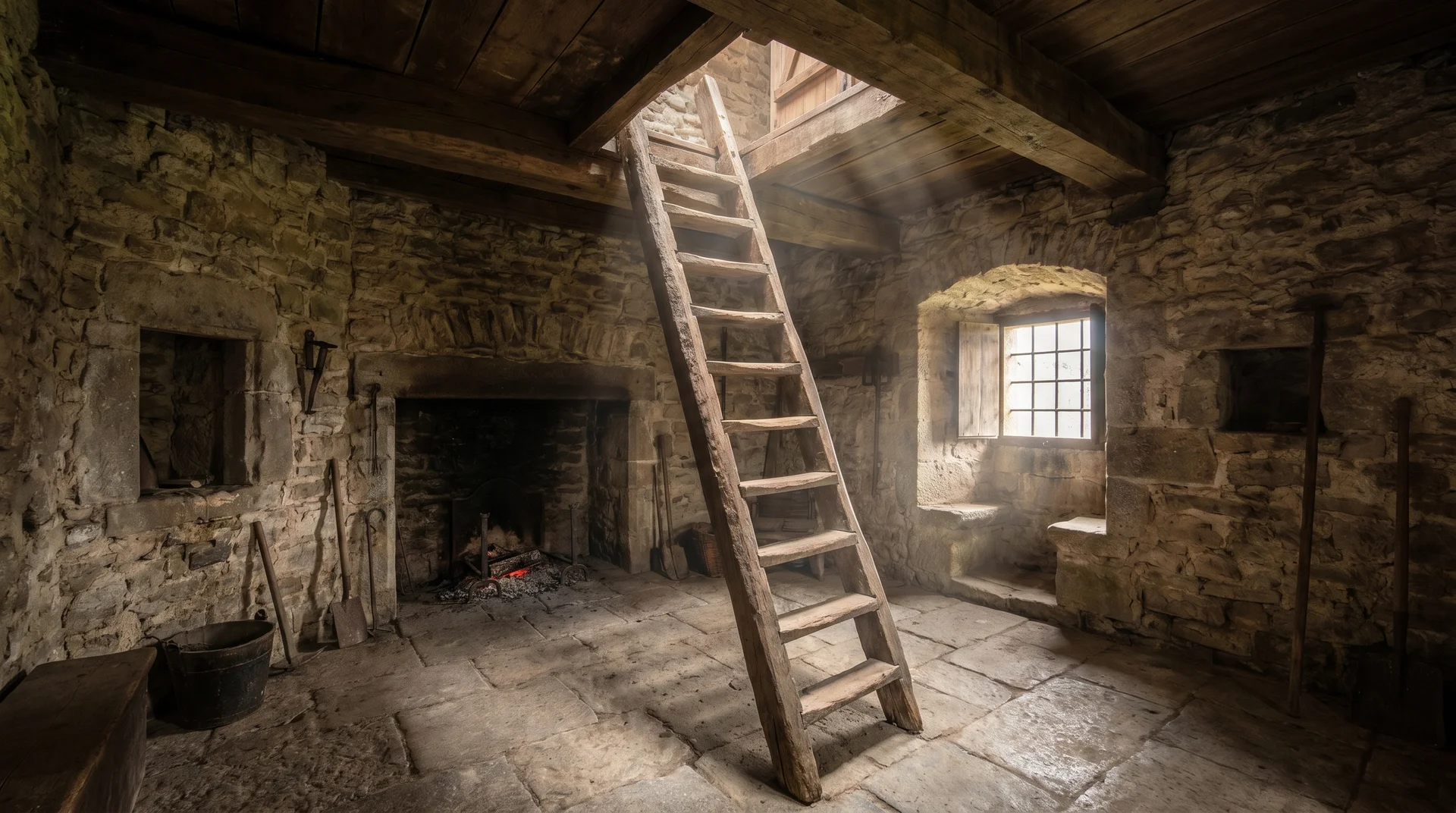
To reach the very top for the 360-degree panorama, you must climb a steep, near-vertical wooden ladder and squeeze through a small trapdoor in the ceiling. This is the one section that catches visitors off guard. The ladder is not optional if you want the summit terrace; there is no alternative route to the top.
Wear practical trousers or shorts before you start the ascent. Skirts and dresses are genuinely impractical here. The ladder angle means anyone standing on the steps below has a direct line of sight upward. This applies to both the ascent and the descent.
The terrace at the top provides an unobstructed view all the way to the Adriatic Sea on a clear day, roughly 20 kilometers away. The prison cells below the main hall are accessible and worth five minutes of your time, though the space is low and dark.
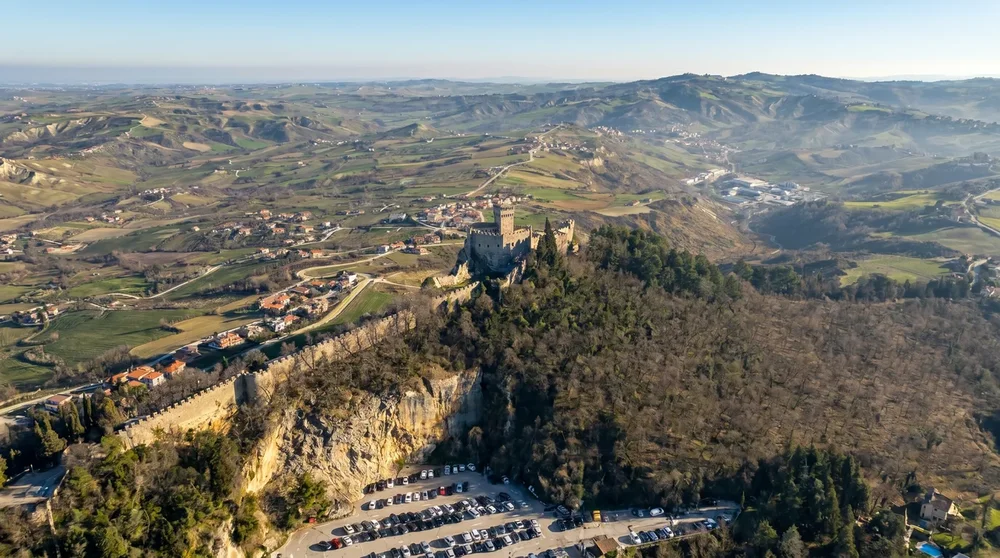
The Witches Path (Passo delle Streghe)
Passo delle Streghe is the jagged cobblestone ridge connecting Guaita to Cesta. Walking this path requires no ticket; it remains open at all hours and can be walked freely even outside opening times.
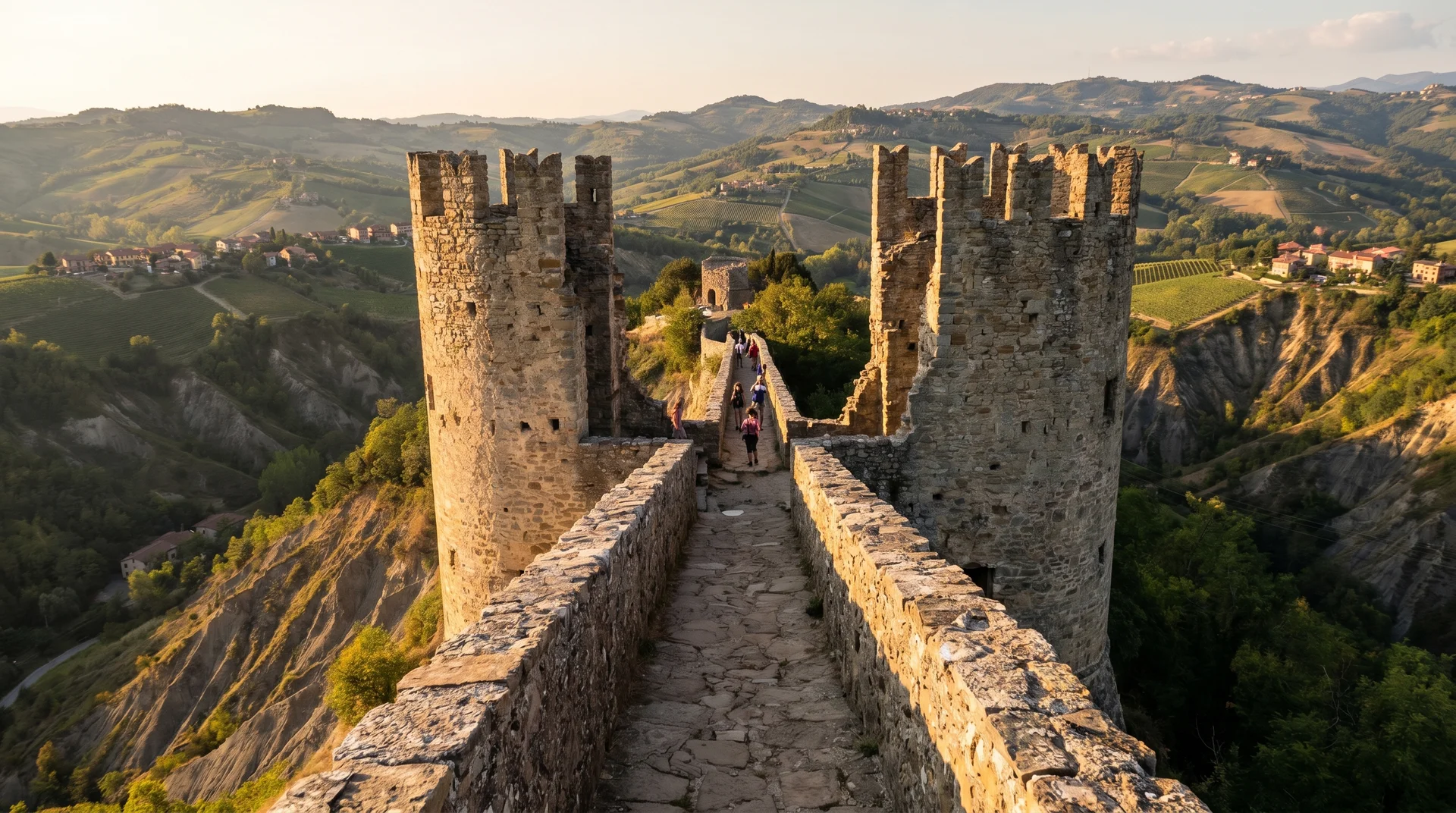
Do not walk straight through without pausing. The best composition for photographs happens exactly halfway between the two towers, looking back toward Guaita. The tower is framed against the vertical drop of the cliff face from this angle in a way that disappears once you continue forward.
At the lowest point of the path, a small public restroom building sits to the side of the trail. Stop near this structure to spot a narrow stone bridge and a natural hole through the rock face, both hidden from the main walkway.
The path involves stone steps but nothing technically demanding. Sturdy walking shoes handle it without difficulty. Allow fifteen to twenty minutes to walk it properly with pauses.
Cesta: The Second Tower and the Arms Museum
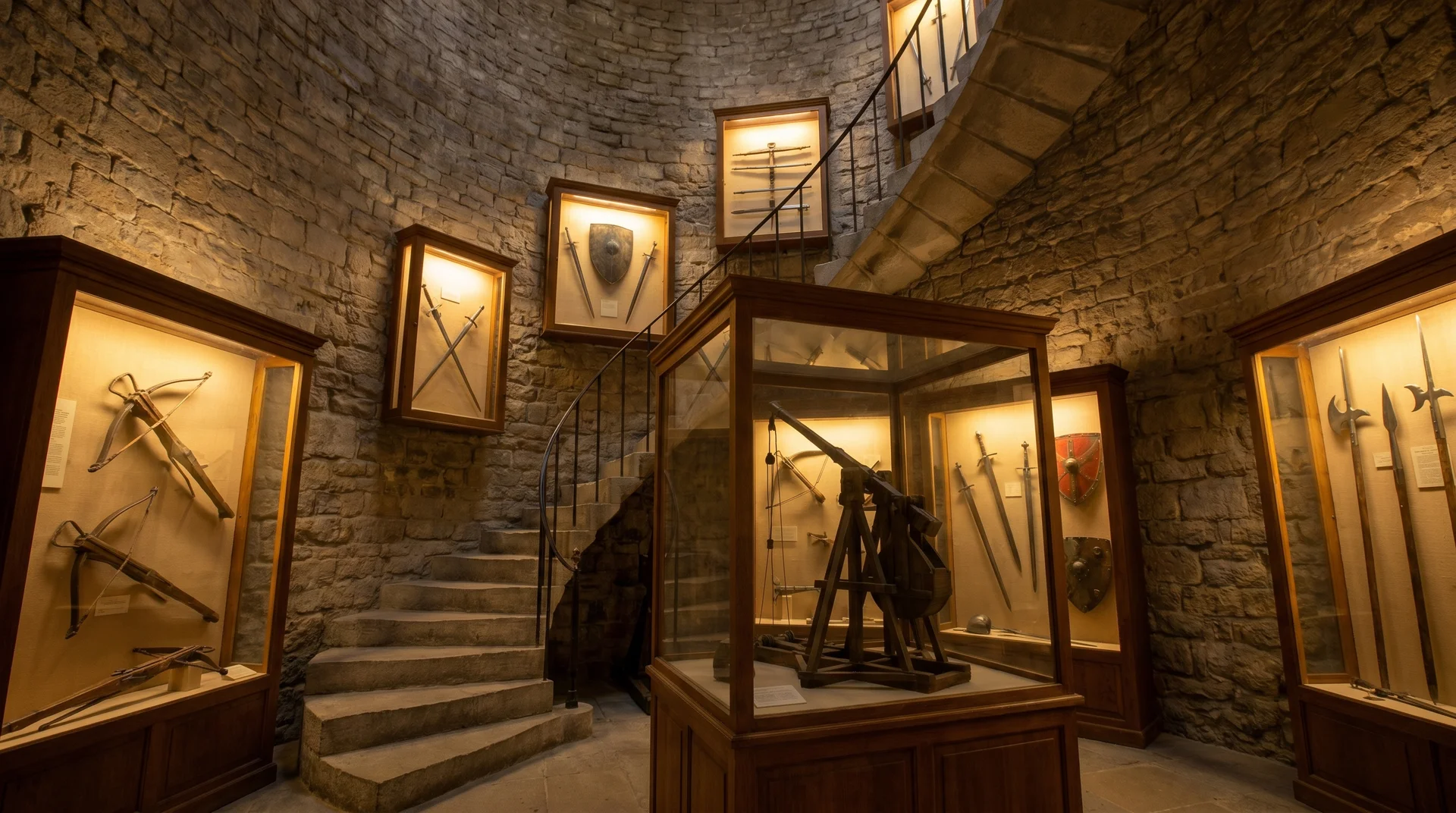
The Cesta Tower sits on the highest peak of Mount Titano at 755 meters. This 13th-century defensive structure houses the Museum of Ancient Arms, included in both the two-tower and combined museum ticket.
The collection features over 1,500 weapons spanning five centuries: heavy crossbows, experimental double-barreled pistols, decorated ceremonial swords, and full suits of armor. The museum layout is straightforward and well-lit. Thirty to forty minutes covers it thoroughly without rushing.
The exterior terrace of Cesta frames Guaita perfectly against the cliff drop below. This vantage point is the best position from which to photograph the first tower. The sea appears on the opposite horizon.
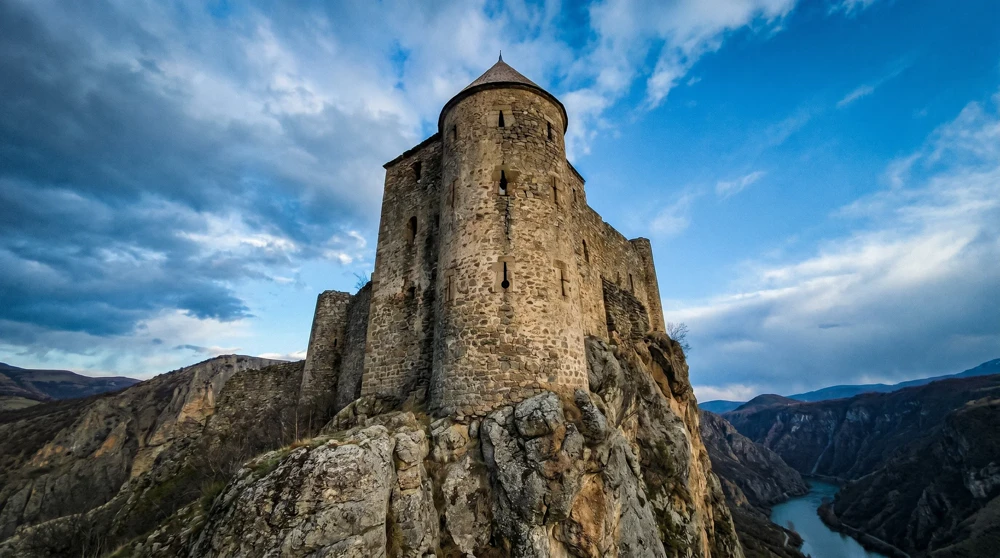
From Cesta, the path continues to Montale. The crowds thin noticeably once you pass the second tower; most visitors turn back at this point.
Montale: The Third Tower
Montale is the smallest fortress and is entirely closed to visitors. You cannot enter. The entrance door sits seven meters above ground level, a deliberate medieval design that made the tower impossible to siege without a ladder. Prisoners lowered into the dungeon below had no other way out.
The walk from Cesta to Montale takes about ten minutes. The paved path transitions into a quiet forest trail with noticeably cooler air under the tree canopy. After the exposed ridgeline, the shade is a genuine relief on a hot day.
Standing at Montale, you can see all three towers together from the outside for the first time. This is the photograph most people miss by turning back too early.
Tickets: Which Option to Choose
Two-tower ticket (€9): covers Guaita and Cesta only. Practical if your only goal is the towers and the arms museum.
Combined museum pass (€11): adds the Palazzo Pubblico, State Museum, National Gallery, and several smaller collections. Worth the extra €2 if you are spending more than three hours in the historic center. For a quick half-day visit focused purely on the towers, the two-tower ticket is sufficient.
Last Minute ticket (€5): available at the ticket window after 16:00, valid until closing. Useful if you arrive late afternoon and only want to see the towers quickly. Summer closing is at 19:45, which leaves over three hours with this ticket.
Under-18s enter free. Students and visitors over 65 qualify for the Pass Mini rate of €8.
If you are planning a San Marino day trip and want to maximize your time, buying the combined pass at the tourist office first means one transaction covers everything.
Opening Hours by Season
| Season | Dates | Hours |
|---|---|---|
| Summer | Jun 28–Sep 5 | 8:30–19:45 |
| Spring/Autumn | Mar 29–Jun 27, Sep 6–Sep 26 | 10:00–17:50 |
| Winter | Jan 2–Mar 28, Sep 27–Dec 31 | 9:00–16:50 |
Last admission is thirty minutes before closing in all seasons. The towers close on December 25, January 1, and the afternoon of November 2.
Arriving early makes a practical difference. During summer, the narrow interior staircases create bottlenecks when tour groups arrive mid-morning. By 8:30 AM the towers are nearly empty. By 10:30 AM on a July day, the queue at Guaita's entrance regularly extends back down the hill.
How to Get There
From the parking areas below, signs direct you toward the historic center and the towers. Lots P6 and P7 sit highest on the mountain, cutting out most of the uphill walk before you reach the fortress gates.
If you are arriving by public transport from Italy, the Bonelli Bus from Rimini drops passengers at P2 Bus Parking. From there, a public elevator carries you up to the historic center level. Cross the Piazza della Libertà and follow the uphill alleys directly to the Guaita entrance.
The San Marino cable car arrives at a station near the city center and adds a memorable approach to the visit, particularly on the descent when the valley view opens up below the gondola.
The entire circuit from Guaita to Cesta to Montale and back runs roughly 2 kilometers. Budget two hours as a minimum if you plan to enter both towers. Three hours is comfortable.