Grenada sits at the southern edge of the hurricane belt, which makes it the natural base for Caribbean cruisers who want trade-wind sailing without spending June through November worrying about named storms.
The island packs a full range of facilities into a compact coastline: a premium superyacht marina with on-site customs, a budget-friendly cruiser community anchored off the south coast, and a boatbuilding tradition that comes alive every January during the sailing regatta. Whether you are clearing in on a bareboat charter or looking for a haul-out yard to leave your vessel for the season, this guide covers every practical detail you need before you arrive.
| Detail | Info |
|---|---|
| VHF Channels | 16 (Calling/Emergency), 68 (Port Louis Marina) |
| Clearance Ports | St. George's (Port Louis Marina), Prickly Bay, Tyrell Bay (Carriacou) |
| Currency | Eastern Caribbean Dollar (XCD); USD widely accepted |
| Best Sailing Months | December to May (dry season, steady trade winds) |
| Hurricane Season | June to November; insurance latitude limits typically apply |
Grenada's Main Marinas
Camper and Nicholsons Port Louis Marina (St. George's)
Port Louis Marina sits in the natural lagoon of St. George's harbour and is the premier facility on the island. The marina holds 227 berths, including 30 dedicated superyacht slips for vessels up to 110 m LOA. Customs and immigration officers are stationed on-site, which makes arrival and departure clearance smooth. Hard-wired broadband runs directly to individual boats, eliminating the need to fight for bandwidth on a weak dock signal.
Rates run approximately US$0.90 to US$1.30 per foot per night for monohulls, with catamarans typically charged at 1.5x to 2x the monohull rate. Recent additions include a swimming pool, expanded fuel services, and a nearby beach club. The on-site marina village has sailmakers, yacht management providers, a chandlery, ATM, and the Victory Bar restaurant.
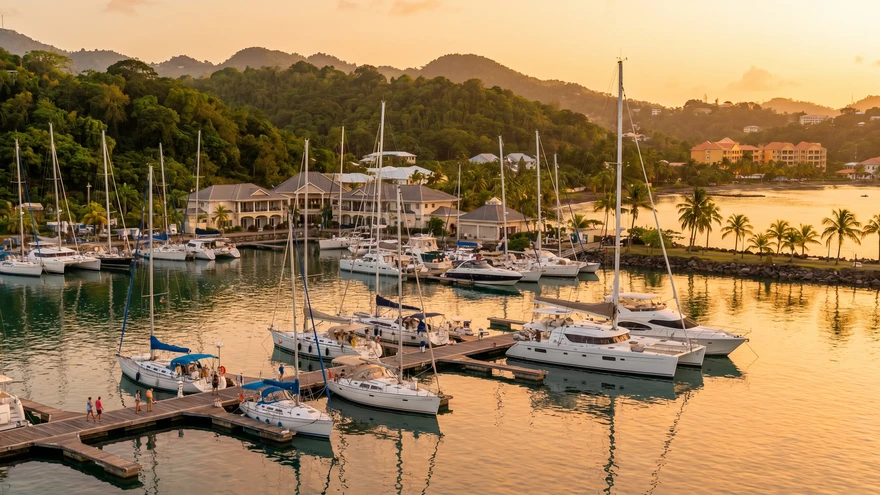
The mountain topography that delivers world-class surge protection also blocks cooling trade winds completely. The docks become genuinely hot from July through November, so seasonal live-aboards should factor this into their planning.
Prickly Bay and the South Coast Anchorages
Prickly Bay is the hub of Grenada's cruising community and the best starting point for sailors who want to avoid premium marina fees. The anchorage holds well in sand and mud in depths of 5 to 15 metres. The Bianca C wreck and other sites covered in the scuba diving in Grenada guide are accessible from south coast anchorages. Prickly Bay Marina and the adjacent Spice Island Marine Services offer a 35-ton travel hoist, haul-out, fuel, and a full chandlery.
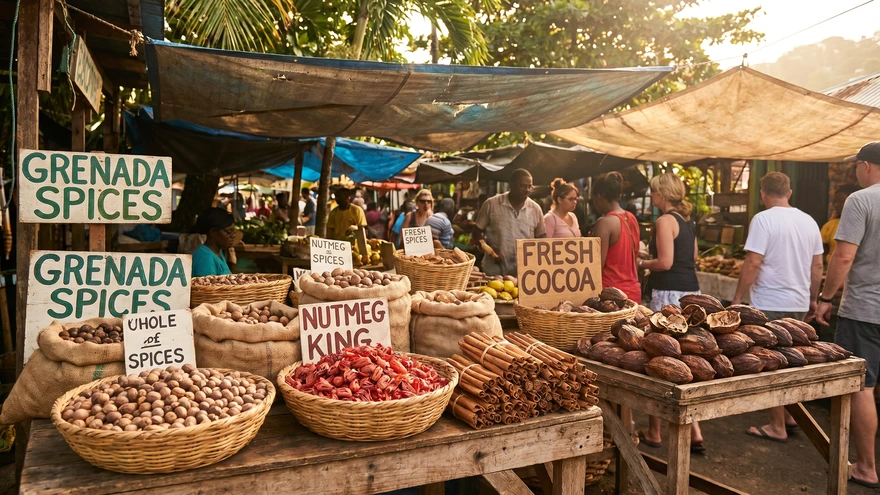
A large Foodland supermarket sits directly across from Port Louis Marina and has its own dinghy dock for tender tie-up, making heavy provisioning straightforward. For fresh produce, the St. George's Saturday morning market is a better choice: local ground provisions, fresh spices, and tropical fruits last significantly longer on board than imported supermarket produce.
Grenada Yacht Club, closer to St. George's, is a solid budget-friendly option for quick fuel and water stops without committing to marina berth rates.
Prickly Bay also serves as a clearance port, with customs, immigration, and health officers on-site seven days a week.
Tyrell Bay, Carriacou
Tyrell Bay on Carriacou's southwest coast is the primary anchorage and clearance port for vessels moving north toward the Grenadines. The bay offers 5 to 10 metres over sand and mud with reliable holding and shelter from the prevailing trades. Carriacou Marine in Tyrell Bay provides haul-out, chandlery, a convenience store, and duty-free fuel. The bay has free Wi-Fi funded by local businesses.
From Tyrell Bay you can stage for some of the more remote anchorages on Carriacou's south and east coasts, or continue north toward the Tobago Cays. A short sail further north reaches Petite Martinique, Grenada's quiet third island.
Hurricane Season: Storage and Insurance
Grenada is heavily marketed as a haven below the hurricane belt and historically major storms track further north. However, Hurricane Beryl in 2024 changed the calculus for some insurers. Several providers that previously covered boats in Grenada have tightened their policies or added stricter latitude requirements following that storm.
Most insurance policies still cover Grenada, but typical requirements include:
- Vessel positioned south of 12°40' N from July through November
- Boat strapped down to ground anchors in a certified yard
- Written storm preparation plan submitted to the insurer
Spice Island Marine Services can accommodate approximately 240 boats on the hard with travelift capacity up to 70 tons and concrete tie-down points. Hartman Cove is Grenada's newest haul-out facility, featuring a 44-ton travel lift and concrete-block tie-downs.
Mt. Hartman Bay's deep, mangrove-lined inlet provides emergency shelter if a severe weather system tracks further south than usual. Always verify your insurance policy's specific named-storm clauses before booking a hardstand for the season. For a broader look at how hurricane season affects travel planning, the best time to visit Grenada guide covers seasonal weather in detail.
Chartering a Boat in Grenada
Port Louis Marina is the main base for major charter operators including Dream Yacht Charters and The Moorings. Setting off from St. George's gives you immediate access to both the main island's lush south coast and the traditional boatbuilding culture of Carriacou to the north. Crew who prefer not to sail can reach Carriacou by the Osprey ferry instead.
Bareboat vs. Crewed Charters
A bareboat charter gives you the freedom to anchor off uninhabited spots like Sandy Island near Carriacou or Ronde Island between Grenada and Carriacou. Navigating the Grenadines requires comfort reading water colours for reef avoidance and handling sudden squalls.
A crewed charter removes the stress of tight anchorages and constant weather monitoring. Local skippers know the nuances of the passages and can negotiate with beach vendors at the Tobago Cays for the best lobster prices at the BBQ grills.
Grenada Sailing Week and the Workboat Regatta
Grenada Sailing Week runs each January. In 2026 the main racing events ran January 25 to 30 across the southern bays. The regatta fills anchorages and marina slips quickly; reserve berths and charter yachts several months in advance if you plan to attend.
Immediately following, the Westerhall Rum White Jack Workboat Regatta (January 31 to February 1 in 2026) brings traditionally crafted wooden sailboats, many built on the beaches of Carriacou, to compete in beach starts off Grand Anse Beach. The event is a direct expression of Caribbean maritime heritage that is difficult to find anywhere else in the region.