Dropping onto the Bianca C wreck without a strict gas management plan is a quick way to turn a world-class dive into a frantic, shortened ascent. Grenada's reputation as the shipwreck capital of the Caribbean is well-earned, but the logistical reality of its offshore currents and 50-meter depths demands more than just a basic open water card.
- Water Temperature: 26°C (December to May) / 28°C (June to November)
- Typical Visibility: 15 to 30m, best during the dry season
- Bianca C Depth: 30m (superstructure) to 50m+ (hull)
- Wetsuit Recommendation: 3mm full suit, 5mm for extended deep wrecks
- Primary Dive Season: December to May
The Bianca C Wreck: Current Condition and Dive Profile
Depth, Bottom Time, and Descent Strategy
Known as the "Titanic of the Caribbean," the Bianca C is massive, resting on its starboard side out in the blue. The shallowest reachable structure sits around 30 meters. The hull and deeper sections descend well past the 50-meter mark, making this the largest diveable wreck in the Caribbean at roughly 185 meters in length.
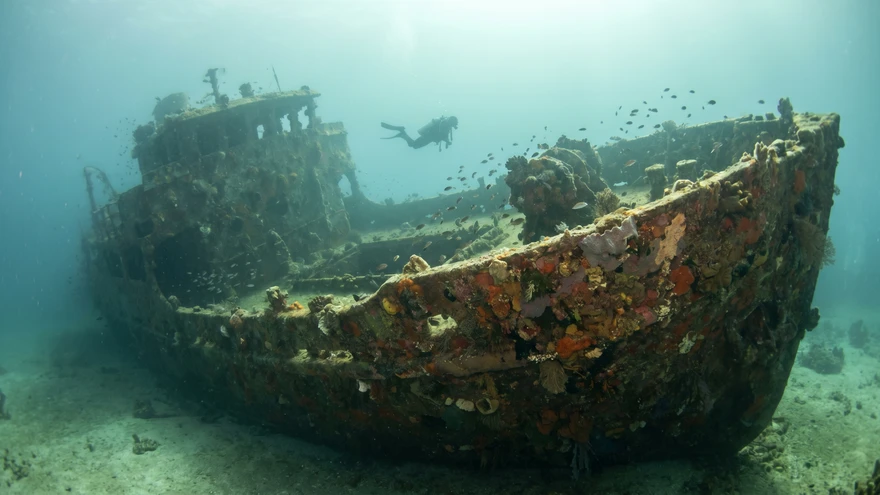
The wreck sank in 1961 after an onboard explosion while moored off St. George's. Local fishermen helped rescue passengers and crew, an act still commemorated by the anchor and plaque at the Carenage waterfront. The wreck remains largely intact, with the old swimming pool accessible and deep-water coral and sponges colonizing the broken railings and hull plating.
Moderate to strong currents constantly sweep across this offshore site, and there are no mooring buoys. You need to execute a prompt negative entry and a rapid blue-water descent. Lingering at the surface wastes breathing gas and blows you off the wreck coordinates.
Expect a maximum bottom time of roughly 15 to 20 minutes before hitting no-decompression limits. Deep-water coral growth covers the broken railings, and large pelagics including eagle rays, schooling jacks, barracuda, and Caribbean reef sharks frequently cruise above the hull.
Required Certifications and Safety Gear
This is strictly advanced territory. An Advanced Open Water certification is the absolute minimum requirement to board the boat. Deep Diver and Nitrox certifications are heavily recommended to safely maximize your short bottom time.
Gas management and nitrogen narcosis exposure are critical factors on the Bianca C. You must carry a primary dive light and a delayed surface marker buoy (DSMB). Overhead temptation is real, but penetration should be left entirely to trained technical divers due to the collapsing infrastructure. Many operators require a check-out dive before authorizing the Bianca C, particularly if you have been out of the water for an extended period.
Top Reef and Wall Dives in Grenada
Molinere Underwater Sculpture Park
Jason deCaires Taylor's cement and rebar creations at the Molinere Underwater Sculpture Park sit in shallow water, making this an easy afternoon dive to offgas after a deep wreck. The statues are slowly transforming into thriving artificial reefs covered in colorful sponges and encrusting corals.
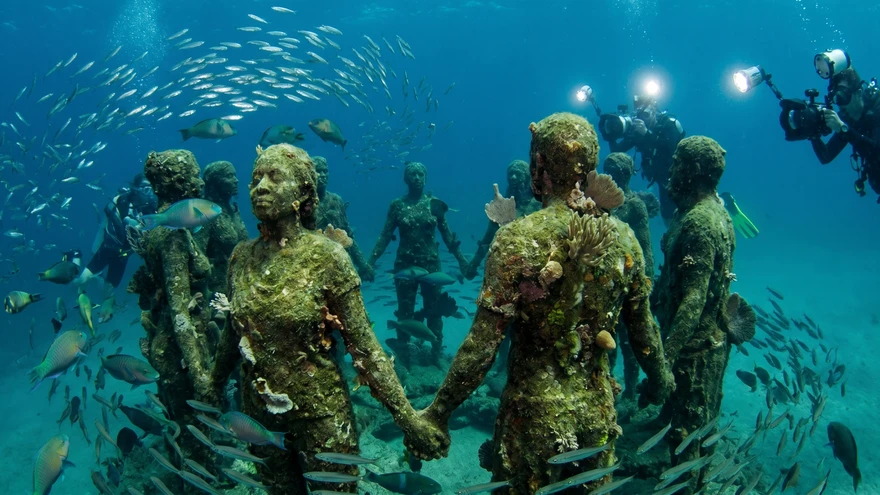
Depth ranges from just 5 to 10 meters. The site gets busy with snorkel tours. Booking a small-group dive early in the morning guarantees a much clearer view of the statues before the sand gets kicked up by later groups.
Flamingo Bay and Boss Reef
Flamingo Bay offers a steep wall starting at 7 meters and dropping straight down to 30 meters. Expect minimal current, making it incredibly relaxing to spot garden eels, batfish, and sea horses hidden in the soft corals.
Boss Reef stretches for over five miles along the coast. It offers a classic drift dive over vast fields of star coral and gorgonians. Look out for purple Creole wrasse swimming in tight downward formations, alongside spotted drums and resting nurse sharks.
Veronica L Wreck
This shallow cargo ship provides a fantastic contrast to the imposing Bianca C. The Veronica L sits upright near the beginning of Boss Reef. Its underside is heavily encrusted with bright pink sponges and yellow cup corals.
It is an ideal site for underwater macro photography and night diving. The open cargo hold makes for a safe, accessible swim-through for divers who want to experience a wreck without the stress of deep water overhead environments.
A World Adrift, Carriacou
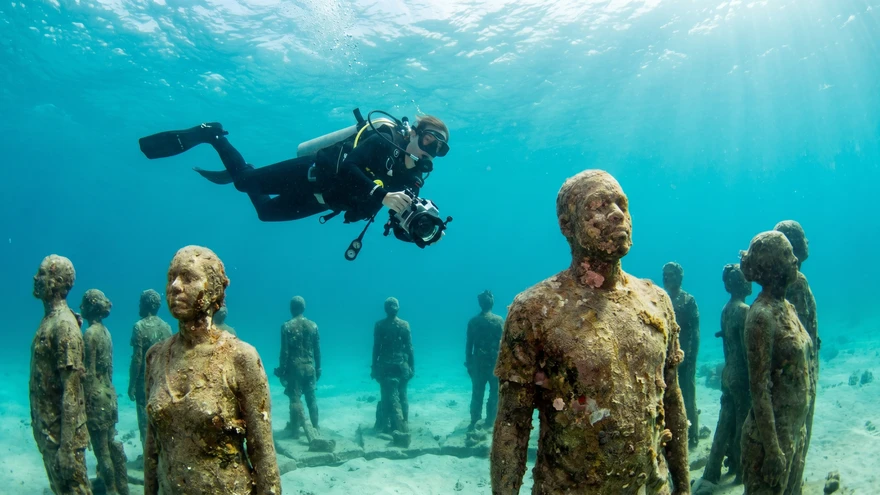
Grenada added a second underwater sculpture park to its diving portfolio in late 2024. Located off Carriacou in the Jackadan marine protected area, "A World Adrift" features 30 boats helmed by figures depicting local schoolchildren, installed at 3 to 5 meters depth. The shallow installation is accessible to both divers and snorkelers, and the sail ropes serve as active coral nurseries. The park was created by Jason deCaires Taylor, the same artist behind the Molinere sculptures on the main island, as part of Carriacou's recovery effort following Hurricane Beryl.
Choosing the Right Dive Operator in Grenada
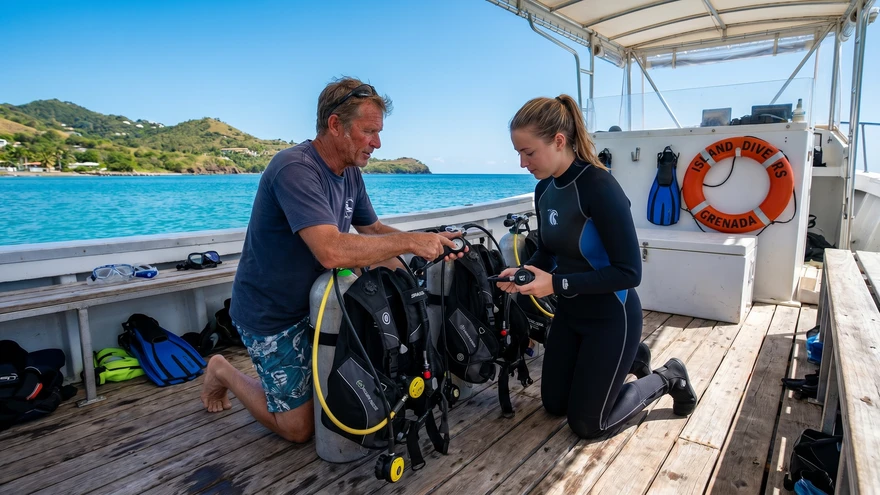
Diving here is effortless when the shop handles the heavy lifting. Look for boutique PADI 5-star operators on Grand Anse Beach that provide a true valet diving experience.
Top-tier crews assemble your gear, carry the heavy tanks to the boat, and swap your equipment during surface intervals. You simply walk onto the deck, do your buddy check, and focus on the dive. Dive Grenada, located at Mount Cinnamon Resort on Grand Anse Beach, has earned TripAdvisor's Certificate of Excellence for nine consecutive years. Eco Dive, run by marine biologist owners at Coyaba Beach Resort, and Native Spirit Scuba, a small flexible operation led by a recognized PADI instructor, are the other key Grand Anse options.
Small details separate the good operators from the great ones. Experienced local guides prep masks with baby shampoo to prevent fogging and serve warm ginger tea and local cookies between dives. Strict safety protocols and low guide-to-diver ratios keep the focus entirely on the reef, eliminating equipment anxiety.
Two-tank dive packages with equipment run approximately US$130 for a day trip including lunch, tanks, weights, and a guide. A full equipment rental kit including a dive computer costs around US$25 per day. A marine park fee of US$3.50 per person applies to most sites and is typically not included in the listed dive price.
Seasonal Conditions: Marine Life and Water Temperatures
The dry season runs from December to May. Northeast trade winds bring consistent weather patterns, and the lack of rainfall pushes visibility well past 30 meters. Water temperatures hover around 26°C, making a 3mm full wetsuit the right exposure protection for multiple days of diving.
Summer months from June to November push water temperatures up to a bath-like 28°C. While the hurricane season poses a slight weather risk, the seas are generally much calmer, allowing for easier, smoother boat rides out to the exposed offshore wreck sites. Hurricane Beryl struck Carriacou in July 2024, damaging some reefs, though the main island of Grenada was unharmed. Reef recovery on Carriacou is actively underway, with dive operators running coral planting programs at the new sculpture park.
Caribbean reef sharks appear regularly above the Bianca C hull regardless of season. Turtle sightings are common on the shallower reef sites throughout the year.