The Caribbean's oldest working water wheel still turns on the northeast coast of Grenada, powered by the same river that fed it in 1785. Show up at River Antoine during the workers' lunch hour, and you will miss the machinery entirely. Arrive at the wrong bottle counter, and airport security will confiscate what you spent good money on. Both mistakes are completely avoidable with a little preparation.
- Tour Fee: ~15-40 EC ($5-$15 USD) (guided walk-through and tasting included)
- Payment: Cash only at the entrance; card accepted in the shop with a 10% surcharge
- Opening Hours: Monday to Friday, 9:00 AM - 5:00 PM (machinery stops 12:00 PM - 1:30 PM)
- Location: Northeast coast, near La Poterie, Saint Patrick Parish
- Tour Duration: 30 to 45 minutes for the full walk-through and tasting
- Getting There: Public bus from St. George's to Grenville, then transfer to La Poterie
A Pre-Industrial Time Capsule: Why River Antoine Matters
Modern rum production relies on computerized temperature controls, imported molasses, and stainless steel column stills. River Antoine operates in complete defiance of modern convenience. The estate still crushes its own hand-harvested sugarcane using river power, with no cultured yeast strains or steam-heated distillation passes.
The resulting rum is an unaged, wildly pungent, high-ester spirit that reflects the exact agricultural realities of 1785 - the year rum was first distilled here. A 1763 record places the estate at 150 acres under cane cultivation, so the land itself has been in sugar production for even longer.
The site functions less like a polished tourist attraction and more like a rugged, heavy-industry time capsule. You are stepping onto a working farm where bagasse - crushed cane stalks - litters the ground to sun-dry before fueling the fires. It is not manicured or air-conditioned. That is precisely what makes it worth the trip.
The Distillation Process: From Raw Cane to Copper Pot
Understanding the mechanics of River Antoine requires looking past the raw, manual labor to see the ingenious historic engineering still at play.
The 1840 Water Wheel and Flat Rollers
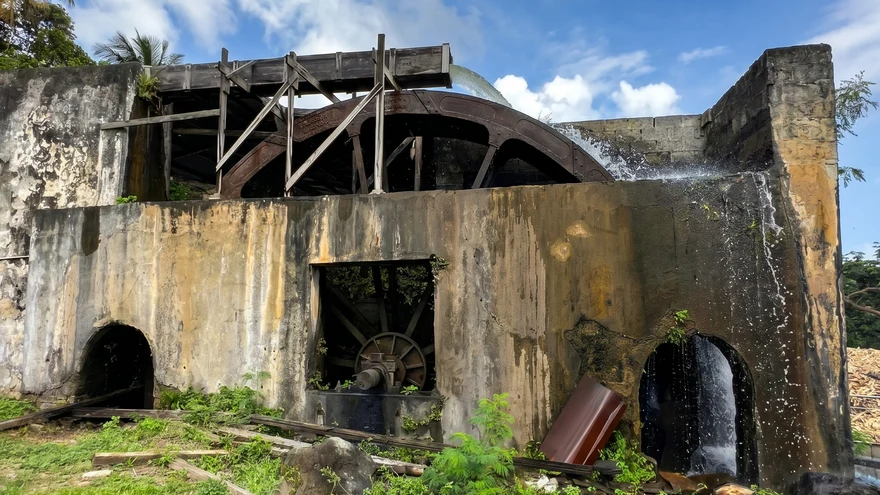
A viaduct diverts water from the River Antoine directly onto the top of a massive water wheel, manufactured in 1840 by London-based George Fletcher and Co. This wheel physically turns a Victorian-era cane mill. If the river runs low during a prolonged dry spell, production halts entirely.
Unlike modern grooved rollers designed for maximum efficiency, the iron rollers here have worn completely flat over nearly two centuries of use. Workers manually feed the cane onto the conveyor, and the extracted green juice flows down a simple wooden trough directly toward the boiling house. There is no pump, no motor, no electronic sensor - only gravity and river pressure.
Open-Air Fermentation and Wood-Fired Heating
The raw cane syrup thickens in a series of heated open copper bowls before moving to open-air concrete tanks. Fermentation happens completely naturally, relying on wild, airborne yeast and residual bacteria left in the unscrubbed tanks.
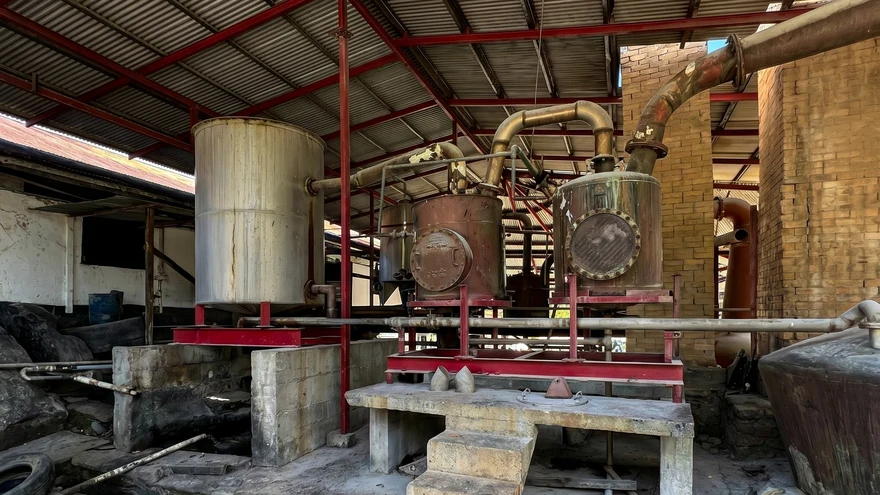
This highly bacterial, eight-day fermentation creates the funky, intense flavor profile that high-ester rum collectors seek out globally. Distillation occurs in side-by-side double retort pot stills - one from John Dore, the other from Vendome. Instead of using delicate steam coils, workers burn locally scavenged hardwood in recessed fireboxes directly beneath the copper pots. It is a harsh, aggressive distillation method that creates a spectacularly heavy spirit.
Sugarcane Harvest Season
The primary harvest runs during Grenada's dry season, roughly January through May. This is when the sugar concentration in the cane is highest and production is at its most intense. The distillery continues to operate year-round but the dry-season months offer the most active, fully-engaged production floor experience.
69% vs. 75% ABV: Which Bottle Can You Take on a Plane?
Tasting the final product is an intense experience, but buying a bottle requires careful attention to aviation laws. The distillery bottles its unaged white rum at two distinct strengths, easily identified by their labels.
The Blue Label (69% ABV): This version is specifically proofed down to squeeze just under the legal threshold for commercial airline transport. It is the only bottle you can legally pack in your checked luggage to take home.
The Tan Label with Red Ribbon (75% ABV): Bottled straight off the still at a blistering 150 proof, this rum is legally classified as a highly flammable liquid. Airport security will confiscate it from both carry-on and checked baggage without exception.
Ironically, the 75% ABV version often presents a smoother, more complex flavor profile than its diluted counterpart. Taste both at the on-site sampling bar, but only attempt to fly with the blue label.
Tour Logistics: Getting There and Best Times to Visit
Reaching the estate requires navigating rural Grenadian roads, and timing your arrival dictates the quality of the tour.
Navigating the Bus Route from St. George's
If you plan on fully participating in the high-proof tasting, skip the rental car and use public transit. From the main terminal in St. George's, catch a bus heading to the town of Grenville. From the Grenville depot, transfer to a second bus bound for La Poterie.
The distillery does not have massive billboards or an obvious tourist entrance. Look for a small, unassuming dirt driveway running alongside an old stone building on the left side of the road. Follow the drying cane stalks on the ground, and you will find the main facility. If navigating the two-bus route independently sounds complicated, a number of operators run guided River Antoine rum distillery tours with direct hotel pickup and round-trip transfers included.
For an overview of all transit options across the island, the Getting Around Grenada guide covers bus fares, routes, and shared taxis in detail.
The Lunch Break Rule and Cash Fees
Timing is everything. The entire production line - including the water wheel and the wood fires - shuts down completely between 12:00 PM and 1:30 PM for the workers' lunch break. Arriving during this window guarantees a static, silent tour with motionless machinery. Plan your visit for mid-morning around 10:00 AM, or late afternoon after 2:00 PM, to see the crushing mill at full speed.
Bring enough Eastern Caribbean Dollars (XCD) in cash. The entrance and tasting fees are strictly cash-only. While the small on-site shop accepts credit cards for bottle purchases, an automatic 10% surcharge applies to all card transactions. Withdraw local currency in St. George's before heading out to avoid the hidden fee.
Photography at the Distillery
Photography is generally welcomed throughout the tour. The guides are accustomed to visitors documenting the machinery, the boiling house, and the copper pot stills. No flash photography near the active wood fires is the main practical limitation. The water wheel in motion, with the aqueduct feeding it from above, makes for one of the most visually compelling shots in Grenada.
Accessibility and Terrain
Navigating the 1785 industrial site presents real challenges for visitors with limited mobility. The paths are unpaved, covered in dry sugarcane bagasse, and require walking close to active wood-fired pits and elevated concrete platforms without modern safety railings.
The tour involves uneven ground, open drainage channels, and surfaces slippery with cane juice residue during active production. Closed-toe shoes with grip are not optional - they are genuinely necessary. Anyone with significant mobility constraints should factor this in before making the journey northeast.
Pairing the Distillery With Other Grenada Experiences
The River Antoine visit pairs naturally with the Grand Etang National Park hike, since both sites sit in the island's interior and can be combined into a full-day northeast circuit if you have a rental car or arrange a private transfer.
If you are interested in the broader context of Grenada's agricultural heritage, the island's world-famous cacao estates offer a different lens on the same tradition of estate-based food production. Grenada is the only place in the world producing both cacao and rum from genuinely estate-grown crops.
For travelers planning the full island experience, the Best Time to Visit Grenada guide covers dry season timing, hurricane risk windows, and how to sync with both the rum and cacao harvest calendars.
Cruise passengers stopping in St. George's can reach the distillery as a half-day excursion - the Grenada Cruise Port Guide has pre-built shore itineraries that include the northeast coast route.