Stepping out of Maurice Bishop International Airport without a transit plan leaves you at the mercy of aggressive taxi negotiations and long wait times in the Caribbean heat. The transportation network in Grenada relies on cash-only minibuses, left-side driving laws, and a single dominant rideshare app that bypasses the traditional taxi queues. Sorting these systems out before you land ensures you skip the hassle and pay local rates.
- Best for budget travel: Minibus routes covering the main tourist corridor
- Best for convenience: Haylup rideshare app (accepts credit cards)
- Best for flexibility: Car rental (requires EC$60 local driving permit)
- Best for island-hopping: Osprey Line ferry to Carriacou and Petite Martinique
- Driving side: Left-hand traffic throughout the island
Navigating Grenada via Rideshare: The Haylup App
The arrival of Haylup fundamentally changed how locals and visitors move around the island. Before this app, getting a ride meant standing on the street waving down cabs or paying a premium for hotel-arranged transport. No Uber or Lyft operates in Grenada - Haylup is the island's only rideshare platform.
Haylup functions exactly like Uber or Lyft, matching you with a verified local driver through real-time GPS tracking. The platform offers everything from budget-friendly basic rides to large SUVs for families traveling with heavy luggage. You see the exact fare calculated upfront, eliminating surprise surge pricing or awkward cash negotiations at the end of the trip.
Pre-scheduling a ride guarantees a driver is waiting the moment you step out of the arrivals terminal - a significant advantage over the taxi queue outside.
App Setup, OTP Verification, and Payment
Download the app and set up your profile before your flight lands to avoid relying on spotty airport Wi-Fi. The booking process is entirely digital and follows a strict verification protocol:
- Enter your exact pickup point and destination to lock in the upfront fare
- Track the assigned driver's route live on the map
- Provide the One-Time Password (OTP) to the driver upon arrival to confirm your identity
- Complete the ride, and the app charges your linked credit card securely
The system supports multiple currencies, including the Eastern Caribbean Dollar (XCD). Unlike standard taxis, Haylup accepts credit cards, completely removing the need for cash.
The Public Minibus System: Routes, Costs, and Etiquette
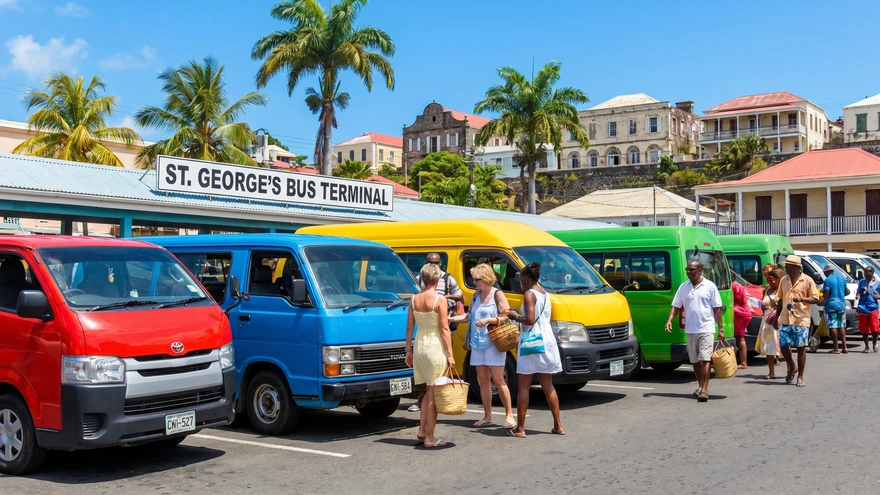
For an authentic and highly affordable transit experience, the privately owned minibus network is the backbone of the island's daily commute. These 16-passenger vans handle the steep hills and narrow roads with surprising efficiency. There are 9 routes covering the main populated areas of the island.
Windshield Route Numbers and Coverage
Every minibus displays a prominent route number on its windshield, dictating its specific trajectory across the island. Route 1 is the most heavily trafficked line, running from downtown St. George's to the Grand Anse area, making it perfect for grocery runs or beach days at Grand Anse. Route 2 services the Woburn Bay direction.
You flag them down from the side of the road and tap the side of the van or tell the conductor when you need to get off. Conductors actively call out destinations to attract passengers - this is normal and helpful for navigating unfamiliar routes.
Operating Hours and Fares in XCD
Minibuses run intensely from Monday through Saturday, starting around 6:00 AM and running until approximately 9:00 PM, though timing varies by route. Grand Anse routes sometimes extend later given tourist demand.
Fares range between $2.50 and $6.50 XCD depending on the distance you travel. Always carry small XCD coins or bills, as drivers rarely have change for large US dollar notes. Cash only - no card payments accepted on any minibus.
Car Rentals and Regulatory Hurdles
Renting your own vehicle provides total autonomy for exploring the northern waterfalls and remote rum distilleries, but it comes with strict legal and physical demands. The infrastructure outside the main resort areas requires confident driving skills - these roads are narrower than many residential driveways back home.
If you plan to drive in Grenada, read the full permit and road rules guide before picking up the keys.
Securing the Mandatory EC$60 Local Driving Permit
You cannot simply show your home country's driver's license and drive off the lot. Grenadian law requires all foreign drivers to purchase a temporary local driving permit costing exactly EC$60 (approximately US$22), valid for three months.
Most established rental agencies issue this permit directly at the counter when you pick up the keys. If you rent from a smaller local outfit, you may need to visit the Central Police Station on The Carenage in St. George's to process the paperwork yourself. An International Driving Permit (IDP) is not required - your home license plus the local permit is all you need.
Left-Side Driving and Mountain Topography
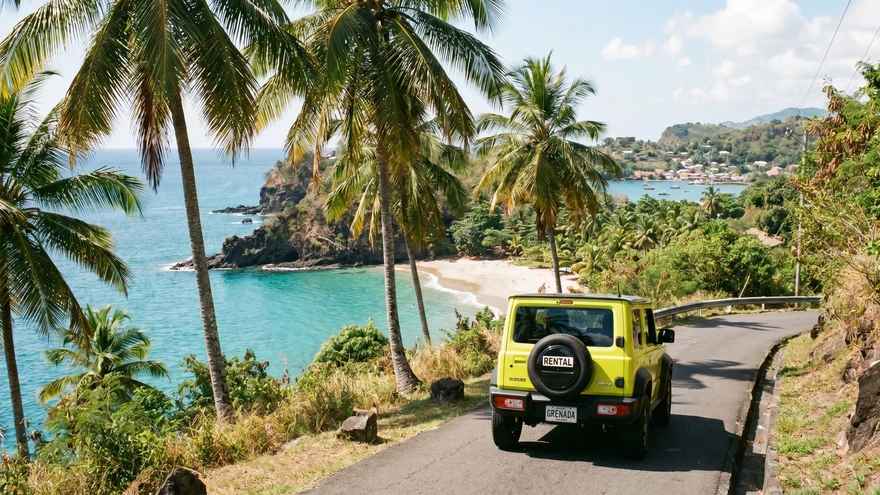
Traffic flows on the left side of the road, a remnant of British colonial influence that requires immediate mental adjustment for North American and European drivers. The island's interior features narrow, winding mountain passes with blind corners and extreme inclines.
You will frequently encounter single-lane roads where one car must pull over to let oncoming traffic pass. Renting a vehicle with a strong engine is essential, as you often need extra power to clear the steep residential hills. Most agencies require drivers to be 25 years or older.
Standard Airport Taxis and Fixed Fares
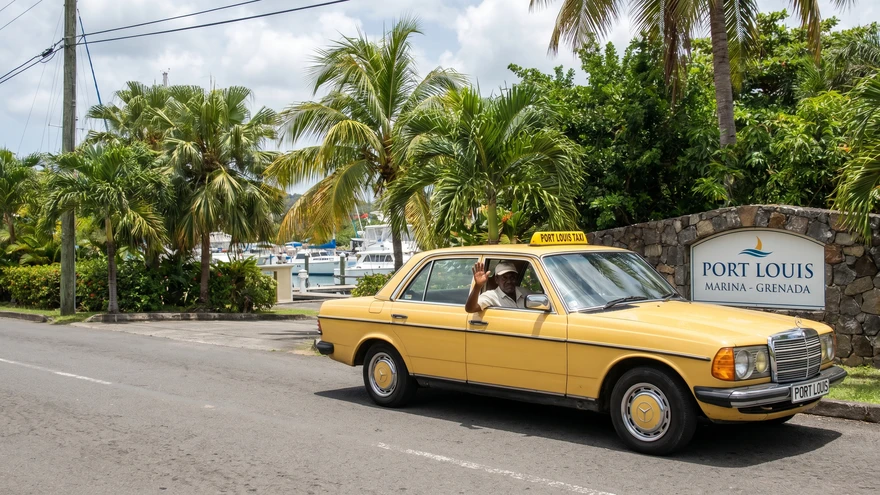
If you opt out of the rideshare app, standard taxis remain a highly visible option at Maurice Bishop International Airport and outside major supermarkets. These drivers belong to localized associations including the National Taxi Association and the Grenada Airport Taxi Association, and operate on a fixed-rate system rather than electronic meters.
Licensed taxis line up directly outside the arrivals hall. Fares are standardized based on zones, but always verbally confirm the total cost before loading your bags. Critically, clarify whether the quoted price is in US Dollars or XCD - the difference is significant. Taxis do not accept credit cards, so have local cash ready.
For budget-conscious travelers, it's worth negotiating. One common route (Grenada Yacht Club to St. George's) starts at EC$80 quoted but often settles at EC$50 after a brief conversation.
Coastal and Inter-Island Transit: Water Taxis and Ferries
Grenada's geography means some of the most efficient routes involve leaving the asphalt entirely. The coastal waters offer calm, scenic alternatives to congested roadways around the capital.
St. George's to Grand Anse Water Taxis
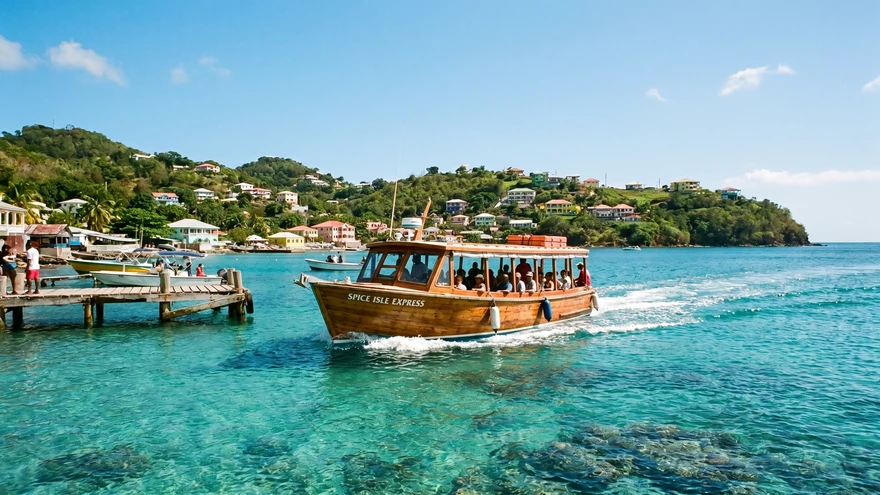
Local water taxis run a continuous, informal circuit between the cruise ship terminal in St. George's and the long stretch of Grand Anse beach. This quick boat ride bypasses the dense city traffic - useful if you're arriving via the Grenada cruise port and heading straight to the beach.
Fares are negotiated directly with the boat operator on the dock. Establish the price clearly before stepping aboard - the same rule applies here as with land taxis.
The Osprey Line: Connecting Carriacou and Petite Martinique
To explore the sister islands to the north, the Osprey Line ferry provides a fast, reliable marine link departing from The Carenage in St. George's. Adult one-way tickets cost EC$20 (approximately US$8); return tickets are EC$80 (approximately US$31). Children 5-12 travel at reduced rates.
The ferry cuts through the Caribbean Sea up to Carriacou, with a secondary route continuing to Petite Martinique. Reviewing their seasonal schedule at ospreylines.com before booking is essential, as departure times shift based on weather conditions and local holidays. You can also reach them at (473) 440-8126.
For solo travelers planning the full island circuit, Grenada solo travel logistics covers which transport combinations work best by itinerary length.
To understand how transit costs fit into your overall trip budget, the Grenada travel costs breakdown covers daily spending across all transport modes.