Showing up in flip-flops expecting a casual stroll around the crater lake will leave you knee-deep in mud and completely lost on unmaintained paths. Navigating Grand Etang National Park safely requires knowing exactly which trails match your gear and how to handle the notoriously opportunistic wildlife.
- Entrance Fee: $2 USD (approx. XCD 5) per person
- Opening Hours: Visitor Center open 8:30 AM - 4:00 PM Monday to Friday, plus weekends when cruise ships are docked
- Transportation: Local Bus #6 from St. George's (10 XCD) or rental car/taxi
- Elevation: 500 m (1,640 ft) - noticeably cooler and damper than the coast; frequent rain showers
- Facilities: Public washrooms, small museum, snack and souvenir vendors
How to Get to Grand Etang National Park
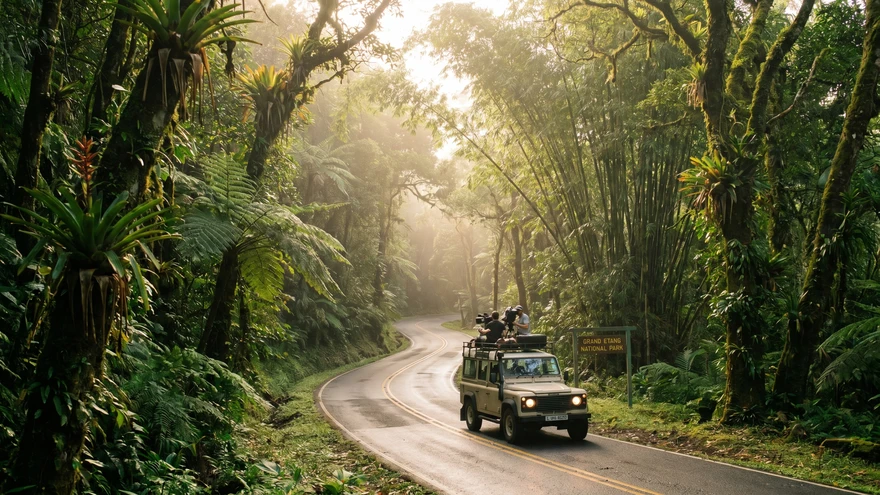
Getting up the mountain involves navigating steep, winding roads through the dense rainforest canopy. The park sits about 20-30 minutes by car from St. George's.
Taking Local Bus #6 from St. George's
Skip the overpriced cruise excursions and head to the local bus terminal in St. George's. Bus #6 goes directly to the park entrance. The ride costs about 10 XCD per person. It drops you right at the top near the ticket booth, making it an incredibly cost-effective logistics choice.
Before heading up, figure out how you're getting there - check out the driving guide for Grenada if you plan to rent a car, since the mountain roads have their own quirks.
Driving and Parking Logistics
Renting a car offers flexibility, but the parking area near the visitor center turns into a chaotic bottleneck during peak cruise ship hours. Maneuvering out of the lot requires serious spatial awareness amidst dozens of large tour buses and taxis. Arrive early in the morning to secure a spot and beat the heavy crowds.
Spotting the Mona Monkeys (and What to Bring)
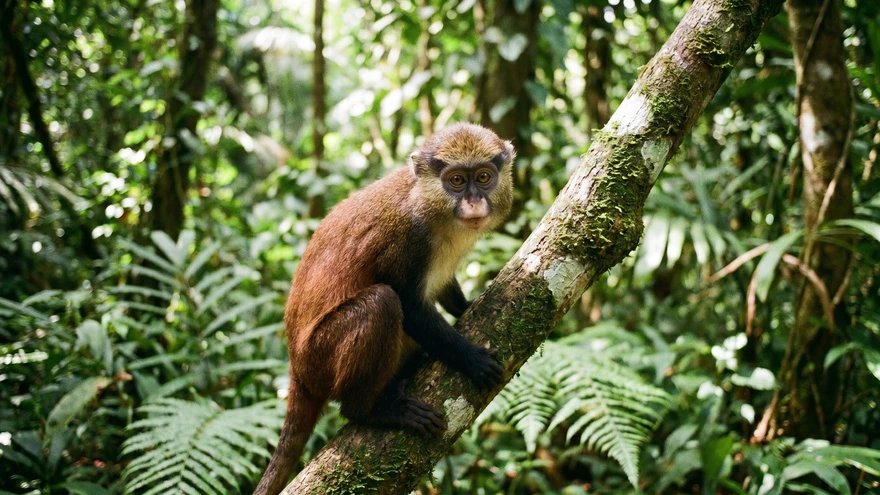
The Mona monkeys, originally brought from West Africa in the 18th century on slave ships, are the park's main draw. They usually hang around the trees right past the ticket entrance, not deep in the jungle. You will likely notice them before anything else - they tend to gather near the main viewing area and along the road edges, especially when visitors arrive.
- Bring Bananas: The monkeys are heavily food-motivated. Local park staff and guides will often call them down using fruit.
- Tip the Guides: If a local helps you get a monkey on your shoulder for a photo, a small cash tip is expected.
- Hide the Bling: These monkeys are highly inquisitive and have a reputation for snatching shiny objects. Remove necklaces, dangling earrings, and loose sunglasses before interacting with them.
- Respect Their Space: Despite being accustomed to people, these are wild animals. Avoid feeding them outside of guided interactions and never corner them.
Hiking Trails: From Easy Walks to the Mt. Qua Qua Summit
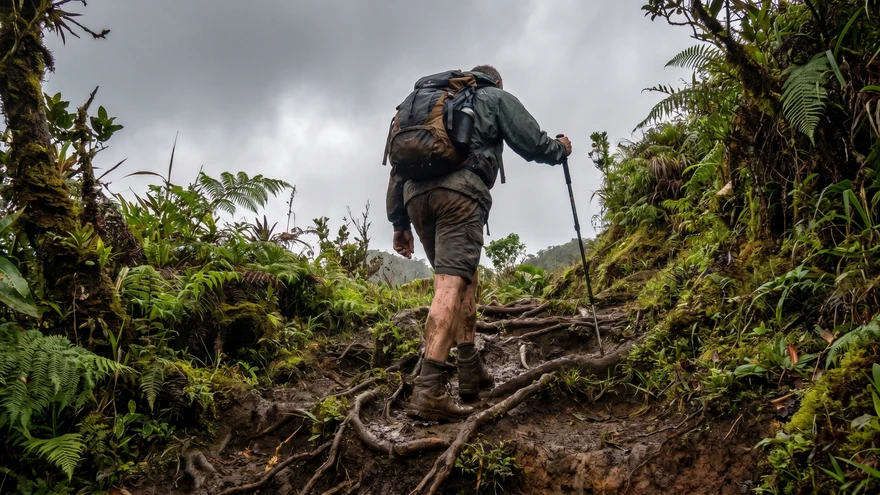
Do not trust the "easy" classification on the trail boards. Frequent rain turns the volcanic soil into slick clay, making proper hiking shoes an absolute necessity for any route. For a broader look at trailheads and access across the island, hiking in Grenada covers routes beyond the park as well.
Morne LaBaye Viewpoint Walk (15 Minutes)
Located just past the restroom facilities, this short uphill trek - only about 200 m - leads to an observation point overlooking the forest canopy. The old viewing platform is mostly gone, but the elevation still provides a solid photo opportunity. The path is notoriously slippery after morning showers.
Shoreline Trail (2 km Loop - Warning: Mud and Unmaintained Paths)
Advertised as a simple 2 km loop around the crater lake, this trail is often a logistical nightmare. The path frequently disappears under thick vegetation and massive tree roots. Hikers regularly find themselves pushing through dense brush with zero visibility of the lake. Skip this if you lack proper footwear or patience for heavy mud.
Beausejour Ridge Trail (300 m)
A shorter ridge-crest option offering views toward the Caribbean Sea. Good for visitors who want elevated views without committing to a long hike. Still muddy after rain.
Mt. Qua Qua Hike (3 km One-Way - Strenuous)
This two-hour upward climb rewards hikers with panoramic views of the entire island. The elevation gain is aggressive. Wear long pants or high socks - sections of the ridge are overgrown with razor grass that will easily slice bare legs. Expect to get very dirty.
Seven Sisters Waterfalls (5 km - Logistics and Razor Grass Warning)
The trailhead for Seven Sisters is about 1.25 miles down the main road from the Grand Etang visitor center. The approach involves multiple sharp elevation changes and muddy terrain. Note that Seven Sisters sits on private property with a separate small entrance fee of around 5 XCD. Hiring a local guide at the entrance for this specific trek saves time and keeps you on the right path through the bamboo-heavy forest. Seven Sisters is just one of several impressive drops on the island; waterfalls in Grenada maps out the full range of cascade options including Royal Mount Carmel and Concord.
Cross Trail (5 km)
Connects Hurricane Ridge to the visitor center. Less traveled than the main trails, offering a quieter experience through dense rainforest. Best done with a guide who knows the junction points.
Inside the Visitor Center and Local Vendors
The park entrance features a small, staffed information center where you pay the $2 USD entry fee. Inside, a quick 5-minute video runs on a loop, explaining the geological formation of the volcano and the island's ecosystem.
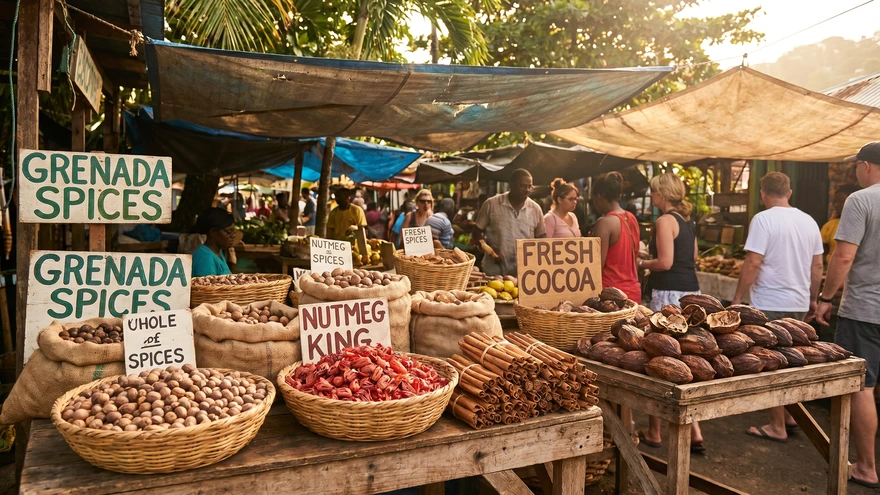
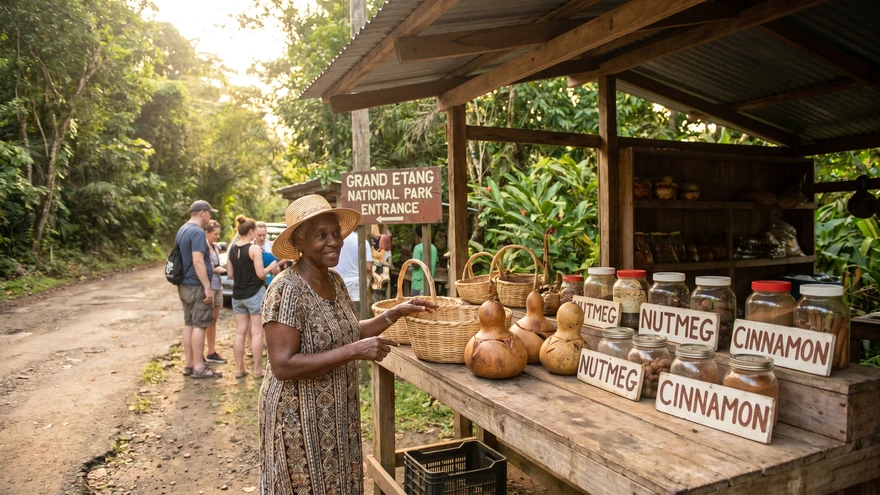
Just outside the center, several local vendors sell spices, snacks, and souvenirs. The vendor stalls closest to the museum often carry a better and significantly cheaper selection of iron-on patches, magnets, and local nutmeg products compared to the shops down at the cruise port. Grab a hot local cocoa or a cold drink here to warm up or cool down after a muddy hike.
Practical Tips Before You Go
The park sits in Grenada's wet interior, which means rain can arrive without warning regardless of the season. Check the best time to visit Grenada before planning your hike - the dry season (January to May) gives you the best trail conditions.
- Start early - by midday, cruise ship groups arrive and crowds increase dramatically
- Bring at least 1-1.5 liters of water per person
- Wear closed-toe shoes with grip; sandals will not survive the mud
- Pack a light rain jacket even on sunny mornings
- Download offline maps - cell signal is unreliable at elevation
If you're planning a multi-day Grenada trip, sorting out a local SIM card before heading into the interior is worthwhile since connectivity drops significantly outside of St. George's.