Getting around Jamaica takes a bit more planning than most Caribbean islands. Route taxis zip between towns on fixed fares, private transfers keep things simple, and rental cars give you the freedom to explore at your own pace - but each option comes with its own quirks. Knowing which transport method suits your itinerary (and your comfort level with unfamiliar roads) saves you both time and money.
Getting Around Jamaica: Transportation, Route Taxis, and Safety
Negotiating unfamiliar roads, aggressive drivers, and unmarked vehicles makes navigating Jamaica a challenge for the unprepared. Booking a licensed driver or knowing exactly how the local transit system operates is the only way to avoid scams and ensure your island transit remains seamless and safe.
| Transport Method | Best For | Comfort & Safety | Flexibility |
|---|---|---|---|
| Route Taxis | Short hops, mingling with locals | Crowded / Moderate | Very High |
| JUTA Taxis | Airport transfers, resort hopping | Comfortable / Very High | High |
| Knutsford Express | Intercity travel (e.g., MoBay to Kingston) | Air-conditioned / High | Low (Fixed Schedule) |
| Car Rental | Independent island exploration | Varies with road conditions | Ultimate |
Navigating Jamaica by Taxi: JUTA vs. Route Taxis
Jamaica's taxi system operates on two entirely different wavelengths. You have the polished, official tourist transports on one side, and the chaotic, hyper-efficient local shared vehicles on the other. Choosing the right one depends entirely on your route and your tolerance for personal space.
How to Spot Licensed Route Taxis (The Red PPV Plate)
Licensed taxis carry red number plates with the letters "PPV" (Public Passenger Vehicle) printed on them. This is your primary visual cue for safety. Unlicensed cabs, often called "robot taxis," roam the streets offering rides to tourists.
Riding in an unlicensed vehicle completely voids any insurance coverage and puts you at a significant security risk. Always verify the red plate before opening the door. Ask your hotel concierge to call a verified cab if you feel unsure about hailing one from the street.
Route Taxi Fares and Etiquette
Route taxis function more like buses, running specific routes and picking up multiple passengers along the way. They operate without a set schedule and simply leave when the driver decides the car is full. Prepare to abandon your concept of standard vehicle capacity. It is completely normal to have three passengers in the front and four or five squeezed into the back.
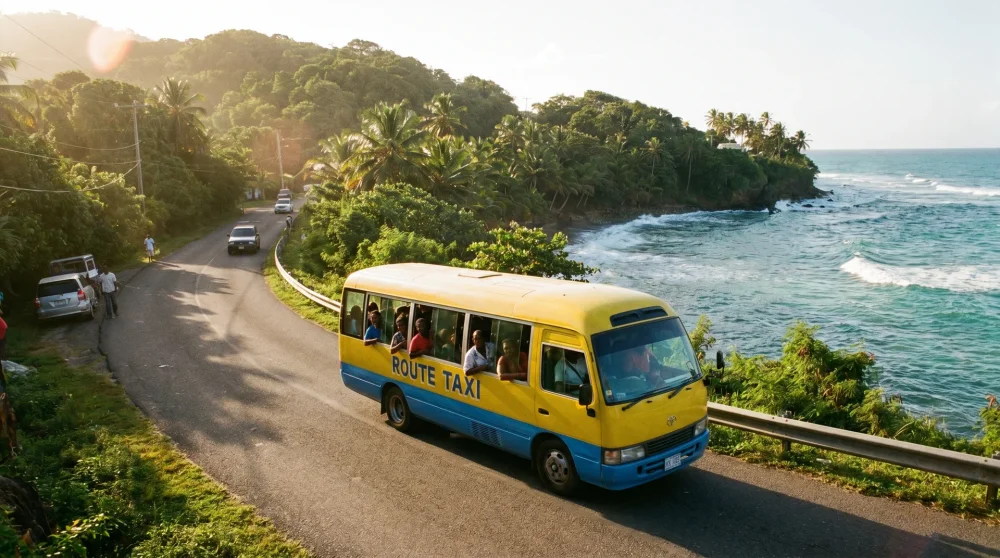
This is the ultimate exercise in going with the flow. Hand your fare directly to the driver or the conductor, and always carry small bills to ensure you get the right change. When you reach your destination, simply shout "one stop" to let the driver know you are ready to get out.
Fares vary by route and distance - negotiate before boarding and always confirm whether the quoted price is in Jamaican Dollars or US Dollars to avoid disputes.
Private JUTA Taxis and Hotel Transfers
For a conventional, private ride, look for the gleaming white vans and sedans belonging to JUTA (Jamaica Union of Travellers Association). These are the official carriers for the tourism industry.
They provide exclusive charters, meaning the driver will not pick up strangers during your journey. Since these vehicles are unmetered, establish the exact fare with the driver before you step inside the car. Negotiation is an accepted part of the process, especially if you hail a vehicle directly off the street.
Renting a Car and Driving in Jamaica
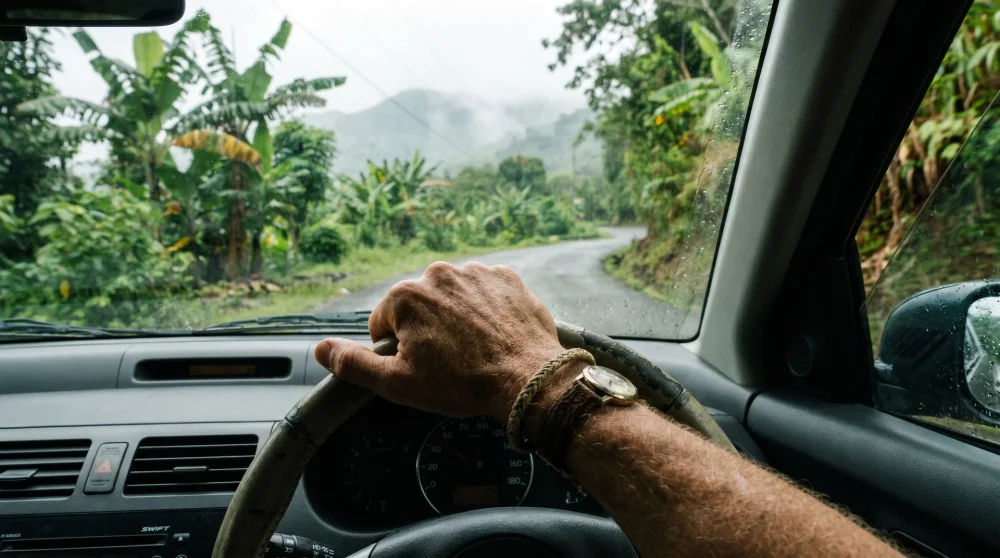
Taking the wheel yourself offers unmatched freedom to explore hidden beaches and mountain trails. Driving is on the LEFT side of the road. While the island is relatively small, the driving culture demands intense focus and defensive reflexes. If you decide to explore independently, Rent a car in Jamaica through a reputable agency to get the best rates and coverage.
Road Conditions, Potholes, and Hazards
The main highways along the north and south coasts remain pristine and provide a remarkably smooth driving experience. Step off the main arteries, however, and the terrain changes drastically. Rural roads often feature severe potholes, sudden hairpin turns, and a complete lack of street signage.
Construction zones rarely have adequate warning markers. Untethered livestock frequently wander onto the tarmac in country areas, requiring you to stay highly alert. Avoid driving at night altogether; poor lighting and dazzling oncoming headlights make rural navigation exceptionally dangerous.
Rental Costs, Insurance, and Driving Rules
Car rental agencies require a valid license from your home country, and drivers generally need to be at least 21 years old. Always opt for comprehensive insurance coverage. If you decline the damage waiver, you become personally liable for every single scratch on the vehicle, regardless of who caused it.
Speed limits hover around 50kph in towns and up to 80kph on main roads, with strict enforcement via radar guns. Jamaican drivers use their horns constantly; a quick toot usually means "thank you" or signals an intention to overtake. If oncoming drivers flash their headlights at you, they are politely warning you about a police roadblock or speed trap ahead.
Long-Distance Travel: Buses and Coaches
If you want to travel across the island without the stress of navigating unmarked traffic circles, buses are your most viable option. The system ranges from premium coaches to heavily modified minivans.
Knutsford Express (Comfort and Reliability)
The Knutsford Express breaks the mold of chaotic island transport. This service utilizes modern, air-conditioned coaches that run strictly on scheduled timetables.
It connects major hubs like Kingston, Ocho Rios, Montego Bay, and Negril with high reliability. Pre-book your seats online to secure your spot, as these routes fill up quickly. This is the smartest way to handle long-haul, cross-country transits. The journey from Montego Bay to Negril takes approximately 2 hours; Montego Bay to Kingston runs around 3.5 to 4 hours.
Local Minibuses (The Budget Option)
Privately owned minibuses offer a distinctly authentic way to travel. They lack any formal timetables and conductors aggressively scout for passengers at the bus terminals. You must wait inside until the vehicle is packed to the brim before the journey begins.
While they cover almost the entire island, direct routes for long distances are rare. A trip across the country might require changing buses in three different towns. Keep your valuables securely concealed beneath your clothing, as the tight, jostling environment inside makes it easy for pickpockets to operate unnoticed.
Safety First: Transportation Scams to Avoid
Transportation safety in the broader Caribbean region always requires a sharp eye, and Jamaica is no exception. Never assume a vehicle stopping for you is a legitimate taxi just because the driver honks or waves.
Uber is not available in Jamaica. For broader context on tourist safety, see is Jamaica safe for tourists. Apps like Uber and Lyft do not operate on the island. Your options are licensed JUTA taxis, route taxis, or pre-arranged transfers through your hotel or tour operator.
Pedestrians do not inherently have the right of way. Drivers rarely stop at crosswalks, and overtaking stopped vehicles at high speeds is a common maneuver. Walk with extreme caution near major roads and rely heavily on official resort shuttles or JUTA-certified drivers for your daily excursions.