Navigating the Swiss rail system to reach a landlocked country without its own train station can feel like a logistical puzzle. The transfer from Zurich to Vaduz is completely seamless if you know the exact connection point. The SBB network via Sargans cuts out any stress of navigating alpine roads, letting you step into the center of Liechtenstein in just under an hour and a half.
This guide covers the exact route, current costs, what to do once you arrive in Vaduz, and how to squeeze the most out of a single day in the sixth-smallest country in the world.
How to Get to Liechtenstein from Zurich
Train and Bus via Sargans (The Fastest Way)
Take the IC3 train from Zurich Hauptbahnhof (HB) to Sargans - the ride lasts about one hour. Grab a seat on the left side of the train for the best views of Lake Zurich and the alpine countryside rolling past.
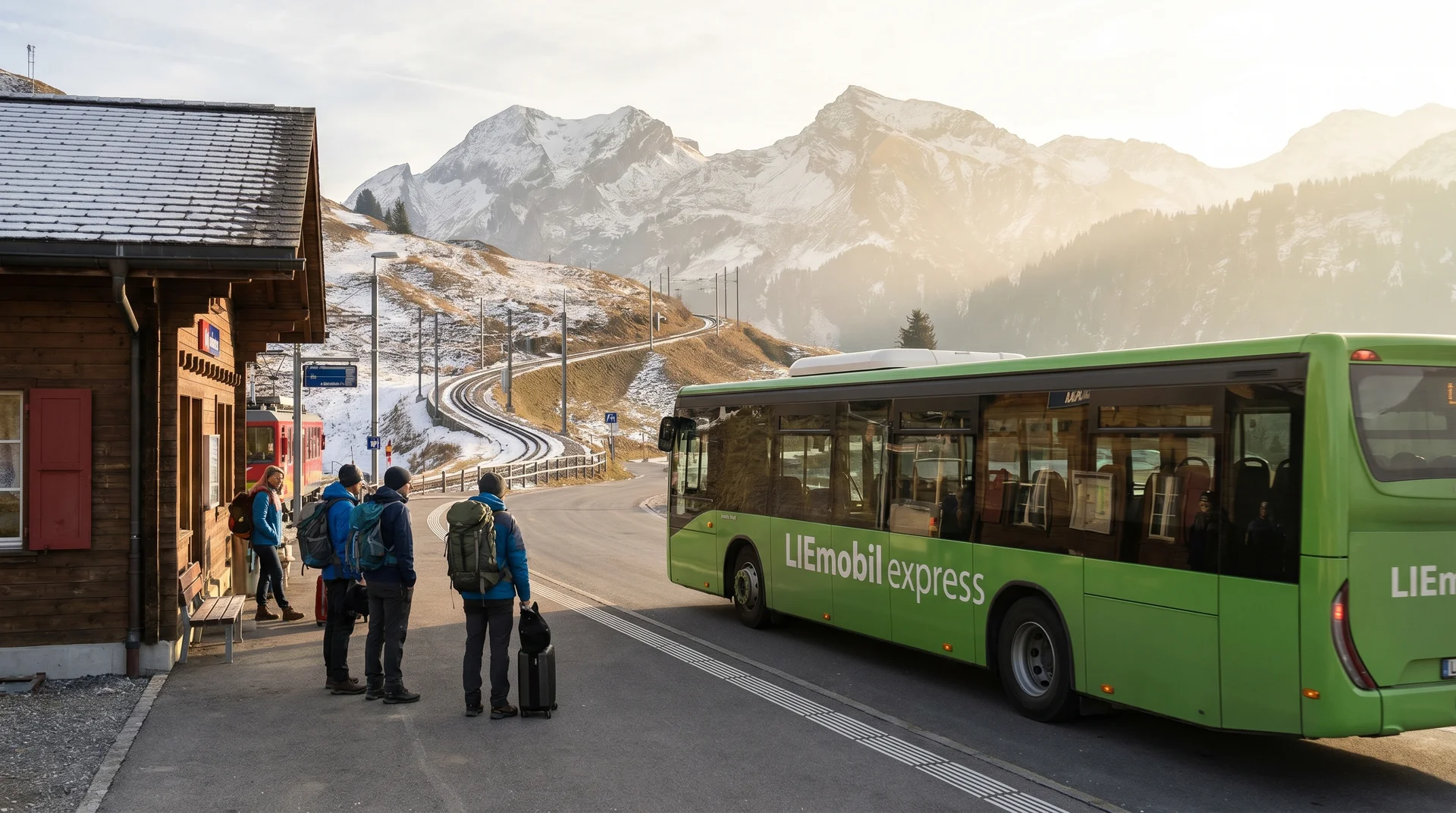
Once you arrive at Sargans, step outside the station entrance to find the neon-green LIEmobil buses waiting. You have two options heading toward Vaduz Post:
- Bus 12E (Express) - reaches Vaduz in about 23 minutes
- Bus 11 (Local) - takes closer to 30 minutes
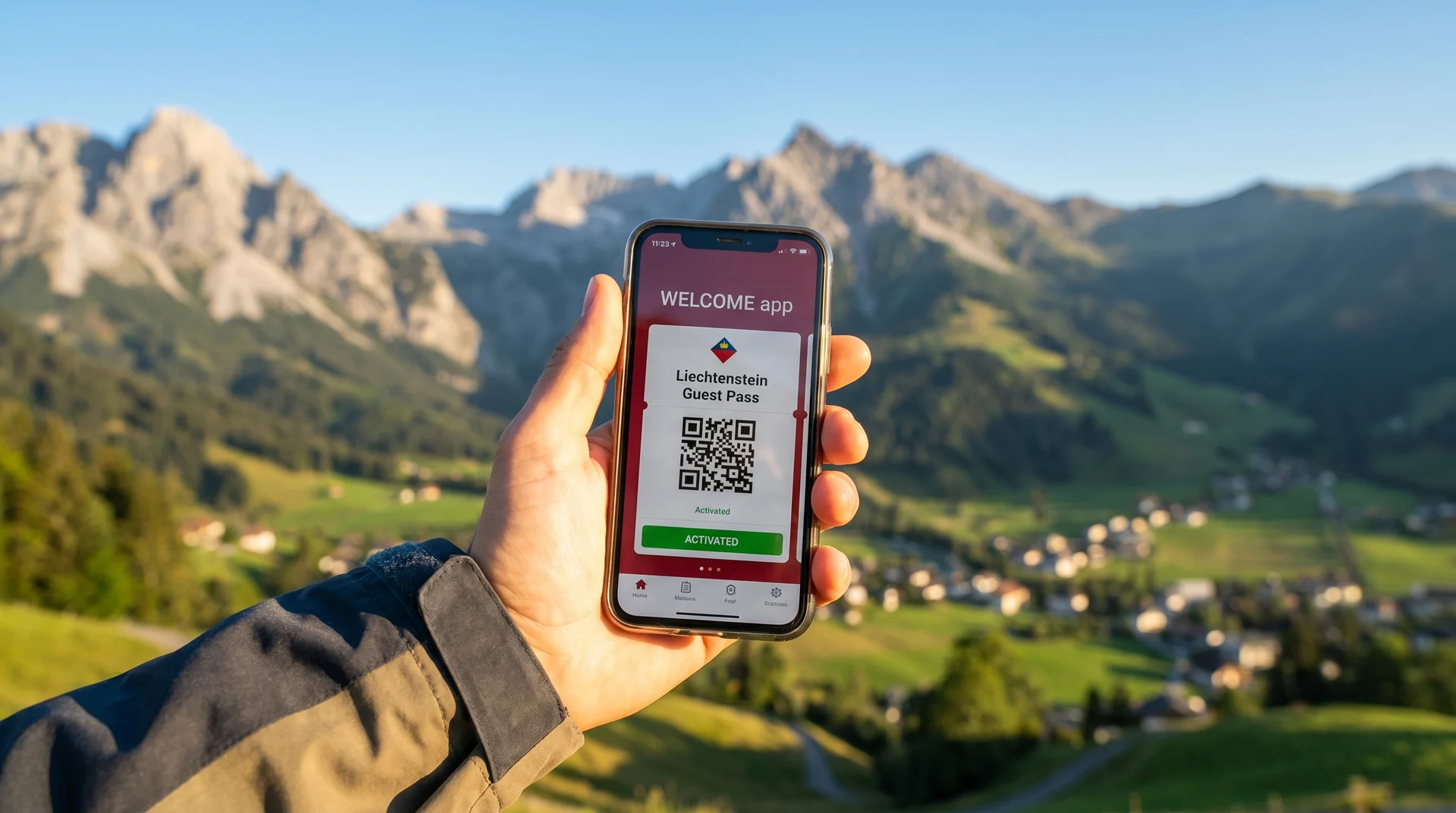
Bus tickets cost 8 CHF each way each way. You can tap your credit card directly on the bus, so no need to find cash before boarding. If you hold a valid Swiss Travel Pass or GA Travelcard, both the train and the LIEmobil buses are fully covered.
The total round-trip cost without a pass runs to approximately ~50 CHF round trip (train + bus) (as of 2026), combining the SBB fare and bus tickets in both directions.
Driving to Vaduz
Renting a car and driving the 80-kilometer stretch takes roughly 1 hour 10 minutes via the A3 and A13 highways. This gives you the flexibility to pull over for photos or explore remote alpine roads at your own pace.
Keep in mind that you need a Swiss motorway vignette attached to your vehicle to legally drive on the highways leading to the border. Parking near the Städtle pedestrian zone fills up fast during summer months, so arriving early is important.
Things to Do in Vaduz in One Day
For a full breakdown of all attractions in the capital, the things to do in Vaduz guide covers every museum, free sight, and hidden corner.
Get Your Passport Stamped
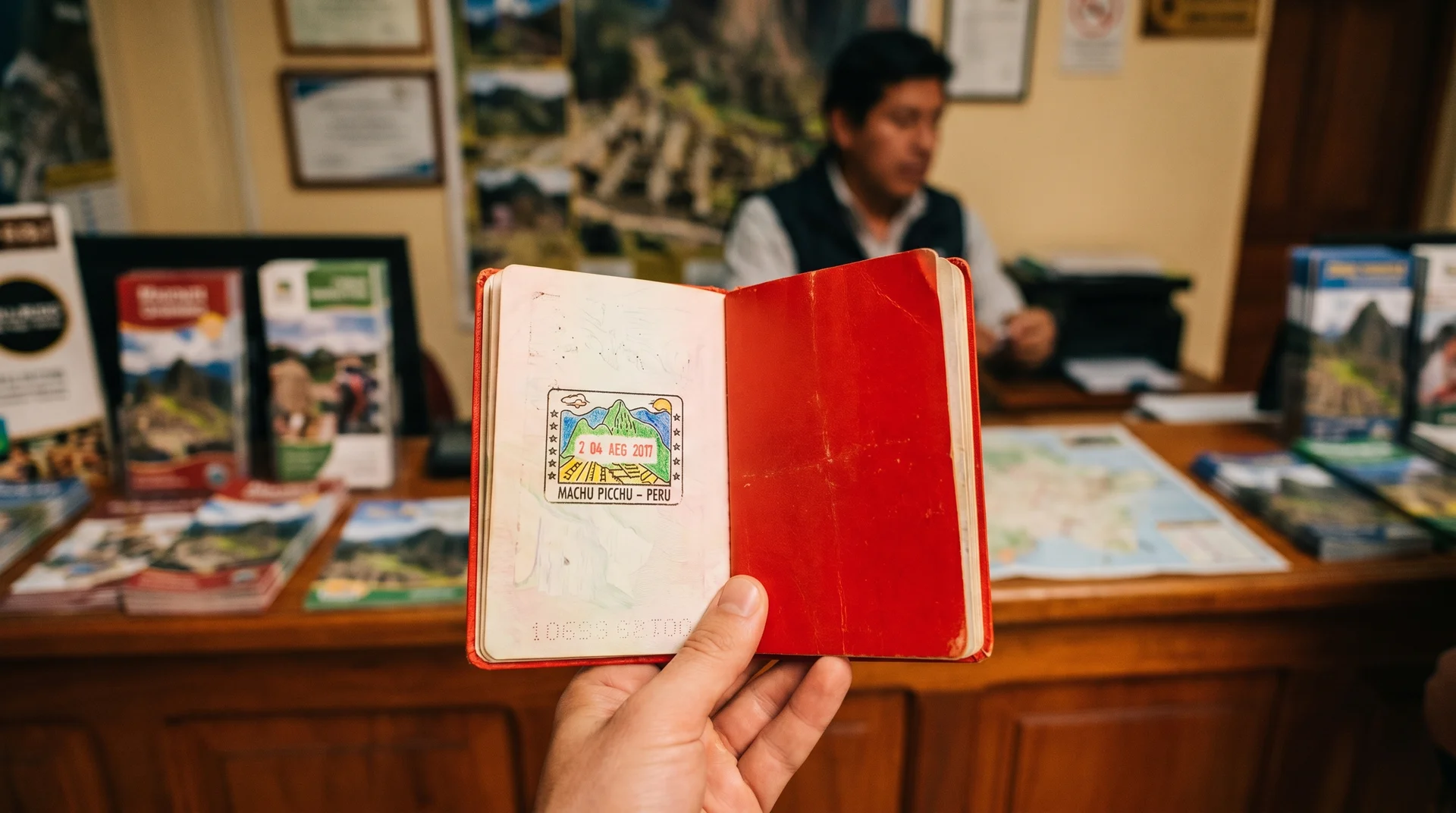
Liechtenstein has no physical border checkpoints when entering from Switzerland. To get proof of your visit, head to the Liechtenstein Center (the official tourist office) on Städtle street. They provide an official souvenir stamp right at the counter. The stamp costs 3 CHF and is one of the most popular and inexpensive souvenirs in the country.
Walk Up to Vaduz Castle
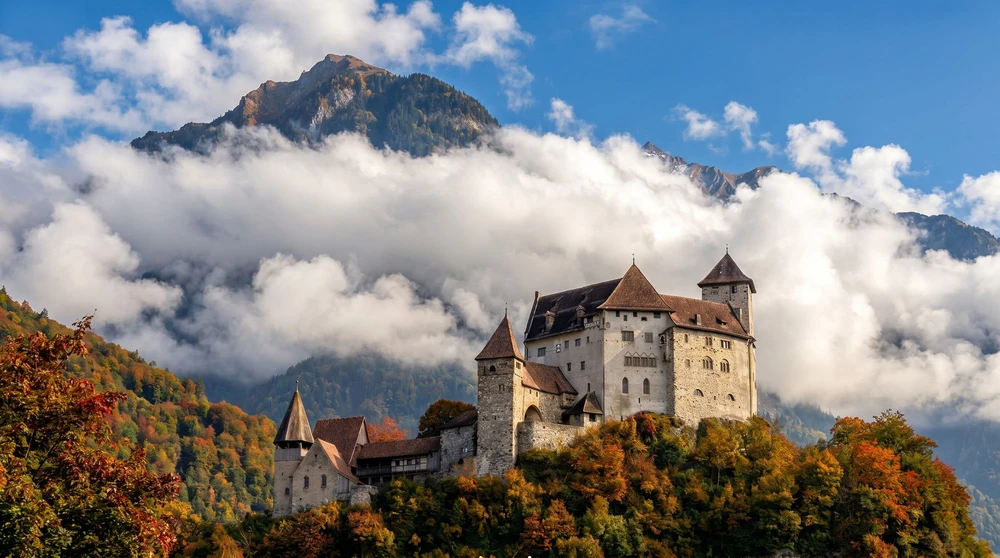
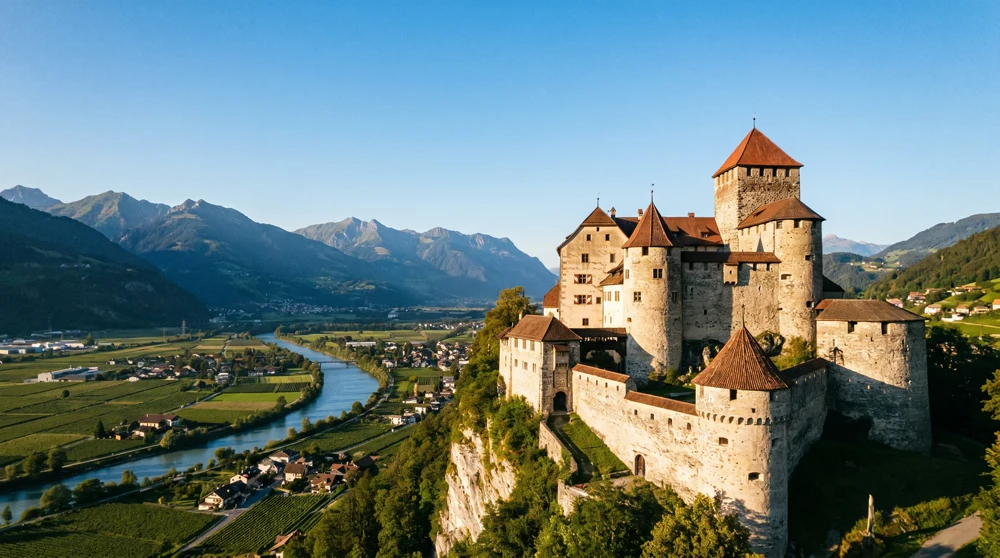
Perched dramatically above the capital, Vaduz Castle serves as the official full-time residence of the Prince of Liechtenstein. Because it is an active royal home, the interior remains strictly closed to the public.
Walking up to the castle grounds is still an absolute must. The 15-minute hike via the Schloss-Stieg and Schlossweg paths is steep, but the reward is a breathtaking, unobstructed panorama of the Rhine Valley and the jagged Swiss Alps stretching behind it. If you prefer not to hike, the tourist train runs up the hill as an alternative.
Visit the National Museum and Kunstmuseum
The city center packs a surprising amount of culture into a tight radius. The Kunstmuseum Liechtenstein stands out immediately - a striking black-box architectural structure housing an impressive collection of modern and contemporary art. The building itself is considered a work of art.
A short walk away, the Liechtenstein National Museum explores the landscape, history, and royal lineage of the principality in depth. Both museums are completely closed on Mondays, so structure your itinerary carefully if you are visiting early in the week.
Explore the Städtle Sculpture Walk
Vaduz's pedestrianized main street is scattered with eccentric public sculptures installed since the 1980s. You might pass a metallic horse, a squashed rhinoceros, or a car raised on human legs - each piece part of an informal open-air collection that gives the compact capital an unexpectedly surreal edge. The Cathedral of St. Florin, just below Vaduz Castle, is also worth a quick stop for its stained glass interior and the tomb dedicated to the princely family.
Extended Stops: Beyond Vaduz
Explore Gutenberg Castle in Balzers
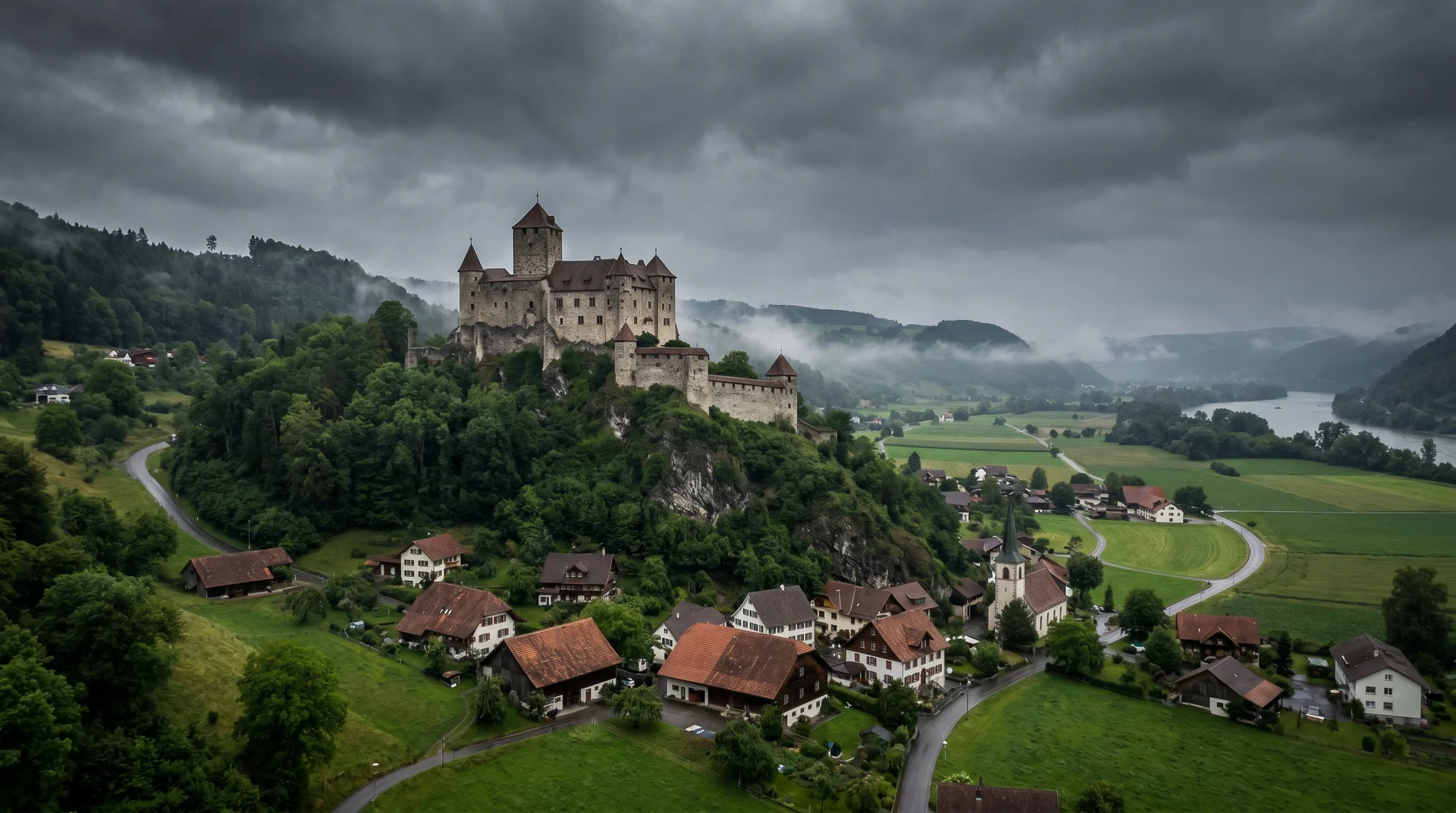
If you want a medieval experience without the closed-to-the-public restriction of Vaduz Castle, drive or take a 15-minute local bus ride south to the town of Balzers. Burg Gutenberg dominates the skyline, resting atop a rocky hill in the middle of the valley. While the inner chambers operate on seasonal schedules, the outer courtyards and stone pathways are fully accessible and make for some of the most photogenic shots in the country.
Malbun (Ski Resort, Accessible Year-Round for Hiking)
Bus 21 from Vaduz takes you up a winding mountain road directly into Malbun, Liechtenstein's only alpine resort village. In winter, heavy snow accumulation transforms the area into a compact ski escape. In summer and autumn, the same area opens up as a hiking base with marked trails above 1,600 meters. Proper footwear is non-negotiable year-round - the terrain above the bus stop changes character quickly with elevation.
Practical Tips for Your Day Trip
Currency and Payments
The official currency is the Swiss Franc (CHF), so there is no conversion loss if you are traveling directly from Zurich. Credit and debit cards are widely accepted across restaurants, museums, and public transport, including the buses.
Euros are accepted in most shops and restaurants as a backup. However, your change will always come back in Swiss Francs at a less-than-ideal exchange rate, so paying by card is the smarter move.
Best Time to Visit
Late spring through early autumn (May to October) offers the most reliable weather for hiking and walking between the hillside castles. The trails are clear of snow, and the Rhine Valley turns a brilliant green. Sunday visits require extra planning as many restaurants, shops, and supermarkets are closed. Plan for a Tuesday through Saturday visit if you want everything open.
Winter visits require careful planning around daylight hours and transport. Many higher-elevation hiking trails close, and reaching outer villages by bus becomes harder if a heavy snowstorm rolls through.