Getting behind the wheel in Grenada requires more than just remembering to drive on the left - you need a mandatory local permit before you even start the engine. Navigating the steep, winding island roads gives you unparalleled freedom, but it demands sharp attention and a solid understanding of unwritten local etiquette.
- Driving Side: Left
- Mandatory Local Permit: EC$60 (approx. $22 USD), valid for up to 3 months
- Speed Limits: 20-25 mph (32-40 km/h) in built-up areas; 37-40 mph (60-64 km/h) on open roads
- Rental Age Limits: Minimum 21 years old (often capped at 65 by rental companies)
- Blood Alcohol Limit: 80mg per 100ml (strictly enforced)
- Seatbelts: Mandatory for all passengers
- Phone Usage: Strictly hands-free only
Securing Your Grenada Visitor's Driving Permit
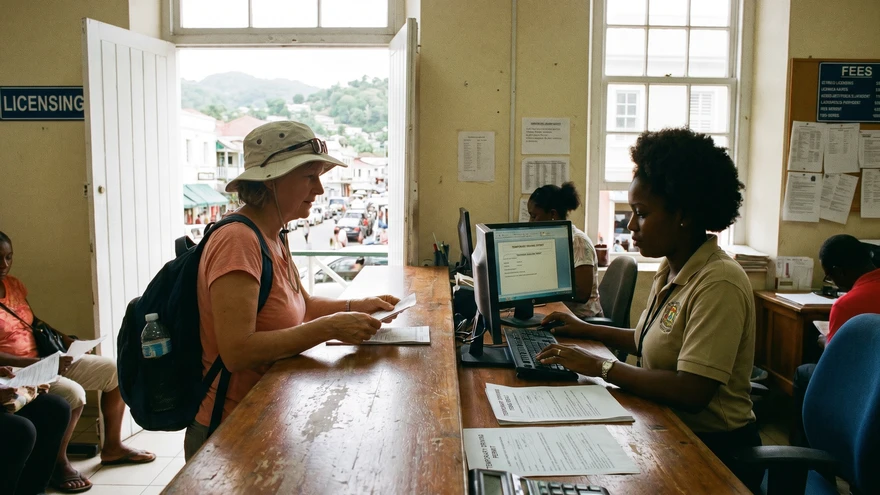
You cannot legally drive in Grenada using only your home country's driver's license. Every foreign visitor must obtain a temporary local driving permit.
The easiest way to handle this is directly through your car rental agency at Maurice Bishop International Airport or in St. George's. They will process the EC$60 fee and issue the permit alongside your rental paperwork. If you are borrowing a car from a friend or buying a vehicle, you must obtain this permit in person at the Traffic Department of the Royal Grenadian Police Force, located on Carenage Street in St. George's.
If your domestic license is not printed in English or does not use the Roman alphabet, you must also present an International Driving Permit (IDP) alongside your home license to get the local permit. Bring physical copies of your documents - digital photos on your phone will not cut it at a police checkpoint.
Navigating the Roads: Left-Side Traffic and Local Habits
Grenada follows the British system, so you will be driving on the left-hand side of the road with the steering wheel on the right. If you are used to driving on the right, the coastal roads and roundabouts require active concentration during your first few days.
The main tourist corridors around Grand Anse and St. George's are well-paved and predictable. However, the moment you head inland toward Grand Etang National Park or the northern parishes, the terrain changes drastically. The roads become incredibly steep, narrow, and winding, often lacking shoulders or guardrails. Keep in mind that roughly half of Grenada's roads are unpaved or dirt tracks, so your itinerary dictates your vehicle choice.
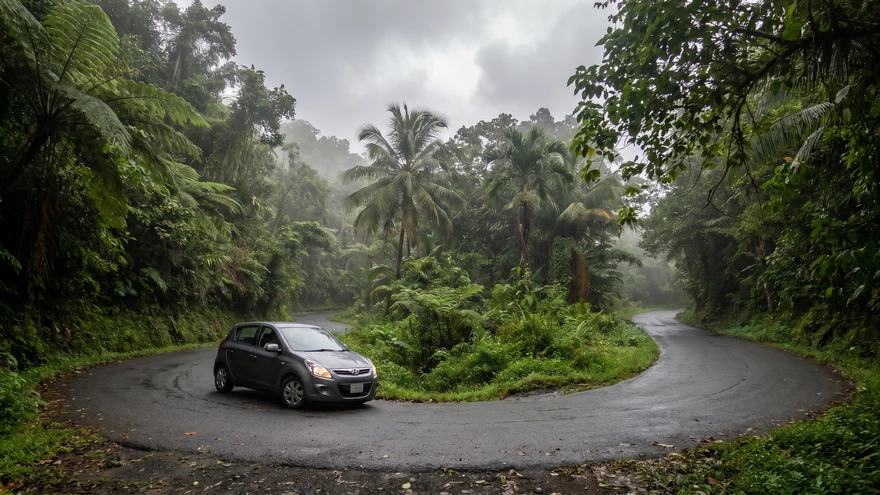
Understanding the local driving communication is essential here:
- The Blind Corner Honk: Many mountain roads fit only one and a half cars. A quick tap of the horn before a sharp, blind corner is standard protocol to warn oncoming traffic.
- The Courtesy Flash: If an oncoming driver flashes their headlights, they are yielding and giving you the right of way to pass a narrow stretch.
- Sudden Stops: Local public minibuses stop frequently and abruptly to pick up or drop off passengers without pulling over. Keep a safe following distance. If you prefer not to drive, getting around Grenada by minibus or taxi is a practical alternative for many routes.
- Roadside Hazards: Pedestrians walking in the road, free-roaming goats, chickens, and dogs are all common, especially on rural routes. After heavy rain, watch for loose gravel and occasional landslide debris.
Avoid driving in the rural interior after dark if possible. Streetlights are sparse to non-existent outside the main towns, and you will share the road with pedestrians, wandering livestock, and deep, hard-to-see potholes.
Also note that Grenadian drivers sometimes stop mid-road to greet friends or neighbors - this is a genuine local custom, not aggressive driving. Patience is your best tool on these roads.
Essential Car Rental Logistics
Choosing the right vehicle depends entirely on your itinerary. If you plan to stick to the beaches, restaurants, and resorts between St. George's and Lance aux Epines, a compact economy car is perfect. It makes navigating tight city streets and squeezing into small parking spots much easier. Most accommodation in Grenada in this southern corridor provides dedicated parking for guests.
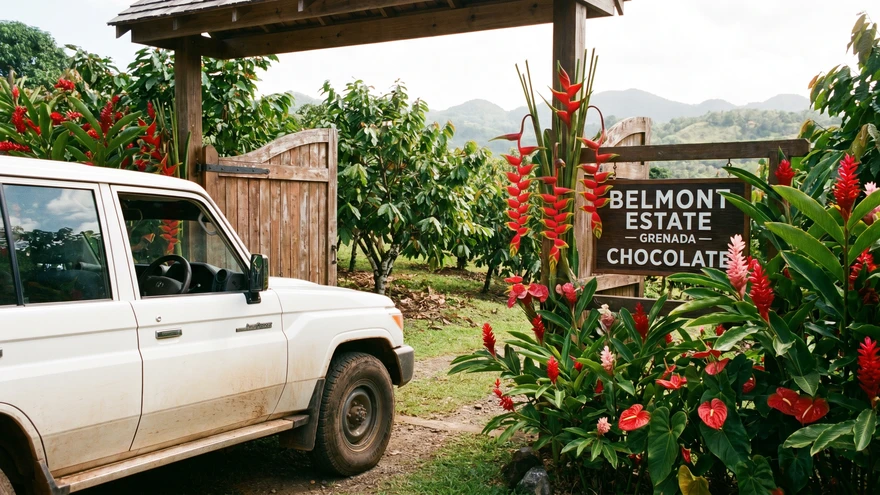
If your plans include chasing waterfalls, exploring rural chocolate estates, or driving up to Levera Beach in the north, a 4x4 or an SUV is highly recommended. The extra ground clearance is invaluable on unpaved dirt tracks and steep, rain-slicked hills.
Basic insurance is required by law and usually included in your rental rate. However, given the tight roads and risk of minor scrapes from overgrown roadside brush, opting for the Collision Damage Waiver (CDW) offers serious peace of mind.
Rental rates start around $50 USD per day, with most reputable companies offering free airport pickup from Maurice Bishop International Airport. Factor this into your overall Grenada travel costs when planning your daily budget. Confirm your permit is processed as part of the rental paperwork before driving off the lot.
For comparison, the left-hand driving adjustment in Grenada is similar to what visitors face in other Caribbean destinations. If you are curious how Driving in Grand Cayman works, or how Getting Around St. Kitts and Nevis differs, those guides cover the same regional permit and road culture nuances.
Parking and Fuel Station Availability
Parking in central St. George's requires patience, especially on busy market days. The spots around the Carenage fill up quickly, so arrive early in the morning. The area near the Bus Terminal is another option when the Carenage is full. Outside the capital, parking is generally abundant and free. Always ensure you are not blocking a narrow lane or a local driveway when pulling over.
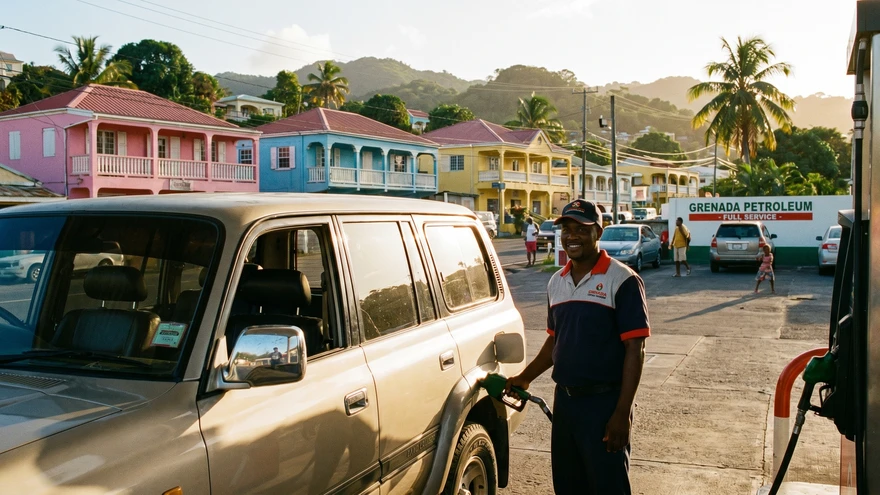
Do not let your fuel gauge drop too low. Gas stations are plentiful around the southern tourist hubs, but they become sparse as you head north. Most stations in Grenada are full-service - an attendant will pump the gas for you. Keep in mind that many rural fuel stations close early, often by 6:00 PM or 7:00 PM, so fill up before embarking on an afternoon road trip.
Driving Time Reality Check
Grenada is a small island, but journey times are longer than the distance suggests. A 20-kilometer mountain drive can easily take 45 minutes or more. A full loop around the island's perimeter, without stopping, takes roughly three to five hours depending on your route and road conditions.
If you plan an island-wide road trip, allocate a full seven to eight hours to comfortably accommodate waterfall excursions, beach stops, and slow-moving agricultural traffic. The north of the island around Levera and Sauteurs is worth the extra time, but the roads demand patience and a capable vehicle.