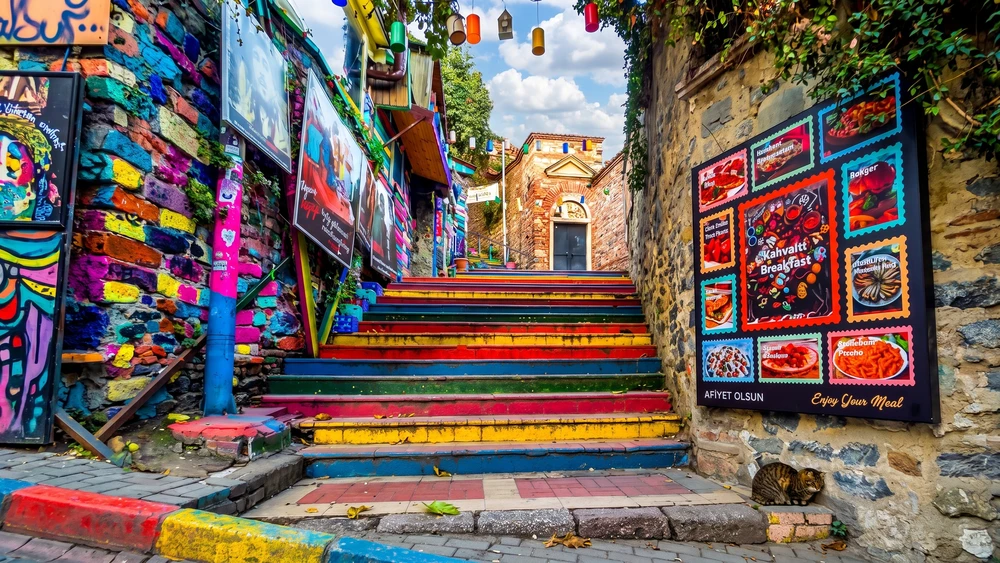
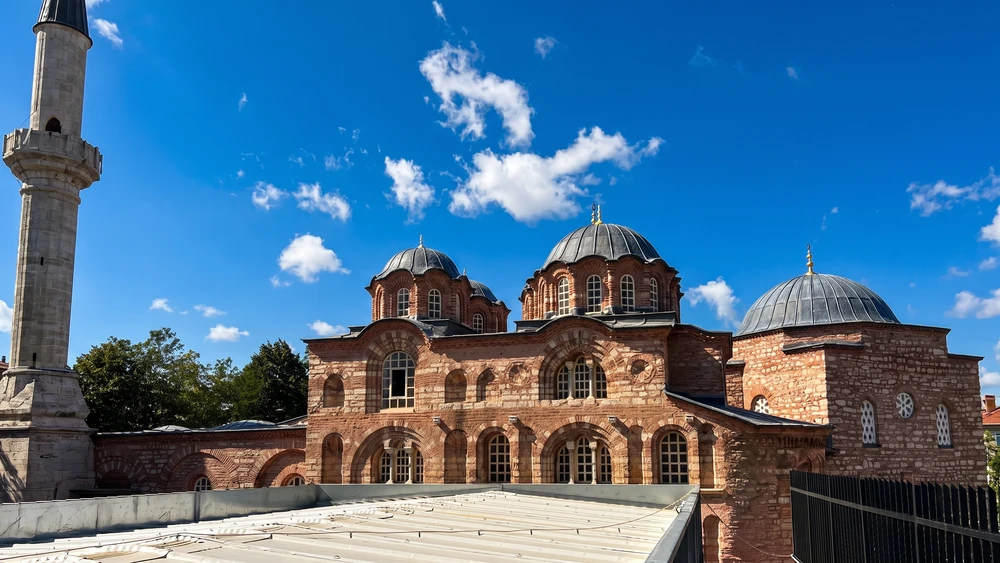
Navigating the labyrinth of Balat and Fener without a clear sequential plan usually ends in physical exhaustion and missed landmarks. The sheer number of steep, dead-end cobblestone streets makes relying on fragmented photo spot lists completely impractical. A geography-driven route prevents backtracking and turns a chaotic uphill struggle into a logical, manageable walk. This route focuses purely on logistics, start point, sequence, and timing, so you can see all five landmarks without doubling back.
| Detail | Info |
|---|---|
| Total Distance | 2.5 km (1.5 miles) |
| Estimated Time | 2.5-3 hours (including interior visits) |
| Effort Level | High, steep inclines and uneven stone stairs |
| Starting Point | Cibali Gate (T5 Tram: Cibali stop) |
| Ending Point | Bulgarian Iron Church (T5 Tram: Balat stop) |
Getting to the Starting Point
Skip the traffic-heavy bus routes along the Golden Horn. The most efficient transit method is the **T5 Eminönü-Alibeyköy tram line**. Board the tram at Eminönü and exit at the Cibali stop. Starting at Cibali allows for a natural, chronological progression from the older Byzantine harbor walls directly into the historic center of Fener, preventing an immediate, exhausting climb right out of the vehicle.
Turn-by-Turn Walking Route
Stop 1: Cibali Gate and Golden Horn Promenade
Cross the street from the tram station and locate Cibali Gate (Cibali Kapısı) standing beside the Byzantine sea walls. This stone archway marks the physical boundary between the modern waterfront and the historical peninsula. The area immediately inside the gate is flat, serving as an easy warm-up before the severe elevation changes ahead.
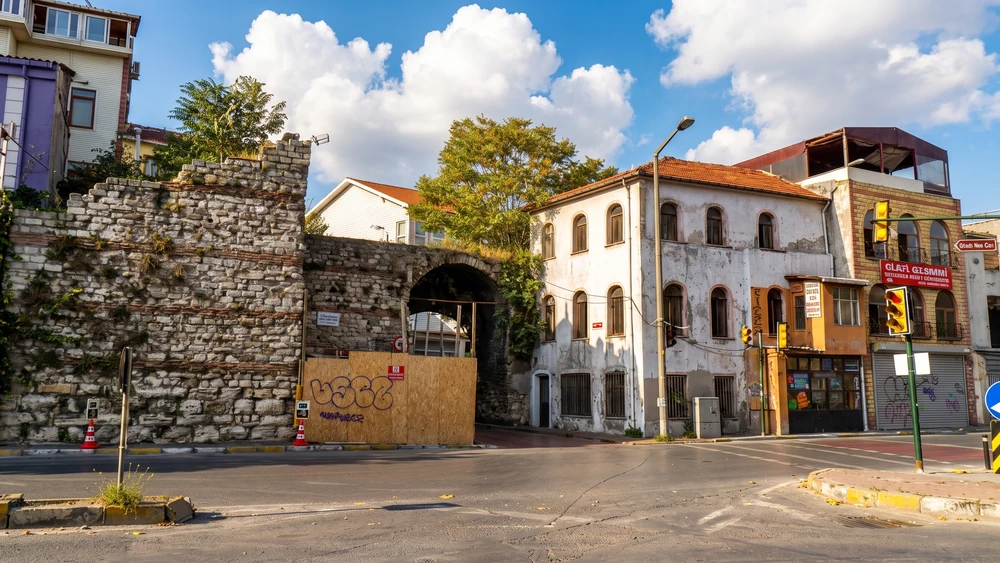
Walk straight along Kadir Has Caddesi, keeping the water on your right, until you reach the edge of the Fener district. For the district's broader backstory, from Byzantine harbor to Ottoman-era Jewish quarter, the history of Balat and Fener fills in the context this walk skips past.
Stop 2: Fener Greek Orthodox Patriarchate (St. George)
Turn left onto Dr. Sadık Ahmet Caddesi. The heavily fortified walls on your right enclose the **Ecumenical Patriarchate of Constantinople**.
The main entrance is permanently sealed; use the side door for access. Inside, the Church of St. George holds immense significance for the Orthodox world. Entry is free of charge, and visitors pass through a basic security check at the side entrance before reaching the courtyard. Admire the detailed wood carvings of the iconostasis and the 5th-century patriarchal throne.
Stop 3: Phanar Greek Orthodox College (The Red School)
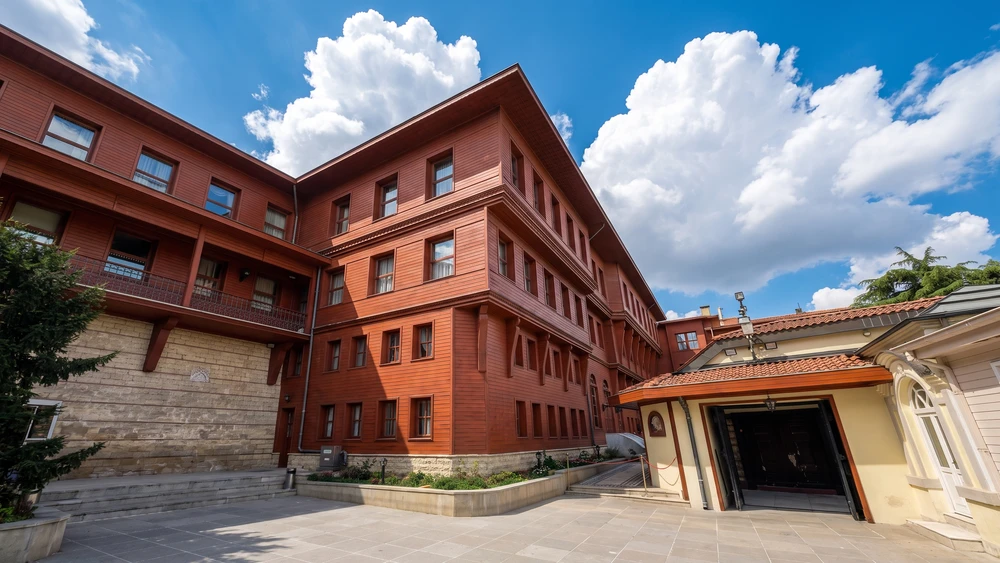
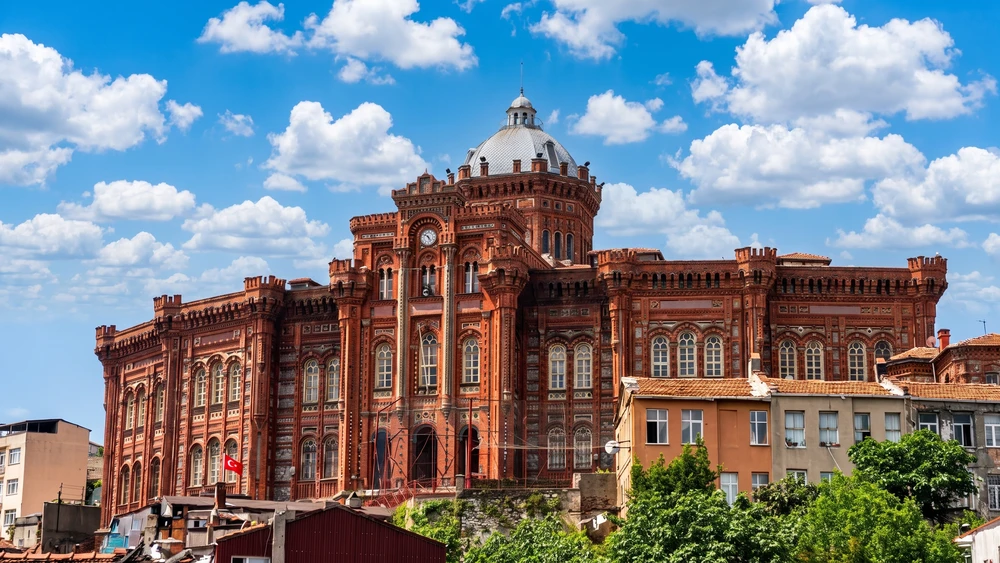
Exit the Patriarchate and start the steep ascent up Sancaktar Yokuşu (Sancaktar Slope). The gradient here is punishing. Look up to see the massive, castle-like silhouette of the Phanar Greek Orthodox College.
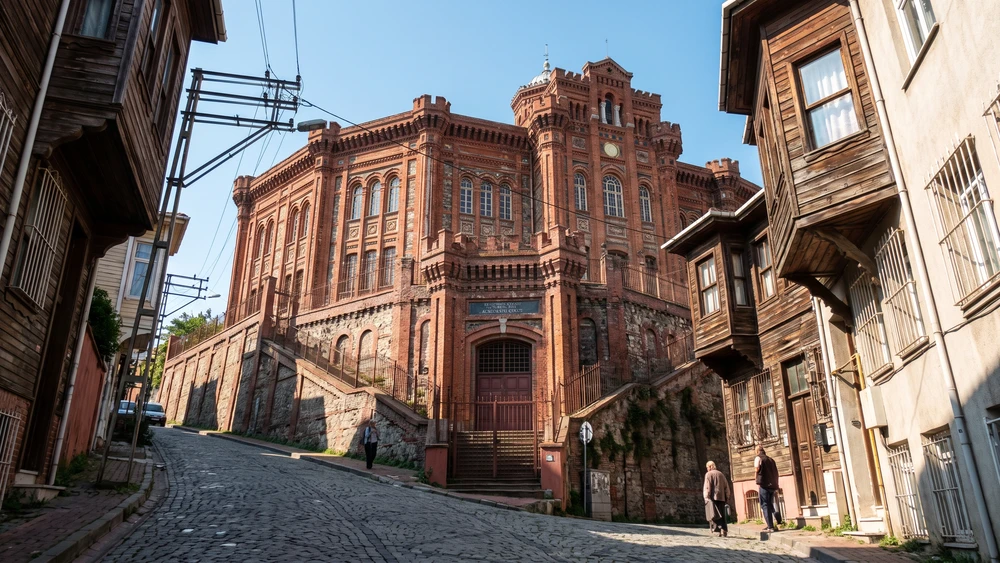
Made entirely of red bricks brought from France in the 19th century, the architecture dominates the skyline. The school is an active educational institution and closed to the public, but the exterior view from the top of the stairs provides the definitive architectural photograph of the area. If you have extra time to spare, the Byzantine mosaics inside the Fethiye Museum (Pammakaristos Church) sit a short detour north of here, though this particular route does not loop past it.
Stop 4: Church of St. Mary of the Mongols (Kanlı Kilise)
Continue walking along the high ridge behind the Red School onto Tevkii Cafer Mektebi Sokak. You will quickly encounter the high, red-painted walls of the Church of St. Mary of the Mongols. It holds the distinct title of being the only Byzantine church in Istanbul that never converted into a mosque.
A heavy iron door guards the courtyard. Ring the bell, the caretaker occasionally opens it for visitors, though access is entirely at their discretion.
Stop 5: Bulgarian St. Stephen Church (The Iron Church)
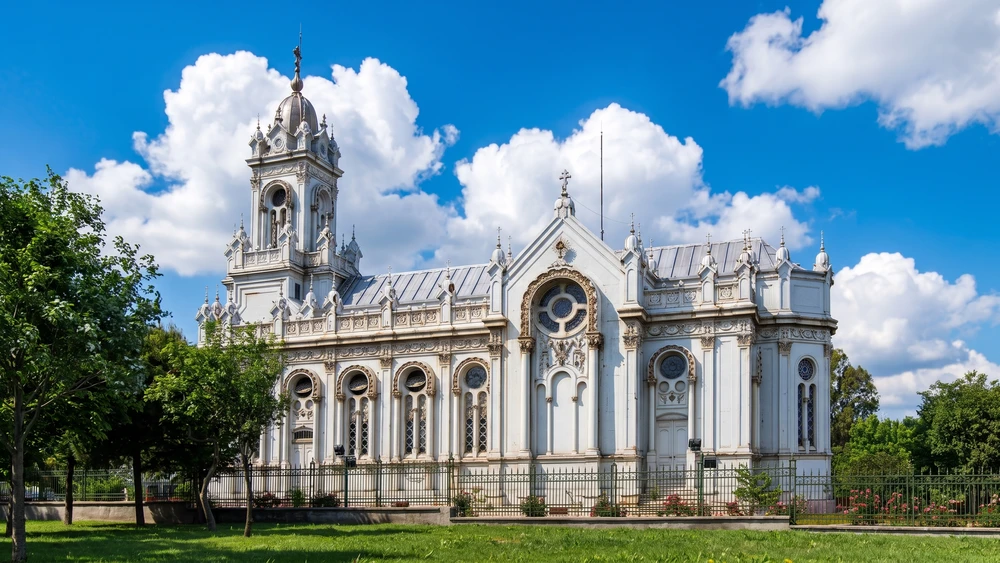
Begin your descent back towards the water via Merdivenli Yokuşu, the stepped street flanked by historic Greek mansions. At the bottom, cross Mürselpaşa Caddesi to the waterfront park. The Bulgarian St. Stephen Church sits directly on the shore, a short walk from the Balat tram stop.
Built entirely of prefabricated cast-iron pieces shipped from Vienna down the Danube River, the neo-Gothic exterior and golden domes are visually striking. Entry is free, and the interior galleries offer a close look at the exposed iron assembly. On the way down, Balat's Çıfıt Çarşışı also hosts antique auctions and vintage shops worth a slower browse if you are not racing the clock.
Best Time to Walk the Route
Early mornings on weekdays provide the clearest streets. The narrow alleys around the Red School bottleneck quickly after 11:00 AM when large tour groups arrive. Sunday mornings are highly congested around the Patriarchate due to active church services. The afternoon sun hits the Red School's facade directly, creating harsh shadows, making pre-10:00 AM light optimal for photography.
Practical Tips for the Steep Streets of Balat
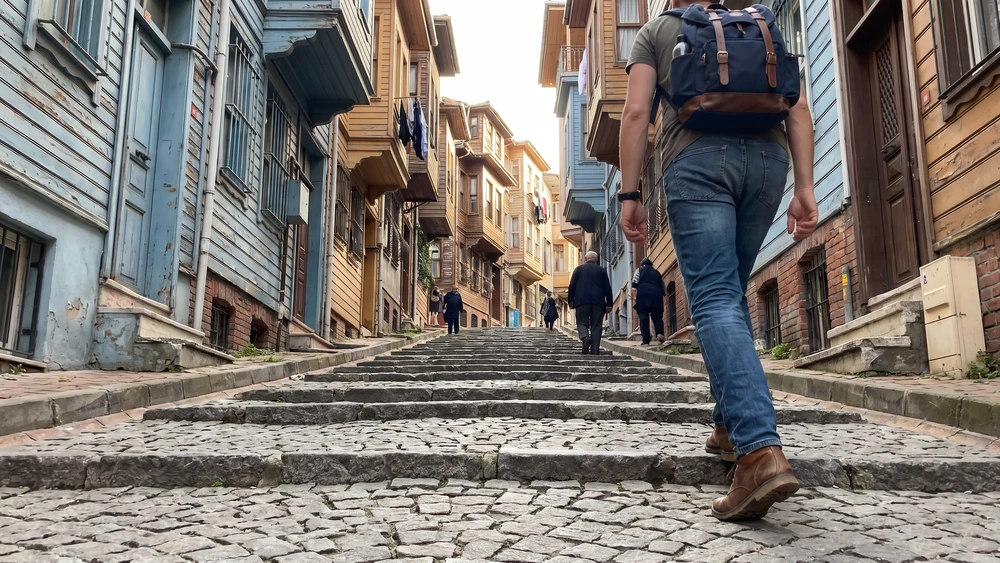
- Footwear: Thick-soled sneakers or hiking shoes are mandatory. The cobblestones are polished by centuries of use and become extremely slick, especially near the historic fountains.
- Accessibility: This specific geographical route is not wheelchair or stroller-friendly. The elevation changes require navigating long, uneven stone staircases without handrails.
- Navigation: GPS signals often bounce off the high brick walls in the narrowest alleys. Download an offline map of the Fatih district before leaving your hotel to maintain your bearings when the signal drops.
- Dress code: Cover shoulders and knees before entering the Patriarchate or the Iron Church, both are active places of worship.
If this single route only scratches the surface, the wider list of things to do in Fener and Balat covers cafes, viewpoints, and shops that fall outside this specific turn-by-turn path.