Showing up in Balat at noon to buy antiques means missing the actual event, as the real action only kicks off when the afternoon auctions begin. Navigating these fast-paced, Turkish-only bidding wars requires knowing exactly when to arrive and how to signal a bid without overpaying.
- Location: Leblebiciler Caddesi and Vodina Caddesi, Balat, Istanbul.
- Auction Times: Typically Wednesday, Friday, Saturday, and Sunday between 15:30 and 20:00 (Fener Antik). Evening online sessions often stretch from 20:00 to midnight.
- Payment: Cash (Turkish Lira) is king, very few accept credit cards for auction items.
- Getting There: T5 Tram line to Fener station or the public ferry to Fener pier, followed by a 5-minute walk inland.
What Is Çıfıt Çarşısı? Balat's Historic Trading Quarter
The name Çıfıt Çarşısı refers to Leblebiciler Caddesi, a historic commercial street in Balat. Sephardic Jews who arrived in Ottoman lands after 1492 became part of the neighborhood's Jewish community, while the street's name preserves its older roasted-chickpea trade. Narrow cobblestone streets, tightly packed brick facades, and a chaotic but charming array of storefronts define the street today.
Today, the original demographic has shifted, but the commercial spirit remains untouched. The street is a massive open-air cabinet of curiosities, far removed from the sterile environment of a shopping mall. It stands in sharp contrast to the covered, ticketed stalls of the Grand Bazaar, where fixed prices and tourist-facing shops dominate.
You walk in for a quick look and leave three hours later with a brass telescope.
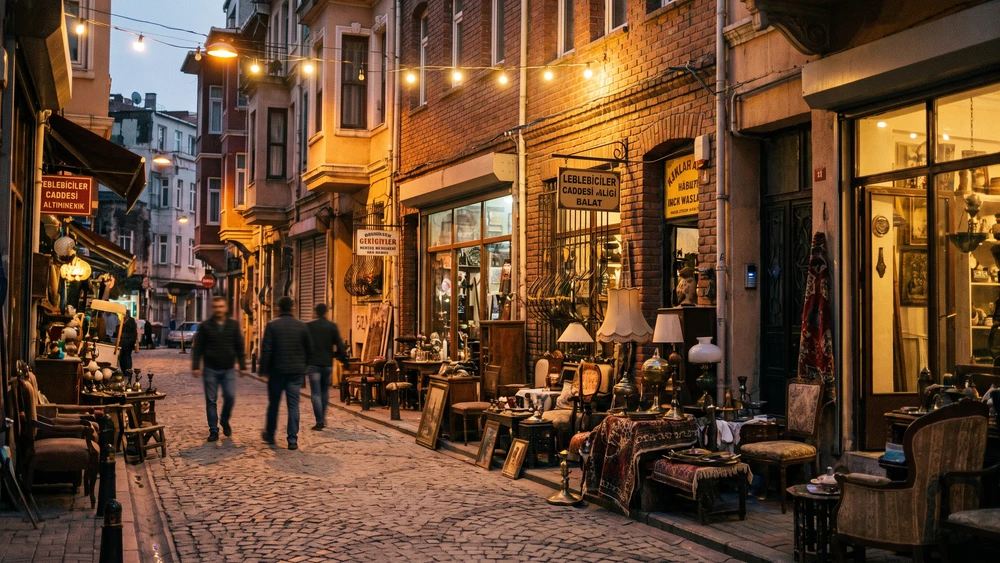
How Live Antique Auctions (Mezat) Work in Balat
The concept of a mezat (auction) here is entirely different from the silent, formal rooms of high-end auction houses. These are loud, street-level events. Auctioneers shout prices over cups of tea, and locals crowd onto wooden stools right on the pavement. Not every shop keeps a consistent auction schedule; some have quietly stopped holding live sessions altogether, so it is worth confirming a specific vendor is still auctioning before you plan an evening around it.
Viewing vs. Bidding Times
Arriving right when the auction starts leaves you blind to what is actually on sale. Shops display the evening's lots a few hours before the bidding begins.
This is the time to inspect the goods closely. Check the vintage cameras for mold, test the hinges on old jewelry boxes, and verify the authenticity of vinyl records. Quality swings wildly lot to lot: a genuine find can sit next to overpriced junk with no real antique value, so treat every piece on its own merits rather than assuming the shop has already vetted it.
Once the auctioneer takes the floor, items move too fast for a thorough physical check. Seating is limited to a handful of wooden stools, so arriving after the auctioneer has started usually means watching from a standing crowd at the back.
Etiquette & Rules for Bidding
Bidding moves rapidly in Turkish, usually opening low for smaller curiosities. You need to read the room and act decisively.
The Nod: You don't need a numbered paddle. A clear nod, a raised hand, or direct eye contact catches the auctioneer's attention.
Increments (Pey): Bids usually increase in small, fixed steps that scale up as the item's value climbs, so a chipped teacup and an Ottoman-era coin move at very different speeds. Watch for the same handful of bidders pushing every lot artificially high before dropping out, a known shill tactic that can push an unremarkable piece toward a naive final bidder. Set your own ceiling in advance and stick to it regardless of how the room reacts.
Commitment: Dropping your hand means you are out. If the hammer falls on your bid, the item is yours.
Payment Collection: You pay at the end of the night or right after winning, depending on the specific shop's flow. Keep your cash ready. If a vendor offers to hold or appraise a piece for you overnight, ask for a photo or written note first - shops here operate on trust with no formal claim tickets, and a misplaced item is difficult to resolve after the fact.

Best Vintage Shops & Art Galleries on Vodina Caddesi
While Leblebiciler holds the historical title, Vodina Caddesi and its intersecting alleys form the modern spine of Balat's antique scene. Prices quoted for a walk-in purchase are not fixed either; vendors have been known to raise the asking price on an item you passed on earlier in the day. Agree on a number and buy on the spot rather than circling back later. A shop being open is also no guarantee it is willing to let you browse - a few vendors turn away casual lookers outside auction hours, so ask before wandering deep inside.
Fener Antik Mezat
This is the epicenter of the live auction culture. Heavy foot traffic, items spilling out onto the pavement, and a highly theatrical auctioneer define the scene.
They run live sessions on Wednesdays and Fridays from 15:30 to 20:00, and weekend afternoons. Expect anything from Ottoman-era coins to retro 70s desk lamps.
Maison Balat
A completely different atmosphere. Clean curation, polished displays, and the scent of freshly ground coffee.
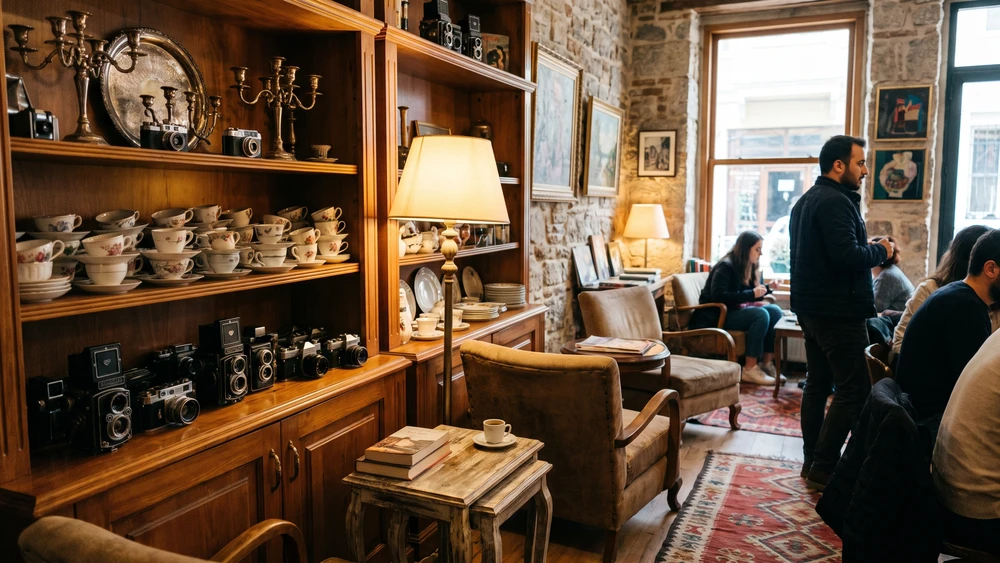
You examine delicate porcelain cups and silver candelabras while waiting for an espresso. It operates more like an antique gallery with a built-in cafe, perfect for a slower pace.
Anılar Eskici Dükkanı
A sanctuary for analog technology enthusiasts. The shelves groan under the weight of heavy gramophones, rotary phones, and boxy televisions.
It stays open until 20:30 most days but is firmly closed on Mondays. A few doors down, Büyülü Fener is worth a quick detour for its shelves of retro radios and quirky lamps if gramophones aren't your focus.
Practical Tips for Antique Buyers in Istanbul
Carrying a bulky typewriter through the steep hills of Balat requires some logistical planning.
Cash, Cards, and Shipping
Forget the credit card for street auctions. Small vendors and auctioneers operate strictly on cash, specifically Turkish Lira.
ATMs are scarce deep within the neighborhood, so withdraw your budget before leaving the main coastal road, near the Balat or Fener waterfront before heading into the upper streets. For larger furniture pieces, you need to arrange private transport. The shops do not offer international shipping, and navigating the narrow alleys with a massive truck is impossible.
How to Get to Balat
Skip the chaotic bus routes. The T5 Tram line running along the Golden Horn is the most efficient route.

Step off at the Fener station, cross the main road, and walk straight uphill. Alternatively, taking a public ferry to the Fener pier drops you right at the edge of the historical district, avoiding traffic entirely. If you are arriving straight from the airport, check the Istanbul Airport Transportation Guide before you set out, since the tram connection point differs depending on which airport you land at.