Covering more than half of Vatican City's total land area, the Vatican Gardens are a tranquil 23-hectare oasis that most visitors only glimpse from museum windows. Right behind the Renaissance walls that surround St. Peter's Basilica, these private papal grounds have been tended since 1279 - and they remain one of the most exclusive green spaces in Europe. If you are planning a trip to Rome and want to experience a quiet corner of the microstate that the vast majority of tourists never set foot in, here is everything you need to know.
Can You Visit the Vatican Gardens on Your Own?
The short answer is no. The Vatican Gardens are a secure, working part of Vatican City. They house the Vatican Radio Station, the Governor's Palace, the official papal heliport, and the Pontifical Academy of Sciences. Because of their active administrative and religious function, you cannot buy a simple entry ticket and wander around at your own pace.
To enter the gardens, you must book an official tour in advance. When your tour ends, you are escorted directly into the museum complex, meaning your time in the gardens is tightly managed but highly rewarding. Group sizes are kept deliberately small, which means none of the frantic crowding you encounter in the main Vatican Museums corridors.

Vatican Gardens Ticket Types Explained
The Vatican officially offers two distinct ways to experience the grounds. Choosing the right one depends on your physical stamina, budget, and how much you want to explore the artistic details up close.
1. The Open Bus Tour
If you prefer a relaxed experience - or are traveling with family members who have mobility limitations - the open-top bus tour is the right choice. It takes approximately 45 minutes and uses an eco-friendly bus fitted with multi-language audio headsets.
You drive past the major landmarks while listening to commentary covering the historical context of the landscaping and papal traditions. In winter, wind-resistant plastic covers keep passengers comfortable.
The key limitation: you must remain seated throughout the entire journey. You cannot disembark to take photos from different angles or sit on a bench. If you end up in the back rows, your panoramic view may be slightly obstructed. The open bus tour is priced at €32 per adult.
2. The Guided Walking Tour
For history enthusiasts, garden design fans, and photographers, the two-hour guided walking tour covers approximately 1.75 miles of the grounds. A certified Vatican guide leads small groups through the Italian, French, and English-style garden sectors.
Walking gives you the freedom to pause, ask questions, explore hidden corners, and photograph everything under natural light. Your guide provides in-depth context on the architecture and botanical history before depositing you at the museum entrance.
The terrain is slightly hilly with some old stone staircases, so sturdy footwear and sun protection are strongly recommended. Many guides also offer a Sistine Chapel fresco briefing before transferring you to the museum galleries - context usually reserved for private tours that you get here as a standard part of the experience. The walking tour is priced at €40 per adult.
The Skip-the-Line Benefit: Does the Garden Ticket Include Museums?
Yes - and this is arguably the greatest practical advantage of booking a garden tour. The famously long queue outside the Vatican Museums can swallow two hours on a busy morning. When you book a Vatican Gardens tour, your ticket includes a dedicated skip-the-line entry pass to the museums.
You bypass the main public queue entirely and enter through a separate security gate. Once your bus or walking tour concludes, the guide transfers you directly inside the museum complex - from where you follow the route toward the Sistine Chapel. This seamless transition eliminates the most common stress point for first-time Vatican visitors and makes the cost of the garden ticket extremely practical.
If you are already planning to visit the Vatican Museums, the extra cost for the garden tour essentially buys you skip-the-line access plus a rare look at a part of the Vatican that most tourists never see.
What to See Inside the Vatican Gardens
First laid out as a papal viridarium by Pope Nicholas III when he relocated the papal residence to the Vatican in the 13th century, the grounds evolved through the Renaissance and Baroque periods into the layered landscape you see today.
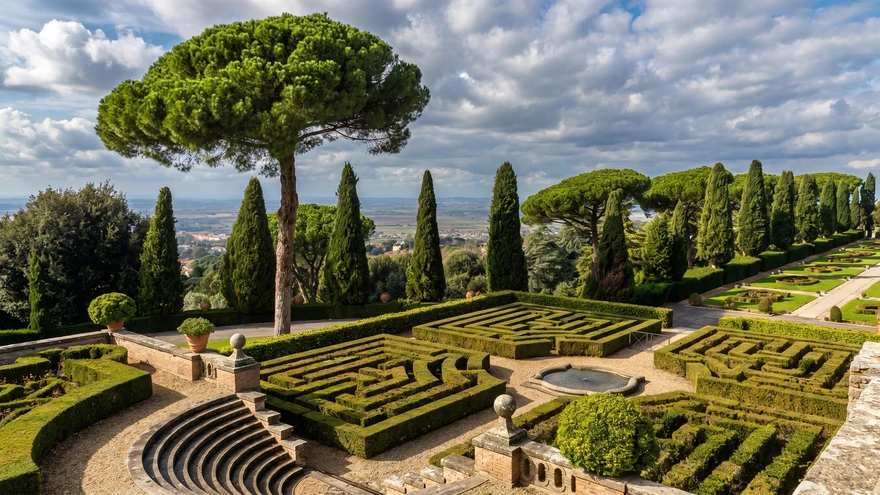
The Leonine Walls are among the most striking features - medieval defensive fortifications built in the 9th century to protect the heart of the Church from external threats. Walking along their base gives a visceral sense of how the microstate has defended itself across the centuries.
The Fontana dell'Aquilone (Eagle Fountain) is a stunning Baroque water monument from the 17th century, celebrating the engineering ambition of the papal court and still functioning as intended.
The Lourdes Grotto is a faithful replica of the famous French shrine at Lourdes. It serves as a walking prayer route for the current Pope and has genuine spiritual significance within Vatican life.
The Papal Heliport is a modern touch that underscores how the microstate operates day-to-day. On rare occasions, visitors on early tours glimpse preparations for official papal travel.
The botanical diversity is remarkable: over 300 unique plant species sourced globally over centuries as diplomatic gifts are cultivated across the grounds. Wild green parrots have colonized the palm trees, adding an unexpected tropical note to the Roman skyline.
The gardens also offer framed views back toward St. Peter's Basilica and the dome that you simply cannot get anywhere else in the city.

Practical Tips for Visiting
Book 2 to 3 weeks in advance. The Vatican strictly caps daily visitor numbers to protect the ecosystem. Tickets sell out quickly, especially during peak travel seasons and major religious milestones. Morning slots disappear first.
Choose the earliest available slot. An early start means cooler temperatures, better light for photography, and you enter the museums right as the peak morning crowds start to build rather than after they have settled in.
The Vatican dress code applies in full. Shoulders and knees must be covered before you reach the security checkpoint. Carrying a lightweight scarf solves this easily.
Wear proper walking shoes. This applies even to the bus tour, since you walk between entrance points and through museum galleries afterward.
Bring a refillable water bottle. The walking route features several natural spring fountains where you can top up with cold water - a genuine relief in summer.
Check the schedule for Wednesdays. The gardens close on Wednesday mornings due to the weekly Papal Audience in St. Peter's Square. Plan around this when selecting your date.
Calibrate your expectations. A minority of visitors arrive expecting a purely botanical experience and feel the tour is more architectural than horticultural. The guides focus on the buildings, walls, fountains, and papal history far more than on plants and garden design. If you understand you are buying a private history tour of the microstate - with lush greenery as the backdrop - the experience rarely disappoints.
If you are building a wider Rome itinerary, the garden tour pairs naturally with a visit to Castel Sant'Angelo, which sits just outside the Vatican walls and can be done in the same afternoon.
Is the Vatican Gardens Tour Worth It?
For most visitors, yes - with a clear-eyed understanding of what you are buying. You are not getting unfettered access to roam a park at your own pace. You are getting a curated, guided experience of a genuinely rare space that is otherwise off-limits, combined with practical skip-the-line museum entry that saves real time.
If you value personal space, history, and photography opportunities away from the main tourist crush, the walking tour in particular offers something that no standard museum ticket can. The Vatican Museums and Sistine Chapel will still be there at the end - but you will have seen something that most visitors to Rome never do.