Stepping out of the Melville Street cruise terminal leaves you staring at a wall of punishingly steep volcanic hills, turning a random stroll into a recipe for physical exhaustion. Navigating St. George's without draining your energy requires a strategic walking route that cuts through the rugged topography, connecting the 1983 military invasion sites to the historic waterfront and the island's best spice market.
- Currency: Carry Eastern Caribbean Dollars (XCD) in small denominations. Vendors accept USD, but change comes back in XCD, often at an unfavorable rate.
- Fort George entry: Roughly $2 USD (5 XCD) per person, cash only.
- Opening hours: Plan for a weekday or Saturday morning. Shops run half-days Saturday; the city shuts completely on Sundays.
- Local transport: For skipping hills or reaching Grand Anse Beach, use the Haylup ride-share app or a minibus for approximately 2.50 XCD from outside the terminal.
Navigating the City: Melville Street to The Carenage
St. George's is divided by a massive central ridge. The cruise terminal sits on the Melville Street side, but the picturesque historical harbor lies on the opposite side. Walking over the ridge in the Caribbean midday heat is a rookie mistake that will cost you an hour and your energy.
Walking Through the Sendall Tunnel
The smartest way to cross the city is through the Sendall Tunnel. Built in 1894, this 340-foot engineering shortcut punches through the volcanic rock, completely bypassing the steep climb above.
The tunnel is an active, single-lane road shared by cars and pedestrians. There is no elevated sidewalk. Stick close to the stone wall on your right and walk single-file when local traffic passes through. Avoid the tunnel between 2:30 and 4:30 PM on weekdays when school lets out and minibus traffic peaks sharply. The temperature drops noticeably inside, offering a brief cool respite from the midday sun.
The Carenage Waterfront Architecture
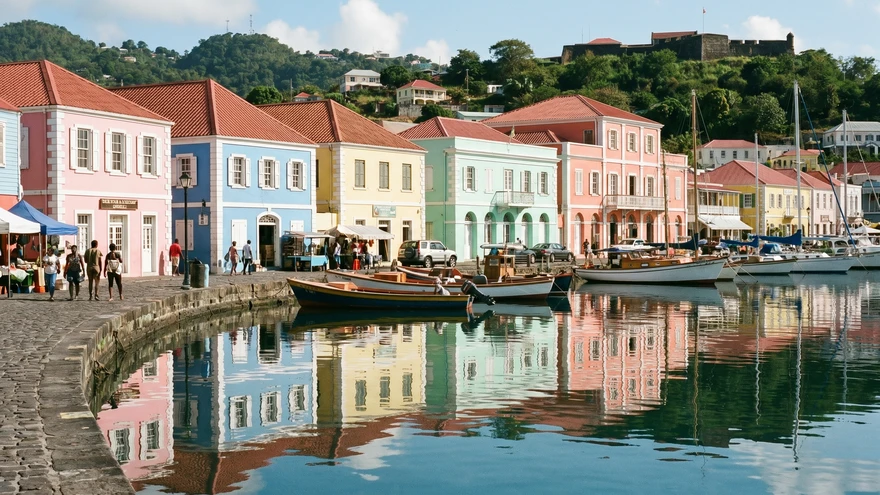
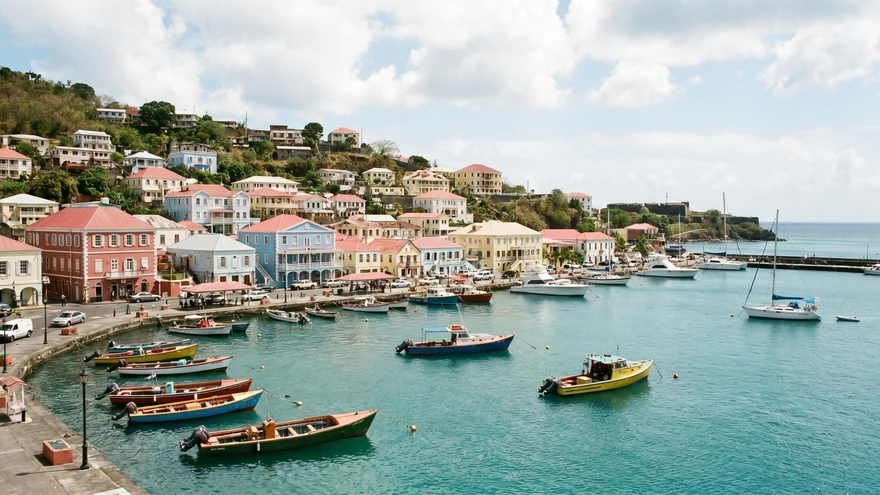
Emerging from the tunnel drops you directly onto the Carenage. This horseshoe-shaped inner harbor serves as the visual anchor of St. George's. Colorful fishing boats bob in the water, flanked by well-preserved 18th-century brick and stone warehouses.
Walking along the waterfront is entirely flat. Notice the fish-scale clay tiles on the older roofs; ships sailing from Europe brought these tiles as ballast. Passing the Christ of the Deep statue, you get a clear view of the city's amphitheater-like layout rising from the water. Budget one to two hours here before heading uphill.
If you want to arrange getting around Grenada beyond the capital, the Carenage area is where you will find minibuses heading to other parishes.
Fort George and the 1983 US Invasion
Reaching Fort George requires a short but intense uphill climb via weathered stone steps accessible from next to the Sendall Tunnel exit. The French originally built this fortification in 1705, naming it Fort Royal. The British renamed it Fort George in 1763 after taking possession of the island. Its stone walls, however, hold a much more recent and turbulent history.
The Execution of Maurice Bishop
In October 1983, a Marxist power struggle reached a bloody climax inside the fort's central courtyard. Prime Minister Maurice Bishop and several cabinet members were executed by firing squad against the courtyard wall.
This specific event directly triggered "Operation Urgent Fury," the US military invasion just days later. Standing near the basketball hoop in the courtyard, look closely at the surrounding stone. The deep, jagged pockmarks left by high-caliber bullet holes from that week are still clearly visible in the rock.
Panoramic Views and Cannon Placements
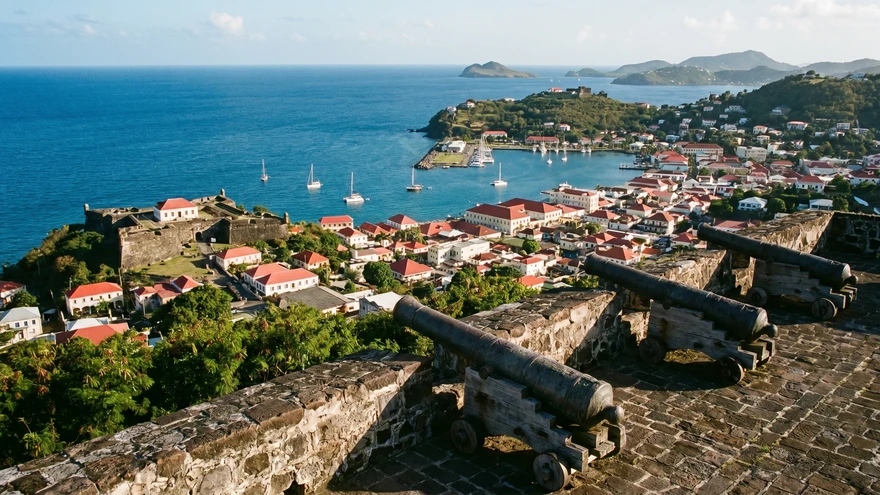
Beyond its dark history, the fort provides the most commanding vantage point in the capital. The views over the red roofs of St. George's, the Carenage, and the Caribbean Sea are unmatched from anywhere else in the city.
A battery of heavy colonial cannons still points toward the harbor entrance. Walk the outer ramparts carefully. The centuries-old stone surfaces become extremely slippery after tropical rain, and guardrails are absent in several sections. Wear closed shoes if there is any chance of a shower.
For context on what to expect throughout the island, the Grenada cruise port guide covers the full range of shore excursion options beyond the city center.
Market Square and Spice Trade Logistics
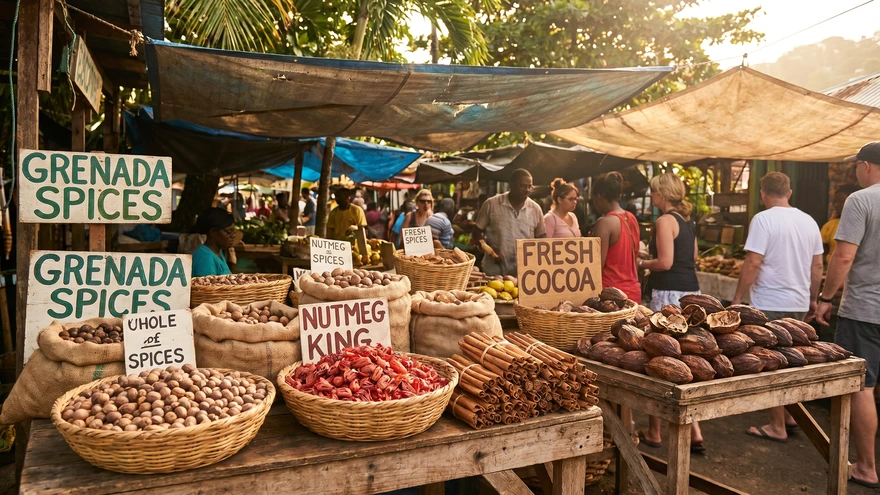
After descending from the fort, head toward the commercial center to experience the island's agricultural backbone. Grenada did not earn the name "Spice Isle" for marketing purposes. The island's economy is built on the export of nutmeg, cinnamon, and mace.
Cash, Currency, and Best Times to Visit
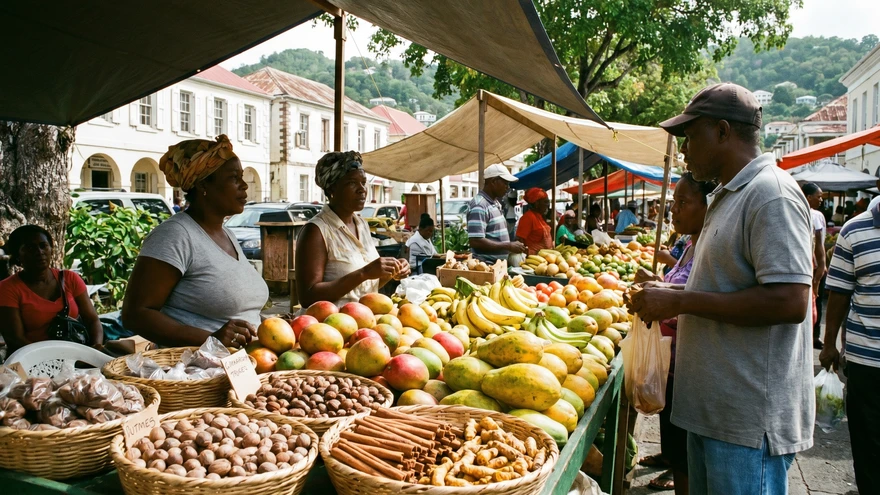
Market Square is chaotic, loud, and entirely authentic. Saturday morning is the peak time to visit. Vendors pile their wooden tables high with fresh turmeric root, bundled cinnamon bark, and raw cocoa pods. The market runs daily from 8 AM to 5:30 PM, but Saturday attracts farmers directly from outlying parishes.
Carrying local currency is essential here. Handing a vendor a $50 USD bill for a $5 XCD pouch of saffron causes frustration on both sides over making change. Stick to small XCD bills. Buy spices at Market Square rather than at the duty-free terminal; prices are significantly lower, and money goes directly to local farmers.
One practical note: vendors can be persistent. A polite but firm "no thank you" is sufficient.
Note that only factory-sealed packages clear US Customs on the way home. Loose nutmeg or bulk spice purchases bought at the market cannot be brought back to the United States.
House of Chocolate and Local Cocoa
A short walk from the market on Young Street sits the House of Chocolate. This small, air-conditioned mini-museum functions as a perfect cool-down stop after navigating the crowded market streets. Admission is free.
Grenada produces some of the highest-quality organic cocoa in the world. The museum walks you through cultivation and processing with live demonstrations and samples. Skip the generic tourist trinkets and buy authentic cocoa balls here. Locals grate these balls and boil them with water and spices to make traditional Grenadian cocoa tea.
Hours are Monday to Friday 9 AM to 5 PM, Saturday 10 AM to 2 PM. Closed Sundays.
For a deeper look at when conditions in St. George's suit your plans, the best time to visit Grenada covers seasonal weather patterns and cruise traffic levels across the island.