Booking a ferry to the world's first Dark Sky Island during a full moon, or attempting to navigate its unlit cliffs without a red-light torch, quickly ruins the very astronomical experience you traveled so far to see. Moving around a completely car-free island in pitch blackness requires strict attention to the lunar calendar and careful logistical planning.
- Dark Sky Status: Designated in 2011 (International Dark-Sky Association)
- Best Viewing Season: September to April (longest nights, clearest skies)
- Ferry Access: 45 minutes from St Peter Port, Guernsey (passenger only)
- On-Island Transport: Foot, bicycle, or horse-drawn carriage. Zero cars.
- Observatory Fee: £10 per adult (arranged via Sark Astronomy Society)
- Essential Gear: Red-light torch, sturdy walking boots, windproof layers
Why Sark's Night Sky Is Uniquely Dark
Stepping off the ferry, the first thing you notice is the complete absence of motor vehicles and streetlights. In 2011, the International Dark-Sky Association recognized this extreme lack of light pollution, making Sark the first island community globally to achieve Dark Sky Island status.
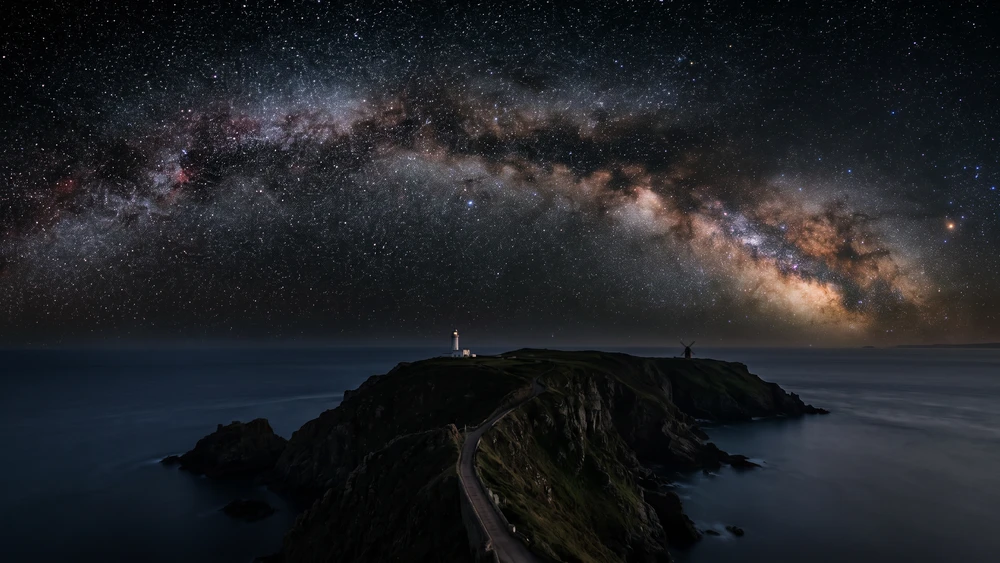
The 600-strong local community strictly manages light spill. Ordinary room glow from houses is kept to an absolute minimum. Because artificial light never washes out the atmosphere, the night sky reveals over 7,000 naked-eye stars and meteor showers that are nearly impossible to observe elsewhere in Europe. The Milky Way stretches distinctly from horizon to horizon.
Best Time to Visit Sark for Astronomy
Timing is everything when planning an astro-trip to the Channel Islands. Showing up on a random weekend often leads to massive disappointment if the celestial conditions clash with your itinerary.
Watch the Moon Phases (Avoiding the Full Moon)
A bright full moon acts like a giant floodlight, completely washing out the Milky Way and fainter constellations. Always cross-reference your travel dates with a lunar calendar. Aim for the New Moon phase, or the few days just before and after it, to ensure the sky is dark enough for deep-space observation.
September to April: The Milky Way Window
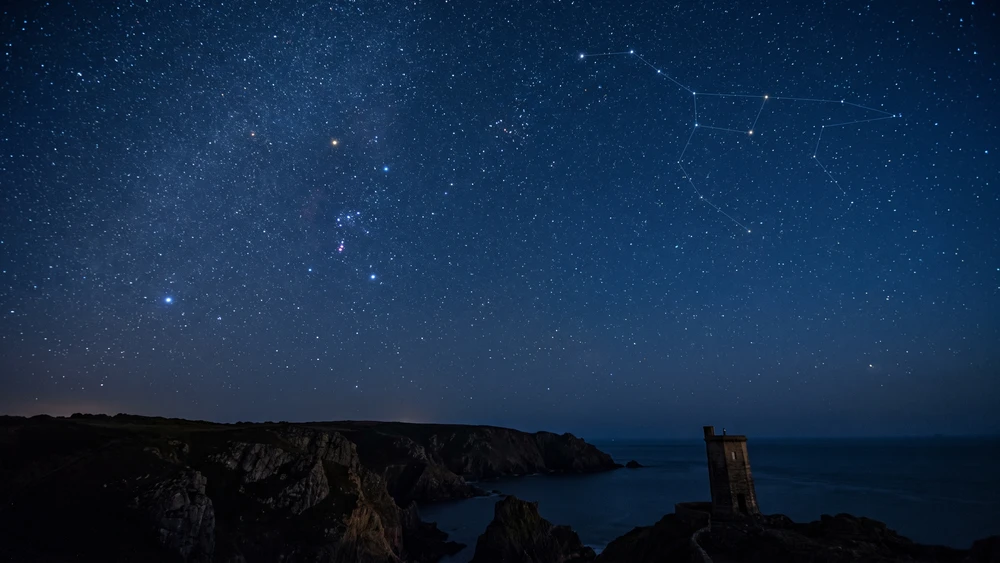
While summer offers pleasant coastal walks, the nights are simply too short for serious stargazing. The prime viewing window opens in September and closes in late April. During these colder months, the air holds less moisture, providing a crisp, sharp view of the cosmos. You get to see constellations like Scorpius, Sagittarius, Lyra, and Cygnus with absolute clarity just two hours after sunset.
Top Stargazing Locations on the Island
Finding a dark spot is effortless, but a few specific locations offer unparalleled, panoramic views of the galaxy.
La Coupée Ridge: Unobstructed Horizon Views
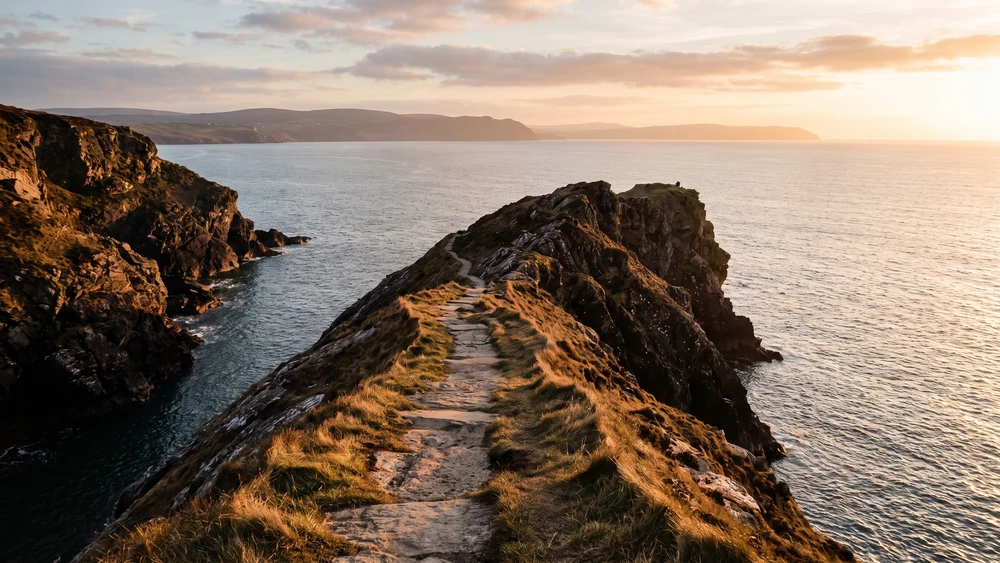
This narrow isthmus connecting Great Sark to Little Sark features sheer cliff drops on either side. The elevated position offers a spectacular, 360-degree view of the horizon without a single obstacle, and it is widely rated as the best spot on the island for Scorpius, Sagittarius, Lyra, and Cygnus. Walking this exposed path at night demands extreme caution, though: high winds and complete darkness make it unsuitable for anyone unsure on their feet.
A safer way to use the ridge is to cross it just before sunset while there is still light, then settle on the Little Sark side near the old silver mine ruins or the cliffs beyond. That ground is flatter, more open, and far enough from the main village to feel completely still once the sky darkens. If La Coupée feels too exposed, the lanes just past La Seigneurie Gardens and the open farmland at Les Laches du Nord, on the northwest side, offer wide, unobstructed sky with fewer crowds and no need to cross the ridge in the dark.
The Sark Observatory (SAstroS)
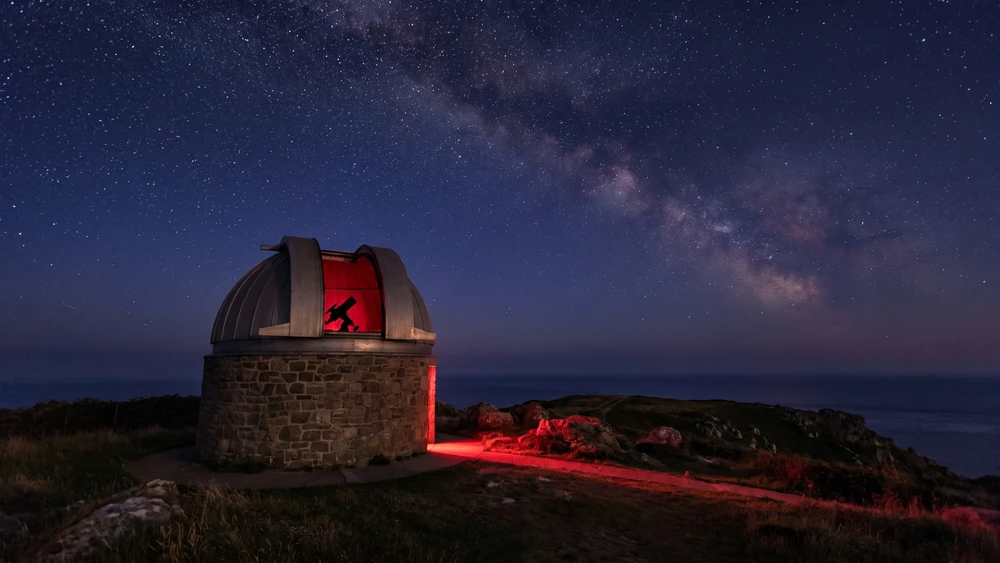
Located just opposite St. Peter's Church, the local observatory provides a warm shelter and high-quality telescopes, including a 12-inch Meade LX90. The Sark Astronomy Society (SAstroS) runs guided sessions on clear nights for a £10 fee, payable on site or in advance. The volunteers are deeply knowledgeable, and you can even view astronomical feeds directly on their screens if the coastal wind becomes too biting.
Essential Gear for a Car-Free Island Night
Packing for Sark is fundamentally different from a standard holiday. You carry everything yourself, and the rugged environment dictates the rules.
Red Light Torches and Sensible Footwear
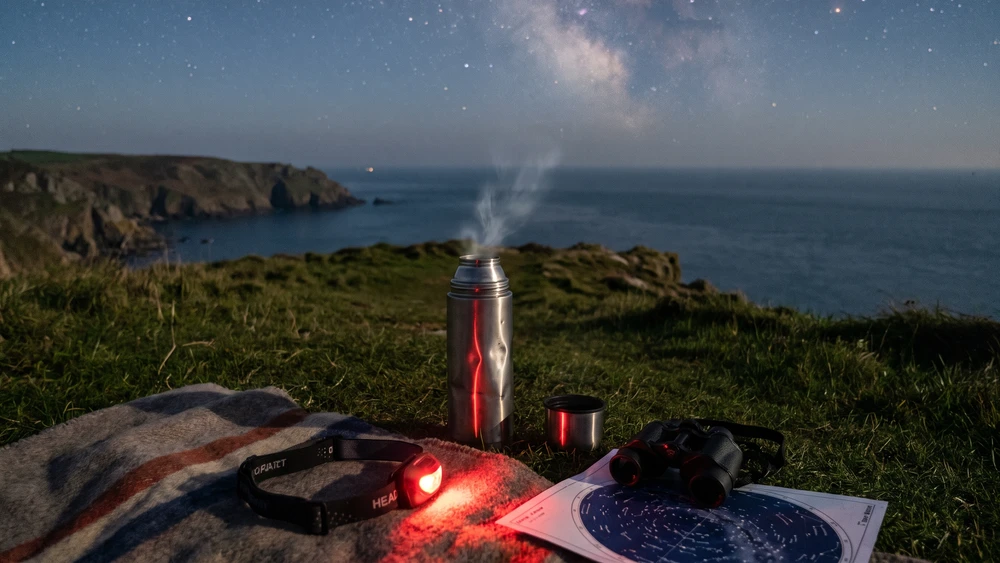
A standard white LED flashlight instantly ruins your night vision, which takes up to 30 minutes to adjust to the dark. Bring a headlamp with a dedicated red-light mode.
Navigating unpaved country lanes and cliff paths requires sturdy hiking boots; small does not mean flat here. Finally, pack heavy, windproof layers. Standing still on a coastal ridge in November gets freezing very quickly.
How to Get to Sark and Where to Stay
Reaching the island takes effort, but the isolation is exactly what protects the dark skies in the first place.
Guernsey to Sark Ferry Logistics
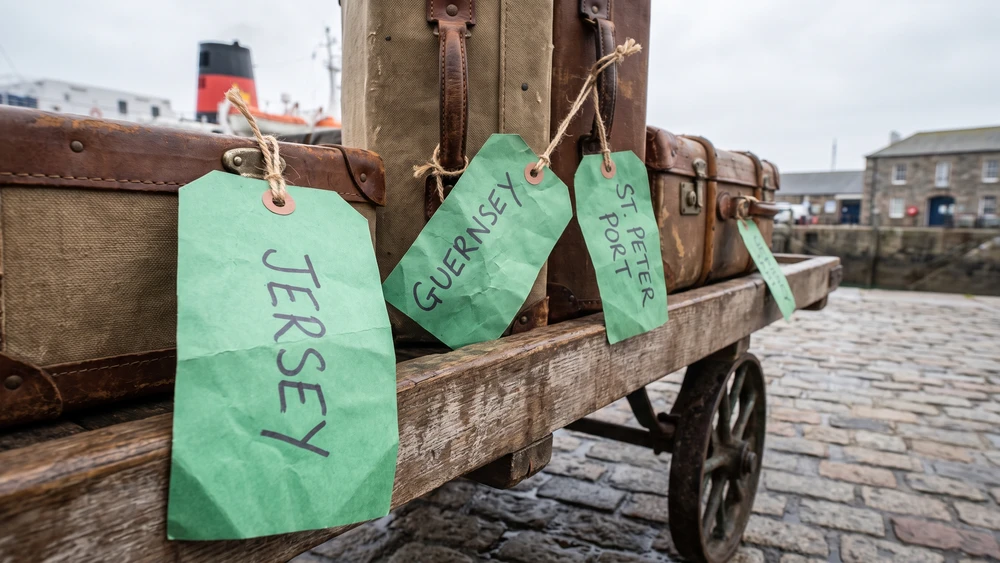
There is no airport on Sark. You first fly or sail into Guernsey, then take the 45-minute passenger ferry from St Peter Port. The ferry waits for the tide, not for delayed flights, so leave a generous time buffer between your Guernsey arrival and the Sark ferry departure to avoid missing the connection. For a full breakdown of the crossing options, see how to get to Sark from Guernsey and Jersey.
Accommodation Near the Darkest Spots
Hotels and guesthouses on the island understand the specific needs of astro-tourists. Places like Stocks Hotel or smaller local B&Bs often leave side doors open for late-night skywatchers. Since beds are extremely limited, book your accommodation months in advance, especially around New Moon weekends in the autumn and spring. Once you arrive, getting between your hotel and the viewing spots on foot or by bike is part of the routine, covered in more detail in this guide to getting around Sark.