Arriving on Norfolk Island expecting a standard Australian outpost usually leads to severe culture shock the moment you hear locals speaking what sounds like a secret code. Understanding this island requires peeling back the layers of a complex Anglo-Polynesian heritage rooted in the world's most famous naval rebellion.
- Language spoken: English (official) and Norf'k (co-official since 2004)
- Key cultural event: Bounty Day (June 8th annually)
- Best cultural hubs: Kingston and Arthur's Vale Historic Area (KAVHA), Norfolk Island Museum
- Local currency: Australian Dollar (AUD)
- Flight access: Direct flights from Sydney and Brisbane (Qantas)
The Mutiny on the Bounty Connection
The cultural DNA of Norfolk Island traces directly back to the 1789 Mutiny on the Bounty. Nine British sailors, led by Fletcher Christian, alongside eighteen Polynesian men and women, sought refuge on the uninhabited Pitcairn Island. This extreme isolation forged an entirely new, deeply intertwined Anglo-Polynesian society. Genetic lines, social norms, and survival tactics blended into a unique community structure.
Yet Pitcairn's limited resources eventually forced a massive geographical shift.
Migration from Pitcairn to Norfolk Island
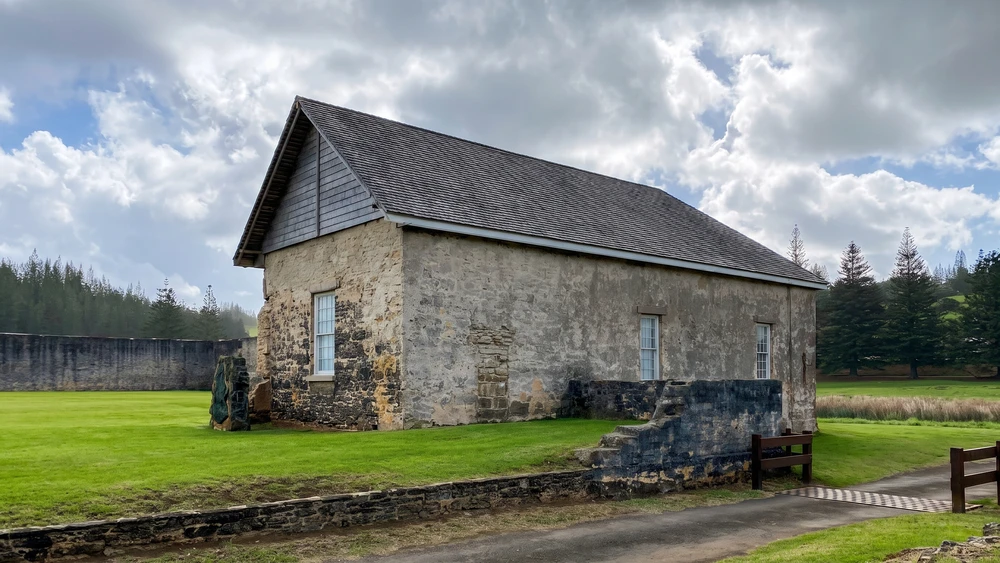
By the 1850s, Pitcairn was unable to sustain its growing population. In 1856, the entire community of 194 descendants relocated 6,000 kilometers west to Norfolk Island, a recently abandoned British penal colony. They took over the stone buildings of Kingston, adapting their tropical survival skills to a subtropical environment. The deep-seated sense of community, born on Pitcairn, remained entirely intact despite the change of scenery.
Understanding the Norf'k Language
Norf'k is often mistakenly dismissed by outsiders as a mere dialect or heavily accented English. It is actually a complex, highly evolved contact language with its own strict grammatical rules and vocabulary. In 2007, UNESCO officially recognized Norf'k as an endangered language, elevating its status from a marginalized local patois to a protected cultural asset. The language functions heavily on shared community knowledge and context.
Breaking down its vocabulary reveals the exact origins of the island's first families.
Tahitian and 18th-Century English Roots
The linguistic foundation combines 18th-century English naval dialects, West Indian Creole (via mutineer Ned Young), and early Tahitian. Words of Tahitian origin typically describe specific natural elements, traditional food preparation, or highly expressive emotional states. Meanwhile, the English contributions reflect archaic maritime terminology and regional British slang that faded from use centuries ago.
Common Norf'k Phrases Used Today
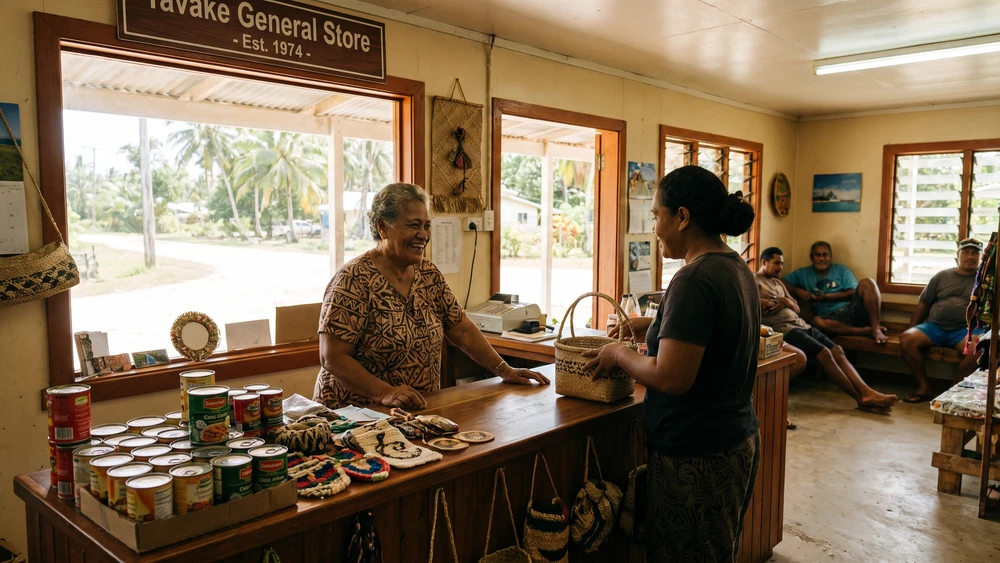
Hearing Norf'k in daily life is common, especially around local shops or the post office. Familiarizing yourself with a few key phrases helps bridge the gap between visitor and local.
- Watawieh? How are you?
- Thaenks f' ucklun. Thanks on our behalf, or thanks for us.
- See yorlye morla. See you tomorrow.
- Kushu. Comfortable, good.
Locals will notice the effort even if your pronunciation is rough, and shopkeepers often respond with a grin rather than a correction.
Living Culture and Daily Customs
The island's social fabric relies heavily on dense, multiplex family networks tracing back to the original eight Pitcairn family names. Nicknames are incredibly prevalent, often officially listed in the local telephone directory to distinguish between dozens of people sharing the exact same surname. A strong egalitarian mindset dominates daily interactions.
This shared heritage reaches its peak during the island's most significant annual gathering.
Bounty Day Celebrations
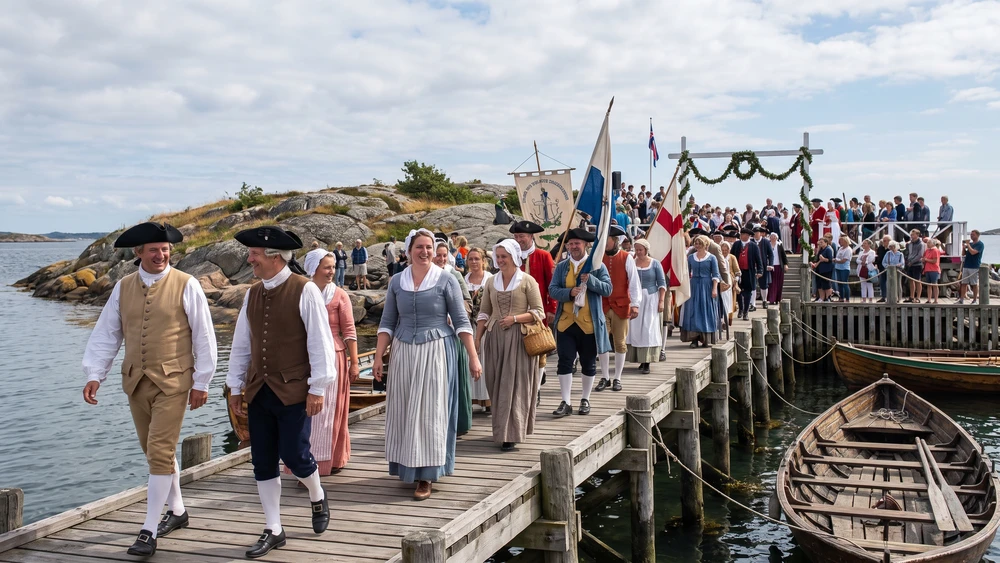
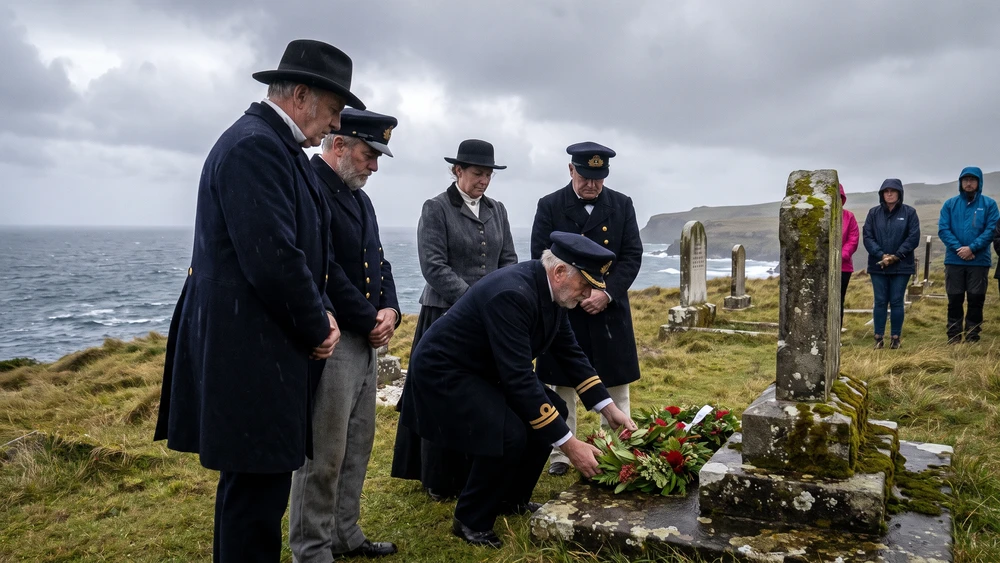
Every year on **June 8th**, the island practically shuts down to commemorate the 1856 arrival of the Pitcairn Islanders. Descendants dress in traditional period clothing, featuring woven straw hats and long sweeping skirts. The day begins with a historical re-enactment at Kingston Pier, followed by a somber wreath-laying ceremony at the cemetery. The atmosphere is immensely proud, deeply nostalgic, and strictly community-focused.
Traditional Food and Community Sharing
The concept of sharing resources remains a pillar of Norfolk society, a survival trait inherited directly from Pitcairn. Traditional dishes heavily feature local ingredients like bananas, sweet potatoes (tayty), and fresh fish. You will frequently encounter mudda (green banana dumplings boiled in milk) or pilhai (a dense, baked root vegetable slice). These recipes reflect a profound adaptation to the island's specific agricultural yield.
Things to Do on Norfolk Island to Experience the Culture
Engaging with the Pitcairn descendant culture requires stepping away from standard tourist trails and seeking out specific local interactions.
- Attend the Mutiny on the Bounty Show: An outdoor, open-air amphitheater production at Salty Theatre where locals re-enact their ancestors' history.
- Visit the Norfolk Island Museum: The Pier Store houses actual relics salvaged from the HMS Bounty, including the ship's original cannon.
- Explore the Cyclorama: A 360-degree panoramic painting that visually narrates the entire journey from the mutiny to the Norfolk settlement.
- Taste traditional island cooking: Seek out local cafes offering hihi (periwinkles) or traditional fish fries along the cliff edges at sunset.