Flying into the Cocos (Keeling) Islands with unannounced windsurfing rigs or incorrect kite sizes will cut your trip short at the Perth airport check-in desk due to strict Qantas regional weight limits. Avoiding these logistical traps and securing the necessary permits for restricted lagoon zones is what actually guarantees your time on the water.
- Best season: July to October (consistent 15-25 knot trade winds)
- Water temperature: Above 26°C year-round (boardshorts or rashguard only)
- Main hub: West Island (Kite Beach and The Sweet Spot)
- Access flights: Qantas from Perth (Mondays and Fridays)
- Local transport: Mopeds or push bikes (available for rent at the airport)
- Gear status: Bring your own quiver (7m, 9m, and 12m kites are ideal)
Wind and Climate Patterns in the Indian Ocean Atoll
Trade Wind Season and Velocity (May to November)
The trade wind season delivers remarkably reliable south-easterly winds, blowing consistently between 15 and 25 knots from dawn until dusk. Unlike traditional tropical destinations, windless days remain exceptionally rare during these peak months. The air temperature stays stable, fluctuating narrowly between 25°C and 27°C. You get uninterrupted sessions without the sudden drops in wind speed common in other island networks.
Water Temperature and Packing Requirements
The lagoon water maintains a warm temperature above 26°C, eliminating any need for a thick neoprene wetsuit. A high-quality rashguard and polarized sunglasses offer sufficient protection against the intense tropical sun reflection. Pack a lightweight rain jacket for the occasional passing tropical shower. These brief downpours typically clear within thirty minutes, often triggering a clean wind boost immediately after.
Top Kitesurfing and Windsurfing Spots on West Island
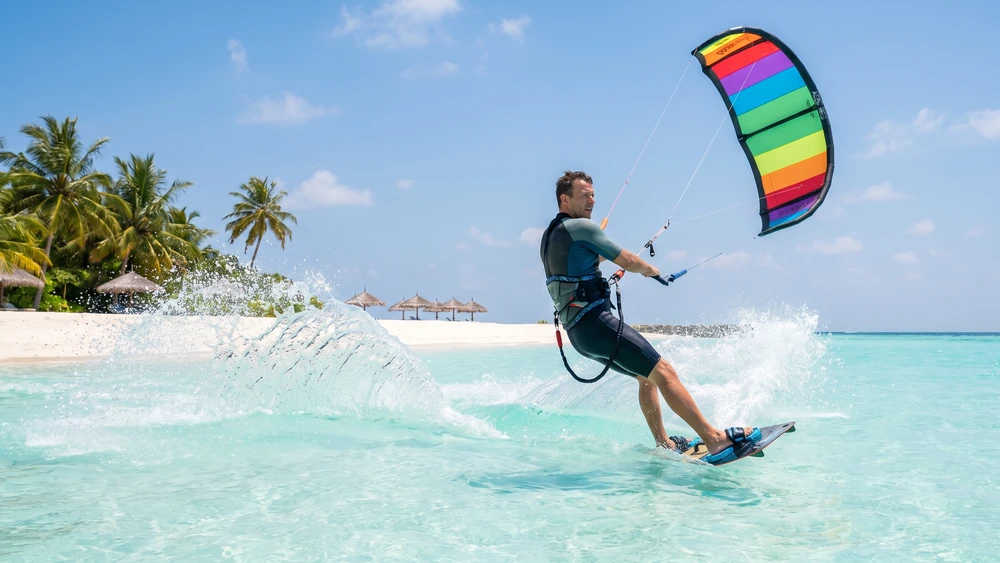
Kite Beach: The Ultimate Shallow Lagoon Launch
Located at the southern end of West Island, Kite Beach offers a pristine launching zone directly under the palm trees. The cross-onshore wind ensures a safe return to the sandy shoreline, making it an excellent arena for building confidence. The waist-deep, flat turquoise water extends across a massive standing area. You can look straight through the transparent water to spot green turtles and black-tip reef sharks gliding along the sandy bottom.
The Sweet Spot: Flat Water and Airport Runway Restrictions
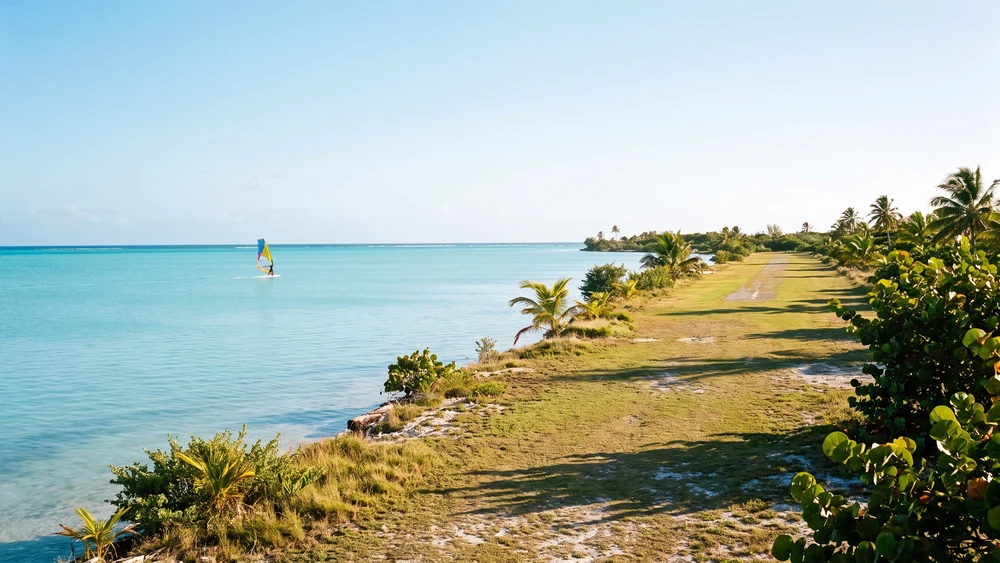
For advanced freestylers, the Sweet Spot provides butter-flat water ideal for executing precise technical tricks. The onshore wind pushes directly against small, uninhabited islands to create perfectly smooth riding conditions. This zone sits directly adjacent to the active international airport runway. Launching here requires explicit permission from local aviation authorities before you unpack your lines.
Crucial Logistics for Remote Water Sports Travel
Qantas Flight Constraints and Bringing Personal Gear
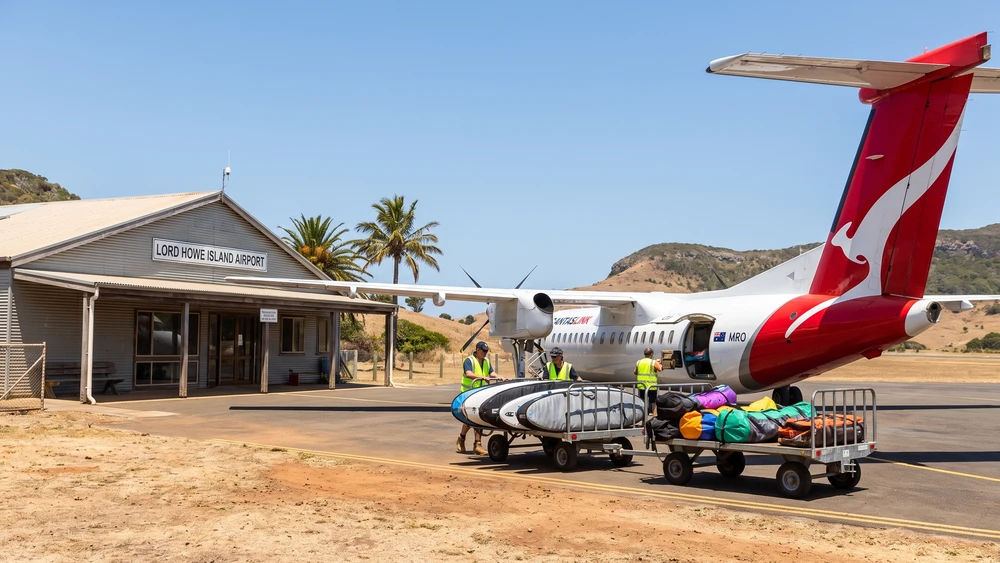
Because there are no commercial gear rental facilities on the islands, traveling with a complete personal quiver is non-negotiable. An optimal setup for the average rider includes 7m, 9m, and 12m kites, or a versatile short-board windsurfing rig.
QantasLink enforces strict weight and size limits on the regional aircraft operating out of Perth, and flights run only on Mondays and Fridays. Since May 2026, the Friday service flies non-stop from Perth in around four hours, while the Monday route still connects via Christmas Island and takes over six hours. Register your oversized sports luggage well in advance to avoid getting your boards left behind on the tarmac.
Island Transportation: Mopeds and Push Bikes
Navigating the small, flat terrain of West Island requires minimal motorized power. Mopeds equipped with customized rack attachments or simple push bikes are available for hire directly at the airport terminal. Distances between accommodations and the primary launch sites are short. A moped gives you the flexibility to track shifting wind angles across different parts of the atoll throughout the day.
Local Infrastructure: Accommodations, Food, and Slow WiFi
Due to strict environmental caps, only 144 visitor beds exist across West Island and Home Island, making early bungalow bookings vital. Dining options remain limited to a few local establishments, including the Cocos Club and Tropika Restaurant on West Island. The local satellite internet infrastructure is notoriously slow and expensive. Plan your digital needs ahead of time and rely on the Visitor Centre computers for mandatory wind forecast updates.
If you are weighing other remote kite destinations before committing to Cocos, kitesurfing in Cape Verde and the Union Island kitesurfing blueprint cover similarly gear-dependent trips with easier flight access.
Safety Measures and Medical Evacuation Protocols
The atoll is surrounded by a massive marine park with strong tidal currents moving through deep ocean channels. Always stick to designated riding zones and wear heavy-duty reef booties to protect against sharp coral heads. Medical infrastructure on West Island and Home Island is strictly limited to basic health clinics. Any serious injury or complex medical emergency requires a costly emergency flight evacuation back to Perth.