Most history buffs visiting the Cocos (Keeling) Islands completely miss the actual sites of the 1914 naval clash because the SMS Emden wreck lies inside a highly restricted, treacherous marine reserve, not off the main tourist beaches. Accessing these remote WWI and WWII relics requires precise inter-island ferry timing, local skipper knowledge, and specific national park permits.
- Key Locations: Direction Island, Home Island, Horsburgh Island, North Keeling Island
- Museum: Pulu Cocos Museum (Home Island)
- SMS Emden Wreck Access: Highly restricted, requires Parks Australia permit and licensed operator (Pulu Keeling National Park)
- Main Transport: Inter-island public ferries (departing from West Island)
- Direction Island Ferry: Usually operates on Thursdays and Saturdays only
What Happened During the Battle of Cocos?
The Attack on the Direction Island Cable Station
On November 9, 1914, global communications were physically severed in the middle of the Indian Ocean. Captain Karl von Müller of the German cruiser SMS Emden sent a 53-man landing party to destroy the British cable and wireless station on Direction Island.
The station staff acted fast. Before the German sailors could smash the Morse machines and dynamite the wireless mast, an operator tapped out a desperate SOS. That single transmission changed the course of Australian naval history.
HMAS Sydney vs. SMS Emden: Australia's First Naval Victory
The distress call reached the Australian light cruiser HMAS Sydney, commanded by John Glossop, which was escorting an ANZAC troop convoy nearby. Sydney immediately broke formation and raced toward the atoll at full speed.
The resulting clash was brutal and decisive. HMAS Sydney outgunned the Emden with its heavier 6-inch artillery. After taking massive damage and losing 134 men killed and 69 wounded, von Müller intentionally ran the blazing Emden aground on the distant coral reefs of North Keeling Island to prevent her from sinking.
The Great Escape on the Schooner Ayesha
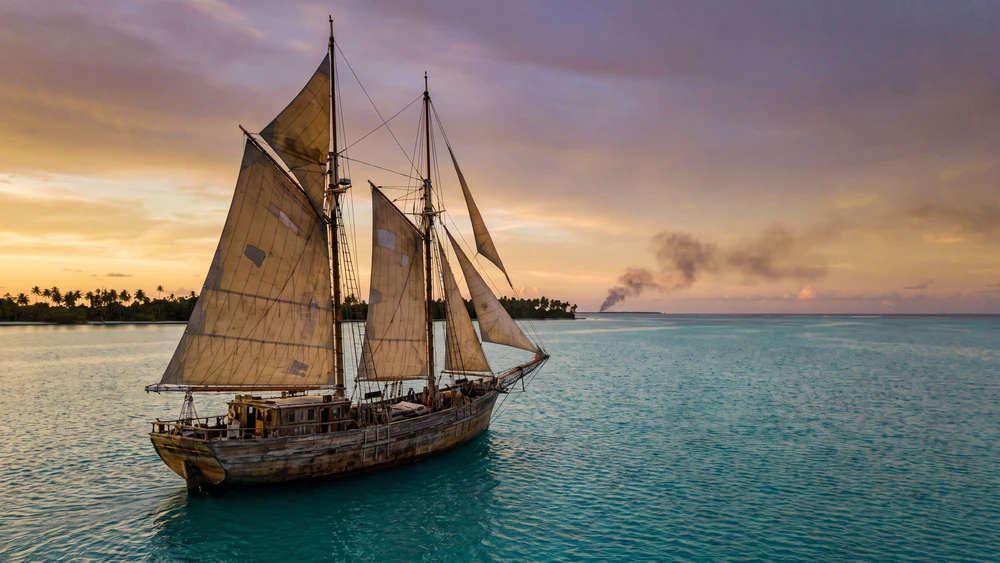
Back on Direction Island, the German landing party watched their ship burn on the horizon. Realizing they were stranded, First Officer Hellmuth von Mücke commandeered the old, deteriorating schooner Ayesha anchored in the lagoon.
They packed it with provisions and slipped away before HMAS Sydney could return to capture them. This sparked an epic, months-long overland and overseas escape that eventually brought the surviving crew back to Germany via Constantinople.
Where to See Battle of Cocos Relics Today
Direction Island Heritage Trail and the Battle Gazebo
Direction Island is completely uninhabited today, but the footprint of the 1914 clash remains. Step off the ferry, and you will find a dedicated Battle of Cocos gazebo providing shade and context right near the beach.
Following the island's heritage trail reveals interpretive plaques marking the exact spots where the telegraph station stood and where the landing party came ashore. The contrast is sharp. Violent naval history sits quietly against white sand and leaning palms.
Horsburgh Island Six-Inch Guns (WWII Addition)
The strategic value of the Cocos Islands persisted into the Second World War. To defend the lagoon entrance from a potential Japanese invasion, Allied forces installed massive six-inch naval guns on Horsburgh Island.
These artillery pieces remain in their original positions overlooking the turquoise water. You need to hire a local skipper to access Horsburgh, as the public ferry does not stop here.
Pulu Cocos Museum Artifacts on Home Island
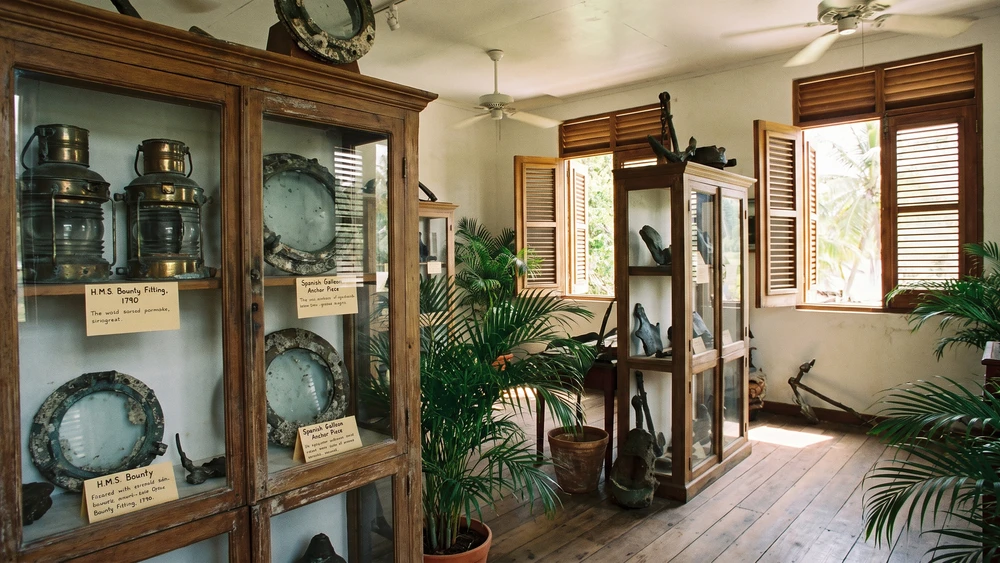
For physical artifacts recovered from the reef, head to the Pulu Cocos Museum on Home Island. The community here salvaged metal and components from the Emden wreck for decades before the site became protected.
The museum houses a modest but fascinating collection of these relics. It offers a tangible connection to the ship that terrorized the Indian Ocean for months before meeting its end on the atoll.
Can You Visit the SMS Emden Wreck on North Keeling Island?
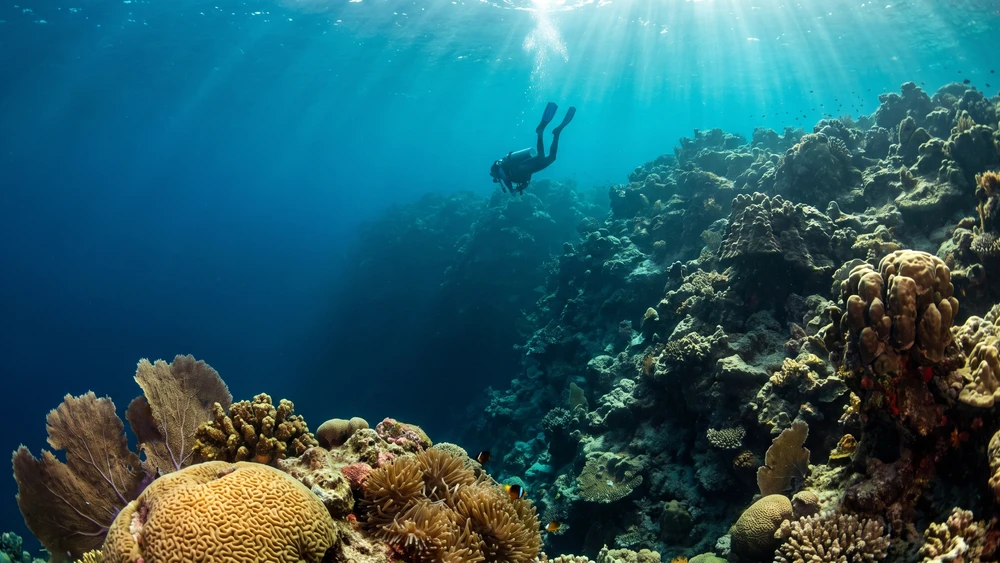
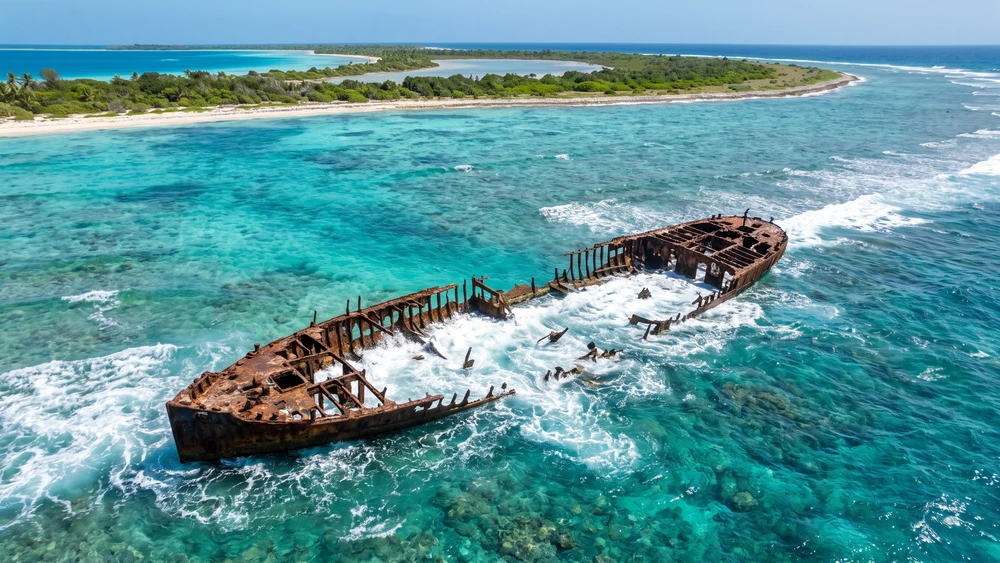
Visiting the actual wreck of the SMS Emden is incredibly difficult and requires serious logistical planning. The remains lie on the southern reef of North Keeling Island, an isolated atoll located about 24 kilometers north of the main Cocos group.
North Keeling is entirely encapsulated within Pulu Keeling National Park. You cannot simply rent a boat and go. Access is strictly regulated by Parks Australia to protect the fragile seabird breeding grounds and the historical integrity of the wreck.
Furthermore, the open-ocean crossing is notoriously rough, and landing on the island involves swimming through heavy, dangerous surf. You must secure a permit and book a trip with one of the very few licensed local operators, and even then, departures are highly dependent on perfect weather windows.
How to Get to the Historical Sites
Inter-Island Ferry Routes and Logistics
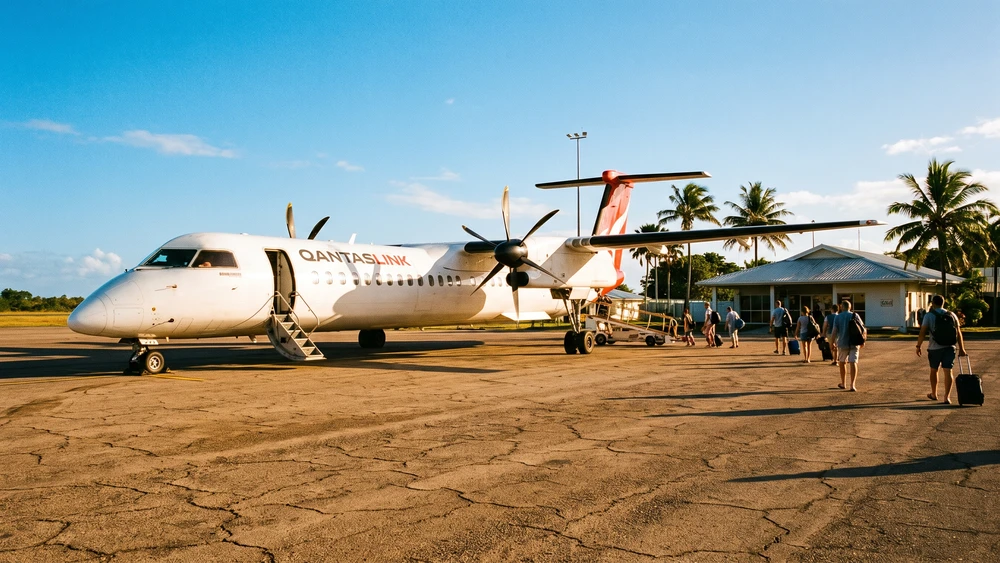
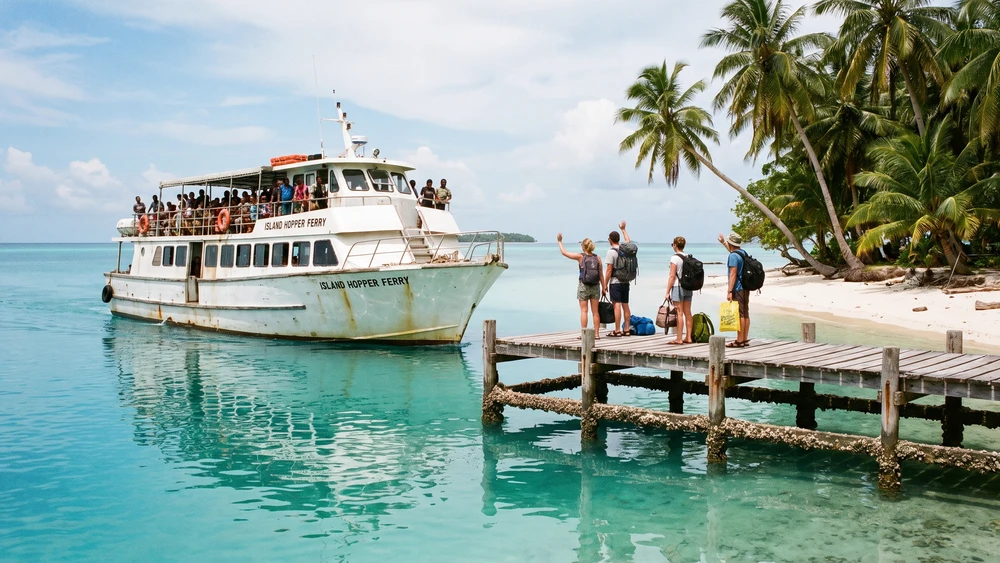
Your base of operations dictates how you move around the atoll. Most visitors stay on West Island, where the airport is located. To reach the museum on Home Island, you catch the regular daily passenger ferry across the lagoon.
Accessing the Direction Island heritage trail requires timing your itinerary carefully. The public ferry typically only runs to Direction Island on Thursdays and Saturdays, and costs AUD $5 per person for the return trip, paid in cash on board. Missing that ferry means chartering a private boat, which significantly increases your daily budget.
Best Time to Visit for Military History Enthusiasts
Aim for late April to align your trip with Anzac Day (April 25). The local community hosts a solemn, highly atmospheric dawn service on the edge of the Indian Ocean, offering a completely unique way to commemorate the ANZAC legacy right at the site of their first WWI naval victory.
For the best chance at calm seas, which you need if you are attempting the expedition to the Emden wreck on North Keeling, target the doldrums season between November and April. Trade winds pick up from May through October, roughening both the lagoon chop and the open ocean swell along North Keeling's exposed reef.