If you're planning a trip to Gibraltar, you've probably heard about the caves hidden inside the Rock. There's a common mix-up worth clearing up before you go: many visitors confuse the brightly lit, heavily touristed St. Michael's Cave with the far more restricted Gorham's Cave Complex. The two sit on opposite sides of the Rock and operate under completely different rules for getting in.
Gorham's Cave Complex is not a show cave. It is a UNESCO World Heritage Site and an active archaeological dig that preserves some of the last known evidence of Neanderthal life on Earth. Because of that scientific value, you cannot simply walk up and go inside. Visiting it properly, whether from the viewing platform or on a guided tour, takes some advance planning.
Here is the short version before the details:
- Access type: Restricted. The cave interior is reached only on a museum-guided tour; a public viewing platform lets you see the site without booking anything.
- Guided tour season: Twice a week, weather permitting, roughly between 1 July and 31 October.
- Booking: Email the Gibraltar National Museum's World Heritage Office at neanderthals@gibmuseum.gi, ideally weeks in advance.
- Physical demand: High. The route down to the cave entrance and back involves 344 steps cut into the cliff face.
- Cheapest way in: The Europa Point Viewing Platform, open weekdays only, costs £5 per adult (2026 rates).
Gorham's Cave vs. St. Michael's Cave: What's the Difference?
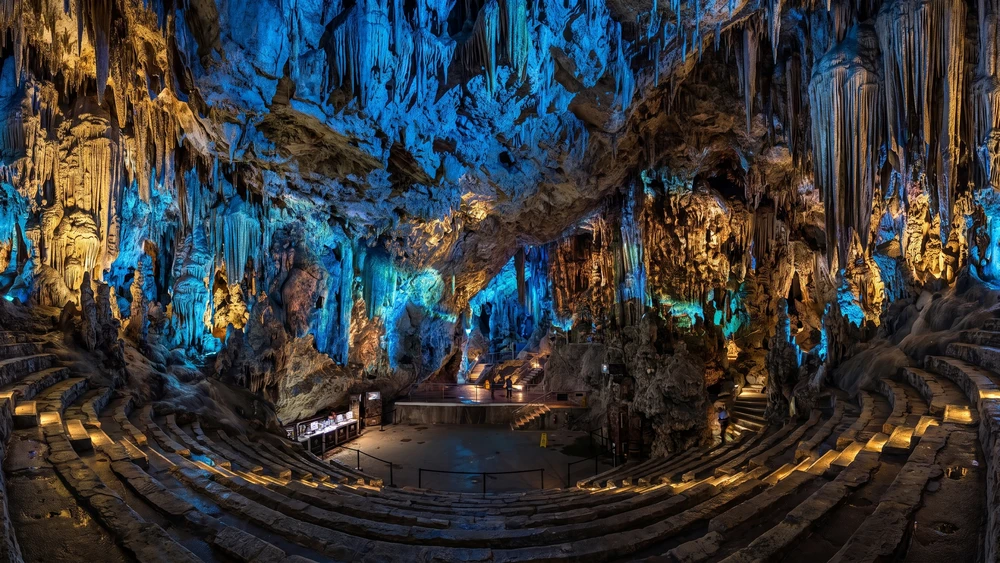
St. Michael's Cave sits inside the Upper Rock Nature Reserve and is Gibraltar's most visited cave. It has paved walkways, colored floodlighting, and a light-and-sound show called The Awakening. You can walk in as part of your standard Nature Reserve ticket with no separate booking, and thousands of visitors do exactly that every year.
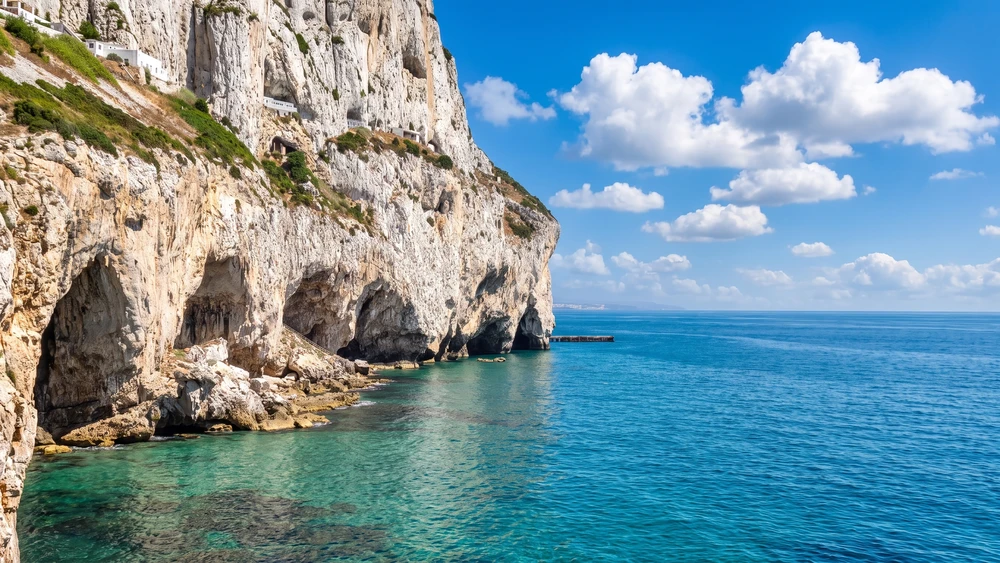
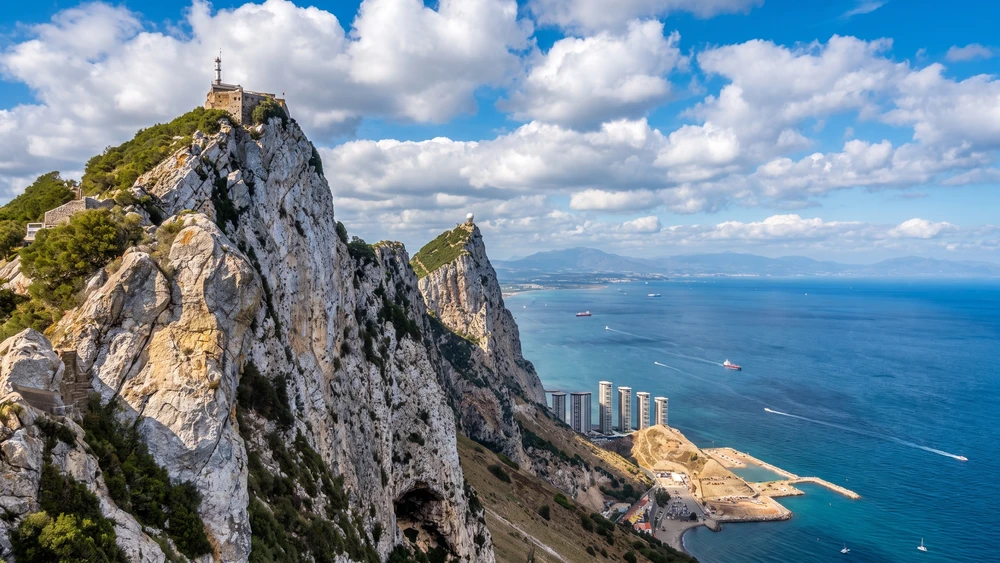
Gorham's Cave Complex is a different experience entirely. It sits at sea level on the Rock's southeastern face, reached by descending a steep cliffside staircase rather than a paved path. There are no gift shops or light shows here, only a working excavation where archaeologists are still uncovering evidence of the last Neanderthals. Because the deposits are fragile, entry numbers are capped and every visit is escorted.
How to Visit the Gorham's Cave Complex
There are three realistic ways to experience the World Heritage Site, depending on how much time, budget, and mobility you have.
The Europa Point Viewing Platform
For most visitors, this is the practical choice. The Gibraltar National Museum built a dedicated viewing platform at 1st/2nd Europa Advance Batteries on Europa Advance Road, overlooking the cave entrances from above. It is open Monday to Friday, 10:00 to 14:00 (last entry 13:30), and closed on weekends and public holidays, so plan around that if you're visiting on a weekend day trip.
Entry costs £5 for adults and £2.50 for children under 12; children under 5 and Gibraltar ID card holders go in free. If you're also planning to visit the Gibraltar Museum and the Natural History Museum, a combined ticket at £12 for adults (£6 for children) covers all three. Museum staff give short talks on the site every 30 minutes, and the interpretation panels explain the Neanderthal history in more depth than you would get from the cave entrance itself.
Booking the Official Guided Cave Tour
If you want to stand at the actual cave entrance, you need to book the specialist tour run by the Gibraltar National Museum's World Heritage Office. Groups are capped at five people, and the tour only goes as far as the cave entrance, not inside, to protect the archaeological layers.
Tours run only twice a week, typically between 1 July and 31 October, and only when the weather cooperates; no visits are allowed within 48 hours of bad weather. To book, email neanderthals@gibmuseum.gi well ahead of your trip, since space is limited and last-minute cancellations for weather are common. You will need to provide ID or passport details in advance, and there is normally no parking at the site itself.
Pricing has two parts: an entry fee of £25, plus a guide fee of £25. A solo visitor pays the full guide fee alone; in a group of five, everyone splits it, which brings the per-person cost down considerably.
Seeing It by Boat
There is a third option if the steps or the seasonal booking window do not work for you. Dolphin Adventure runs a weekly boat trip from Marina Bay most Sunday mornings, weather permitting, that passes along the coastline in front of Gorham's and Vanguard Cave with recorded commentary from the site's director. It is not a substitute for standing at the cave mouth, but it is a good way to see the setting from the water, especially if you are already booked on one of their dolphin-watching trips.
If you would rather build a full day around the Rock's other highlights, A guided minibus tour of the Rock typically includes St. Michael's Cave, the Apes' Den, and a stop at Europa Point, which is the same stretch of road as the Gorham's Cave viewing platform. It will not get you inside the cave, but it is a convenient way to cover the rest of Gibraltar's Upper Rock sites in a single booking.
What to Expect on the Guided Tour: Safety and Fitness Requirements
The museum is direct about who the cave tour is and is not suitable for, and it is worth reading before you book. The route down to Gorham's Cave descends 344 steps cut into the cliff face, followed by a crossing over a boulder field with only a partial path. Every one of those steps has to be climbed again on the way back up, so this is not a casual stroll.
Because of that, the museum will not take visitors with cardiac or breathing conditions, vertigo, or anyone who needs a walking stick, frame, or physical assistance. Children under 12 are not normally allowed on the tour, since the terrain is judged too difficult for them. If you have any doubt about your fitness for the route, it is worth contacting the museum directly before you book rather than finding out on the day.
Bring comfortable clothing and sturdy, closed walking shoes, boots, or robust trainers, plus a bottle of water, ideally in a backpack so your hands stay free. Hard hats are supplied and must stay on for the whole visit unless a guide says otherwise, since there is a real risk of rock falls on the cliff path. Photography is not permitted on the access road or inside the caves themselves, and there are no toilets at the site beyond the entrance office and the viewing platform.
Why Gorham's Cave Complex Is a UNESCO World Heritage Site
Gorham's Cave Complex was inscribed on the UNESCO World Heritage List in 2016. The inscription recognizes what the caves preserved for tens of thousands of years: a rare, continuous record of how Neanderthals lived, and eventually disappeared, at the southern edge of Europe.
The Last Known Neanderthal Refuge
Neanderthals had vanished from most of mainland Europe by around 40,000 years ago, but evidence from Gorham's Cave suggests a small population held on in Gibraltar's mild coastal microclimate much longer, with the most-cited estimates placing the last occupation somewhere between roughly 32,000 and 28,000 years ago. The caves gave them shelter, fresh water, and access to both marine and land food sources at a time when the climate elsewhere was turning hostile.
The site also produced one of the most debated finds in Neanderthal archaeology: a deep, deliberately engraved geometric pattern cut into the bedrock of Gorham's Cave, nicknamed the "Neanderthal hashtag" in the press when it was published. Researchers argued it shows Neanderthals were capable of abstract, symbolic thinking, a trait long assumed to belong to modern humans alone.
The Sister Caves: Vanguard, Hyaena, and Bennett's
Gorham's Cave gets most of the attention, but the World Heritage Site actually covers four caves along the same stretch of coastline. Vanguard Cave, right next door, holds deep, undisturbed layers of sediment that have preserved animal bones, hearths, and stone tools spanning more than 100,000 years, effectively a time capsule of the last Ice Age.
Hyaena Cave and Bennett's Cave add further layers to the picture, recording how the local wildlife and coastline changed over that same span. Together, the four caves are why archaeologists still consider this one of the most complete windows into the final chapter of Neanderthal life anywhere in the world.