Getting to the edge of Europe sounds adventurous, but turning up at Europa Point only to find the mosque doors locked and the horizon swallowed by afternoon haze easily ruins the experience. Timing your visit and knowing exactly how the local transport works transforms a potentially frustrating detour into a seamless journey between two continents.
- Bus fare: Route 2 from Market Place, single trip £1.80, unlimited-day Hopper pass £8.80 (exact change recommended)
- Parking: Free directly at the point, with Windmill Road car park as backup
- Mosque hours: Open to visitors daily, 11:00 to 15:00, no need to work around prayer times
- Shrine hours: Mornings only in summer; split hours with a midday break the rest of the year
- Best time to visit: Early morning, before afternoon haze blocks the view of the African coast
- Facilities: A nearby café for snacks and drinks, plus free public toilets
How to Get to Europa Point
Reaching the southernmost tip of Gibraltar requires a bit of planning, especially if you want to avoid a punishing walk under the Mediterranean sun. The roads leading south are steep and winding.
Taking Bus Route 2
The most efficient way to travel is using the public bus network. Route 2 departs from the Market Place central station, located near Casemates Square, and drops you right at the lighthouse. The journey takes about 15 minutes.
A single ticket costs £1.80. If you plan to bounce between the town center and other areas the same day, the Hopper day pass at £8.80 works out cheaper than five single fares. Have your coins ready, as drivers appreciate exact change. If you're mapping out the rest of your trip, Gibraltar travel costs breaks down what else to budget for beyond transport.
Driving and Free Parking Spots
If you have a vehicle, driving down is straightforward and highly convenient. Unlike the congested town center, Europa Point features a large, free parking lot right in front of the lighthouse, so you can pull up, park, and step out to views of the Atlantic. During peak summer afternoons, this main lot fills up quickly. A good alternative is the Windmill Road car park a short distance away, and if you're coming in from Spain, parking situation across Gibraltar gets noticeably tighter near the border during high season.
Top Things to See at Europa Point
Europa Point is not just a single landmark. It is a cluster of historical, religious, and military sites positioned strategically at the entrance of the Mediterranean Sea.
Trinity Lighthouse (Europa Point Lighthouse)
Built in 1841, the striking red-and-white Trinity Lighthouse is the focal point of the area. It stands 19 meters tall and serves as a vital waypoint for vessels navigating the busy Strait of Gibraltar. The system was fully automated in 1994 and upgraded to powerful LED lanterns in 2016.
The interior of the lighthouse is closed to the public, so you cannot climb to the top. The base still provides a wide, flat area that's perfect for photography and ship-watching.
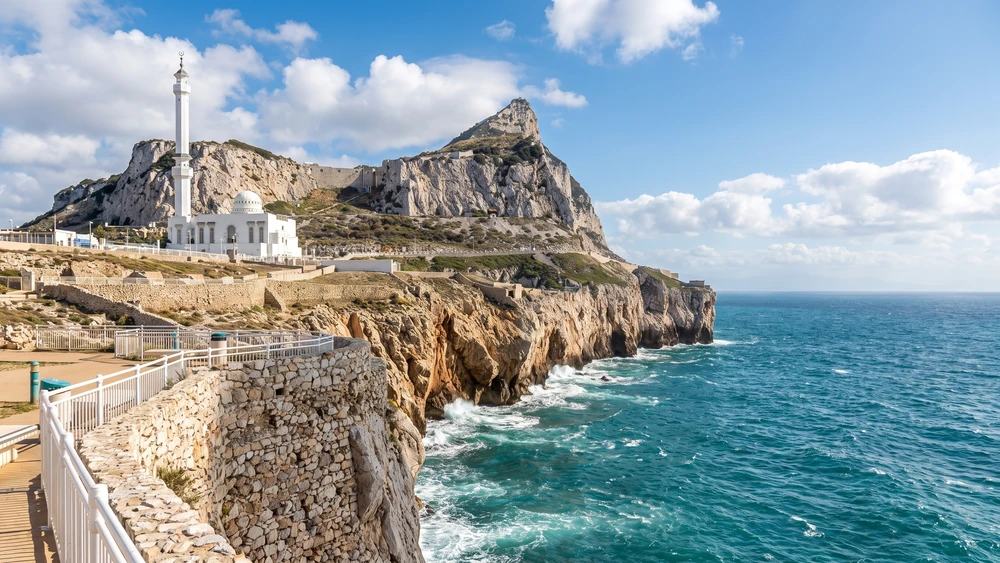
Ibrahim-al-Ibrahim Mosque (King Fahd Mosque)
Gifted by the late King Fahd of Saudi Arabia in 1997, the Ibrahim-al-Ibrahim Mosque is one of the southernmost mosques in continental Europe. Its white architecture against the backdrop of the Rock of Gibraltar is visually striking.
Unlike some working mosques that only admit outsiders around prayer times, this one keeps a fixed daily visiting window: it's open to tourists from 11:00 to 15:00, seven days a week. Dress modestly and remove your shoes at the door, but there's no need to plan your visit around the call to prayer.
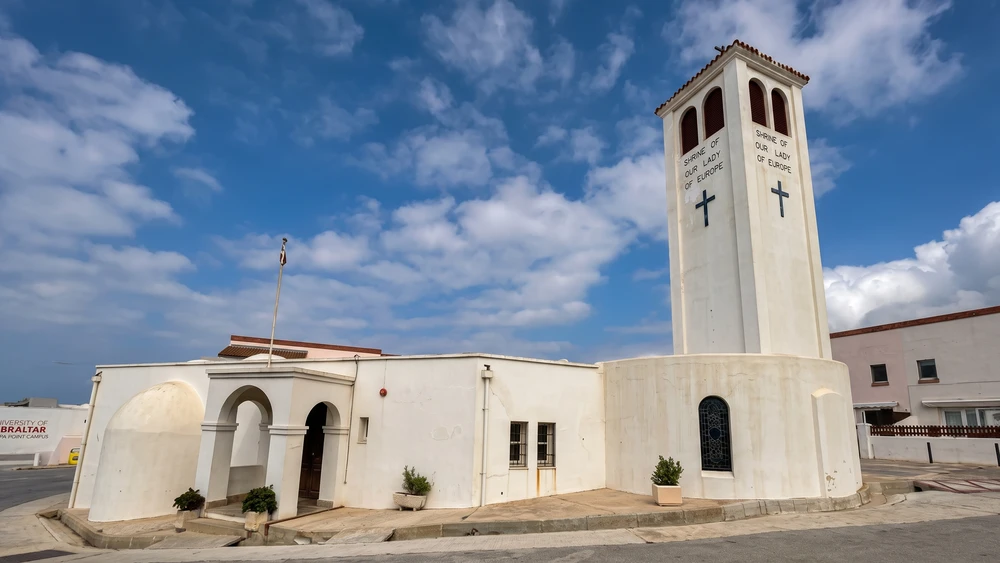
Shrine of Our Lady of Europe
Originally a mosque, this structure was converted into a Roman Catholic chapel in 1462 by the Spanish. It houses a 15th-century carving of the Virgin and Child, along with a small, free museum on the religious history of Gibraltar.
Hours shift with the season, so it's worth checking before you walk down. From July to September the shrine opens mornings only, 10:00 to 13:00, Monday to Saturday, and stays closed on Sundays. From October to June it reopens for a second stretch in the afternoon on weekdays, so a locked gate at midday doesn't necessarily mean it's shut for the day.
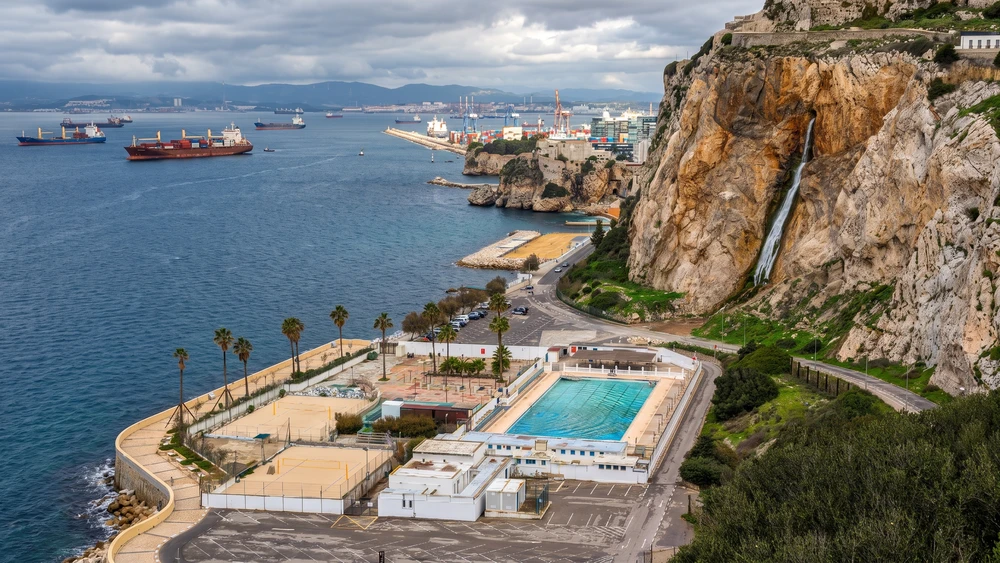
Europa Waterfall: The Desalination Plant Secret
Digital maps highlight a spot called "Europa Waterfall," leading many to expect a pristine, natural mountain spring. The reality is a fascinating piece of modern engineering: this artificial cascade is actually the heavy saltwater discharge from Gibraltar's desalination plant.
Because of territorial constraints, Gibraltar desalinates seawater for its drinking supply, and the excess cascades dramatically down the limestone cliff into the sea. The water is highly concentrated with salt and inaccessible on foot, but it still creates a great visual from the upper road.
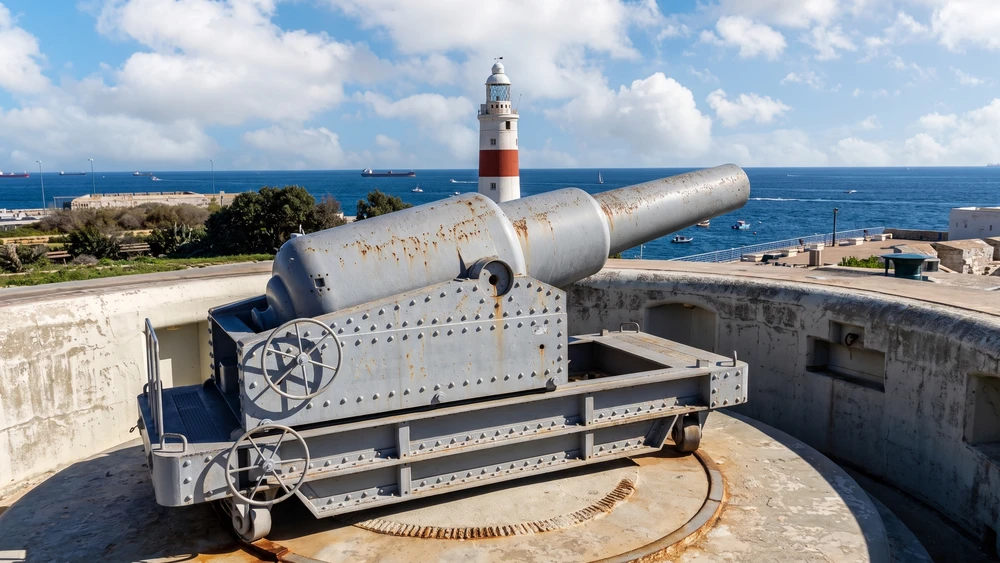
Sikorski Memorial & Harding's Battery
History is deeply embedded in the concrete here. The Sikorski Memorial commemorates Władysław Sikorski, the Polish military leader who died in a B-24 Liberator crash just off the coast in 1943. Right next to it sits Harding's Battery, featuring a restored 12.5-inch, 38-ton RML gun from the 1870s. Both installations are free to explore and include detailed information boards explaining the military significance of the strait.
Pillars of Hercules Viewpoint: Seeing Africa from Europe
A short distance from the main point, the Pillars of Hercules viewpoint marks the ancient boundary of the known world. According to myth, Hercules split a massive mountain to connect the Atlantic and the Mediterranean. The Rock of Gibraltar stands as the northern pillar, while Jebel Musa in Morocco forms the southern one.
On a clear day, the Moroccan coastline, located just 14 kilometers away, is highly visible, and you can clearly see the shipping lanes bottlenecking through the narrow strait. Access to this specific viewing platform is free, but passing through the adjacent Jews' Gate into Gibraltar's Upper Rock Nature Reserve requires a paid ticket, which also covers St Michael's Cave and the Great Siege Tunnels.
Practical Tips for Your Visit
- Wind factor: The geographic position creates a natural wind tunnel, and the breeze coming off the Atlantic is fierce even on hot days. Bring an extra layer.
- Viewing equipment: Coin-operated binoculars line the railing. Keep a few £1 or €1 coins in your pocket for a detailed look at the cargo ships and the African mountains.
- Keightley Way Tunnel: For a unique pedestrian detour, walk through the 412-meter Keightley Way Tunnel. Built by the fortress squadron in the 1960s, it feels like an old mining shaft and offers a cool, shaded path away from the main road traffic.
- Passport control: Depending on the route your bus or taxi takes, you might pass near the airport runway and border control zones. Keep your identification documents accessible just in case.
Early mornings tend to be quieter and clearer across the whole point, and if you want to plan the rest of your trip around the calmest weather, the best time to visit Gibraltar breaks down how conditions shift month to month.