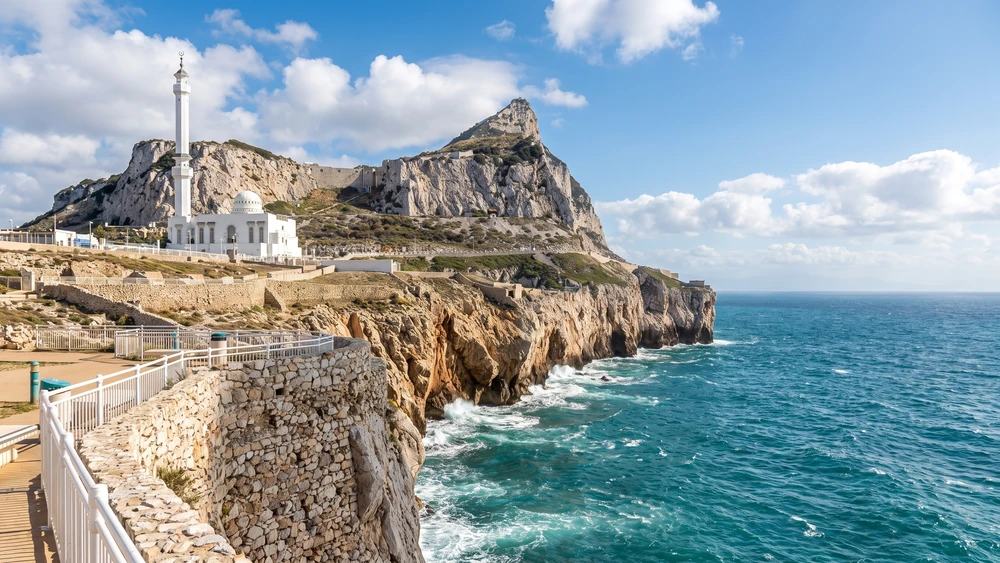
When you look at the Rock of Gibraltar from the outside, you see a majestic, monolithic limestone promontory rising sharply above the Mediterranean. What you do not see from the beaches or the marinas is the astonishing, labyrinthine world carved directly into its core.
While many travelers confuse the various military structures scattered across the Upper Rock, the World War II Tunnels represent a monumental engineering feat entirely distinct from Gibraltar's older fortifications. If you are planning a visit to this British Overseas Territory, understanding what lies beneath the surface is essential to maximizing your experience.
Below is an independent guide to exploring Gibraltar's WWII Tunnels, complete with practical logistics, historical context, and the critical differences that will help you plan your itinerary. If you are still mapping out your trip, it is worth checking how many days you actually need in Gibraltar before you commit to an itinerary.
Quick Practical Overview
Before diving into the history and logistics, here is a baseline summary to help you plan your day on the Rock:
| Feature | Details |
|---|---|
| Main Focus | 20th-century underground military base, garrison quarters, and modern wartime history |
| Average Visit Duration | 45 to 60 minutes |
| Access Requirements | Included in the general Gibraltar Nature Reserve Ticket (Upper Rock Pass) |
| Physical Difficulty | Moderate. Expect steep inclines, uneven surfaces, and damp conditions |
| Best Combined With | Moorish Castle and the Great Siege Tunnels (located on the northern face) |
The Wartime Excavation: Building a City Within a City
The story of the World War II tunnels is born out of sheer strategic necessity. In 1940, as Nazi forces dominated mainland Europe and France fell, Prime Minister Winston Churchill faced a catastrophic scenario. If Gibraltar fell, the Allies would lose total control of the western entrance to the Mediterranean, cutting off vital supply lines to North Africa and the Middle East.
With Spain's geopolitical stance highly uncertain and the threat of Operation Felix (the planned German-Spanish assault on the Rock) looming, the British military made a bold decision: they would build an indestructible fortress inside the mountain.
To achieve this, the military evacuated the entire civilian population of Gibraltar to distant territories like the UK, Madeira, and Jamaica. Four specialized tunneling companies, comprising the British Royal Engineers and the Canadian Army, were brought in. Working under grueling, sunless conditions with heavy dust and severely rationed water, these men pulled off a modern miracle.
By using advanced diamond drills and explosives, they expanded the existing tunnel network from roughly 7 miles to a staggering 25 miles (40 kilometers). In a territory that measures only 6.8 square kilometers on the surface, this meant there were more roads inside the Rock than outside it. This underground city was built to house a 16,000-strong garrison with enough food, water, and ammunition to withstand a continuous 16-month siege.
What to Expect Inside the WWII Tunnels Experience
As you step away from the Mediterranean sun and enter the subterranean network via Hay's Level, you will immediately notice a drop in temperature and an increase in humidity. The tunnels are broad, damp, and intentionally named after English streets (such as Maida Vale and Durham), a psychological tactic used to help British soldiers navigate the dark layout without getting lost.
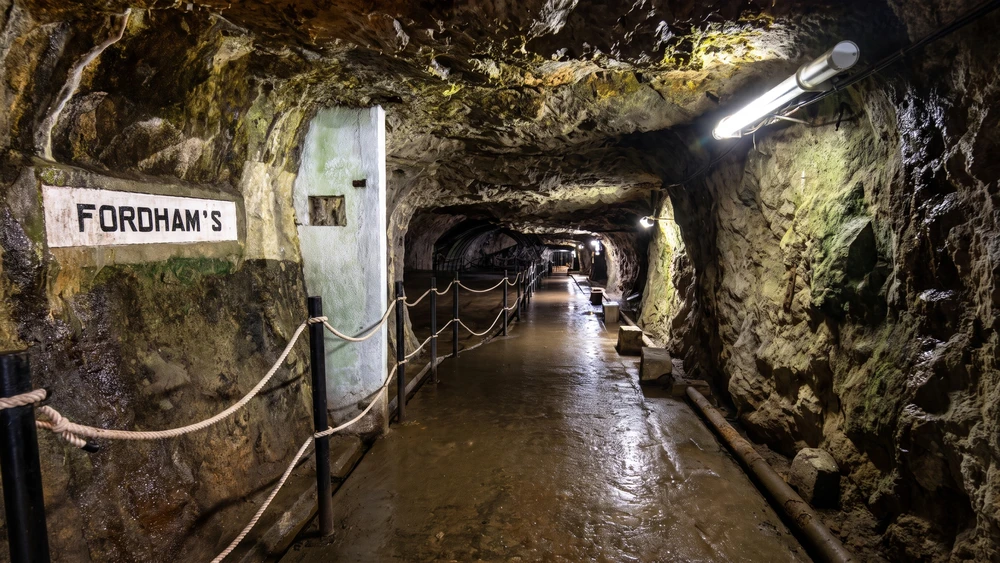
Your self-guided or audio-guided tour will take you through several meticulously restored chambers:
1. Hay's Level and the Defenses
Named after Lieutenant Colonel Robert Alistair Hay, who commanded the Royal Engineers during this peak construction era, this section shows you how the entrances were protected. You will observe blast traps, specialized defensive pockets designed to deflect explosions from aerial bombardment, and historical murals honoring the engineers.
2. Spitfire Hall
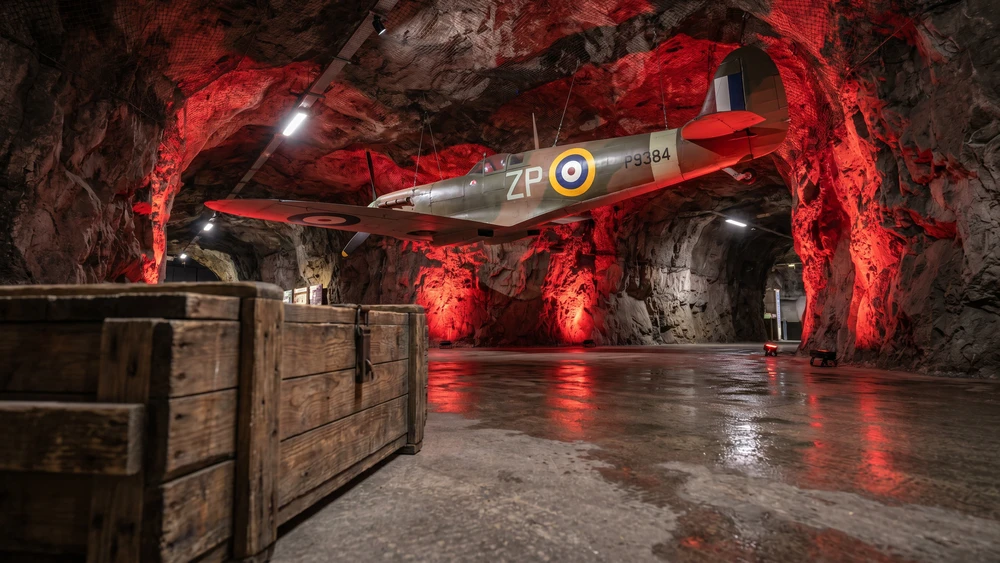
This massive chamber served as a vital workshop for the Royal Electrical and Mechanical Engineers (R.E.M.E.). Today, it houses a full-scale replica of the Supermarine Spitfire P8394 "Gibraltar," an aircraft funded entirely by the local community in 1940 through public donations. This hall illustrates how Gibraltar acted as a launchpad for aircraft supporting Operation Torch in North Africa.
3. The Sapper's Suite and Gunners Gallery
Here, you can inspect original wartime artifacts, uniforms, and communication gear. You will also see a classic BSA M20 motorcycle, demonstrating how troops maintained rapid mobility through the miles of dark limestone corridors.
4. Operation Tracer: The Ultimate Secret
Perhaps the most fascinating element of the Rock's espionage history is Operation Tracer. Deep within the network lies a "Stay Behind Cave." If Gibraltar had fallen to the Axis powers, six men were chosen to be sealed alive inside this hidden chamber.
Their sole mission was to secretly observe the Strait through tiny slits in the rock and radio enemy movements back to the UK. The plan was never executed, and the chamber remained so secret that it was not officially rediscovered until 1997.
WWII Tunnels vs. Great Siege Tunnels: What Is the Difference?
A common point of confusion for visitors is distinguishing between the two major tunnel complexes in Gibraltar. You should ideally visit both, but they offer vastly different experiences:
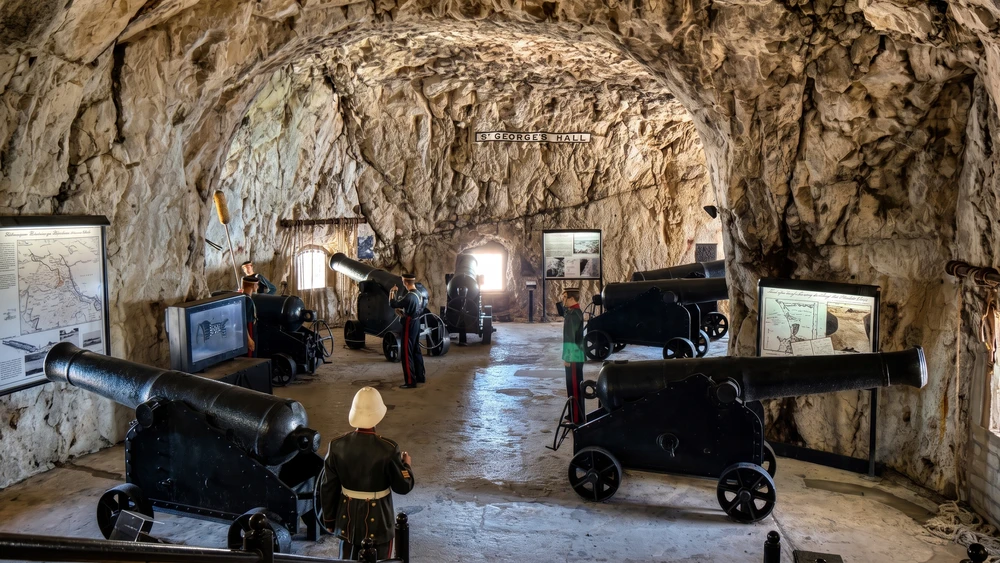
- The Great Siege Tunnels: Carved out in the late 18th century (1779-1783) during the conflict against Spain and France. Dug entirely by hand with crowbars and black powder, they are narrower, more primitive, and feature historic embrasures (openings) where smoothbore cannons were positioned to fire down onto enemy lines.
- The World War II Tunnels: Excavated using 20th-century industrial machinery and dynamite. They are much wider, completely enclosed, and were built to function as a fully operational city, featuring power stations, a hospital ward, bakeries, water desalination plants, and modern vehicle repair bays.
If you are short on time and prefer panoramic views and classical military history, prioritize the Great Siege Tunnels. If you are fascinated by 20th-century espionage, structural engineering, and WWII logistics, the WWII Tunnels are unmissable.
How Do They Differ from the Napier of Magdala Battery?
Another major historical landmark on your itinerary might be the Napier of Magdala Battery, but it is entirely distinct from the mountain tunnels.
While the WWII Tunnels are an extensive underground network carved deep into the Upper Rock, the Napier of Magdala Battery is a specialized, open-air coastal artillery fortification located on the southwest coast of the peninsula. Constructed in the late 19th century (the Victorian era), its sole purpose was to house the world-famous 100-Ton Gun, a massive muzzle-loading cannon designed to defend the bay against ironclad warships.
Visiting the battery gives you a sense of British Victorian naval supremacy, whereas visiting the WWII Tunnels immerses you in the desperate, subterranean defensive strategies of the mid-20th century. History enthusiasts short on time can also combine this with the far older Gorham's Cave Complex, Gibraltar's UNESCO-listed Neanderthal heritage site.
Practical Visitor Information: Tickets, Hours and Logistics
To ensure your excursion runs smoothly, keep these practical travel details in mind.
Tickets and Pricing
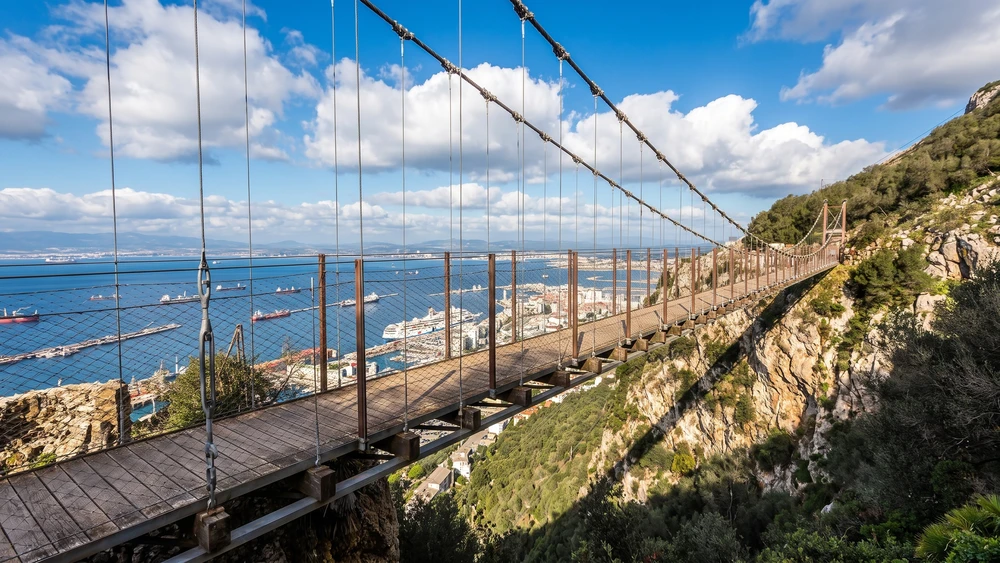
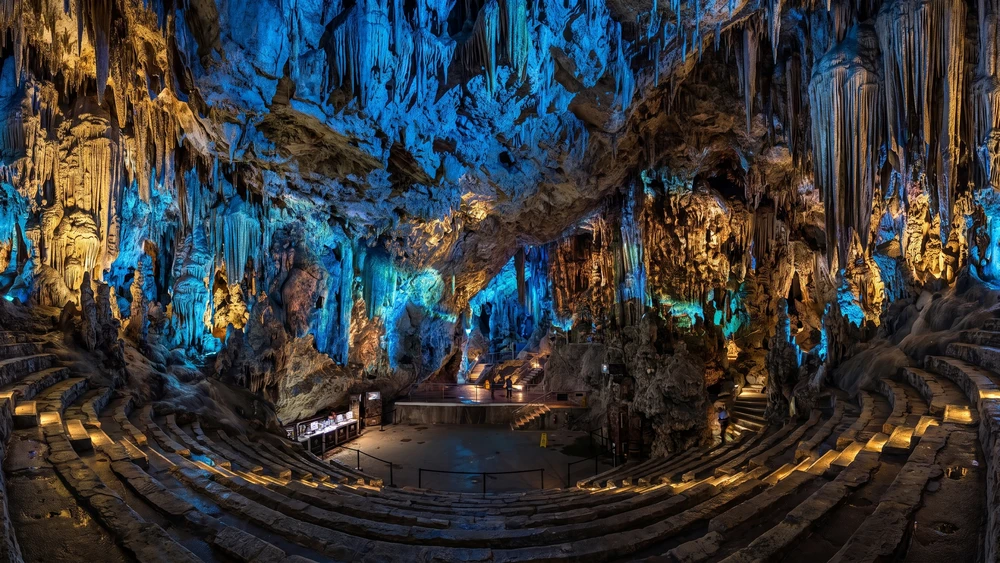
You do not buy a standalone ticket just for the WWII Tunnels. Instead, access is included in the Gibraltar Nature Reserve ticket (often referred to as the Upper Rock Pass). This comprehensive pass grants you entry to all major attractions within the reserve, including St. Michael's Cave, the Great Siege Tunnels, the Moorish Castle, and the Skywalk.
As of 2026, the Nature Reserve ticket costs £30 for adults and £22 for children aged 5 to 11, with children under 5 admitted free. Tickets can be bought online through the official Gibraltar Nature Reserve portal or at the entrance points: the Cable Car base station, Moorish Castle, Jews' Gate, or Devil's Gap.
Opening Hours
The WWII Tunnels follow the Nature Reserve's seasonal schedule and are open 363 days a year, closed only on December 25 and January 1. In the summer season (May to September), hours run 09:30 to 19:15, with last entry at 18:15. In the winter season (October to April), hours run 09:00 to 18:15, with last entry at 17:15.
Since maintenance closures occasionally occur, it is wise to verify times at the Nature Reserve entrance on the morning of your visit. Pairing your visit with the right season also matters, so check our notes on the best time to visit Gibraltar for crowd and weather patterns.
How Long to Visit
You should allocate 45 to 60 minutes to explore the accessible sections of the WWII Tunnels thoroughly. If you are highly enthusiastic about military history and enjoy reading every exhibition panel or listening closely to the audio guides, extend this to 75 minutes.
Essential Tips for an Optimal Visit
- Wear appropriate footwear: The terrain inside is flat but can be slick, uneven, and consistently damp due to limestone condensation. Sandals or heels are highly discouraged; opt for sturdy walking shoes or sneakers.
- Bring a light jacket: Even if it is a blistering 30°C (86°F) outside, the interior of the Rock remains consistently cool and breezy. A light layer will keep you comfortable during your hour underground.
- Be mindful of accessibility: While the main pathways have been made as accessible as possible, the historic nature of the site means there are unavoidable steep inclines, tight corridors, and naturally low ceilings. If you suffer from severe claustrophobia, take this into account before entering.
The Runway Connection
As an interesting final note, the millions of tons of limestone excavated by the soldiers to build these tunnels did not go to waste. It was used to reclaim land from the sea, extending Gibraltar's airport runway by roughly 80 percent, allowing larger Allied aircraft to land and ultimately helping alter the course of the war.