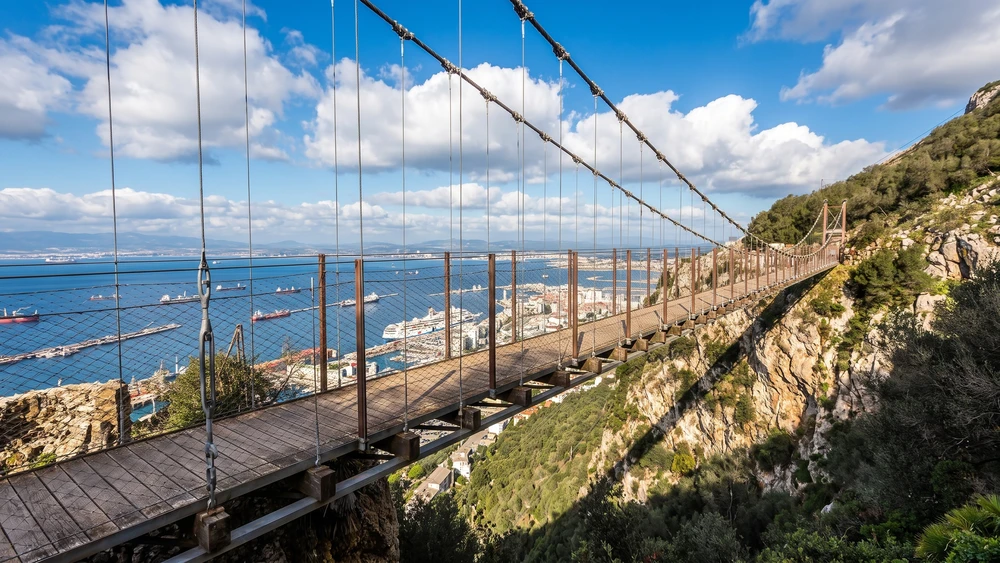
Stepping across the border from Spain into Gibraltar feels like an overnight flight compressed into a single footstep. One moment you are in Andalusia, and the next, you are looking at red telephone boxes, British-style pubs, and pricing labels in pounds. However, managing your money on "The Rock" is not exactly identical to spending cash in London.
Gibraltar operates a unique dual-currency system that frequently catches travelers off guard. To help you navigate the shops on Main Street and avoid costly exchange traps, here is everything you need to know about local currency, card acceptance, and the golden rules of spending in Gibraltar.
- Official currency: Gibraltar Pound (GIP), pegged 1:1 with British Pound Sterling (GBP)
- Cash interchangeability: GIP and UK GBP circulate interchangeably on the Rock
- Euro acceptance: Widely accepted by merchants, but at unfavorable rates; change is given in GIP
- Card & contactless: Ubiquitous across Main Street, restaurants, and the Nature Reserve
- ATM preference: Stick to bank-branded machines like NatWest or GIB; reject DCC prompts
- The leftover trap: GIP notes can't be spent or exchanged once you leave Gibraltar
The 1:1 Peg: Gibraltar Pound (GIP) vs. British Pound (GBP)
The official currency of the territory is the Gibraltar Pound (GIP). By law, this currency is permanently pegged to the British Pound Sterling (GBP) at an exact 1:1 ratio.
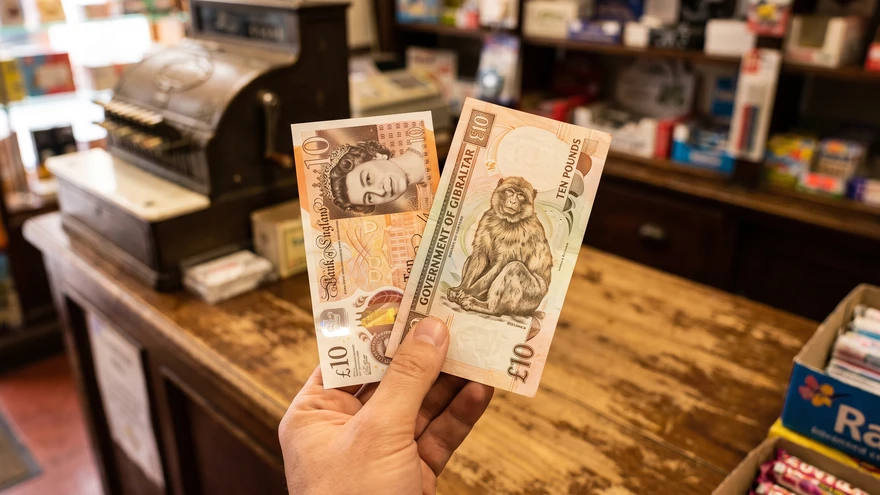
When you withdraw money or receive change in Gibraltar, you will notice that local banknotes feature distinct designs highlighting local landmarks like the Moorish Castle or the Barbary macaques. However, British banknotes issued by the Bank of England and UK coins are accepted everywhere on the Rock at face value. You can hand a merchant a standard UK ten-pound note, and they will accept it exactly like a local Gibraltar note.
There is a critical geographical catch you must keep in mind: this acceptance is strictly a one-way street. While UK pounds work perfectly fine in Gibraltar, Gibraltar Pound notes and coins are not accepted as legal tender in the United Kingdom or by banks outside the territory. If you try to hand a GIP note to a shopkeeper in London or Manchester, they will politely refuse it.
Furthermore, you should note that banknotes issued by Scottish or Northern Irish banks are generally not accepted by businesses in Gibraltar. Stick strictly to Bank of England notes or local GIP currency during your stay.
Can You Pay With Euros in Gibraltar?
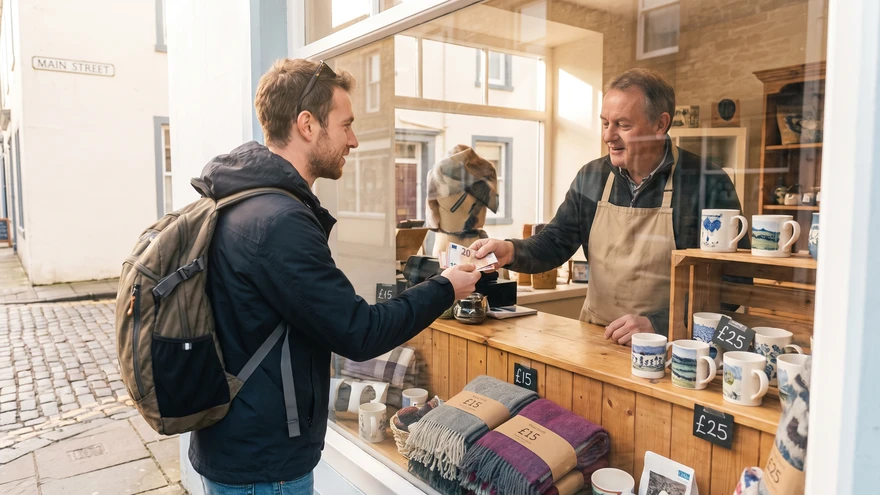
Because millions of day-trippers cross over from Spain every year, almost every retail outlet, restaurant, and taxi driver in Gibraltar will happily accept Euros (EUR) in cash. However, relying on Euro cash on the Rock is one of the most expensive mistakes you can make.
The Exchange Rate Trap
When you pay in Euros, local businesses do not use the real-time interbank market exchange rate. Instead, they set their own internal exchange rates, which often include a heavy markup ranging from 10% to 15% against you. A meal that costs £20 might end up costing you the equivalent of £23 or £24 if you insist on paying with physical Euros.
To make matters worse, even if you pay with Euros, merchants will almost always give you your change in Gibraltar Pounds. This leaves you with a less favorable conversion rate on the initial purchase, combined with local currency notes that you will struggle to spend anywhere else once your trip ends. For the best financial value, you should always opt to pay in pounds or use a payment card set to the local currency.
Cards, Contactless, and ATM Cash Withdrawals
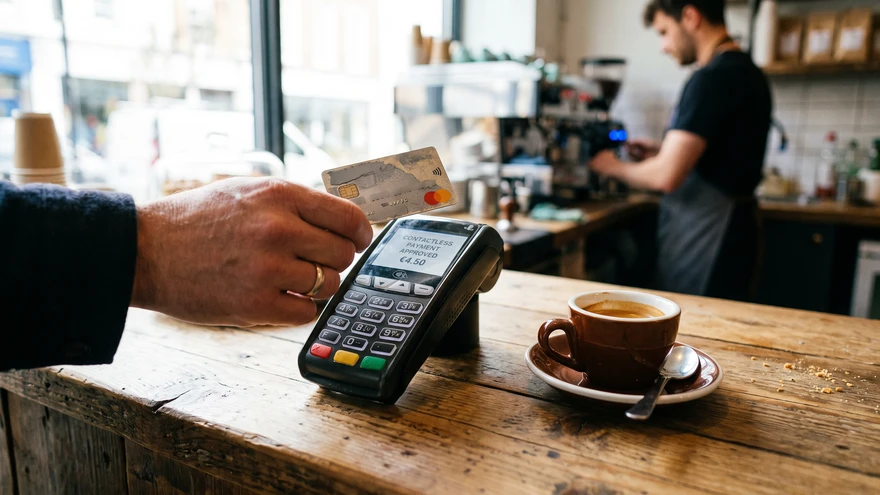
Digital payment infrastructure in Gibraltar is exceptionally advanced and mirrors the United Kingdom. Visa and Mastercard are accepted seamlessly at almost every establishment, from high-end duty-free boutiques on Main Street to traditional British pubs in Casemates Square.
Contactless payments via physical cards, Apple Pay, and Google Pay are standard. You can confidently explore the Upper Rock Nature Reserve, buy cable car tickets, or grab a coffee using nothing but your smartphone or a contactless card. American Express has highly limited acceptance, and networks like Discover, Diners Club, and JCB are rarely supported.
While cards are dominant, carrying a small cash reserve of £20 to £30 is highly recommended for specific scenarios, such as paying certain taxi drivers for short cross-border hops, purchasing items from smaller market stalls, or buying small treats at kiosks. If your only card were lost or blocked partway through the trip, Travel insurance with emergency cash assistance is worth having as a backup before you rely purely on plastic.
Avoiding the DCC (Dynamic Currency Conversion) Scam
When using your card at a local shop terminal or withdrawing cash from an ATM, you will frequently encounter a prompt asking if you prefer to be billed in your "Home Currency" (e.g., USD or EUR) or the "Local Currency" (GBP/GIP).
This is known as Dynamic Currency Conversion (DCC). You should always choose local currency (GBP or GIP). If you select your home currency, the local terminal or ATM operator applies its own inflated exchange rate and layers hidden fees onto the transaction. By choosing the local currency, you ensure that your home bank handles the conversion using the standard, competitive international network rates.
This tactic isn't unique to the Rock. The same dynamic currency conversion scams turn up at ATMs and card terminals right across Europe, and the fix is always the same: decline the conversion and let your own bank handle it.
Additionally, you should be selective about which ATMs you use. Main Street features reputable, bank-branded machines from institutions like NatWest International and the Gibraltar International Bank (GIB). These machines do not charge foreign card operator fees, and the same core strategies for avoiding ATM fees abroad apply just as well here as anywhere else in Europe. Avoid the unbranded, standalone ATMs placed near the Spanish border or inside tourist souvenir shops; they are notorious for aggressive DCC pitches and high transaction fees.
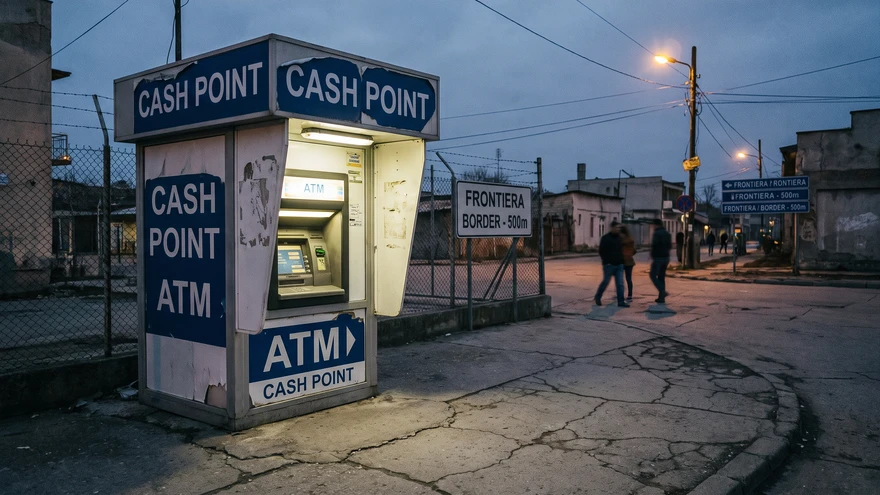
Most cash machines on the Rock also cap withdrawals at around GIP 500 per transaction and dispense Gibraltar pounds only. If you specifically want British sterling notes rather than GIP, the ATMs at Gibraltar International Airport are more likely to offer that option, though this varies by machine.
The Golden Rule: Don't Leave With Gibraltar Notes
The absolute most vital piece of financial advice for anyone visiting the Rock is this: spend or exchange every single Gibraltar Pound note before you cross the border or board your flight.
Because GIP is not a freely traded global currency outside its home territory, commercial banks and currency exchange bureaus in Spain, the UK, and across the globe will refuse to exchange them back into Euros or regular British Pounds. Once you leave the physical boundary of Gibraltar, any leftover GIP banknotes essentially become souvenir paper.
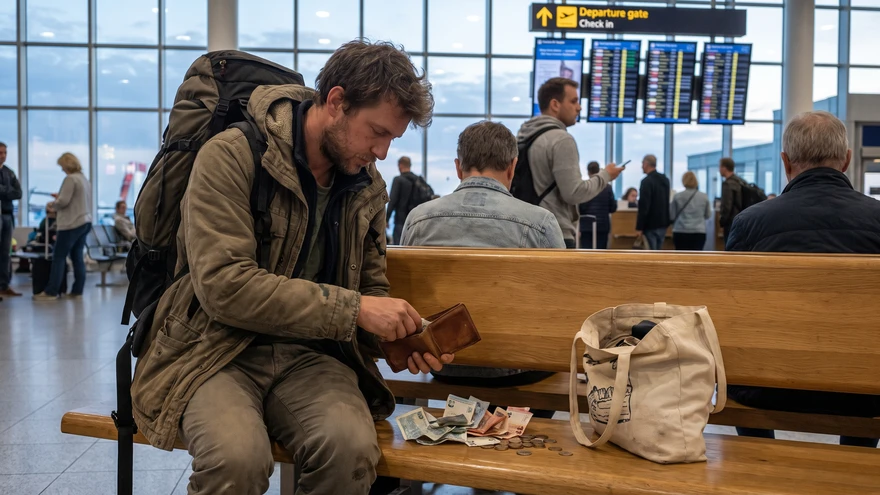
If you find yourself approaching the end of your visit with physical GIP notes in your wallet, you have a few practical options to protect your funds:
- Request UK sterling change: When paying cash at a local shop on your final day, ask the cashier if they can give your change specifically in Bank of England notes.
- Use a local bank: Walk into a commercial bank branch on Main Street before departing and ask them to swap your Gibraltar notes for standard UK sterling notes.
- Settle up: Use your remaining cash to pay down part of your final restaurant bill or hotel tab, then charge the rest to your card.
- Exchange at the border: If you're walking back into Spain via La Línea de la Concepción, use a currency exchange booth at the checkpoint to convert GIP directly into euros, though border rates are slightly less competitive.
Tipping Norms: Restaurants, Pubs, and Taxis
Tipping practices in Gibraltar strictly follow traditional British customs, making them far more relaxed than North American standards.
In sit-down restaurants, leaving a tip of 10% to 12.5% is customary for good table service. However, before you leave coins on the table or add an extra amount to the card machine, look closely at the bottom of your bill. Many establishments automatically add a "Service Charge" to the total, especially for groups. If service is already included, no additional tipping is required or expected.
In traditional pubs and casual cafes, tipping for a round of drinks or a quick coffee is not part of the local culture. If you wish to show appreciation for excellent service, rounding up your bill to the nearest pound or leaving small change in a tip jar is a welcome gesture. For taxi drivers and local tour guides operating around the Rock, rounding up to the nearest convenient pound is the standard way to express your thanks.