Pressing "accept" on an overseas ATM screen can quietly drain your travel budget before you've even found your hotel. Most travelers don't realize they're paying up to three separate fees on a single withdrawal, and one of them is entirely optional. Knowing what to decline, which cards to carry, and which machines to avoid puts that money back where it belongs.
- Card networks with best global acceptance: Visa and Mastercard
- Golden rule at the screen: always select the local currency
- Machines to avoid: airport terminals and standalone convenience store ATMs
- Safest withdrawal spots: ATMs attached directly to major bank branches
The Three Hidden Costs of International Withdrawals
Most people assume one fee when they use a foreign ATM. In practice, three separate charges often hit the same transaction, and together they can turn a modest withdrawal into a surprisingly expensive one.
1. Foreign Transaction Fees
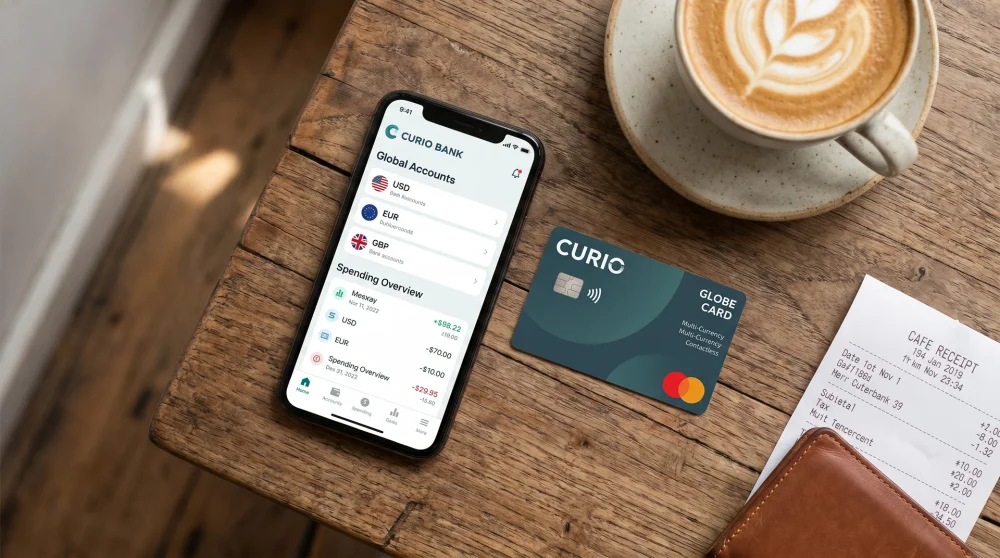
Your home bank usually penalizes you just for crossing a border. This foreign transaction fee applies to every single swipe, tap, or cash withdrawal, and it typically runs between 1% and 3% of the transaction total.
It functions as a percentage of your total transaction. Getting a specialized travel debit card eliminates this cost entirely. Several bank accounts, including Charles Schwab Investor Checking and Capital One 360 Checking, charge zero foreign transaction fees, which already removes one layer of cost from every trip.
2. Out-of-Network Bank Surcharges
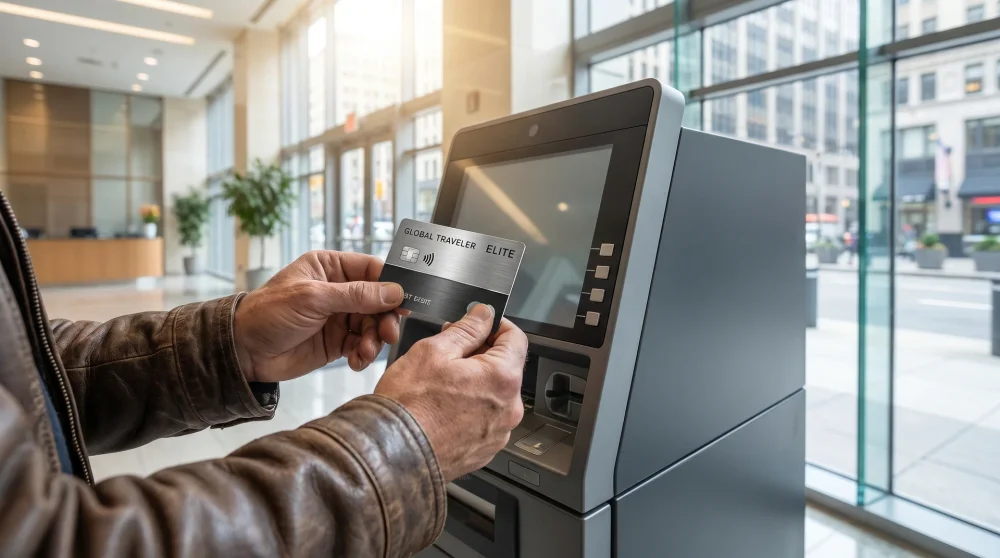
The foreign bank operating the ATM wants a cut of the action. They add a flat out-of-network surcharge to your withdrawal, typically $3 to $5, though this varies by country and machine.
This happens regardless of your home bank's policies. You bypass it by using partner bank networks or by opening a checking account that actively refunds global ATM charges at the end of each billing cycle. Banks in the Global ATM Alliance (Bank of America, Barclays, Deutsche Bank, BNP Paribas, Scotiabank, Westpac) waive surcharges at each other's machines entirely.

3. The Dynamic Currency Conversion (DCC) Trap
This is the most common and most expensive pitfall for international travelers. The ATM suddenly asks if you want your withdrawal charged in your home currency rather than the local one.
It looks incredibly convenient. It is actually a system designed to apply inflated exchange rates and extract maximum profit from your withdrawal. The markup on DCC transactions regularly runs 3% to 7% above the real market rate. Even banks that reimburse all other ATM fees, including Charles Schwab, explicitly do not refund DCC charges. The moment you accept, no refund policy will protect you.
How to Beat the ATM Screen: Always Choose Local Currency
Walking up to a foreign ATM requires a clear strategy. You insert your card and request your desired amount in the local cash.
The screen immediately flashes a warning about exchange rates and offers to lock in a price. It presents two clear options: Proceed with Conversion or Decline Conversion.
Press Decline Conversion without hesitation. The ATM still dispenses your cash perfectly fine. Your home bank then processes the transaction using the mid-market exchange rate, saving you a significant amount of money compared to the DCC rate the machine was trying to apply.
If the screen is confusing or the machine only shows vague options, the safest rule is: if something is being "offered" proactively, decline it. A legitimate transaction never requires you to accept a currency conversion.
Best Travel Debit Cards to Eliminate Foreign Fees
Premium Bank Accounts for ATM Fee Rebates
Certain premium checking accounts act as the most straightforward travel hack available. You use any ATM in the world, the machine charges whatever local fee it wants, and at the end of the billing cycle, your bank automatically refunds all those third-party surcharges back into your account.
Charles Schwab Investor Checking is the most consistently recommended option among long-term travelers and digital nomads. There are no monthly fees, no minimum balance requirements, no foreign transaction fees, and unlimited ATM fee reimbursements worldwide. The reimbursement arrives at the end of each statement period, meaning you pay upfront at the machine but get the fee back within weeks.
Betterment Checking goes a step further by also reimbursing the 1% Visa foreign transaction fee that most debit cards charge, making it one of the most complete options for frequent travelers.
Multi-Currency Digital Solutions
Modern digital banking apps change the rules of travel money. You open an account and hold multiple different currencies simultaneously, converting funds when the exchange rates look favorable.
Wise provides a physical debit card that spends directly from your currency balances at the mid-market exchange rate. There are no hidden margins in the conversion. The caveat is that Wise allows fee-free ATM withdrawals of up to $100 per month only; beyond that, a 2% charge applies on top of any ATM operator fees. For travelers who mostly pay by card and use cash sparingly, this limit rarely becomes a problem.
Revolut offers higher free ATM withdrawal thresholds depending on your plan tier: up to $400/month on the free Standard plan, $800/month on Premium, and $1,200/month on Metal. Beyond those limits, a 2% fee kicks in. Revolut's Standard plan also applies a small weekend markup on currency conversions, which is worth noting if you frequently exchange money on Saturdays and Sundays.
For most travelers, pairing a Schwab or Betterment account (for unlimited ATM access) with Wise or Revolut (for day-to-day card spending) covers all scenarios.
Which ATMs to Use and Which to Avoid
Never use independent ATMs labeled Euronet, Travelex, or Cardpoint. These machines actively target tourists with aggressive DCC screens and high base fees. They are disproportionately placed in airports, train stations, tourist squares, and convenience stores precisely because foot traffic is high and travelers are distracted.
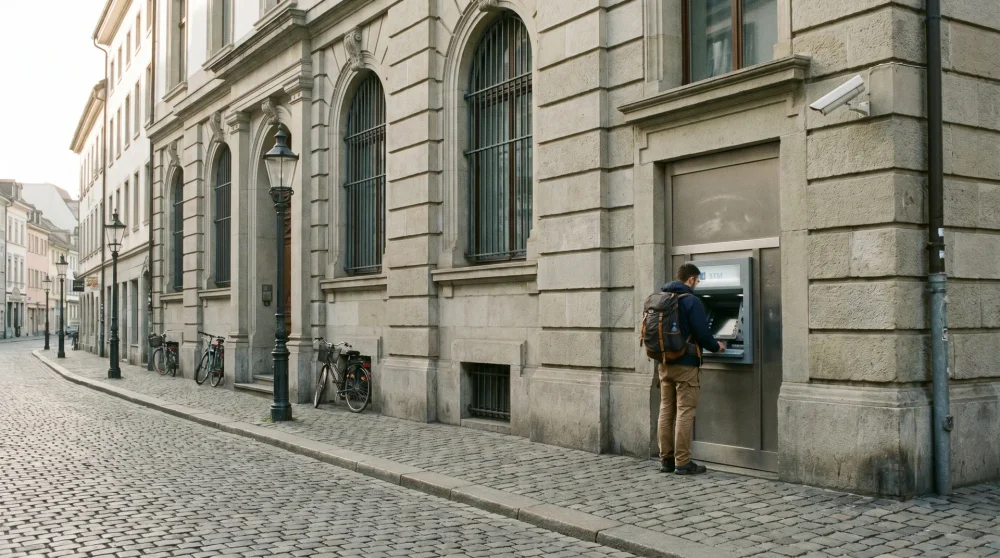
Always find an ATM attached to a local bank branch during regular opening hours. The machines inside the lobbies offer better security. If the machine swallows your card for any reason, the bank staff are right there to assist. Outside ATMs on bank building walls are a reasonable second choice.
Airports deserve special mention. The ATMs in arrival halls are almost universally operated by Euronet or similar third-party companies charging premium rates. If you land and need cash immediately, withdraw a small amount to cover transport, then find a proper bank branch in the city for your main withdrawal.
Golden Rules for Withdrawing Cash Overseas
Make fewer, larger withdrawals during your trip. This minimizes the impact of any flat fees your bank might still apply. Withdrawing three times over a two-week trip costs far less in aggregate fees than withdrawing every other day, even if each individual withdrawal is smaller.
Keep a small emergency cash reserve in a separate pocket or travel wallet, distinct from your main spending cash. If your card is blocked or the ATM system is down, having a buffer of 50 to 100 in local currency prevents genuine emergencies.
In countries where card acceptance is limited (parts of Southeast Asia, rural areas across Eastern Europe, local markets in North Africa and the Middle East), plan to carry more cash than you normally would. In fully cashless environments (parts of Scandinavia, urban Japan), you may barely need ATMs at all. Reading the cash culture of your destination before arriving saves both money and stress.
Traveling with robust backpacker travel insurance also covers lost or stolen cash in many policies, which changes how aggressively you need to minimize each ATM visit. If your policy covers cash up to a certain amount, carrying slightly more at once becomes a more reasonable risk.
Finally, always notify your home bank before international travel. Cards blocked by fraud detection systems at the worst possible moments remain one of the most consistent travel frustrations. A two-minute phone call or app notification eliminates this entirely.