Imagine walking down a street lined with red telephone boxes, traditional British pubs serving fish and chips, and police officers who once wore classic "Bobby" helmets. Now look up: you are standing under a towering 426-meter limestone monolith, baking in intense Mediterranean sunshine at the southern tip of the Iberian Peninsula. This is Gibraltar, a 6.7-square-kilometer territory that has been proudly British for over 300 years, despite sitting physically attached to Spain.
To understand how this slice of Britain ended up on Spain's doorstep, and why the dispute over it is still very much alive, you need a mix of 18th-century wartime strategy, a centuries-old treaty, and a local population fiercely protective of its own identity.
- Status: British Overseas Territory
- Official language: English (local dialect: Llanito)
- Currency: Gibraltar Pound (GIP), pegged 1:1 with GBP
- Border town: La Línea de la Concepción, Spain
- Key landmark: The Rock of Gibraltar
The Treaty of Utrecht: How Britain Got the Rock
The story of British Gibraltar does not begin with a random invasion, but with a European war of succession. In the early 1700s, the death of Spain's King Charles II without a direct heir triggered the War of the Spanish Succession, a struggle over who would control the vast Spanish Empire. Britain, alongside the Dutch Republic and Austria, formed an alliance to prevent a union between France and Spain that would have upended the balance of power in Europe.
What Actually Happened in 1713
In August 1704, an Anglo-Dutch fleet led by Admiral George Rooke spotted a strategic opportunity. The Rock of Gibraltar commanded the narrow strait linking the Atlantic Ocean to the Mediterranean Sea, a bottleneck of enormous military and commercial value. After a heavy bombardment, the allied forces captured it.
The war eventually ground to a halt, and in 1713 the warring nations signed the Treaty of Utrecht. To secure peace, Spain formally ceded Gibraltar to Great Britain. Article X of the treaty was unambiguous: Spain's king agreed to "yield to the Crown of Great Britain the full and entire propriety of the town and castle of Gibraltar, together with the port, fortifications, and forts thereunto belonging... to be held and enjoyed absolutely with all manner of right for ever."
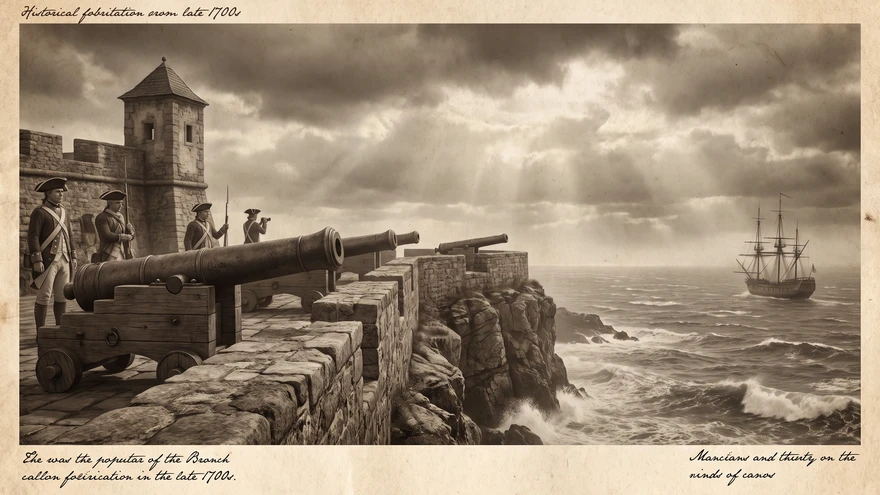
That phrase, "for ever," is the legal bedrock British sovereignty still rests on today. Spain later regretted the concession and tried to recapture the Rock through several sieges, most notably the Great Siege of 1779 to 1783, but the British defenses held.
Why Gibraltar Isn't Part of Spain Today
If you look at a map, it seems obvious that Gibraltar should belong to Spain. So why hasn't it been folded back into Spanish territory over the last three centuries? The answer lies mostly in the twentieth century, in the actions of Spanish dictator Francisco Franco and in the choices Gibraltarians themselves made at the ballot box.
The Ongoing Sovereignty Dispute
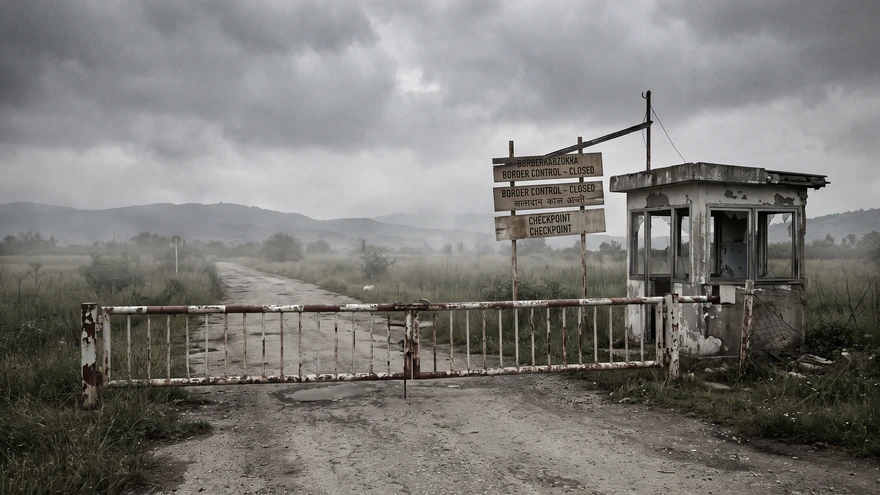
Spain has never fully abandoned its claim, arguing that the Treaty of Utrecht was signed under duress and that Spain's territorial integrity should be restored. In the mid-20th century, Franco escalated the dispute, and when economic pressure failed to force Britain's hand, he took a drastic step. In 1969 he ordered the border between Spain and Gibraltar closed entirely.
The closure lasted 16 years, tearing families apart and cutting Gibraltar off from its natural economic hinterland. Spain partially reopened the border to pedestrians in 1982 and fully reopened it to vehicles in 1985, largely to prepare for its own entry into the European Community. Franco's gamble backfired: rather than forcing Gibraltar into submission, the blockade hardened a distinct local identity and deepened loyalty to the British Crown.
What Do Gibraltarians Actually Want
When discussing whether Gibraltar should be British or Spanish, the most important factor is self-determination: what the people who actually live there want. Modern Gibraltarians are not simply expatriates from London; they are a blend of Genoese, Maltese, Spanish, Moroccan, and Jewish ancestry, and they have answered the sovereignty question more than once, decisively.
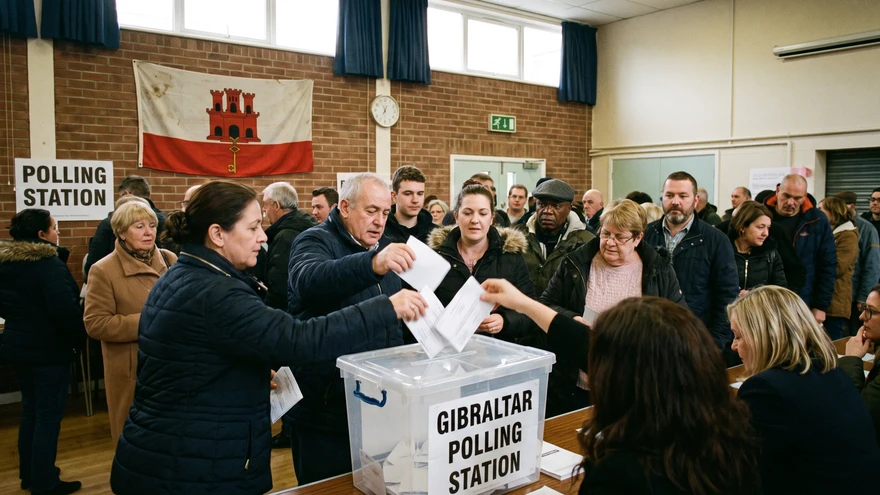
In the 1967 referendum, residents were asked whether they wanted to pass under Spanish sovereignty or keep their link to Britain. 12,138 voters chose Britain against just 44 who chose Spain, with turnout above 95%. In the 2002 referendum, Britain and Spain jointly proposed shared sovereignty as a way to resolve the dispute; Gibraltarians rejected it by 98.97%. Local leaders have repeatedly argued that imposing Spanish sovereignty against the population's wishes would strip Gibraltarians of an identity they built specifically because of, not despite, the pressure Spain applied.
Brexit and Gibraltar's Complicated European Identity
Gibraltar's relationship with the European Union adds another layer to the story. When the UK voted to leave the EU in the 2016 referendum, Gibraltar voted almost 96% to remain, the strongest Remain result recorded anywhere in the vote. The reason was practical as much as political: Gibraltar's economy depends heavily on thousands of Spanish workers who commute across the border every day, and a hard, EU-less border threatened to choke that flow overnight.
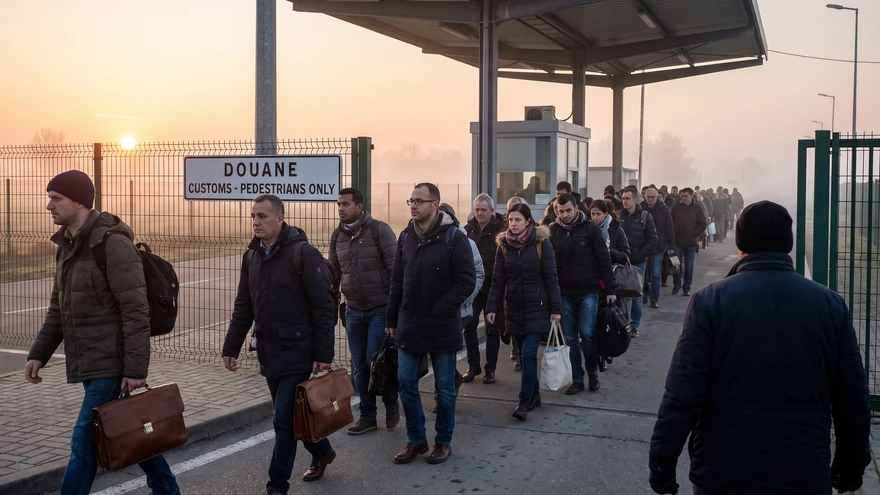
That anxiety shaped years of negotiation between London, Madrid, and Brussels over what would happen to the Gibraltar-Spain frontier once the UK left the EU. The result, finalized as a treaty text in early 2026, is entering into provisional effect in mid-2026 and directly changes what travelers experience at the border.
Why This History Still Shapes Your Visit
The centuries-old sovereignty dispute is not just a history lesson. It is the reason the border crossing, the currency in your wallet, and even which side of the road your rental car drives on all feel a little different from the rest of Spain or the rest of Britain.
The Border Is Changing in 2026
For decades, crossing from the Spanish town of La Línea de la Concepción into Gibraltar meant full passport control, because you were leaving the EU's Schengen Area. That is now changing. Under the UK-EU treaty on Gibraltar, scheduled for provisional implementation from 15 July 2026, immigration checks are being moved away from the land border entirely and concentrated at Gibraltar's airport and port instead. Crossing on foot or by car between Spain and Gibraltar is meant to feel like moving between two Schengen countries, with no routine passport stamp at the frontier itself.
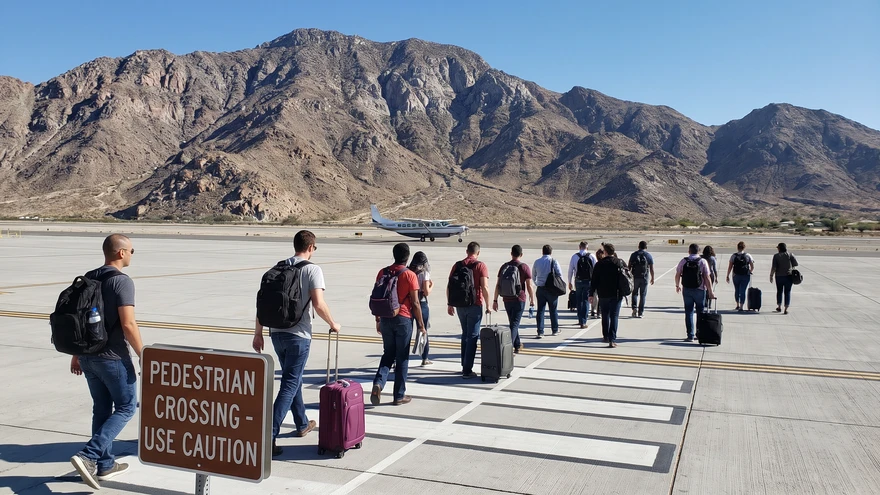
Gibraltar is still not becoming part of Schengen, and it remains outside the EU, so always carry a valid passport when you travel and check current entry requirements before your trip, since a major legal change like this can take time to bed in on the ground. The pedestrian and vehicle crossing itself keeps its famous quirk regardless of the treaty: once you clear the frontier, you walk or drive directly across the active runway of Gibraltar International Airport to reach the town center.
Currency, Language, and the Rule of the Road
While euros are widely accepted in shops and restaurants, Gibraltar's official currency is the Gibraltar Pound (GIP), pegged 1:1 with the British Pound. You can spend UK banknotes freely on the Rock, but Gibraltar Pound coins and notes are generally not accepted once you return to the UK mainland, so spend or exchange them before you leave.
English is the official language used in schools, government, and media, but locals often switch into **Llanito**, a fast, code-switching blend of Andalusian Spanish and British English seasoned with Genoese, Maltese, and Hebrew loanwords. Even the roads carry a compromise: despite being British territory, Gibraltar drives on the right, just like Spain, simply because the land border makes any other arrangement impractical.
Gibraltar remains British because of a 1713 treaty, because of international law, and, above all, because its own people have repeatedly chosen it to stay that way. The 2026 border changes do not resolve the underlying sovereignty question. Spain still claims the Rock, and Gibraltar still refuses to hand it over. What the treaty does is make daily life across that line a little easier, a fitting update to a story that has always been decided as much at the border crossing as in any treaty room.