Fort George and Fort Frederick are the two most accessible historic fortifications in Grenada, both sitting above the capital St. George's with sweeping views over the harbor and the Atlantic coast. They were built by rival empires, designed with opposing defensive strategies, and carry centuries of history between them - including one of the most dramatic political events the Caribbean has ever witnessed.
- Entrance fee: $2 (approximately EC$5) per person at both forts
- Opening hours: Daily, 8:00 AM to 5:00 PM
- Payment: Cash only; bring exact change to avoid delays at the gate
- Essential item: A smartphone flashlight or small travel torch - the Fort Frederick tunnels are completely unlit
- Time required: 15 to 30 minutes per fort is sufficient for a full walkthrough
A Tale of Two Forts: Different Eras, Different Strategies
Fort George and Fort Frederick were not built at the same time, and they were not built with the same enemy in mind. Understanding the gap between them explains why one faces the sea while the other - famously - turns its back on it.
Fort George was completed by the French around 1710, originally named Fort Royal. It sits at the harbor mouth, commanding the approaches to the Carenage from the water. The British seized it in 1763 after the Seven Years War, and control of the fort swapped back and forth over the following decades as France and Britain traded possession of the island.
Its seaward orientation made it effective against naval attack but exposed it to infantry assault from the landward side - a weakness that military planners eventually could not ignore.
That vulnerability directly triggered the creation of Fort Frederick. After the French recaptured Grenada in 1779, they recognized the tactical gap: nothing was stopping a land force from marching in from the high ground to the east and attacking the harbor fortifications from the rear.
They began constructing a chain of fortifications along Richmond Hill - Fort Matthew, Fort Frederick, Fort Lucas, Fort Adolphus, and Morne Cardigan. Fort Frederick was the centerpiece, positioned 244 meters (800 feet) above sea level, and it was completed around 1783, when the Treaty of Versailles handed Grenada back to Britain.
The British inherited the nearly finished fort and put the final touches on it themselves, which is why historians sometimes debate who truly "built" it.
Fort Frederick: The Backward-Facing Fort
Fort Frederick earned its enduring nickname before the walls were even fully dry. Every other Caribbean fort of its era pointed its cannons at the sea. Fort Frederick aimed its heaviest guns inland, toward the mountain ridges.
This was not an oversight. The French military engineers designed it explicitly to address the lesson Fort George had taught them: a fort that can only fight the ocean is defenseless the moment infantry arrives overland. By facing the interior, Fort Frederick could cover exactly the approach route that had made Fort George so vulnerable.
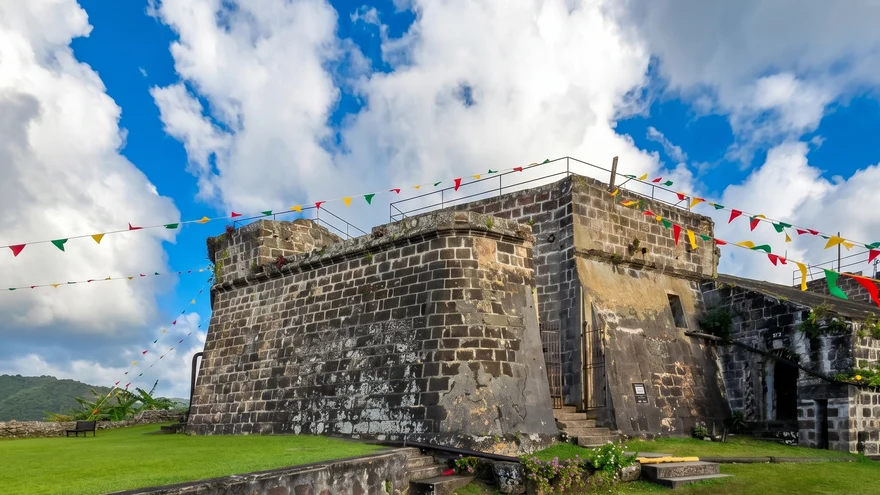
The practical result is one of the Caribbean's most unusual pieces of military architecture, and the most visually striking feature of any visit. Standing at the upper battery, the cannons point directly into a wall of tropical forest rather than toward the glittering harbor below.
Fort Frederick never fired a single cannon in battle. The Treaty of Versailles ended hostilities before the fort was tested, and no subsequent military action ever reached Richmond Hill.
During the 1979 Grenada Revolution, Fort Frederick served as headquarters for the motorized division of the People's Revolutionary Army. Maurice Bishop's Central Committee held meetings here - making the fort a physical site of the political events that would culminate four years later at Fort George.
What to See at Fort Frederick
- The inland-facing battery: The cannons aimed at the mountains rather than the sea, the defining feature of the entire site
- Underground tunnels and reservoirs: A network of pitch-black corridors runs beneath the main courtyard. Bring a flashlight - there is no artificial lighting and the stone flooring is uneven
- 360-degree panoramic view: The Atlantic Ocean to the east, the Caribbean harbor to the west, Grand Anse Beach visible to the south, and rainforest ridges stretching north - all from a single vantage point
- Fort Matthew ruins: The adjacent fortification is largely ruined but visible, providing context for the full scale of the Richmond Hill defensive chain
Fort George: The Harbor Sentinel and the 1983 Crisis
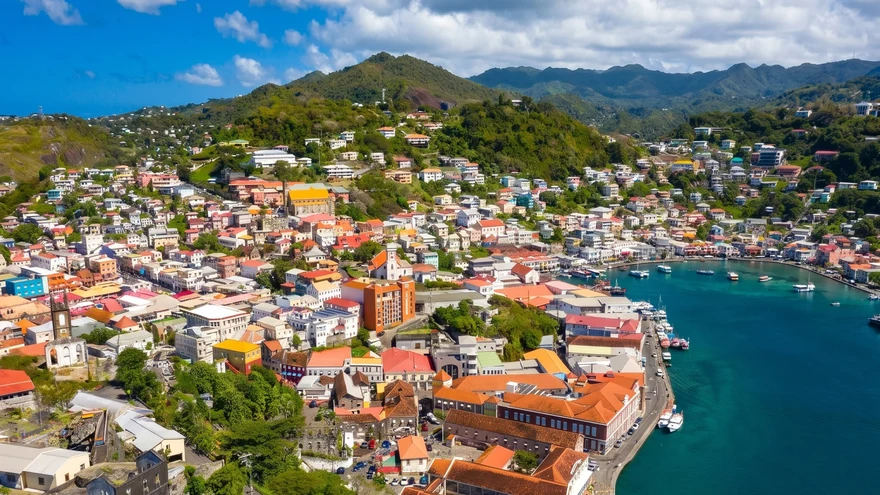
Fort George is older, lower, and carries the heavier modern history. It stands guard over the Carenage - Grenada's horseshoe inner harbor - exactly where French military planners intended it to hold the line against naval attack.
The fort now houses the Royal Grenada Police Force, which means access to certain areas is restricted. The parts open to visitors include the outer walls, the cannon emplacements, and - most significantly - the central courtyard.
The 1983 Maurice Bishop Execution
On October 19, 1983, Prime Minister Maurice Bishop was executed in the courtyard of Fort George during a violent political coup. Bishop had been under house arrest following a power struggle within his own New Jewel Movement government.
Supporters freed him, and a large crowd marched with him to Fort George. Rival factions within the People's Revolutionary Army then opened fire.
Bishop and several cabinet ministers were killed. Bullet holes from that day are still visible in the fort's masonry. The executions triggered a United States military intervention six days later - Operation Urgent Fury - that ended the People's Revolutionary Government and began Grenada's return to parliamentary democracy.
The courtyard is small and quiet. The scale of what happened here is not immediately obvious. Most visitors stand in the space for a few minutes before the weight of it settles.
Current Restoration Work
Both forts are moving through active structural restoration phases. Scaffolding, cordoned walkways, and construction materials are visible across sections of the parapets.
Certain underground rooms or upper ledges may be temporarily inaccessible depending on when you visit. The restoration work secures the walls for future generations but does affect the visual character of the site.
How to Get There
The two forts sit at different elevations and require slightly different approaches.
Fort George is the more accessible of the two - it is located close to the Carenage waterfront in St. George's, and most visitors on foot can reach it from the center of town without difficulty.
Fort Frederick sits high on Richmond Hill, roughly two miles from the city center. Getting there requires a specific approach:
- Minibuses (public minivans): The cheapest option. Buses run along the main roads toward Richmond Hill and drop passengers at the bottom of the incline. From there, you face a steep, unshaded uphill walk to reach the ticket gate. Not recommended in midday heat.
- Taxi or minibus: The most efficient option. Drivers navigate the tight switchbacks and drop you directly at the upper entrance. Minibuses are slightly more affordable and often available near the Carenage.
- Rental car: You can drive directly to the entrance and park near the small vendor area. Parking fills quickly on cruise ship days - plan accordingly.
For more on navigating Grenada's public transit, see the guide on getting around Grenada.
If you are arriving by ship, the Grenada cruise port guide covers shore excursion logistics in detail.
Timing Your Visit
The forts are small sites, and timing makes a significant difference to the experience.
Avoid cruise ship days if possible. When large vessels dock in the harbor, tour groups flood the narrow pathways of both forts simultaneously, and parking at Fort Frederick disappears within minutes of their arrival. Checking Grenada's cruise ship schedule before you visit takes about two minutes and can save the experience entirely.
Late afternoon is the optimal window: cooler temperatures, dramatic directional light for photography, and significantly emptier courtyards. The sunset view from Fort Frederick's upper battery is one of the best on the island.
July and August bring an unexpected bonus at Fort Frederick: flamboyant trees at the entrance bloom in vivid orange-red, framing the stone walls in color.
On-Site Amenities
A small shop near the Fort Frederick entrance sells cold drinks and basic souvenirs. It is not a substitute for a full meal.
The site has no restaurant and no dedicated picnic area. Bring water, especially if you are visiting in the midday heat.
A famously sociable resident cat patrols the Fort Frederick grounds and approaches visitors with considerable confidence. Sharing food is at your discretion.
Musicians occasionally play near the entrance; tipping a few coins is a common local courtesy.
For a broader picture of what to do in the capital, the St. George's Grenada guide covers the walking route between the harbor, the market, and both forts.
If you are building a day itinerary, the Grenada travel costs breakdown helps with budgeting transport and entry fees across multiple sites.
Fort George vs Fort Frederick: Which One First?
If you are visiting both in a single day, the most logical sequence is Fort George first - it is closer to the harbor, easier to reach on foot, and sets the historical context for the inland forts that followed. Fort Frederick then becomes the payoff: the higher elevation, the better views, the more unusual architecture, and the underground tunnels.
Neither fort requires more than half a morning if you are combining them.