Driving in Grand Cayman might seem straightforward until you face the strict 15 mph school zones and local roundabout protocols. Many visitors assume their home country license is enough, but missing crucial details like insurance requirements or the CI$150 mobile phone fine can turn a relaxing trip into a stressful experience.
- Driving Side: Left
- Speed Limits: 25-30 mph (City), 40-50 mph (Highways), 15 mph (School Zones)
- Fuel Price: Approximately CI$5.50 per Imperial Gallon (\~USD $6.60)
- Mobile Phone Use: Strictly hands-free only (CI$150 fine)
- Blood Alcohol Limit: 0.07%
- Seatbelts: Mandatory for all passengers
- Toll Roads: None
- Emergency Contact: 911
Do You Need an International Driving Permit in Grand Cayman?
You do not need an International Driving Permit to explore Grand Cayman if you have a valid license from your home country. The island welcomes drivers with licenses from convention countries (including the US, UK, and Canada) for up to six months. If your license is from a non-convention country, you are legally permitted to drive for up to one month.
Rules for US, UK, and Canadian Licenses
Visitors must be at least 18 years old to drive, even though local residents can obtain a license at 17. You are restricted to driving motor cars, trucks under 8,500 pounds, or motorcycles with engines under 125cc. Always keep your valid driving license and proof of proper insurance coverage - whether through a personal policy, credit card, or rental agency - with you at all times.
Strict Road Rules You Must Know Before Renting
The Cayman Islands strictly enforce traffic laws to maintain safety for residents and visitors alike. Understanding these regulations is crucial to avoid fines and ensure a smooth journey.
Speed Limits and the 15 mph School Zone Trap
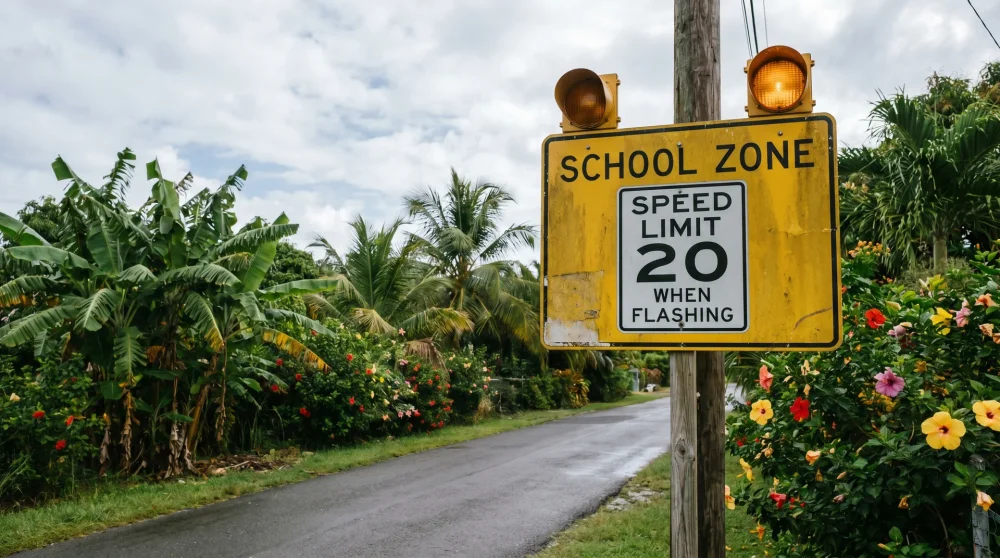
Speed limits range from 15 mph in school zones to 50 mph on highways. Highway speeds max out at 50 mph (80 km/h), while urban areas typically range from 25-30 mph (40-48 km/h). Be exceptionally vigilant in school zones; the speed limit drops to 15 mph when amber lights flash or during posted school hours. Speed limit signs are circular with red outlines and display limits in miles per hour.
Seatbelt Laws and Mobile Phone Fines
All passengers must wear seatbelts. Children under two must be secured in rear-facing car seats, which must never be placed in a seat with an active front airbag. Using a mobile phone while driving is illegal unless you employ a securely mounted hands-free device. The fine for this violation is CI$150.
The 0.07% Blood Alcohol Limit
The drinking and driving rules in Cayman are strictly enforced. The legal blood alcohol limit is 0.07% (70mg of alcohol in 100ml of blood). Violating this limit can result in a CI$1,000 fine, six months imprisonment, and a 12-month driving disqualification. If you plan to drink, utilize the local taxis or designated driver services.
Navigating Roundabouts Like a Local
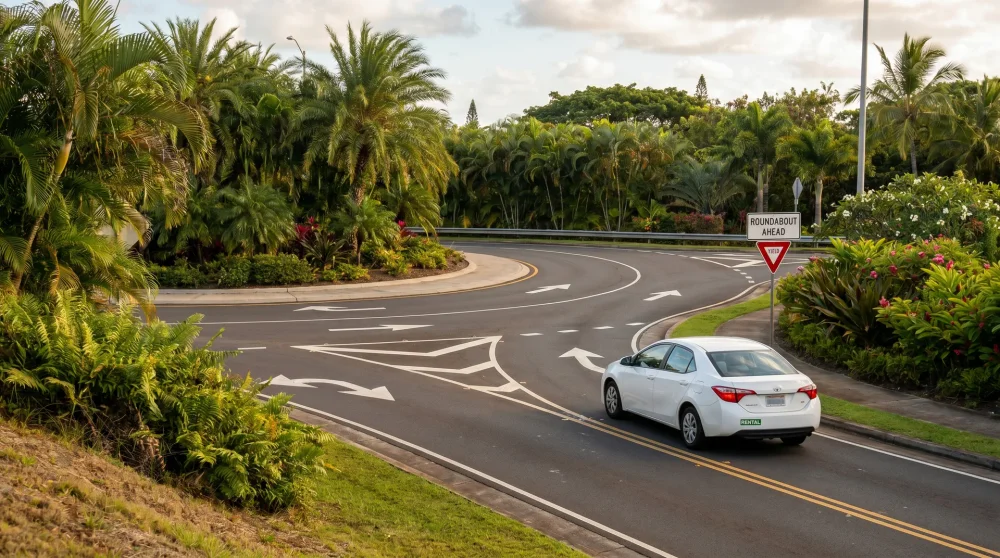
Grand Cayman features over two dozen roundabouts, including several complex three-lane versions. These intersections are a common source of confusion and minor accidents.
Always drive in a clockwise direction and yield to traffic approaching from your right. Traffic already inside the roundabout has the right of way - never force your way in. If you are taking the first or second exit, approach in the left lane. Use the center or right lanes for subsequent exits, maintaining your lane until the exit before yours. When shifting from the center to the outer lane before exiting, always check your left shoulder to ensure no vehicle is overtaking on the outside.
Local drivers recognise rental car plates (white plates) and typically give visitors extra space and patience, especially around roundabouts. Take it slow on your first few and you will adapt quickly.
Fuel Costs: Imperial Gallons vs. US Gallons
Petrol in Grand Cayman is significantly more expensive than in North America. Fuel stations display prices in CI dollars per Imperial gallon. An Imperial gallon is approximately 20% larger than a US gallon, so the per-fill cost will be lower than the headline price suggests when compared directly to US gallon pricing. Budget accordingly and note that most Rental companies require the vehicle to be returned with a full tank.
Parking and Road Conditions
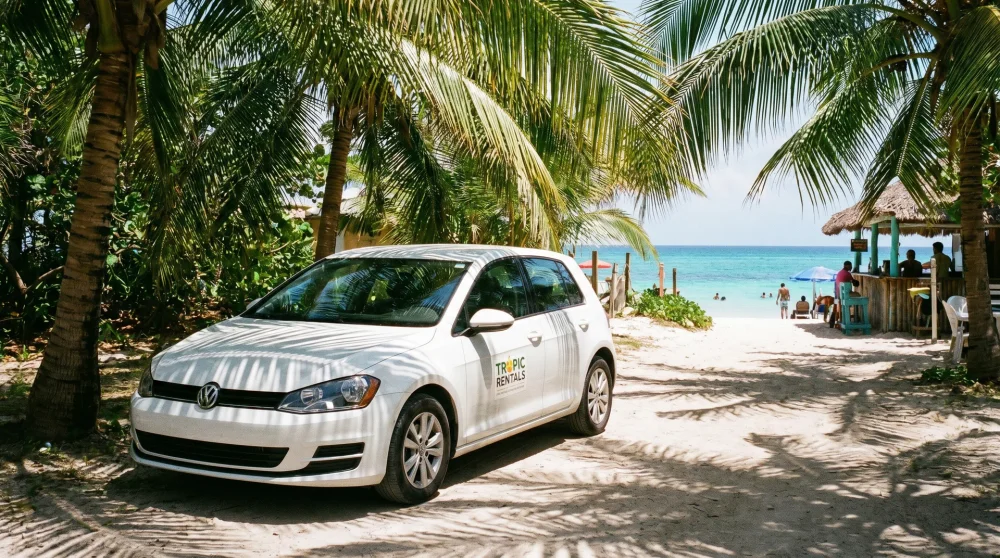
Parking in Grand Cayman is generally free and accessible, particularly near beaches, shopping areas, and tourist attractions. In busier commercial districts like George Town, street parking can be limited during business hours, so always check local signage for restrictions.
The roads are well-maintained, flat, and properly lit. However, be cautious when driving at night as some roads narrow without much shoulder, and wildlife can occasionally stray onto the road. During heavy rain, slow down and increase your following distance.

Emergency Contacts and Accident Protocol
In the event of an emergency, dial 911 for police, fire, or medical response. The law mandates that if you are involved in an accident resulting in injury or property damage, you must exchange names, addresses, dates of birth, vehicle registration, and insurance details with the other parties involved. Alternatively, you must report the accident to the police within 24 hours. Never admit fault at the scene.