Booking a dive trip to Cocos Island expecting massive schools of hammerheads, only to end up on a remote Australian atoll 10,000 miles away, is a surprisingly common and expensive mistake. The Cocos (Keeling) Islands in the Indian Ocean offer world-class, uncrowded coral reefs, but you need to know exactly which "Cocos" you are flying to before paying your deposit.
| Feature | Details |
|---|---|
| Location | Indian Ocean, Australia (2,750 km northwest of Perth) |
| Water Temp | 26°C-29°C year-round |
| Visibility | 20 to 30+ meters on average |
| Key Marine Life | Green turtles, reef sharks, dolphins, Kat the lone dugong |
| Connectivity | No mobile network, use WhatsApp via local Wi-Fi |
| Currency | AUD (cash required for gear deposits) |
The Big Mix-Up: Australia vs. Costa Rica
Costa Rica's Cocos Island is a rugged Pacific liveaboard destination famous for deep-water hammerhead shark diving, thermoclines, and intense currents. Australia's Cocos (Keeling) Islands sit in the Indian Ocean, featuring shallow, turquoise coral lagoons, highly accessible shore snorkeling, and land-based dive operations.
If you want to drop 30 meters into freezing thermoclines for pelagic action, head to Costa Rica. If you prefer crystal-clear coral gardens teeming with reef sharks and turtles just a few fin kicks from a pristine white sand beach, you book a flight from Perth.
Top Snorkeling Spots Around the Atolls
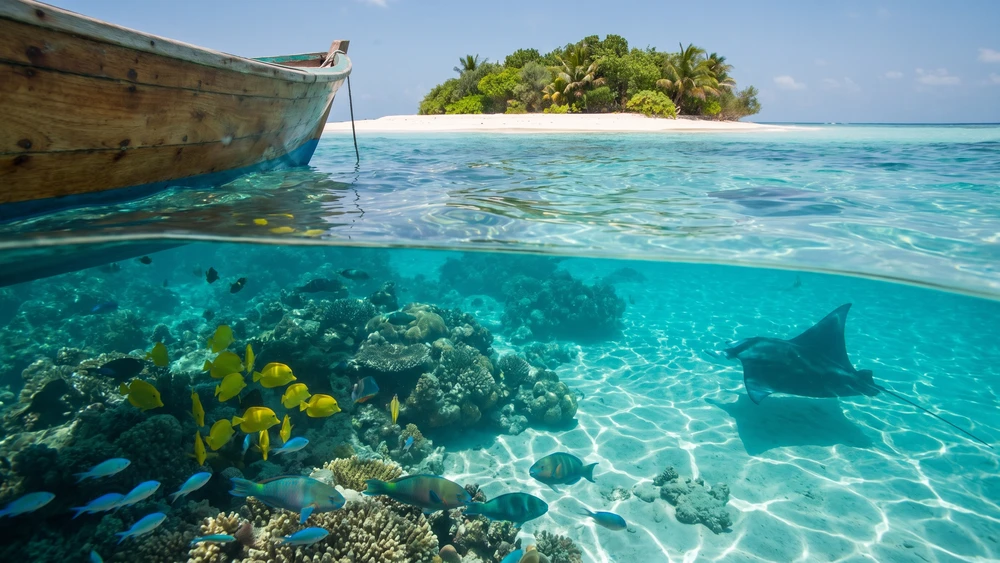
The protected lagoon on the southern atoll creates incredibly calm and clear conditions, making it one of Australia's most pristine aquatic environments. You do not need to be an advanced freediver to see heavy marine action here.
The Famous Rip at Direction Island
Also known as Cossies Beach, this spot features a natural channel that sweeps you over a thriving, colorful reef system. Strong swimmers navigate the current with fins, letting the water carry them over giant clams, parrotfish, and coral outcrops. Less confident swimmers easily arrange boat pickups at the end of the drift, turning a physically demanding swim into a relaxed underwater flight.
Trannies Beach and Scout Park
Trannies Beach on West Island offers calm, sheltered waters perfectly suited for beginners and families. Scout Park requires a bit more timing, at low-to-mid tide, you take a short reef walk out to the deeper drop-offs. The coral rubble on the foreshore is sharp, making thick-soled reef shoes an absolute necessity.
Pulu Maraya and Prison Island
These hidden gems sit around the eastern edges of the atoll. Pulu Maraya is accessible via a shallow channel walk from Scout Park, hiding sleepy rock cods, butterflyfish, and angelfish under its coral ledges. Prison Island and the nearby Broccoli Patches require a local skipper to reach, but the total lack of crowds makes the short boat ride completely worth it.
Scuba Diving: Pristine Reefs and Wrecks
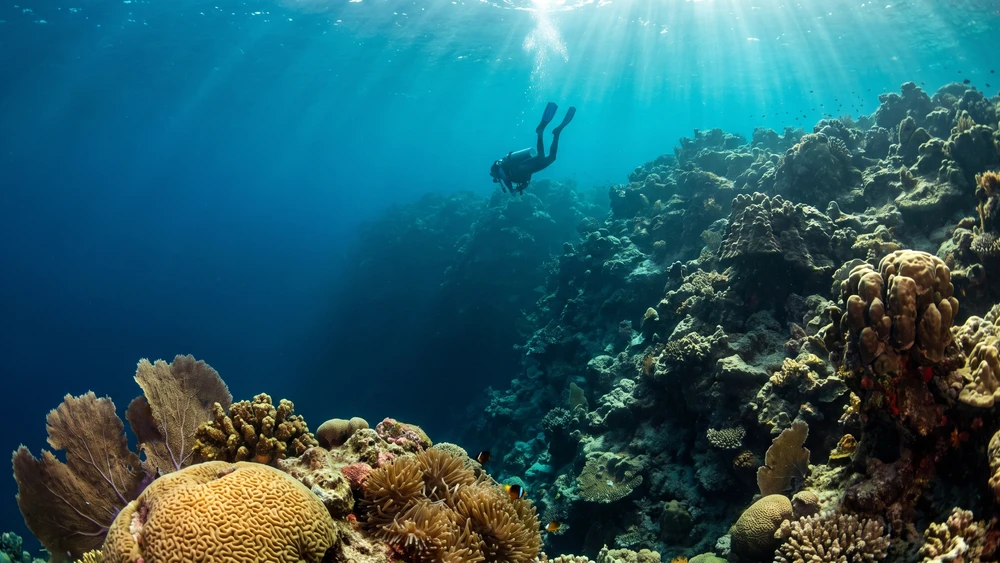
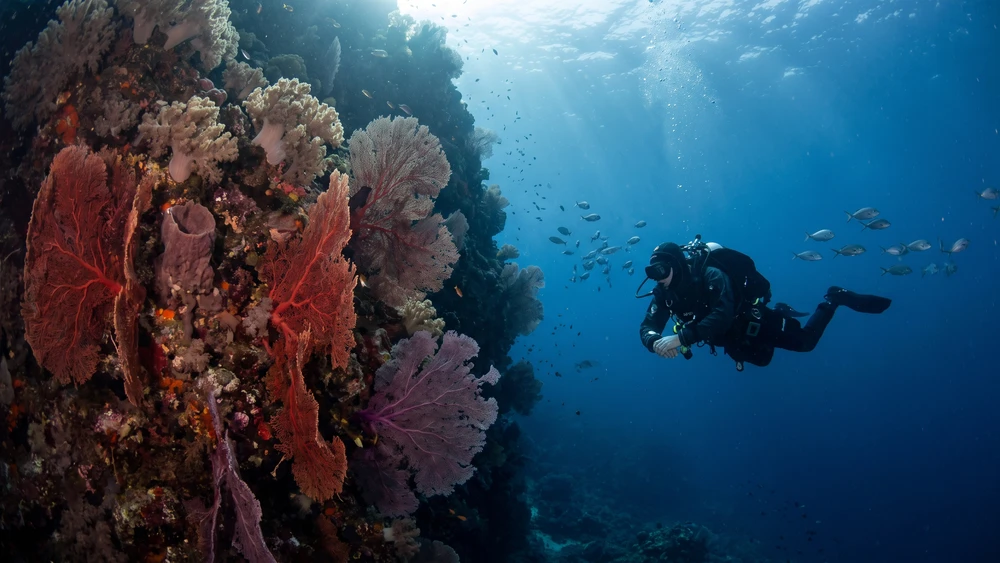
You will not find crowded dive boats or massive luxury resorts dominating the shoreline here. The atoll sits atop a massive volcanic seamount rising from the depths of the Indian Ocean, creating dramatic drop-offs on the outer reef walls. Beneath the surface, the topography consists of pristine gardens made up of soft leather corals, cabbage-like hard corals, and delicate gorgonian fans.
Diving here is an intimate experience. You often hit the water with just your dive buddy and the local guide, exploring uncommercialized sites where the coral formations remain completely untouched by heavy tourism. Around 20 mapped dive sites ring the atolls, most just a short boat ride from West Island.
Marine Life and Water Visibility to Expect
The water clarity inside the lagoon and on the outer reef is exceptional, rarely dropping below 20 meters and frequently pushing past 30 meters on calm days. The sandy lagoon bottom creates a massive, light-reflecting surface that keeps the underwater environment incredibly bright.
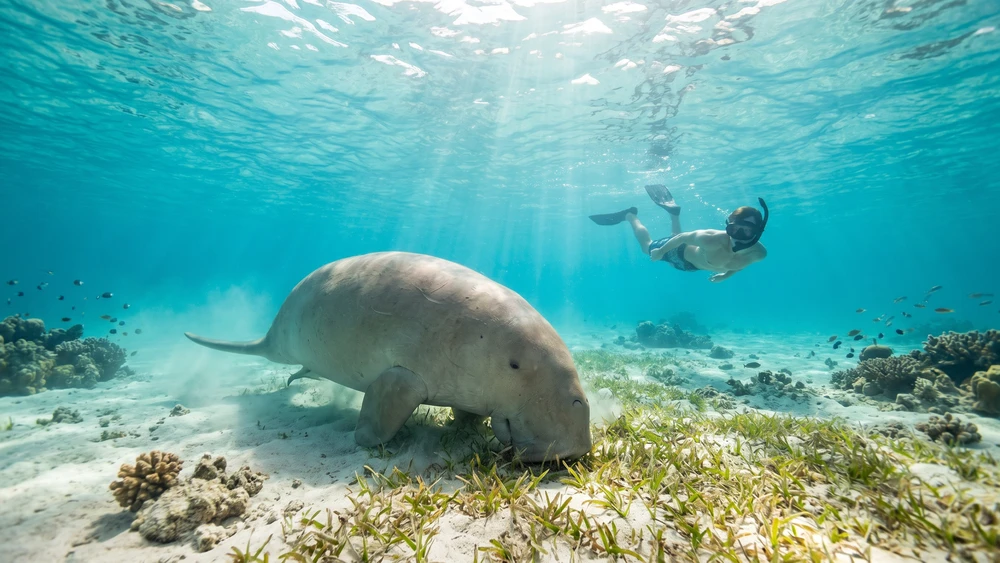
Over 500 species of fish and hundreds of hard corals thrive in this sanctuary. You can expect reliable encounters with resident dolphin pods, manta rays, and cruising blacktip reef sharks. Keep a sharp eye out in the shallow seagrass beds for Kat, the island's famous resident dugong, who occasionally approaches snorkelers out of sheer curiosity.
Dive Operators and Gear Rental Logistics
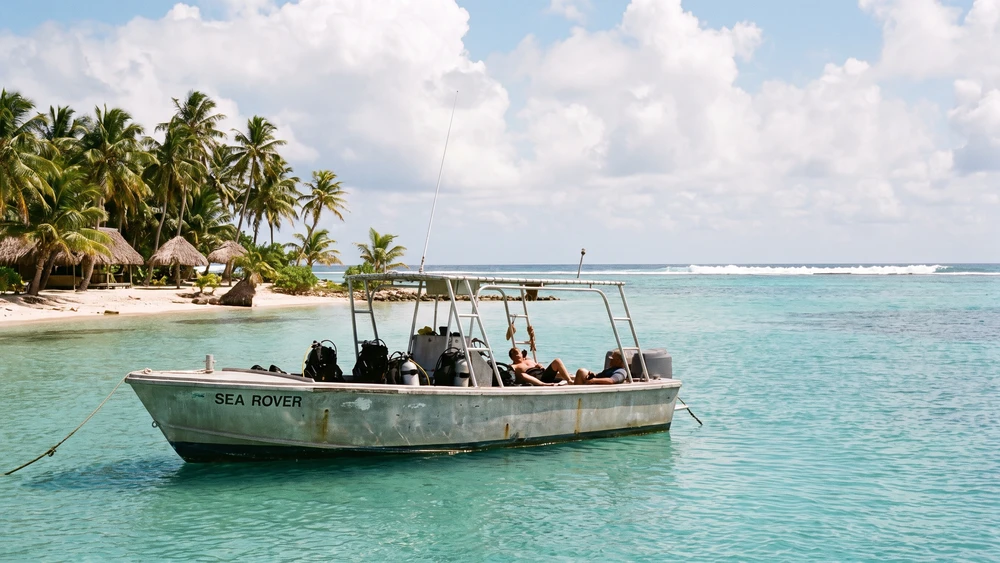
Logistics dictate everything on an island capped at 144 visitors at any given time, a strict limit that keeps the reefs uncrowded. Cocos Dive, run by long-time local Dieter Gerhard, is the only dive operator on the island, focusing heavily on small-group, low-impact diving. If you are also considering swimming with manta rays in the Maldives, the same advance-booking logic applies, single-operator islands fill up fast in peak season. Planning your underwater excursions requires knowing a few strict ground rules about island infrastructure.
- Communication is Wi-Fi only: There is absolutely no mobile network (Telstra or otherwise) on the island. You must use WhatsApp to contact dive operators and arrange boat tours.
- Bring your own fins: The Visitor Centre on West Island rents basic snorkel gear, but fin sizes are notoriously limited. Bring your own mask (especially if you need a prescription lens) and a reliable pair of fins.
- Cash is king: You need physical Australian Dollars for gear hire deposits and small local transactions, as card facilities frequently drop out or are simply unavailable for minor purchases.
Best Time to Visit for Underwater Activities
The water stays warm enough for a 3mm wetsuit or just a rash guard year-round. However, the shifting trade winds heavily influence your ability to dive the outer walls or snorkel the exposed reef edges.
December through May offers the warmest water (averaging 29°C) and lower wind speeds, creating glassy surface conditions perfect for boat diving and exploring the outer reef. July through October brings slightly cooler water (26°C) and strong, consistent trade winds. While this period is legendary for kite surfers, the surface chop can occasionally restrict dive boats to the sheltered inner lagoon sites.