Booby Pond Nature Reserve is one of the most rewarding wildlife destinations in the Caribbean, and arguably the finest birdwatching site in the entire Cayman Islands. Arriving at the viewing deck at high noon leaves you with harsh Caribbean shadows and mostly inactive wildlife. Timing your visit for the late afternoon feeding frenzy is the best way to witness thousands of birds returning from the sea, a loud and chaotic spectacle that transforms the entire lagoon. Entry is free, and the reserve is easily reachable by bicycle from any resort on the island.
Why Booby Pond Is a Globally Important Ramsar Site
The 340-acre lagoon is a landlocked saltwater habitat surrounded by dense mangrove margins and old-growth dry forest. It holds the prestigious status of a Wetland of International Importance under the Ramsar Convention, designated in 1994. This global designation protects the delicate balance between the mud-dwelling invertebrates, seasonal water bugs, and the massive waterfowl populations that rely on them.
The northern shore features unique freshwater seeps. These seeps push up through the brackish water, providing a crucial dry-season refuge for pond fish and attracting specialized local ducks. The area is highly protected under local animal laws, strictly prohibiting the disturbance of any plant or animal life within the boundaries.
Wildlife You Will Encounter (and When to Spot Them)
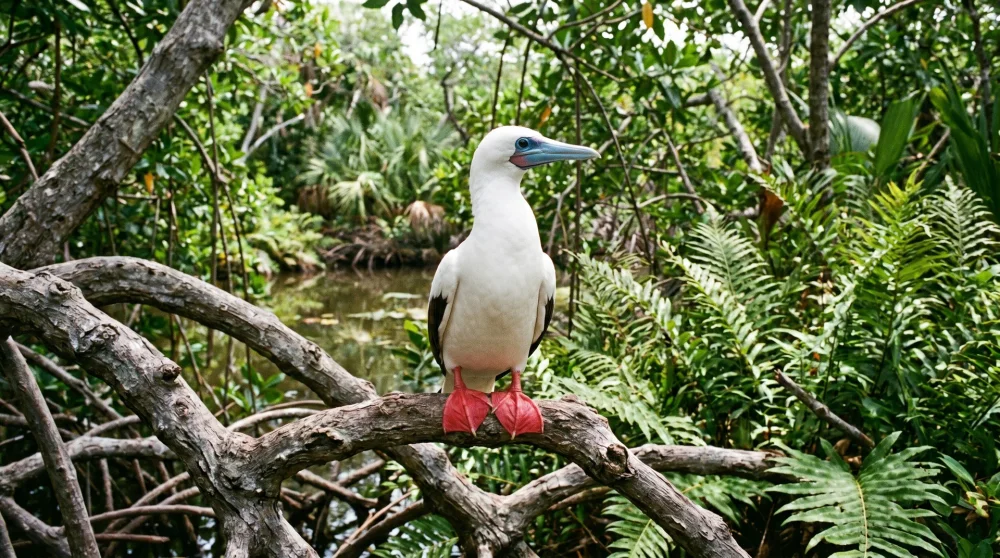
The 4,000 Red-Footed Boobies
This reserve is the exclusive breeding ground for the Red-footed Booby in the territory. A resident colony of approximately 4,000 birds makes this one of the largest populations of Sula sula in the region, representing at least one-third of the entire Caribbean and Atlantic population.
Their sheer numbers create an intense, constant hum of activity across the water. Watch for their characteristic clumsy landings in the forest canopy. It creates a sharp, amusing contrast to their incredibly sleek and precise diving skills out at sea.
Magnificent Frigatebirds
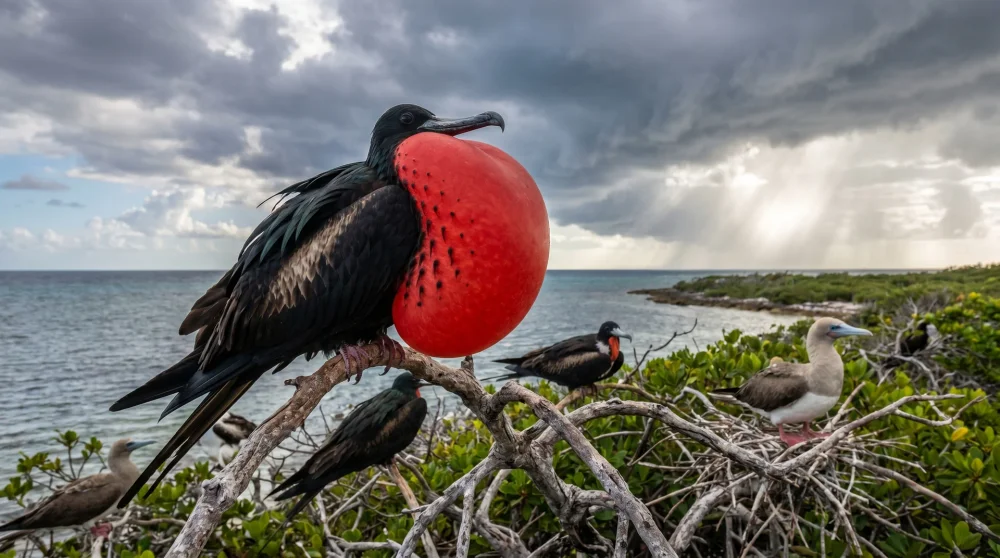
Sharing the airspace is a growing colony of Magnificent Frigatebirds (Fregata magnificens). These large birds primarily nest in the trees along the northern edge of the pond. Look up to spot their massive wingspans riding the thermal currents.
During mating displays, the males inflate their distinctive red throat pouches like balloons. They frequently engage in aggressive aerial piracy, dive-bombing and harassing the boobies mid-air to force them to drop their fresh ocean catch.
Sister Islands Rock Iguana and Other Local Species
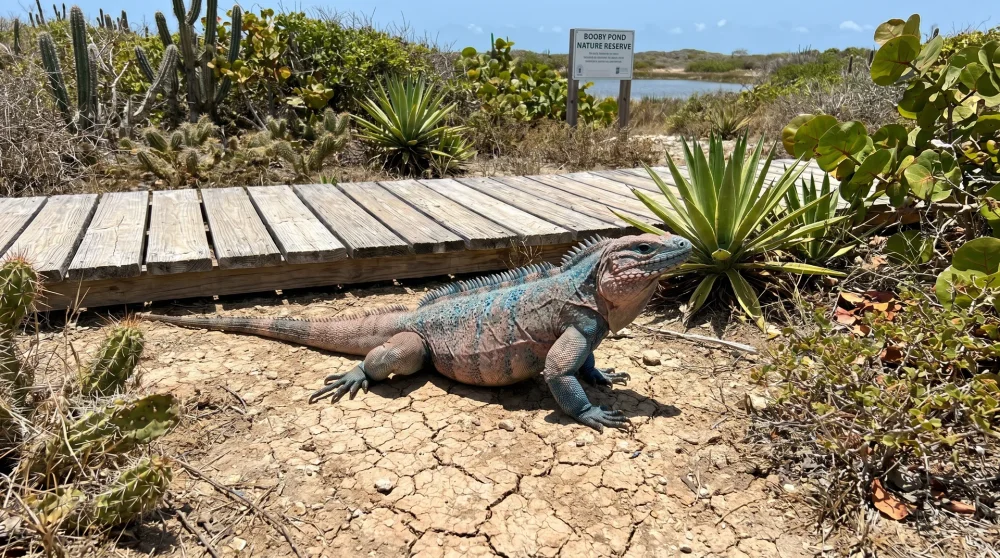
The dry land fringe bordering the wetlands supports the endemic Sister Islands Rock Iguana (Cyclura nubila caymanensis). These large, prehistoric-looking reptiles often sun themselves near the pathways and under the shade of large trees.
Keep an eye on the shallow water edges. Black-necked Stilts feed on mud-dwelling invertebrates here, standing alongside resident herons, egrets, and the elusive West Indian Whistling Duck.
The National Trust Visitor Centre and Viewing Deck
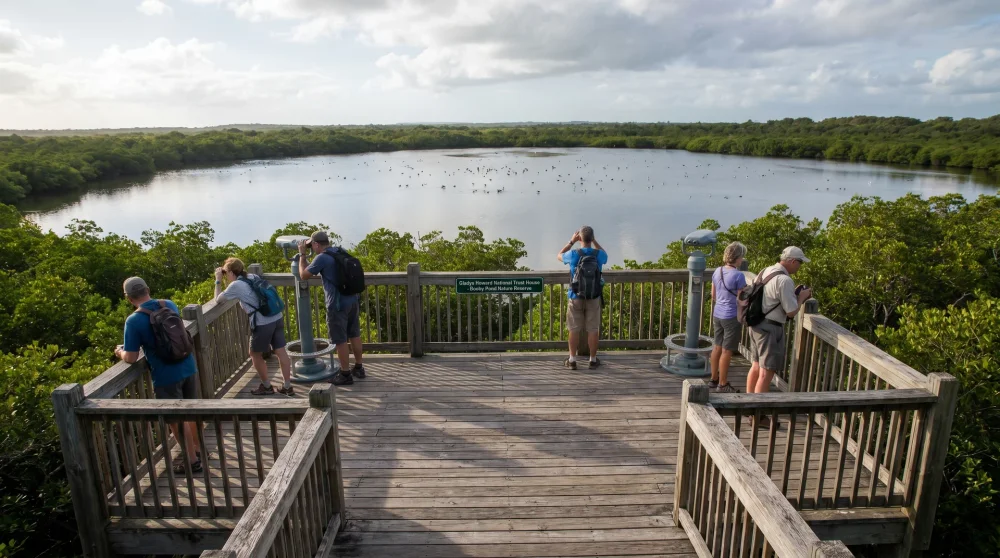
An old Caymanian-style building known as the Gladys Howard National Trust House serves as the headquarters for the National Trust. The architecture is traditional, the atmosphere quiet and highly focused on conservation. The elevated viewing deck attached to the building offers an unobstructed, panoramic view of the entire lagoon.
Fixed binoculars are available directly on the deck, with two units on the lower level and one on the upper level. They bring the distant northern margin nesting sites right in front of your eyes. Inside the building, historic artifacts and detailed wildlife displays explain the complex ecological balance of the reserve. A gift shop is also available for visitors.
For more context on planning your trip around the island, see our comparison guide: Little Cayman vs Cayman Brac: Which Sister Island Fits Your Trip?
Best Time to Visit for Photography and Bird Activity
November through June is the optimal season, as birds are actively raising their young during the breeding period. Early mornings offer soft light and cool temperatures, but the absolute peak of action happens just before sunset. The boobies return en masse from their offshore hunting trips, triggering loud territorial disputes across the canopy.
For wildlife photography, a dedicated telephoto lens is mandatory. The distance from the public deck to the main nesting trees requires significant optical reach (at least a 400mm or 600mm equivalent) to capture sharp details of the birds in flight.
How to Get to Booby Pond Nature Reserve
Navigating Little Cayman is incredibly straightforward due to the extremely small footprint of the landmass. The reserve is centrally located on the south-central coast, directly behind the main coastal road, and easily accessible from all main coastal accommodations.
You can comfortably ride a rented bicycle to the visitor centre. The completely flat terrain makes the short journey effortless. The entrance is clearly marked along the main coastal road. If you are staying at Little Cayman Beach Resort, the reserve is only a five-minute walk. For full guidance on planning your visit around the islands, our Cayman Islands packing list covers everything you need to bring.
Practical Tips: What to Bring With You
Preparing for the local wetland climate ensures a comfortable observation session. The dense mangrove environment means certain items are absolutely essential.
Mosquito repellent: The mangrove margins harbor dense populations of insects, especially after a brief rain shower. Apply strong repellent generously before stepping onto the open deck.
Telephoto lens: Bring your longest focal length. Wide-angle lenses are great for the landscape, but inadequate for the wildlife across the pond. A 400mm equivalent or longer is the practical minimum.
Polarized sunglasses: The glare from the saltwater lagoon is intense during the midday hours. Polarized lenses cut the reflection and help you spot fish activity near the surface.
Lightweight binoculars: While the deck has fixed optics, bringing your own pair allows you to track fast-moving frigatebirds without waiting in line. A 10x magnification is recommended by regular visitors.
If you are combining this visit with other Cayman Islands activities, check out our guide to the best time to visit the Cayman Islands for seasonal planning. You might also enjoy Starfish Point Grand Cayman as part of a broader Cayman Islands itinerary.