Booking a Bioluminescent Bay tour on the wrong night of the lunar cycle is the fastest way to turn a spectacular natural phenomenon into a dark, disappointing boat ride. Timing your visit to match the darkest skies and choosing the right watercraft are the two non-negotiable factors for actually seeing the water glow.
The bay sits on the north side of Grand Cayman, accessible from Rum Point or via boat from the west side of the island. Its narrow entrance traps a dense population of light-emitting plankton, creating one of the Caribbean's most reliable bioluminescent displays. Unlike some bays in Puerto Rico or Mosquito Bay, this one is available to visitors year-round through multiple licensed operators.
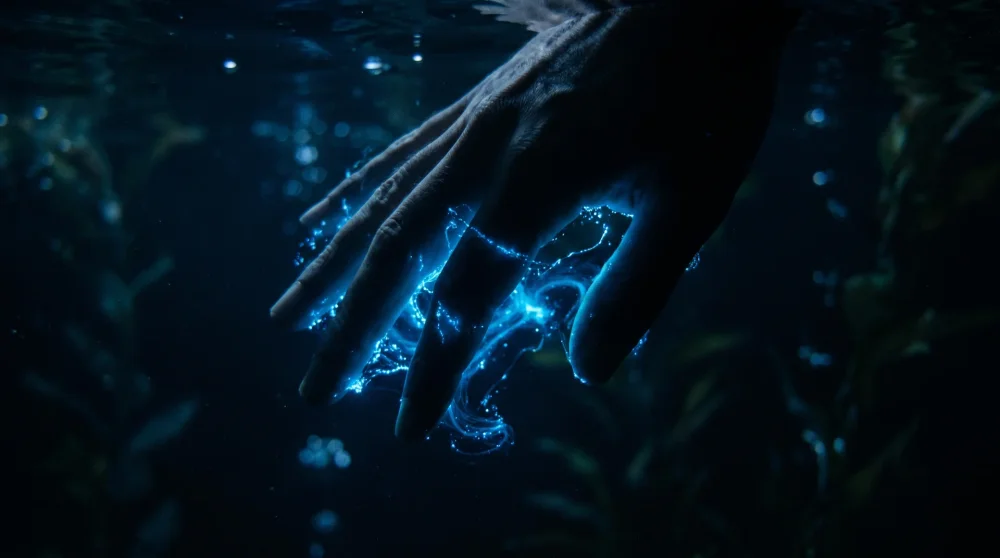
Once the sun drops below the horizon and the sky goes dark, the water shifts from an ordinary black surface to a field of swirling neon blue. Every splash, every paddle stroke, and every swimming fish leaves a glowing trail. The effect is entirely natural and costs the ecosystem nothing - the organisms emit light purely as a defense reflex, not a performance.
- Duration: 1.5 to 2 hours on the water
- Departure Points: Safehaven Marina (west side) or Rum Point (north side)
- Best Moon Phase: New moon or the two to three nights immediately surrounding it
- Tour Types: Powerboat, glass-bottom kayak, or standard kayak
- Water Access: Swimming allowed on specific boat tours only - strictly prohibited on kayak tours
What Makes the Water Glow in Grand Cayman?
The neon blue trails left behind moving boats or splashing paddles come from microscopic organisms called dinoflagellates. These single-celled marine plankton emit a quick flash of light whenever the water around them is disturbed by movement. The bay's narrow opening traps nutrient-rich water inside, creating an incubator effect that keeps the concentration of organisms high enough to produce a visible glow.
The bay itself was originally dredged out over 30 years ago as part of a real estate development project. The unintended consequence was an enclosed lagoon with very limited water exchange - ideal conditions for dinoflagellates to multiply and concentrate. Warm water, high salinity, and plenty of nutrients from surrounding mangroves keep the population dense throughout the year.
The organisms emit light purely as a defense mechanism, startling predators with a sudden burst of blue. For visitors, that defense reflex becomes a living light show that responds to every movement in the water.
Best Time to Visit the Bioluminescent Bay
How Moon Phases Affect Visibility
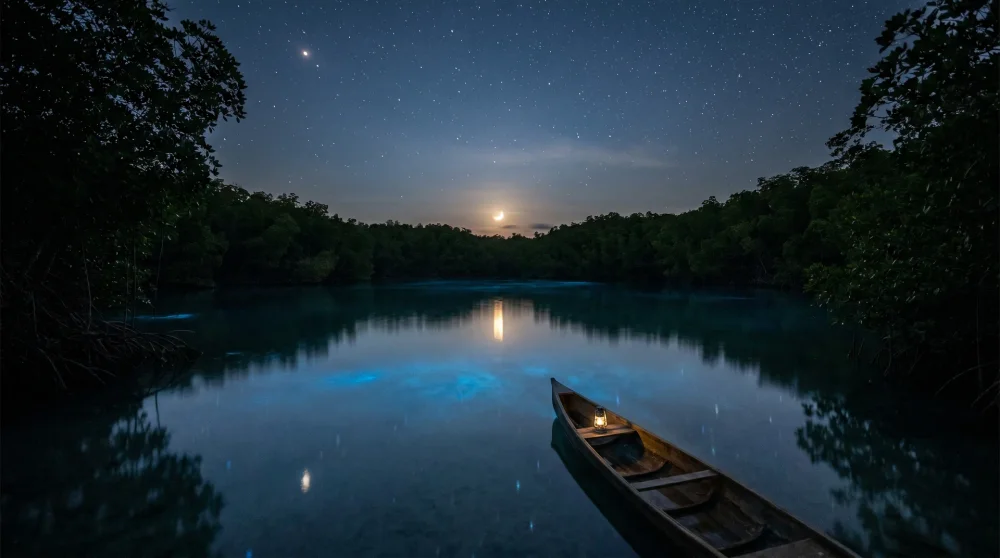
The phase of the moon dictates everything about your experience. A full moon acts like a giant spotlight, completely washing out the faint blue light in the water. New moon nights offer pitch-dark skies, creating the absolute best contrast for the glowing organisms.
Most tour operators schedule their departures to coincide with the darker half of the lunar cycle. Tours typically run for roughly two weeks out of every month - the two weeks centered on the new moon. If your trip aligns with a full moon, you will likely find that most operators are not running tours at all during those nights. If you are already booked and the moon is still above the horizon at tour time, request a later departure.
Weather and Seasonal Factors
The bay glows year-round, but specific weather patterns influence the intensity. Warm water temperatures and high salinity cause the organisms to multiply faster, often resulting in a brighter display. Heavy rainfall can temporarily dilute the salt concentration near the surface, dulling the glow for a night or two after a strong storm.
The short twilight near the equator means complete darkness falls within thirty minutes of sunset, allowing tours to start early in the evening. Tours typically depart about 15 minutes after sunset so they arrive at the bay once full darkness has set in.
Choosing Your Tour: Boat vs. Kayak
Picking the right vessel determines how much physical effort you exert and how close you get to the water. Both options offer completely different perspectives of the bay.
Powerboat Tours
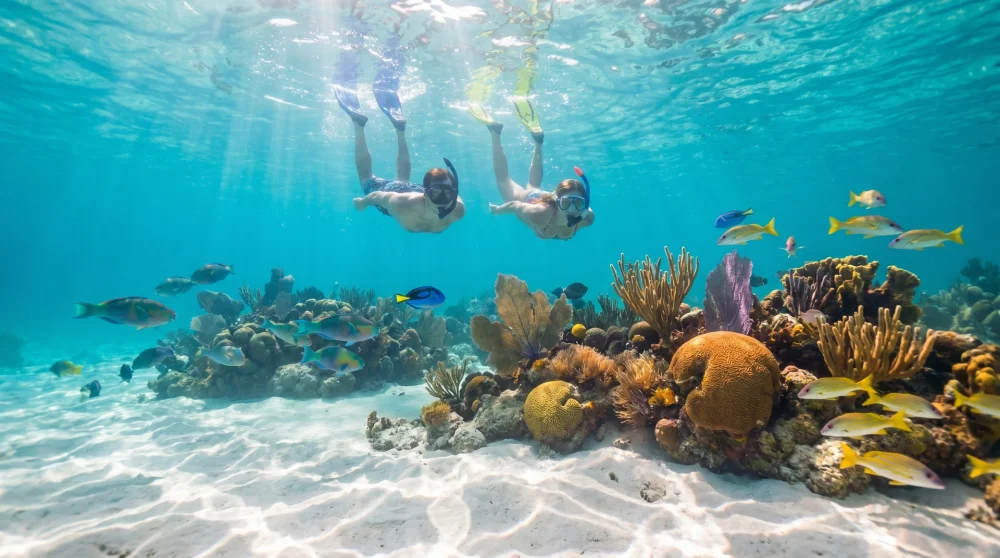
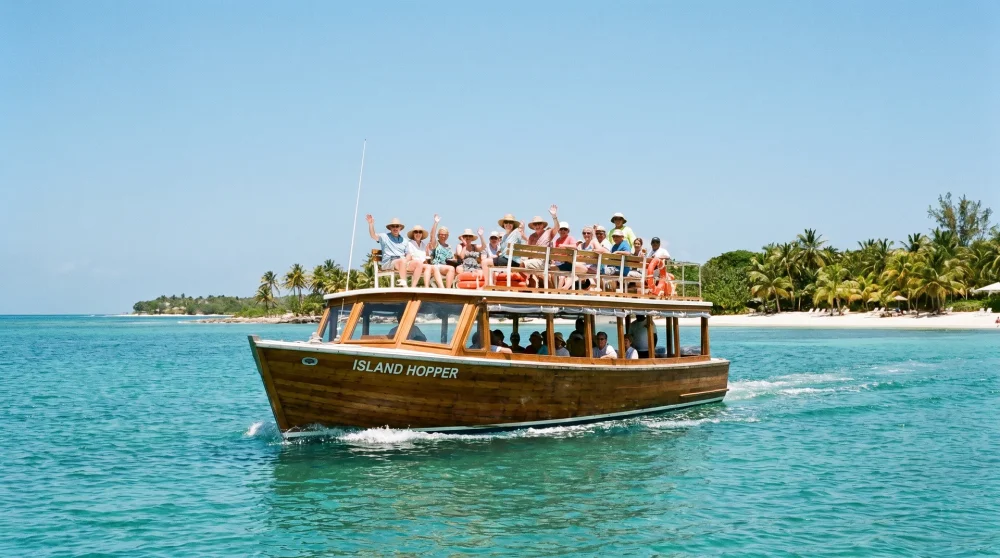
Boats usually depart from Safehaven Marina, taking you on a fast cruise across the North Sound before reaching the quiet bay. These tours require zero physical effort. The main advantage is the ability to snorkel directly in the glowing water on specific designated tours. Life jackets and snorkeling gear are handed out on board.
Prices for powerboat tours that include swimming start at $135 per adult and $110 per child under 12. Staying on the deck limits your view slightly compared to being right on the surface, but it remains the most comfortable option and the one most suitable for families with young children.
For more water-based excursions nearby, the Grand Cayman Mangrove Kayak Tours article covers daytime paddle routes that pair well with a bio bay night tour on the same day.
Guided Kayak Tours
Kayaking provides an incredibly silent and immersive vantage point. Every stroke of the paddle creates a swirling vortex of blue light directly beneath you. Some operators offer glass-bottom kayaks, giving you a clear view of the sparkling trails right between your legs without any obstructions.

Kayak tours start from around $70 per adult. Paddling back across the open water against the evening wind requires moderate fitness. Jumping out of the kayak into the water is strictly prohibited for safety reasons on all kayak tours.
Cayman Kayaks at Rum Point is the main operator for kayak-based bio bay tours. If you are staying near Seven Mile Beach, the boat tour departure from Safehaven Marina is the more convenient option.
Tour Operators and Departure Points
Several established operators run bio bay tours, each with slightly different logistics:
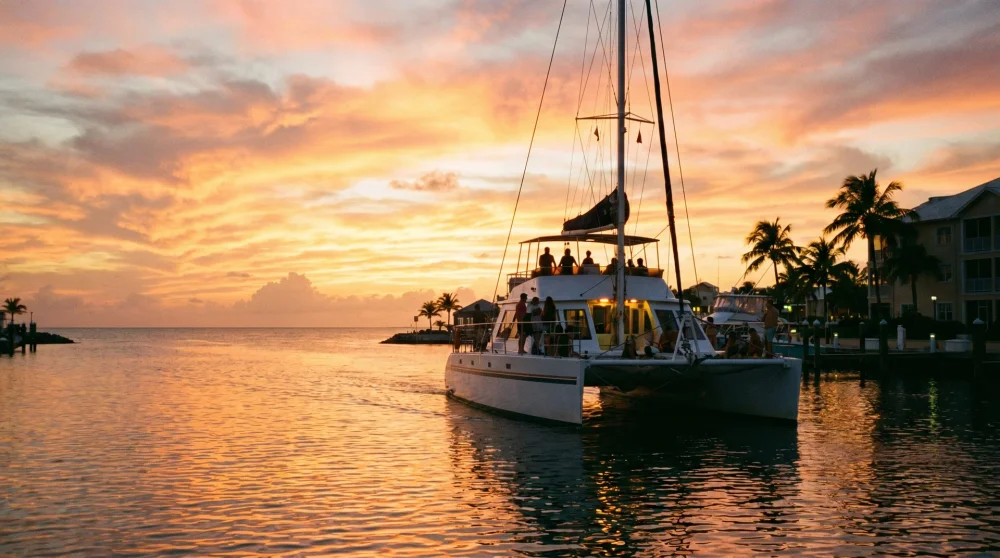
George's Watersports departs from the Cayman Islands Yacht Club near Seven Mile Beach. Their powerboat tours are a popular choice for visitors staying on the west side of the island. The tour includes snorkeling gear and lets participants swim directly in the glowing water.
Cayman Kayaks operates from Rum Point on the north side. They offer both standard and glass-bottom kayak options. This is the most convenient choice if you are already planning a day at Rum Point - you can combine the visit with a sunset at the beach before the tour begins.
Sweet Spot Watersports runs private charter tours for groups of up to eight people. Their tours include a stop at Starfish Point before moving to the bio bay.
Captain Marvin's is one of the longest-running operators on the island, offering boat-based bio bay tours year-round.
For context on getting around the island to reach departure points, the Getting Around Grand Cayman guide covers taxis, rental cars, and bus options.
Combining the Bio Bay with Starfish Point
Many operators package the night excursion with a sunset stop at nearby Starfish Point. You arrive just as the golden hour light hits the shallow waters, revealing dozens of red cushion sea stars resting on the sand. The transition from bright sunshine to a starlit, glowing bay maximizes your time on the water and eliminates the need to arrange two separate transport options on different days.
This combination is particularly popular with families. The starfish encounter is calm and shallow, suitable for young children, while the bio bay tour offers a completely different sensory experience after dark. Several operators run this combined itinerary as a single booking.
Essential Items to Bring on a Night Tour
Packing correctly saves you from insect bites and shivering on the ride back. The environment is dark and entirely outdoors.
Long-sleeved rash guard - Protects your skin from the wind on the boat ride and acts as a barrier against sea lice if you swim.
Environmentally safe bug spray - Mosquitoes are highly active near the mangroves after dark. Standard DEET-based sprays are harmful to the marine environment, so operators require reef-safe formulas.
Dry bag - Keeps your phone and keys completely safe from sudden splashes. Waterproof phone cases are a lightweight alternative.
Towel and dry clothes - The boat ride back to the marina feels quite chilly once you are wet, even in the tropics.
No sunscreen - If you plan to swim, avoid applying any sunscreen before the tour. Chemical sunscreens kill the very organisms you came to see.
Photography Tips for the Bio Bay
Capturing the bioluminescence with a standard smartphone is incredibly difficult. The organisms produce a faint, diffuse light that requires a long exposure to register on a sensor.
The best results come from a dedicated camera with manual exposure controls set to ISO 3200 or higher, with a shutter speed of 15 to 30 seconds. A small tripod or beanbag resting on the boat rail is essential to eliminate motion blur during a long exposure. On a kayak, the rocking motion makes sharp shots almost impossible without a stabilized camera.
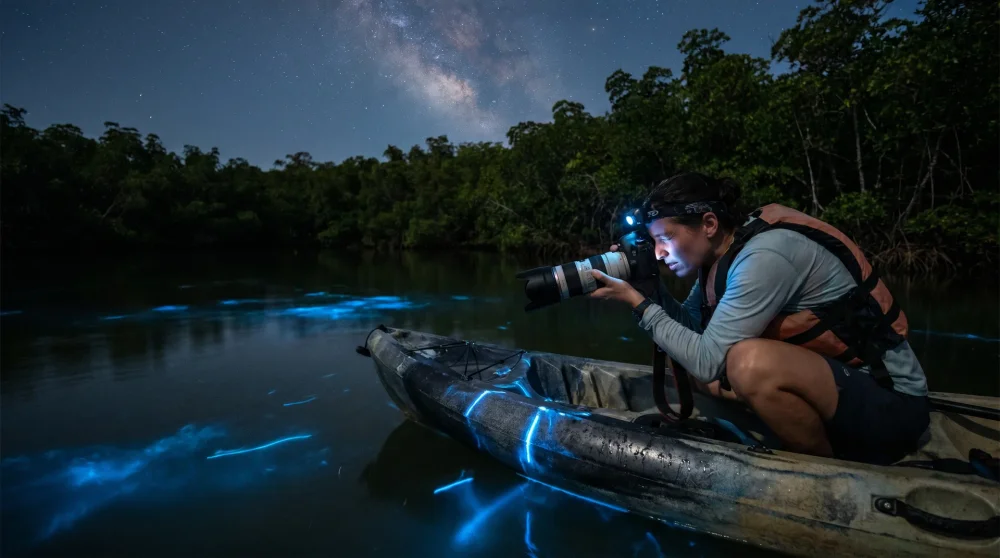
For video, phones with dedicated night modes or dedicated action cameras with wide aperture lenses produce better footage than standard video mode. Accept that no photo will fully capture the experience - the glow is best understood in person.