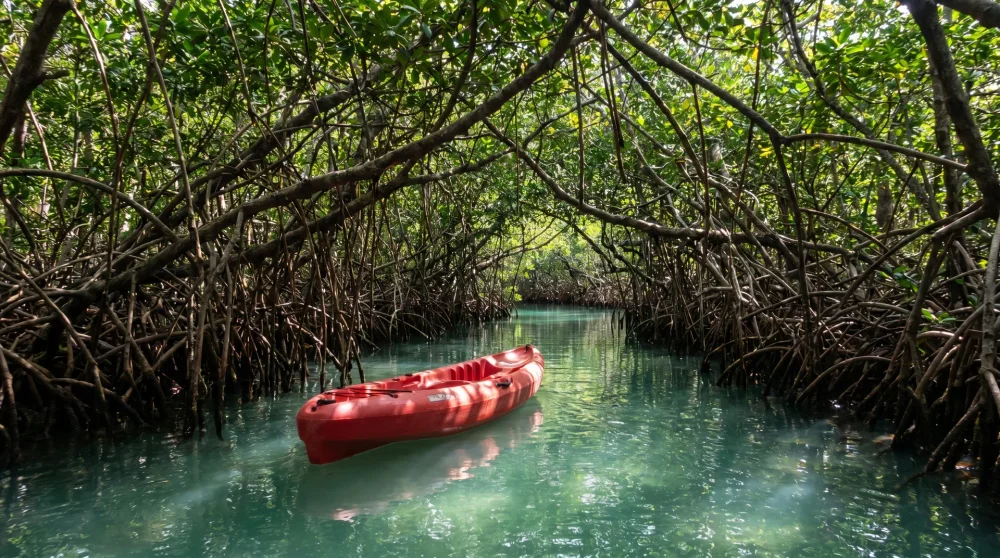
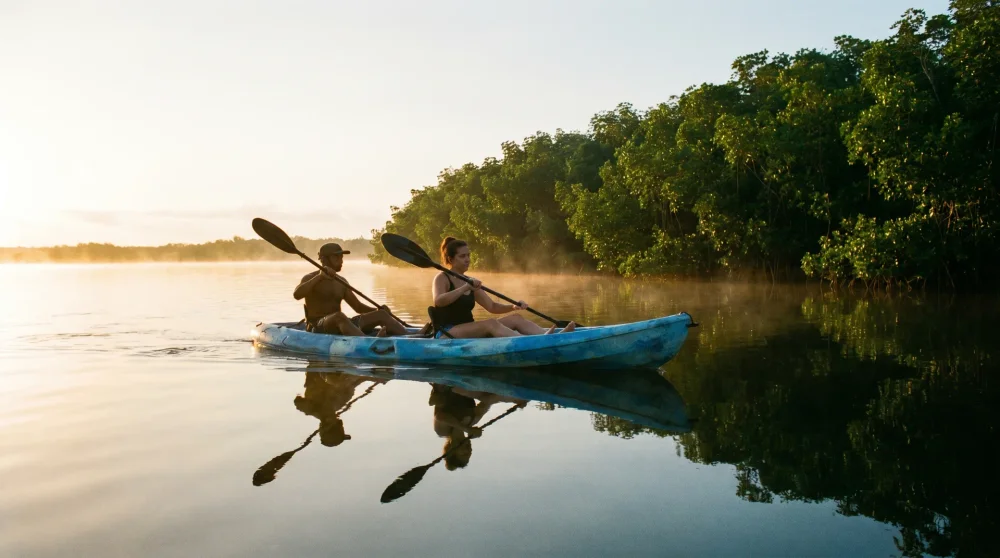
Paddling into Grand Cayman's Central Mangrove Wetlands is one of the most distinctive things you can do on the island, and doing it with a knowledgeable guide makes all the difference. The narrow, tree-webbed channels require a low-draft kayak, a steady paddle, and some patience with the slow pace of nature.
Whether you are a first-time kayaker or a seasoned paddler, the experience rewards anyone willing to slow down and look closely. For more on planning your time on the island, see our guide to Grand Cayman with Kids and the broader Grand Cayman Cruise Day guide.
Why Kayak the Central Mangrove Wetlands?
These wetlands act as the lungs and water filters of the island. The dense root systems block storm surges and trap sediment before it reaches the open ocean. The air inside the canopy is noticeably cooler, and the water surface remains almost completely still, which makes spotting marine life much easier than in the open sea.
Mangroves cover roughly 40 percent of Grand Cayman's coastline. They are a protected ecosystem, which means you can only access the interior channels by guided tour. No independent paddling is allowed within the protected zones.
The Three Types of Mangroves You Will Encounter
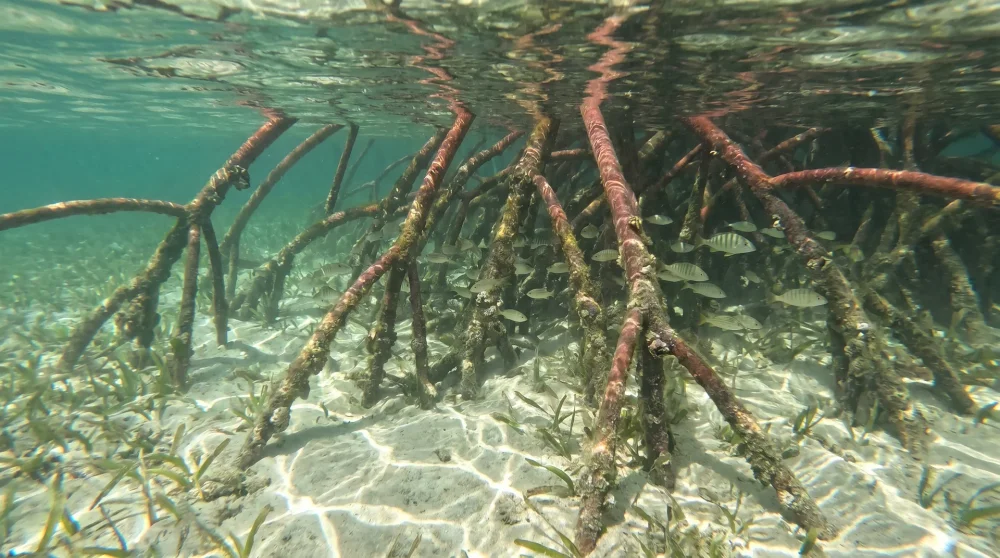
You will spot three distinct mangrove species shaping this ecosystem. Red mangroves stand directly in the water on complex, arching prop roots. Their roots create a dense underwater nursery for juvenile fish and crustaceans.
Black mangroves sit slightly further back from the waterline, surrounded by finger-like pneumatophores sticking out of the mud so the roots can breathe. White mangroves occupy the highest and driest ground at the canopy edge. Scratching the leaves of these trees often reveals salt deposits, a clever biological mechanism that allows the plant to survive in a saltwater environment.
Top Operators for Mangrove Kayaking in Grand Cayman
Several well-established operators run guided tours. Each departs from a different part of the island, so your choice of operator also determines your route. Norwegian, Carnival, Disney, and Margaritaville at Sea include managed mangrove kayak excursions as part of their Grand Cayman shore excursion programs, typically following the Camana Bay route or North Sound channel with certified local guides.
Cayman Kayaks
Cayman Kayaks is the most established operator for mangrove paddling on Grand Cayman. Their morning tour departs from Kaibo Public Beach on Water Cay Road on the North Side. The session lasts approximately 1.5 to 2 hours and uses tandem sit-on-top kayaks with supportive backrests. Guides focus on ecosystem education, pointing out sea anemones, upside-down jellyfish, colorful encrusting sponges, and periwinkle snails along the route.
Small group sizes keep the experience interactive. Cayman Kayaks is also the original operator of bioluminescent bay tours, which run after dark from Rum Point. Check their website at caymankayaks.com for current tour availability and to book. You can also Book a kayak tour in Grand Cayman and compare all mangrove operators in one place.
Paddle Wheel Adventures (Glass Bottom Kayaks)
Paddle Wheel Adventures operates glass-bottom kayaks that launch from the Cayman Islands Yacht Club on the west side of the island, near Seven Mile Beach. The see-through hull panels let you watch the seafloor and root systems without leaning over the side. The route crosses the open sound channel before entering the main mangrove area. Tours are bookable through Viator and TripAdvisor. Check the operator's listing for current availability.
Fat Fish Adventures
Fat Fish Adventures offers a guided paddle through what they describe as the most secluded section of Grand Cayman's mangrove gardens. The route includes a sunken shipwreck visible underwater, which adds an unusual dimension to a standard wildlife tour. They offer complimentary shuttle service from hotels in George Town and Seven Mile Beach, as well as from the Hard Rock Cafe for cruise ship passengers. Contact them at fatfishadventures.com for bookings and current scheduling.
Main Launch Points and Routes
Kaibo Public Beach (Water Cay Road, North Side)
Tours departing from Kaibo focus on the shallow, highly transparent water of the North Sound. The paddling here is calm and easy, which makes it popular with families and beginners. Bottom-dwelling creatures are visible through the clear water without any special equipment. This is the Cayman Kayaks departure point.
Cayman Islands Yacht Club (West Bay)
This route involves crossing the open sound channel before entering the main mangrove interior. The contrast from the luxury waterfront development to the raw, tangled wilderness is sharp. In some sections you stow your paddle and use your hands to pull the kayak through very narrow, shaded passageways. This is where Paddle Wheel Adventures operates.
Governor's Creek (West Bay, near Seven Mile Beach)
Some operators run routes through Governor's Creek, which threads through the mangroves closer to the tourist corridor. This is a convenient option for guests staying along Seven Mile Beach who want a shorter transfer to the launch point.
Wildlife You Will Encounter
The roots and shallow floor of the mangrove ecosystem support a concentrated and hyperlocal food chain.
Marine Life Beneath the Surface
Look down to find Cassiopeia, the upside-down jellyfish, resting on the sandy floor. They pulse gently to push water over their tentacles rather than swimming upright. Guides routinely point out sea squirts, small filter-feeding organisms attached to submerged roots that have been studied for potential medical applications.
You will also see sea stars in shallower zones, crustaceans sheltering among the roots, and colorful encrusting sponges competing for space on the root surfaces. Juvenile fish of many species use the root system as a nursery, so the density of small marine life is noticeably higher inside the mangroves than on the open reef.
Above the Surface: Iguanas, Herons and More
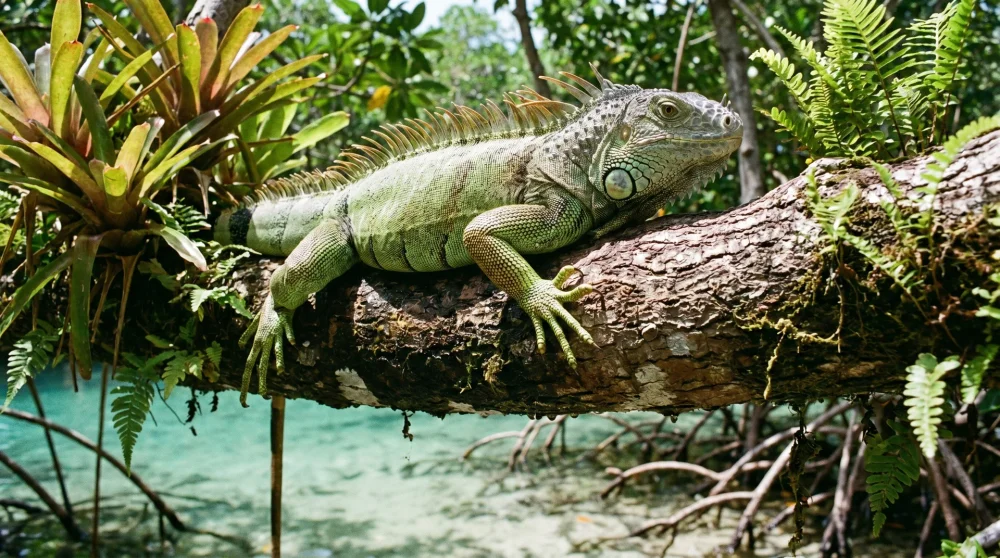
Scan the upper branches for green iguanas sunbathing. They blend effectively with the thick canopy but become easier to spot once you know what to look for. Blue herons frequently take flight as kayaks exit the narrow channels. These large birds use the dense foliage for nesting and for hunting small fish trapped in the shallows. Belted kingfishers and yellow-crowned night herons also appear regularly on guided tours.
Bioluminescence Tours: A Different Kind of Paddling
If you want to paddle the mangrove waterways after dark, Cayman Kayaks also operates a bioluminescence tour that departs from Rum Point at 46 Sand Point Drive in Northside. The tour runs at 7:20 PM and 9:20 PM and allows paddlers to witness the light produced by dinoflagellates in the water when disturbed by a paddle stroke or hand movement. Snorkeling with the bioluminescence is an optional upgrade that significantly improves visibility. Visit caymankayaks.com for current tour schedules and to book. George's Watersports offers a boat-based bioluminescence and snorkel tour departing from the Cayman Islands Yacht Club as an alternative.
What to Wear and Bring
A sit-on-top kayak guarantees you will get wet. Pack and dress with that in mind.
- Wear a swimsuit under a light, long-sleeved UPF shirt for sun protection inside and outside the canopy.
- Choose water shoes or sandals with heel straps. Flip-flops easily slip off and sink.
- Apply reef-safe sunscreen before boarding. Conventional sunscreen containing oxybenzone is damaging to the ecosystem and may be restricted in protected zones.
- Secure your phone or camera in a reliable dry bag. Waterproof phone pouches costing a few dollars are adequate for sit-on-top kayaking.
- Leave heavy towels and a change of clothes in your vehicle. The humidity inside the canopy is high, so bring a large reusable water bottle.
Practical Notes Before You Go
Tour prices vary by operator and are set independently, so check each operator's website directly for current rates before booking. Most tours are beginner-friendly and require no prior kayaking experience. Children are generally welcome from around age five, using tandem kayaks where a child sits with an adult, though age minimums vary by operator.
For the bioluminescence experience, tour visibility depends heavily on moon phase. New moon nights produce the brightest display. If the sky is bright from a full moon, the effect is significantly reduced, so it is worth checking the lunar calendar when planning your date.
For other active outdoor experiences on the island, see our guide to Hiking in the Cayman Islands. If you are planning a full activity day around the North Sound area, Rum Point and Starfish Point is worth combining with a morning mangrove paddle.