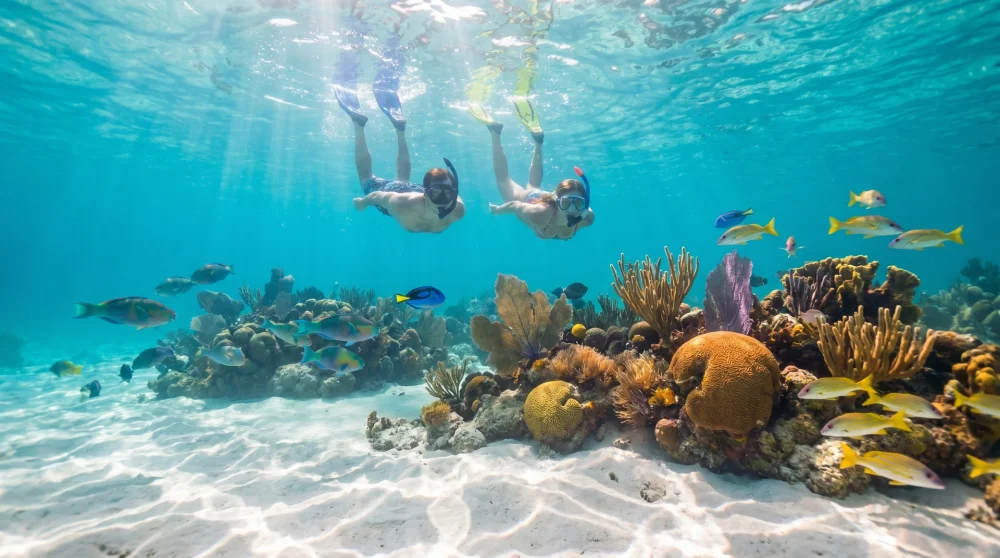
Heading straight into the water anywhere along Seven Mile Beach usually leaves you staring at a barren, sandy bottom with zero marine life. The vibrant coral heads and schooling tropical fish are concentrated at specific, hidden entry points that require knowing exactly where to swim and how far out to go. This guide covers the four best shore-access snorkeling spots, what you will actually see at each one, and the safety rules that apply to everyone in the water.
What Makes Seven Mile Beach Snorkeling Different?
The entire coastline of the Cayman Islands is legally public up to the high-water mark. This means every upscale resort's beachfront is fully open for your snorkeling exploration. You do not need to be a hotel guest to access the prime underwater real estate.
The crescent shape of the bay naturally blocks heavy ocean currents. The water is exceptionally calm and clear. Visibility easily stretches past 100 feet. You won't struggle with murky waters or aggressive waves here, making it an excellent environment for observing marine life without exhausting yourself.
Water Visibility: Consistently clear, often exceeding 100 feet.
Best Snorkeling Hours: Early mornings (before 10 AM) for calmer waters and fewer crowds.
Reef Distance: Varies from just off the shore to a 5-10 minute swim (up to 200 yards).
Access Laws: All beaches are public up to the high-water mark, regardless of resort proximity.
Top 4 Snorkeling Spots Along Seven Mile Beach
Cemetery Beach (The Best Natural Reef)
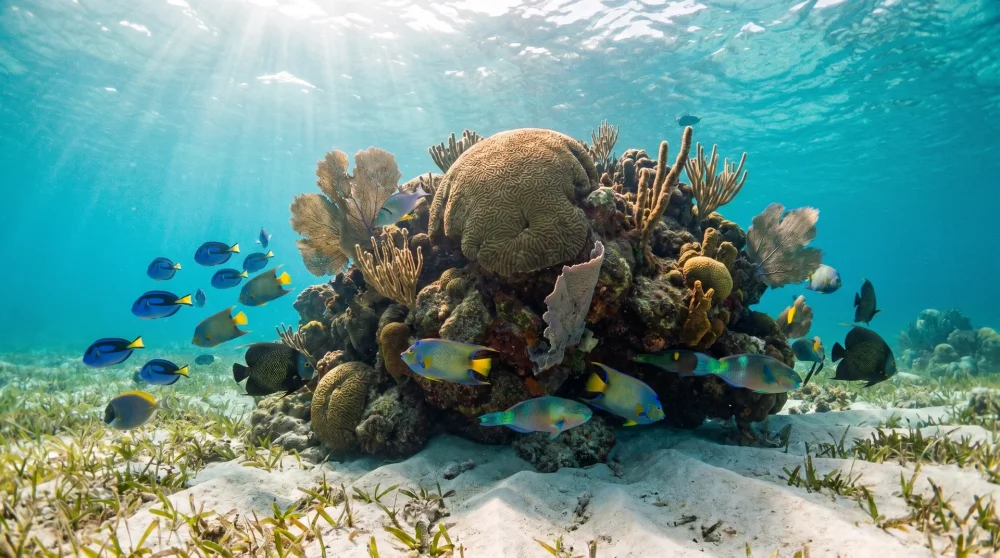
Cemetery Beach, at the northern end of the strip, holds the most pristine natural coral formations in the area. The water entry is smooth with soft sand, and orange buoys mark the reef line from the trailhead. The main reef sits 200 yards offshore, at 10 to 20 feet depth, with active schools of sergeant majors, blue tangs, and occasional sea turtles. Not suitable for complete beginners due to the swim distance. For access points, parking and the full beach layout, see Seven Mile Beach public access.
Seafire Reef (Shallow Waters and Night Snorkeling)
This is a very shallow strip of reef running parallel to the shore. The structure is heavily cracked and textured. These rocky crevices serve as perfect hiding spots for lobsters and smaller reef fish.
The shallow depth makes it highly accessible for beginners. The close proximity to the shore also turns this spot into a highly favored location for night snorkeling. Navigating back to the sand is straightforward even in the dark.
Governor's Beach (Beginner-Friendly Coral Patches)
Governor's Beach offers a more isolated snorkeling experience with patchy coral formations. The main snorkeling area sits about 400 feet offshore. Look for a white marker buoy towards the back end of the reef to guide your swim.
It is less dense than Cemetery Beach but still offers a solid variety of friendly fish. The extreme clarity of the water here compensates for the smaller size of the reef. This spot is located right next to the Westin, behind the Governor's house.
Marriott Artificial Reef Balls (Easiest Access)
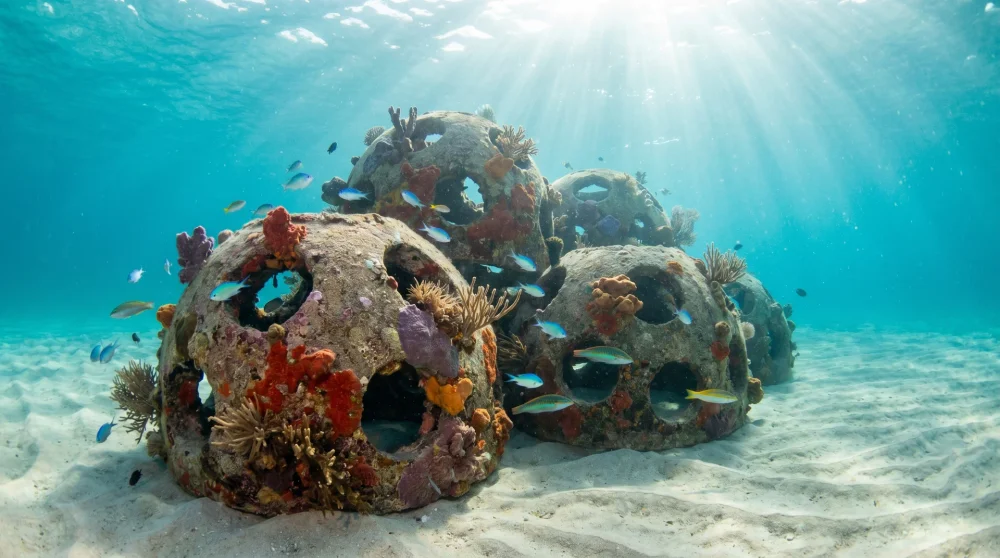
If a long swim feels intimidating, the artificial reef balls near the Marriott resort provide an immediate underwater experience. Hundreds of concrete reef balls sit directly offshore in very shallow water.
These structures act as a magnet for smaller tropical fish. Accessing the water here requires zero effort. It serves as an ideal warm-up spot before tackling the deeper, natural reefs further north.
Where to Rent Snorkel Gear Near the Beach
Bringing your own mask and fins is convenient, but local dive shops have you completely covered if you travel light. Shops like Divers Supply offer full sales and rentals right in the vicinity.
Several operators also provide direct delivery services to the beach. You can easily arrange for a gear drop-off at your specific entry point through services like Paradise Paddle Cayman or Adventura Cayman.
Prefer a guided snorkeling experience? Book a snorkeling tour along Seven Mile Beach with a certified local operator.
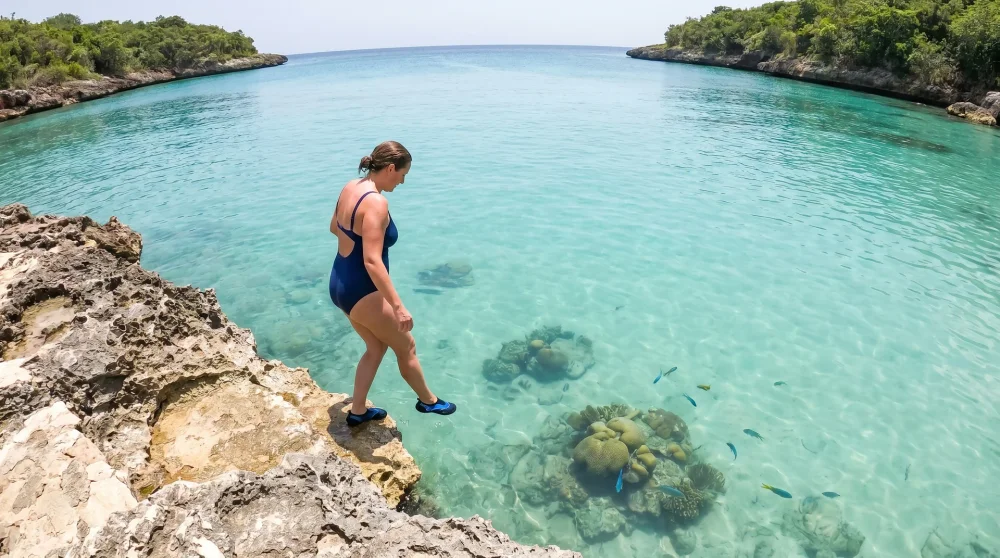
If you are planning a full snorkeling day, pair your session with a review of what to pack for the Cayman Islands to make sure you have reef-safe sunscreen and the right fins for shore entries.
Essential Safety Rules and Marine Laws
Protecting the delicate marine environment is a legal and ethical requirement in these waters. Standard chemical sunscreens cause severe coral bleaching. Applying a mineral-based, reef-safe sunscreen (containing only zinc oxide or titanium dioxide) is mandatory.
Never touch the coral: Coral is a living organism. Even a light brush with a fin causes irreparable damage.
Do not feed the fish: Throwing bread or leftover food into the water disrupts the natural diet of the marine life and damages their health.
Respect private property: Keep your beach setup strictly below the high-water mark to comply with local access laws.
Use a surface marker buoy: A brightly colored SMB keeps you visible to passing jet skis and tour boats, especially at spots further from shore like Cemetery Beach.
For details on where each public entry point is located along the strip, see the Seven Mile Beach public access guide. If you are planning your full Grand Cayman visit around marine activities, the best time to visit the Cayman Islands guide covers seasonal water conditions in detail.