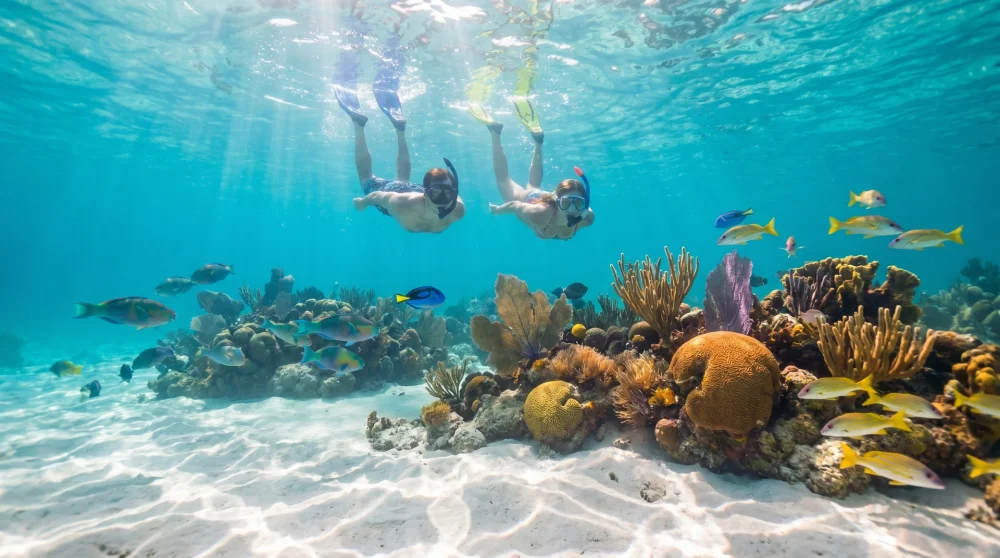
Grand Cayman offers some of the clearest, calmest water in the Caribbean, making it an ideal destination for first-time snorkelers. You do not need a certification or experience to explore vibrant coral reefs, encounter sea turtles, and drift above shallow shipwrecks. The island's sheltered west coast and protected North Sound keep conditions manageable even when trade winds pick up. Choosing the right spot makes all the difference between a relaxing experience and a stressful one.
| Location | Entry Type | Max Depth | Standout Feature |
|---|---|---|---|
| Cemetery Beach | Sandy Shore | 20 ft | Coral heads, colorful fish |
| Spotts Beach | Shore (Grass beds) | 10 ft | Green sea turtles |
| Smith Barcadere | Rocky Shore | 10-15 ft | Sheltered cove, easy access |
| Stingray City Sandbar | Boat / Sandbar | 3-4 ft | Standing depth encounters |
| Wreck of the Cali | Shore | 20-30 ft | Shallow shipwreck |
What Makes a Cayman Snorkel Spot Safe for Beginners?
Not every beach with clear water is suitable for a novice. A safe snorkeling environment requires a sandy and gradual entry to prevent slipping on rocks. It also needs natural protection from open ocean swells.
Many locations on the west side of the island benefit from this natural shielding. Staying inside the barrier reefs keeps you away from unpredictable rip currents. Checking local wind conditions is a basic safety measure before stepping into the ocean. You can also review our Cayman Islands packing list to better prepare your gear before arriving.
Top Shallow-Water Shore Snorkeling Locations
Cemetery Beach: Coral Heads and Sandy Entry
This location sits at the quiet northern end of Seven Mile Beach. The water here remains flat and calm on most days. You enter through a soft sandy shoreline without worrying about sharp ironshore rocks.
The main coral formations are roughly 60 yards out from shore, at depths around 20 feet. You do have to swim a bit to reach the dark patches of reef, but the effort pays off. Schools of tangs, parrotfish, and the occasional sea turtle reward anyone willing to make the paddle. Bring a swim buoy and a companion - beginners should not attempt the reef section alone.
Spotts Beach: Shallow Seagrass Beds for Turtle Watching
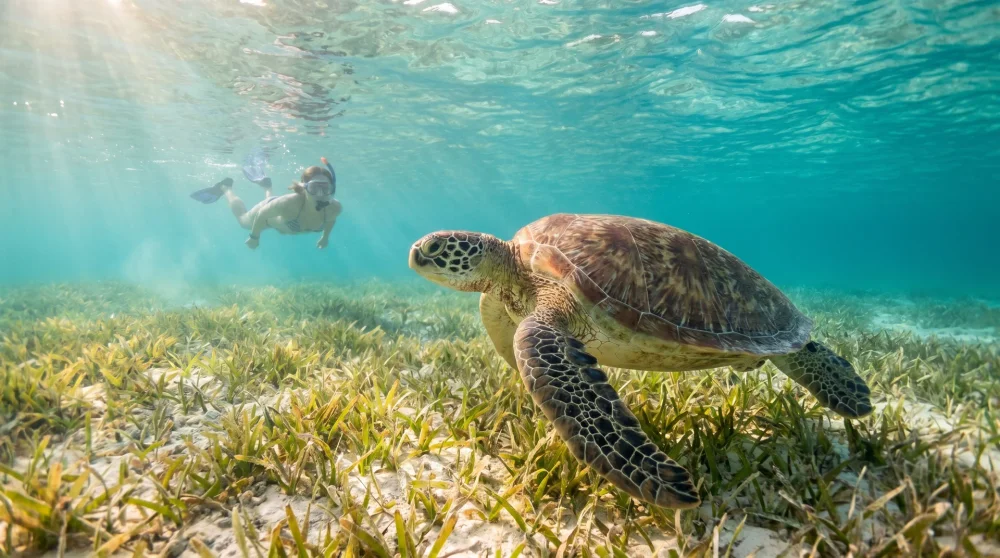
Spotts Beach is the most reliable place on the island to swim with wild green sea turtles. The turtles gather in the shallow seagrass beds just 40-50 yards from the shore. The water depth here is incredibly forgiving for nervous swimmers.
Stay close to the shore and avoid swimming out toward the main barrier reef. The water near the reef cut generates dangerous currents. Early mornings offer the calmest surface conditions and the best chance of spotting turtles grazing in the seagrass. The beach is free to enter, with parking, picnic tables, and restrooms on site. Keep a respectful distance and never block their path to the surface for air.
Smith Barcadere (Smith Cove): Easy Rocky Shore Access
This sheltered cove provides a highly protected environment for nervous swimmers. Limestone rock formations surround the inlet and block large waves. The shallow, crystal-clear water makes it a favorite for snorkeling right off shore.
Bring water shoes for the rocky entry point and swim along the cove edges to spot small crabs, nudibranchs, and colorful reef fish. It serves as a perfect backup location when the wind picks up on the main beaches. Entry is free, with a small parking lot across the street and outdoor showers available.
Boat-Accessible Spots with Shallow Sandbars
Stingray City Sandbar: Standing Depth Encounters
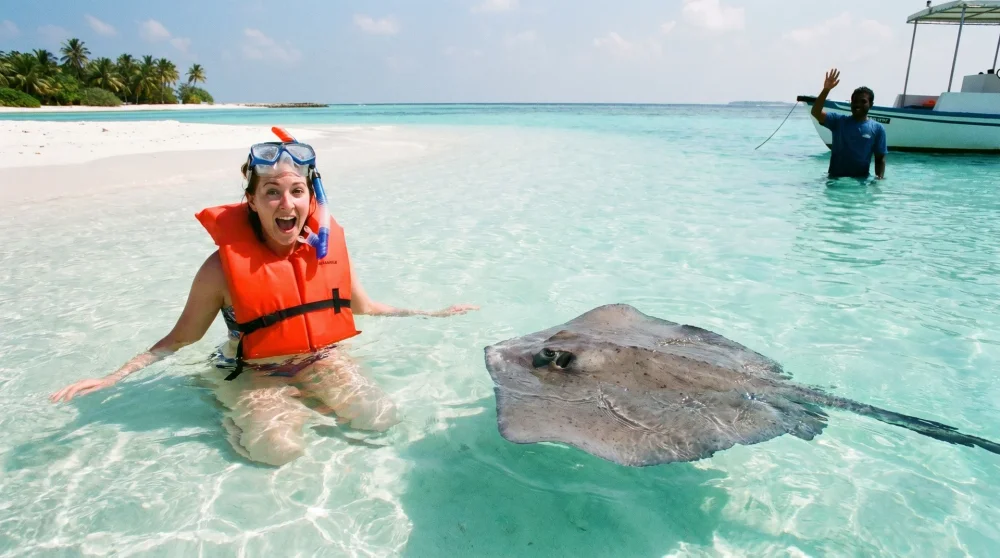
Do not confuse the deep Stingray City dive site with the Stingray City Sandbar. The sandbar allows you to stand comfortably in three to four feet of crystal-clear water. Southern stingrays glide around your legs in a completely open environment.
You do not even need to put your face in the water to see the marine life. Wearing a mask just gives you a clearer view of the stingrays hovering over the white sand. Most tour operators provide all the necessary flotation gear for a stress-free experience.
Coral Gardens: Protected Reef Formations
Boats usually visit Coral Gardens right after the sandbar. This inner reef sits within the protected North Sound area. The barrier reef absorbs the ocean waves, keeping the snorkeling site flat and peaceful.
The depth hovers around 10 feet. You can effortlessly observe parrotfish and small barracudas navigating the coral channels from the surface.
Artificial Reefs Visible from the Surface
Wreck of the Cali: Shallow Shipwreck in George Town
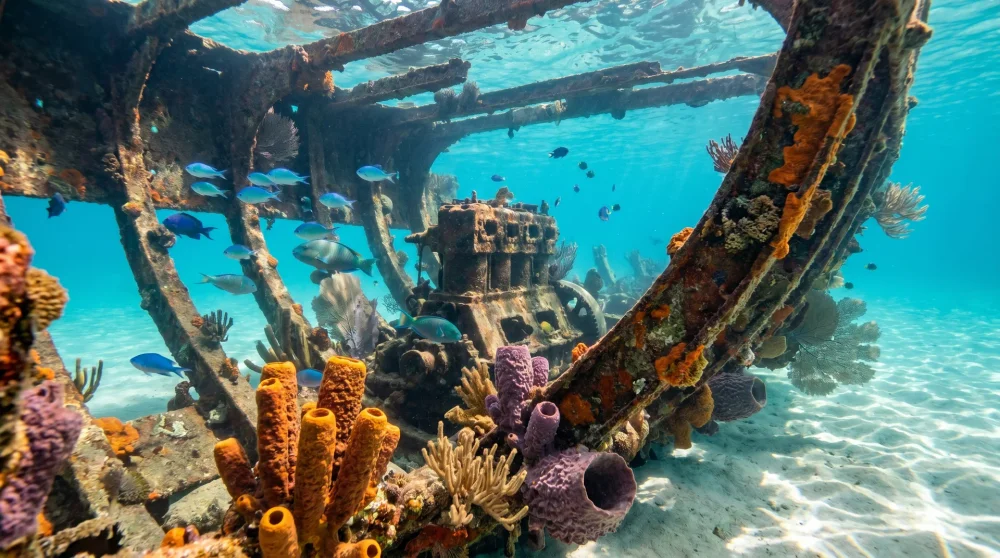
Shipwrecks usually require scuba gear, but the Wreck of the Cali sits in just 20 to 30 feet of water. It lies less than 70 feet off the shore in the George Town harbor, making it one of the most accessible wreck snorkeling sites in the Caribbean. You can see the entire layout of the four-mast schooner directly from the surface.
The lack of deep water makes it highly accessible for beginners. The exposed engine parts and ribs now host thick schools of fish and colorful sponges. Just stay aware of local boat traffic in the harbor area while floating above it.
USS Kittiwake: Snorkeling the Shallow Stern
This intentionally sunk military vessel is massive, and the highest point reaches within 15 feet of the surface. It offers one of the clearest underwater views anywhere in the Caribbean. You can look down and see the entire structure without taking a deep breath.
Access requires booking a licensed boat tour through a CITA-certified operator - swimming from shore is prohibited due to boat traffic. The operators secure the boat directly above the wreck. Floating over a sunken submarine rescue vessel provides a dramatic view with zero diving required. Book well in advance as this is one of the most popular snorkel sites in Grand Cayman. Book your snorkeling trip in Grand Cayman and secure your spot at the top sites.
Spots to Avoid if You Are Not a Confident Swimmer
Avoid the outer edges of the barrier reefs in the East End. The currents there pull strongly toward the open ocean. Do not attempt to snorkel near the reef cuts at Morritt's Tortuga or Spotts Beach's outer reef zone.
Deep drop-offs can cause severe disorientation for beginners. Stick to the sheltered coves and supervised sandbars during your time in the Cayman Islands. For a broader overview of activities, our Grand Cayman with kids guide covers beginner-friendly water options for all ages.
Essential Gear for First-Time Snorkelers
Flotation Vest: Wear a brightly colored vest to stay buoyant without kicking constantly.
Defog Solution: Treat your mask before entering the water to maintain clear vision.
Rash Guard: Wear a UV-protective shirt instead of applying chemical sunscreens that damage the coral.
Proper Fins: Choose shorter, flexible fins to prevent leg cramps during longer swims. Many dive shops near Seven Mile Beach rent open-heel fins that fit over thin neoprene booties.
Planning Your Snorkel Day
The best time to visit the Cayman Islands for calm water conditions is December through April, when seas are flat and visibility is excellent. Arriving at any snorkel spot early in the morning beats the afternoon trade winds and the cruise ship crowds that flood popular locations like Smith Cove by mid-morning. For cruise visitors, our Grand Cayman cruise day guide outlines which spots to prioritize in a limited shore window.