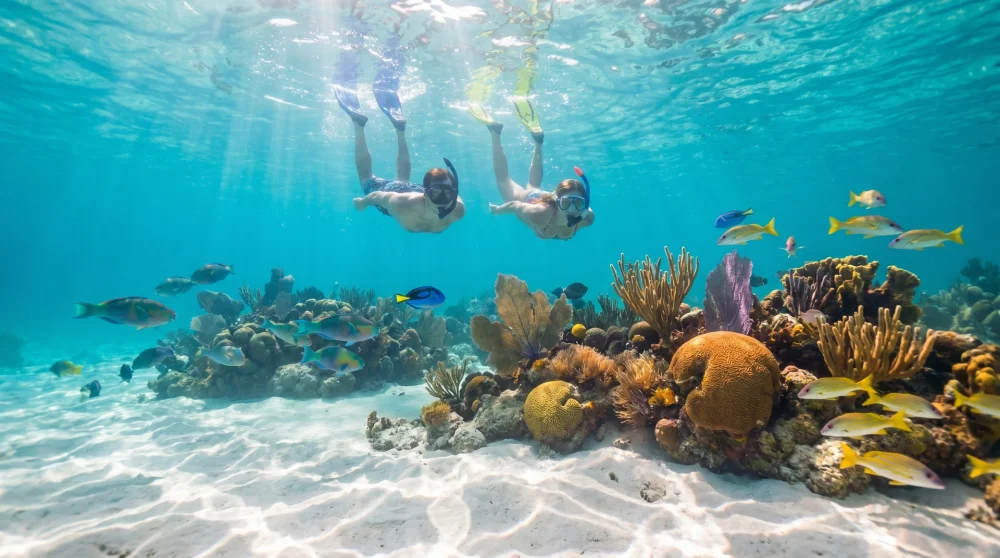
The Cayman Islands consistently rank among the top scuba diving destinations in the world, and for good reason. Three islands, hundreds of named dive sites, warm gin-clear water, and almost zero current on the western shores create conditions that are as forgiving for beginners as they are thrilling for experienced divers. Whether you're stepping off a shore entry ladder for the first time or hunting the edge of a vertical wall in the blue abyss, Cayman delivers.
Why Cayman? Topography and Water Clarity
The islands sit on the edge of the Cayman Trench, an underwater mountain range. This unique geology creates shallow, vibrant coral gardens that suddenly plunge into terrifyingly beautiful, bottomless blue depths. You do not need to be a deep-sea technical diver to experience the thrill of a wall dive here. Many of these sheer drop-offs begin in remarkably shallow water.
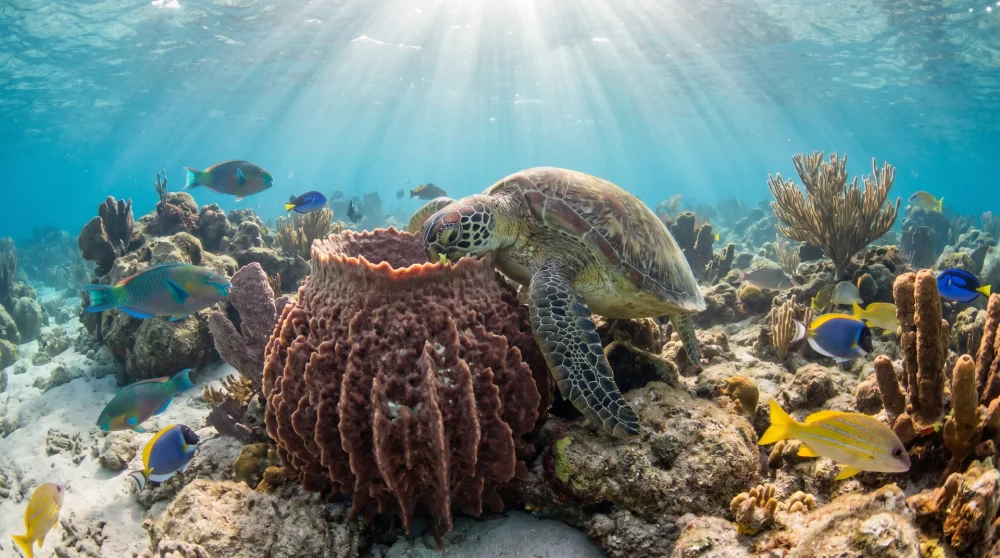
The water clarity acts like a magnifying glass. Sunlight penetrates deep into the water column, illuminating massive barrel sponges and intricate coral formations. Hovering over the edge of the wall feels exactly like skydiving in slow motion.
Water Temperature: 78°F to 86°F (a rash guard or a 3mm shorty provides plenty of thermal protection).
Visibility: 60 to over 100 feet - exceptional clarity thanks to the lack of river runoff.
Currents: Mild to non-existent on the West Side; occasionally stronger along the North and East walls.
Skill Levels Catered To: Everyone from first-time Open Water students to technical rebreather divers.
Best Grand Cayman Dive Sites
USS Kittiwake (Wreck / All Levels)
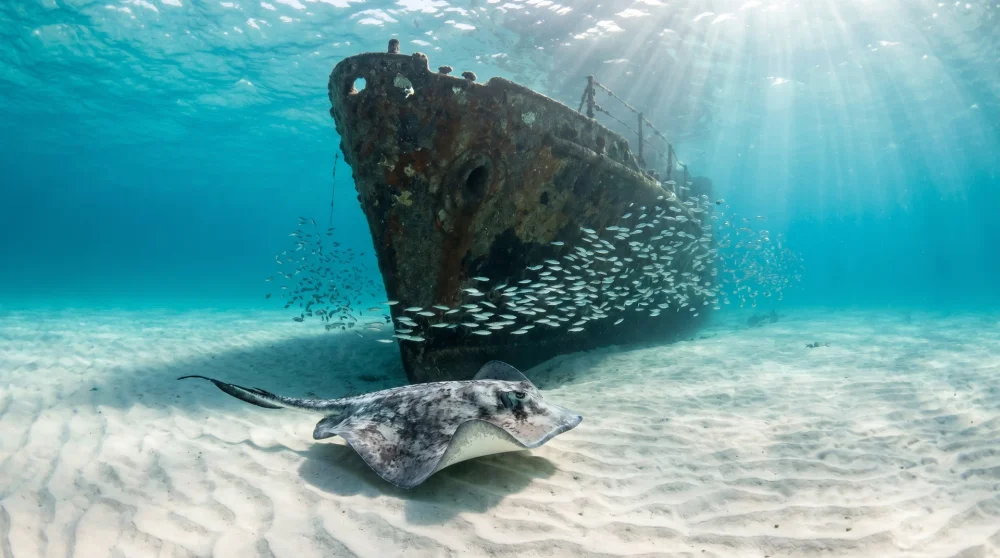
The USS Kittiwake is a decommissioned submarine rescue vessel sitting on a white sandy bottom at around 60 feet. Originally sunk perfectly upright, the power of ocean swells eventually pushed the massive ship onto its port side. This new angle makes swimming through the corridors an exciting, slightly disorienting adventure.
Open Water divers have plenty of room to explore the top two decks just below the surface. Advanced divers get the green light to navigate the lower levels, swim past the massive propeller, and investigate the old cargo spaces. Silversides constantly dart in and out of the hull, and southern stingrays patrol the sand flats just below the bow.
For more on planning your time in Grand Cayman around dive-friendly schedules, see the Grand Cayman Cruise Day guide.
Eden Rock and Devil's Grotto (Shore / All Levels)
Eden Rock and Devil's Grotto sit side by side near George Town, just a ten-minute walk from the cruise ship port. Eden Rock is packed with coral formations and reef fish, while Devil's Grotto features a series of underwater caves that reward confident swimmers with shafts of filtered blue light.
Both sites are accessible from shore and require no boat, making them ideal for independent divers. Rent a tank, check your gear, and set your own pace. The proximity to town also makes them easy afternoon additions after a morning boat charter. These are among the best spots for Grand Cayman with Kids who are taking their first Discover Scuba session.
Lighthouse Point and Cobalt Coast (Shore / All Levels)
Forget the long boat rides. The western coast of Grand Cayman offers a network of mini-walls just a stone's throw from the parking lots. Step off the ironshore, swim out for a few minutes, and the reef gently slopes away before revealing a sudden drop.
These spots are perfect for independent diving. Turtles casually graze on sponges right in front of you. As the sun sets, these shore sites transform completely. Night diving here reveals hunting octopuses and lobsters patrolling the hardpan in the dark.
The North Wall (Deep / Advanced)
The northern coastline takes wall diving to an extreme level. Sites like Tarpon Alley and Ghost Mountain feature towering pinnacles and dark swim-throughs. The reef plate drops thousands of feet, creating an imposing vertical landscape.
This side of the island faces the open ocean, bringing encounters with larger pelagic species. Eagle rays glide slowly along the wall edge, and Caribbean reef sharks occasionally make an appearance. Navigating the North Wall requires solid buoyancy control, as the deep blue abyss below constantly plays tricks on your depth perception. An Advanced Open Water certification is strongly recommended.
For practical logistics around getting to dive sites, the Getting Around Grand Cayman guide covers taxis, buses, and rental options.
Little Cayman and Cayman Brac Highlights
Bloody Bay Wall (Vertical Drop / Intermediate to Advanced)
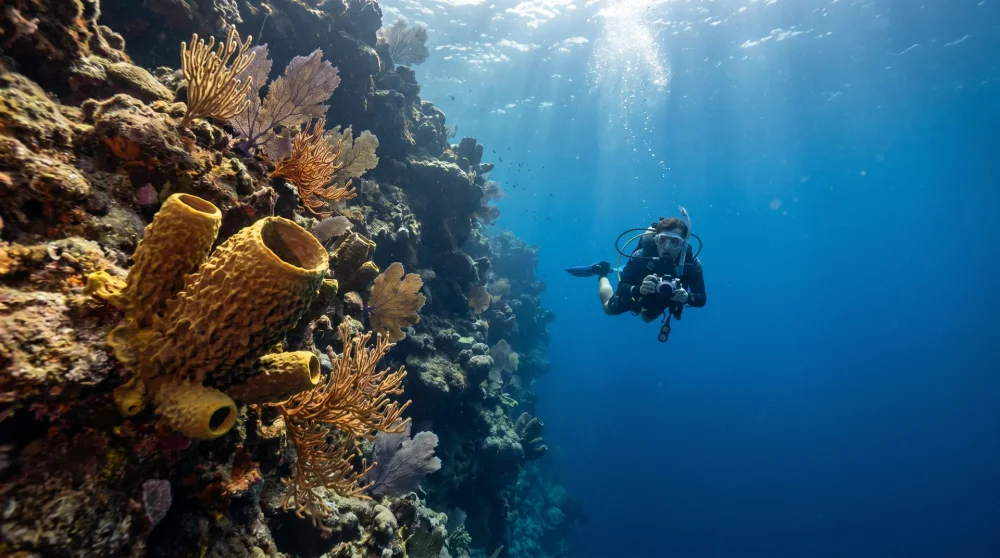
Bloody Bay Marine Park in Little Cayman holds legendary status among divers worldwide. The reef starts surprisingly shallow, often around 20 feet, making it accessible even to less experienced divers. Then, the ocean floor simply vanishes.
The vertical cliff face falls away into total darkness. Yellow tube sponges and vibrant sea fans cling to the rock. Looking up from the edge of the wall, the silhouettes of green turtles and triggerfish block out the sun overhead. The wall drops more than 6,000 feet - it is one of the most dramatic dive environments in the entire Caribbean.
To get here, you will need to take an inter-island flight from Grand Cayman to Little Cayman. See the Getting Between the Cayman Islands guide for flight details and baggage rules before you pack your gear bag.
MV Captain Keith Tibbetts Wreck (Advanced)
Cayman Brac hosts a massive piece of Cold War history. This Soviet-built frigate was purposefully sunk to create an artificial reef. Over the years, the ocean has completely claimed the metal structure. Colorful sponges cover the bow guns, and large groupers treat the bridge as their personal territory.
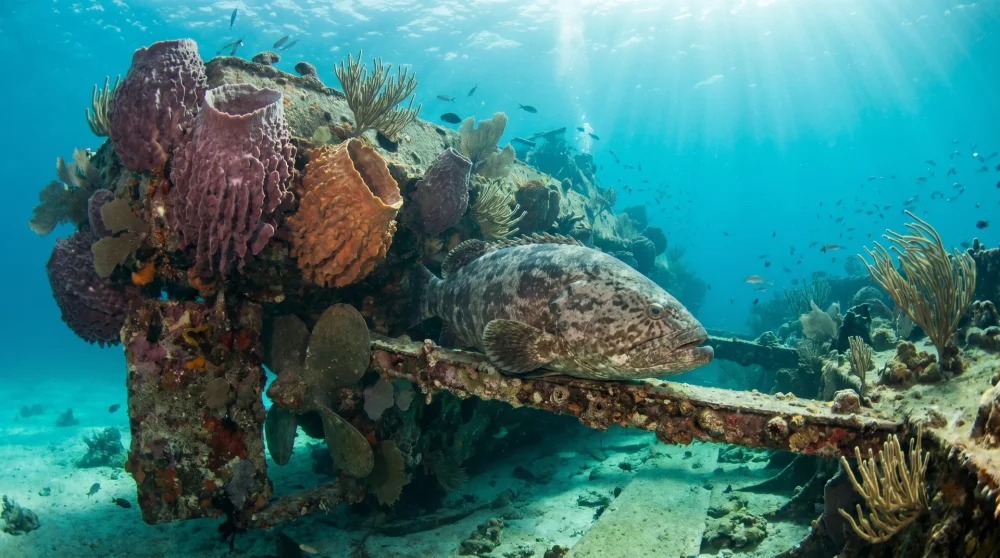
The wreck sits at depths between 50 and 100 feet, so an Advanced Open Water certification is advisable. The combination of marine life colonization and Cold War history makes this one of the most photographically rewarding wrecks in the Caribbean.
For context on which sister island suits your plans best, read Little Cayman vs Cayman Brac before booking.
Practical Logistics for Divers
Shore Diving vs. Boat Charters
Mixing your dive styles keeps the trip dynamic. Dedicate your mornings to boat charters to reach the isolated North Wall or the Kittiwake wreck. In the afternoons, grab a buddy and a rental tank for a relaxed shore dive. This hybrid approach allows you to log more hours underwater without being tied to a strict group schedule.
Ready to get in the water? Find dive tours in the Cayman Islands and compare certified operators before you go.
When to Go
The best time to dive the Cayman Islands runs from December through May. Conditions are calmest, visibility is at its peak, and water temperatures are ideal. Summer diving is also excellent, but the period from June through November brings hurricane season, which can interrupt boat schedules. For a full breakdown of weather patterns and crowd levels, see the Best Time to Visit the Cayman Islands guide.
Maximizing Your Bottom Time
Pay attention to the wind direction when planning your daily routes around the Cayman Islands. If the western shore is choppy, the eastern side might be completely flat. Bringing your own mask, fins, and a reliable dive computer streamlines the rental process at local dive shops. Solidifying your travel tips and packing list early ensures you spend less time adjusting ill-fitting rental gear and more time hovering next to eagle rays. The Cayman Islands Packing List covers dive gear essentials alongside everything else you need.