A mustard-yellow Gothic cathedral rising out of a date-palm oasis in one of the most remote corners of the Northern Cape sounds like a mirage, but Pella is real, and getting there takes real planning. This guide skips the postcard language and focuses on what you actually need before you drive out: the road conditions, who shows you around, what it costs, and why the Kalahari heat is not something to underestimate.
How to Get to Pella Cathedral (Logistics and Road Conditions)
Pella sits roughly 35 kilometers off the N14, a few kilometers south of the Orange River, in the Namakwa district of the Northern Cape. The nearest town with fuel, shops, and lodging is Pofadder, about half an hour away on a mix of tar and gravel.
- Turnoff: From Pofadder, head toward Springbok on the N14 for about 15 kilometers, then turn onto the signposted road toward Pella.
- Gravel stretch: After roughly 300 meters of tar, the road becomes gravel for the remaining 20 kilometers or so into the village, with sandy and corrugated sections.
- Vehicle: A standard sedan can usually manage the drive in dry weather, but a vehicle with higher clearance is more comfortable and safer if there has been recent rain.
- Fuel and cash: There is no ATM or fuel station in Pella itself. Fill up and carry cash in Pofadder or Springbok before setting out.
- Phone signal: Coverage is patchy to nonexistent for long stretches of the drive; download offline maps beforehand and tell someone your route.
Visiting the Cathedral and Meeting the Resident Sisters
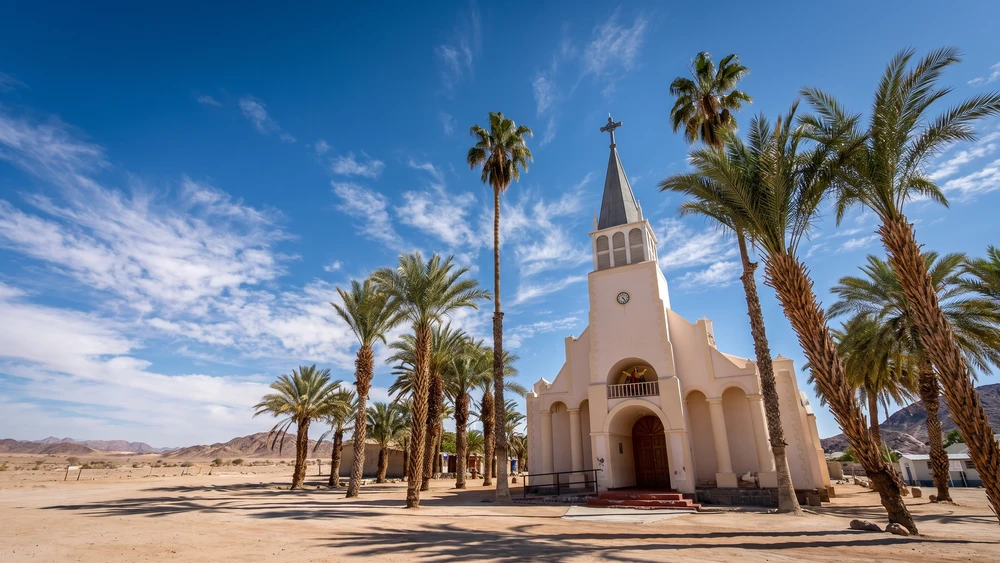
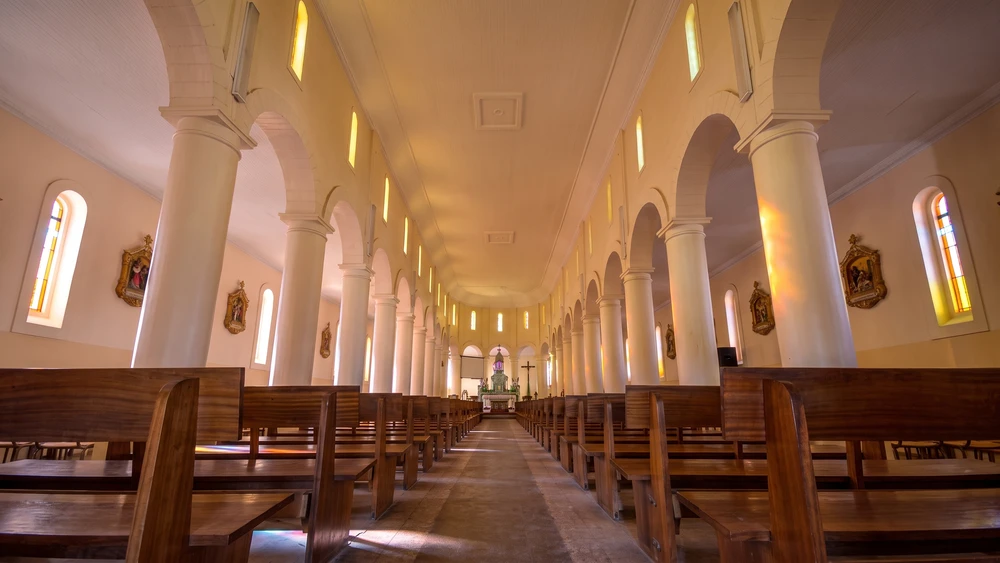
The Immaculate Conception Cathedral is not a self-guided museum stop. It is an active place of worship attached to a small mission, and the resident sisters are usually the ones who open the doors for visitors. Sister Johanna Katrina has been known to walk guests through the church museum and the old bishop's office, sharing details about the building's restoration and the objects inside, including a hand-carved cupboard and an altar donated from Europe.
There is no official ticket booth and no published entrance fee. A donation toward the upkeep of the church and museum is customary and appreciated, but you should not expect a fixed price list or a card machine. Bring small notes, since change is unlikely to be available. Because the sisters have their own schedule of prayer and duties, arriving mid-morning on a weekday gives you the best chance of finding someone available to let you in; there is no guarantee of a tour if you show up unannounced outside those hours.
If you would rather arrange things in advance, local operators such as Namakwa 4x4 Exploration can help coordinate a visit as part of a wider Namakwa or Orange River itinerary.
Safety and Practical Tips for the Journey
Pella is safe to visit, but it is also genuinely isolated, and the practical risks are more about logistics than crime.
Secure Your Vehicle and Valuables
As in most remote South African villages, it is sensible to lock your car and keep valuables out of sight while you are inside the cathedral or museum. Some visitors have reported being approached by locals asking for money or goods near the church grounds; a polite decline is usually enough, and the sisters can help if you feel unsure about anything.
Handling the Extreme Kalahari Heat
Summer temperatures around Pella regularly average close to 40°C, and the tar and gravel roads offer no shade for kilometers at a stretch. Carry more water than you think you need, avoid driving in the early afternoon if possible, and check your tires and spare before leaving Pofadder. Footwear with a solid sole is worth packing since the ground around the cathedral can get hot enough to soften rubber soles by midday.
The Improbable History: Built Without Architects or Machinery
Pella began in 1814 as a London Missionary Society station, founded by Christian Albrecht and named after the biblical town where early Christians once sought refuge. The original mission was abandoned during a severe drought and later reestablished under Catholic Oblate missionaries.
The cathedral itself is the centerpiece of that second chapter. Two priests, Father J.M. Simon and Brother Leo Wolf, oversaw its construction with no formal architectural training and no heavy machinery, relying instead on a plate from a French reference work, the Encyclopédie des Arts et Métiers, as their visual guide.
Local ironwork, including staircases and fittings, was forged on site. The building was completed in 1895 and today serves as the seat of the Catholic Diocese of Keimoes-Upington.
Decades later, water that had pooled beneath the foundations began seeping into the structure and caused a partial collapse. The Gold Fields Foundation funded a full restoration, including a solar-powered drainage system, and the cathedral reopened in November 1985 in the condition visitors see today: a pale yellow facade against craggy, sun-baked hills.
Buying Pella's Famous Medjool Dates
The oasis that supports Pella also supports its best-known export: Medjool dates, grown on palms fed by groundwater beneath the sandy plain. Locally packed dates are sold in wooden boxes and shipped to customers across South Africa.
If you are hoping to buy some on site, timing matters. Harvest wraps up well before the southern hemisphere spring, so travelers passing through later in the year, including anyone visiting in September, often find that the season's stock has already sold out. Ask locally about the current harvest status before building a trip around buying dates in person, and consider that mail-order boxes may be your best option outside the harvest window.