Getting lost in the Marrakech Medina is a rite of passage, but paying a hostile stranger for unwanted directions ruins the entire experience. Knowing exactly how to spot a hustle before it happens gives you the upper hand in the souks. Prepared travelers navigate these narrow alleys without stress or financial loss.
Before you step outside your riad, lock in a few basics: download offline maps, save the tourist police number, and learn two or three phrases in Darija. The scams below follow predictable patterns - recognize the pattern once and you will never fall for it again.
The Helpful Local and Fake Directions
Someone approaches you the exact second you look at your phone map. They offer quick directions to a famous landmark or your riad. You decline, but they walk alongside you anyway, making friendly conversation. Once you reach the destination, their demeanor changes completely. They demand a large tip and become loud to intimidate you into paying.
How to avoid it: Step inside a real shop or cafe to check your map out of sight. Walk with purpose. If someone insists on following you, firmly say La, Shukran (No, thank you) and explicitly state No guide. Operating as an unlicensed guide is illegal in Morocco, and scammers know this.
The Tanneries Detour Scam
You set out to visit a major site like the Bahia Palace. A friendly passerby mentions a special Berber market happening today only, conveniently located near the leather tanneries. You follow them through a maze of twisting alleys. There is no special market. You end up at a distant leather shop where aggressive salesmen pressure you to buy goods, and your uninvited guide demands payment.
How to avoid it: Stick strictly to your original itinerary. Ignore any spontaneous claims about one-day-only markets or hidden festivals.
The Road is Closed Trick
While walking back to your accommodation, a group of youths blocks your path. They claim the street ahead is closed for prayer, construction, or a private event. They kindly offer to show you the alternative route. This detour leads straight into a dark alley or a specific carpet shop.
How to avoid it: Look past them. If you see other locals walking down that exact street, the road is open. Ignore the warnings and keep walking straight with complete confidence.
Jemaa el-Fnaa Square Traps
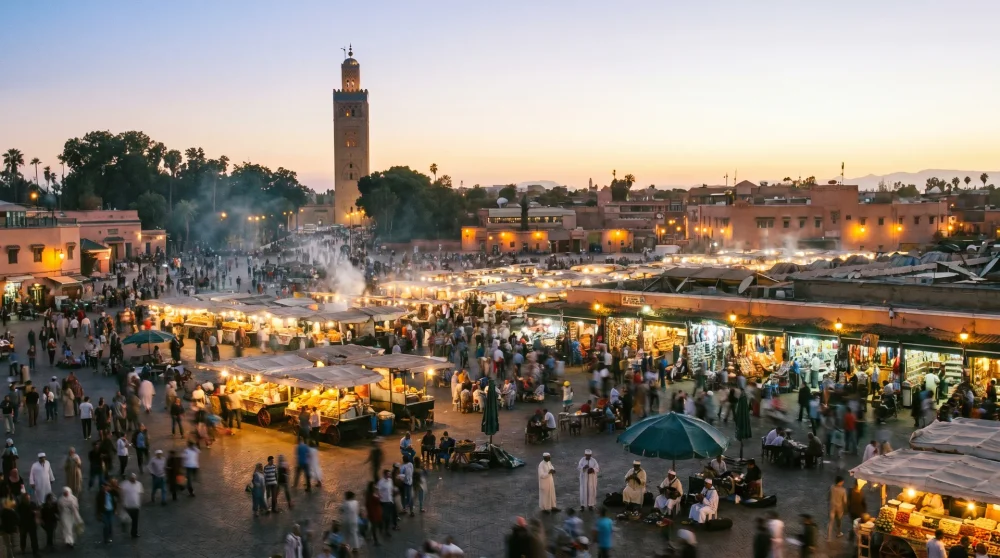
The main square transforms into a chaotic theater at sunset. The atmosphere is loud, crowded, and full of visual distractions - perfect conditions for pickpockets and hustlers.
Aggressive Henna Artists
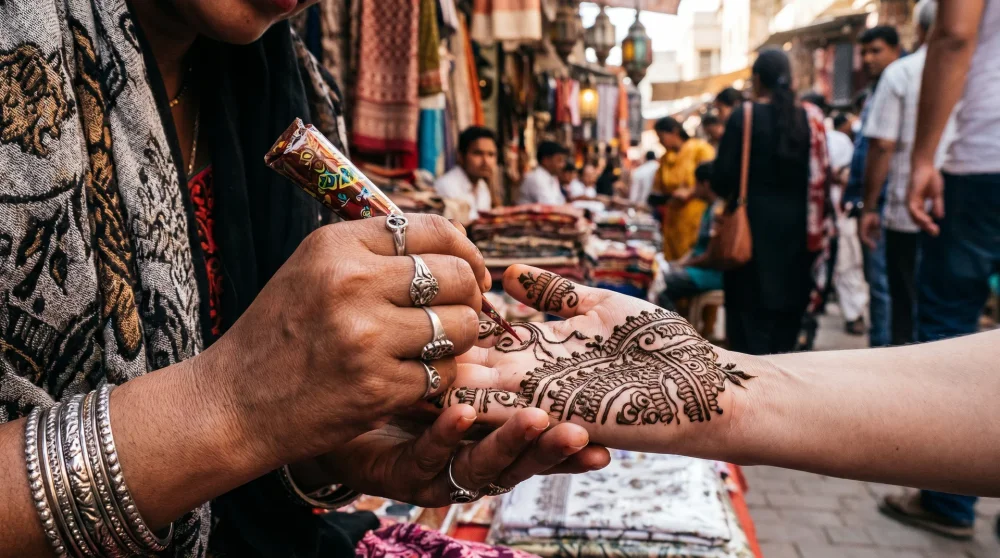
Women patrol the square with syringes full of henna. They grab your hand without warning and start drawing a design instantly. If you pull away, they smear the wet ink on your skin or clothes. If they finish the drawing, they surround you and demand payment for an unrequested service.
How to avoid it: Keep your hands deep in your pockets while walking through the square. Black henna contains toxic chemicals and causes severe allergic reactions or chemical burns. Only get henna done at established, reputable cafes with fixed prices posted visibly.
Snake Charmers and Macaque Monkeys
Performers suddenly drape a snake around your neck or drop a chained monkey onto your shoulder from behind. They quickly encourage your travel partner to snap a photo. Once the camera clicks, the friendly smiles vanish. They demand an extortionate amount of money and block your path until you pay.
How to avoid it: Give these animal handlers a very wide berth. Make absolutely no eye contact. Never take photos of the animals, even from a distance, as the handlers will chase you across the square for compensation.
Pickpocket Gangs
Organized teams work the square, particularly at the transition from the daytime market to the evening food stalls. One person creates a distraction while an accomplice lifts your phone, wallet, or camera from a bag.
How to avoid it: Keep your phone in a front trouser pocket or a zipped inner jacket pocket. Use a money belt for cash and your passport. Be especially alert when someone bumps into you or tries to hand you something.
Shopping and Souk Hustles
Haggling is a deep-rooted part of the culture. However, certain retail tactics cross the line from playful negotiation into outright deception.
Fake Argan Oil and Saffron
Souk vendors sell plastic bottles labeled as pure argan oil. The liquid inside is often cheap vegetable oil mixed with artificial fragrance. Similarly, the bright red saffron piled high on spice stalls is frequently replaced with dyed corn silk or safflower.
How to avoid it: Buy argan oil directly from certified women-run cooperatives outside the Medina. Real saffron has a distinct, earthy smell and takes time to release its color. It does not dissolve instantly in water like fake dyes do.
The Mint Tea Obligation
A shop owner invites you inside for a welcoming cup of hot mint tea. The hospitality feels incredibly genuine. You sit down, drink the tea, and look around. Accepting this hospitality creates a strong psychological obligation to buy a carpet, lantern, or ceramic bowl.
How to avoid it: Politely decline the tea offering unless you genuinely intend to purchase something from that specific store. A simple "La, Shukran" with a smile is enough.
The Drug Dealer and Fake Police Shakedown
A street vendor quietly offers to sell you drugs. Minutes later, an accomplice posing as a plainclothes police officer appears and demands a cash "fine" of 500 to 2,000 MAD to avoid arrest. Both men split the money afterward.
How to avoid it: Decline any approach from strangers offering substances. If someone claiming to be police demands money, insist on going to the nearest official police station. Real officers will not object to this.
Transportation Scams
Getting from the airport or moving between neighborhoods requires dealing with the local transit system, which has its own unwritten rules.
The Broken Taxi Meter
You sit in a petit taxi and notice the meter is off. The driver claims it is broken, or insists that special night rates apply right now. When you finally reach your destination, the fare is heavily inflated compared to the standard rate.
How to avoid it: Ask the driver to turn on the meter before you even sit down fully. If they refuse, walk away immediately. There are plenty of other taxis waiting nearby. Your hotel can also arrange a fixed-fee transfer to bypass this entirely. In 2026, apps like Roby and Heetch also operate in Marrakech and show a fixed price upfront.
Essential Safety Tips for Marrakech
Navigating the city safely requires a mix of situational awareness and setting extremely clear boundaries with strangers.
Phrases to Defuse Situations
Speaking a few words of the local Moroccan dialect, Darija, commands immediate respect. It signals that you are not a clueless tourist on your first day.
Use La, Shukran for a polite refusal. If a scammer becomes persistent or harasses you, firmly say Safi (Enough) or Sir bhalek (Go away). These words work like a charm to back them off immediately.
Where to Find the Tourist Police
The Moroccan authorities take tourist safety seriously. Tourism is the lifeblood of the city, and scammers actively fear the police.
Uniformed officers constantly patrol Jemaa el-Fnaa and stand near the main gates of the Medina. For emergencies, dial 190 for general police or 19 for urban police. If a fake guide or vendor becomes aggressive, simply walking in the direction of a police officer solves the problem instantly. They will scatter before you even need to say a word.
For travel coverage that protects you against theft and unexpected incidents while abroad, Backpacker Travel Insurance: What Coverage Do You Actually Need? is a useful starting point before any trip to North Africa.
Navigation Tips
Download an offline map of the Medina before leaving your riad. Google Maps and Maps.me both work on flight mode, meaning your GPS dot guides you through the labyrinth without needing mobile data. With a working offline map in your pocket, there is no reason to look confused or ask strangers for directions.