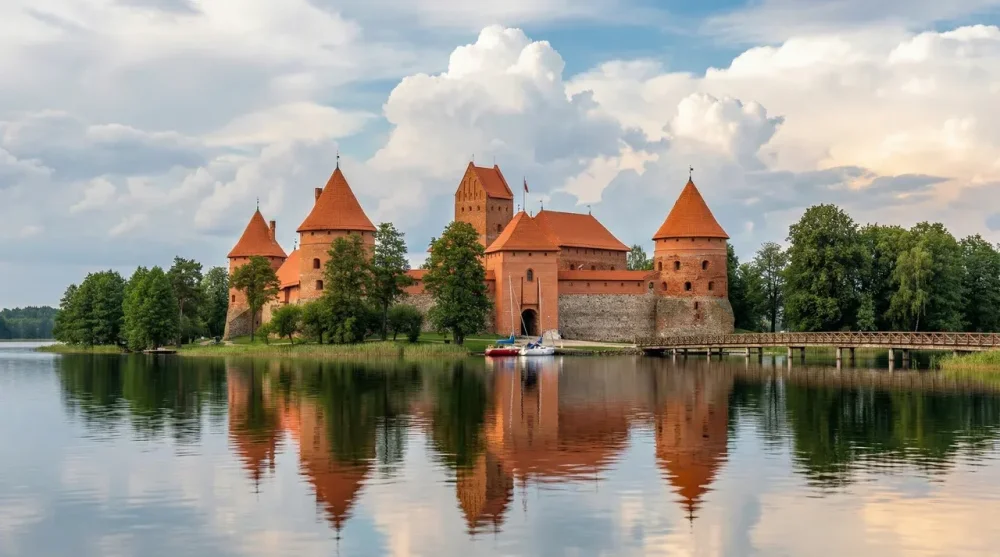
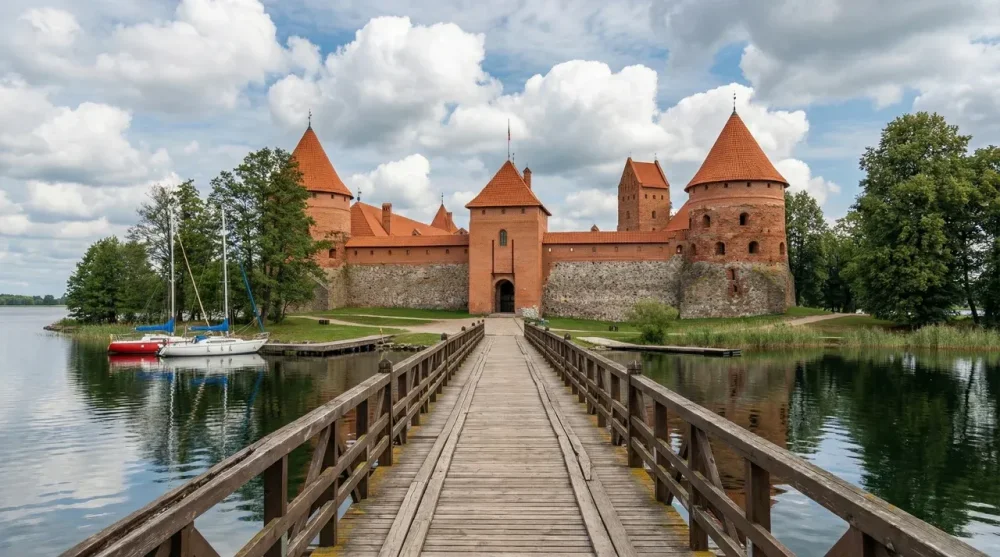
Stepping onto the 100-meter wooden bridge over Lake Galve feels like entering a medieval time machine. The red-brick towers reflect perfectly on the calm water, creating a stunning visual. You do not need to be a history buff to appreciate this 15th-century Gothic masterpiece.
Whether you plan a quick half-day trip from Vilnius or a full day of exploring local Karaite culture, knowing exactly how to navigate the transport and ticket options saves you hours of frustration.
How to Get to Trakai Castle from Vilnius
The journey from the capital is incredibly straightforward. You have three main options to cover the 28-kilometer distance.
By Train
Taking the LTG train from Vilnius Central Station is the most scenic and relaxed method. The ride takes just under 35 minutes and a round-trip ticket costs about €6. Once you step off at Trakai station, do not expect the castle to be right in front of you.
The walk to the island takes another 30 to 45 minutes (roughly 3 kilometers). Follow the lakeside path instead of the main road. The water views are breathtaking, and it is far more peaceful. If you want to skip the walk, grab a Bolt car or rent a local scooter near the station.
By Bus
Buses run frequently from the Vilnius Bus Station from platforms 6, 7, or 8. You reach the Trakai Bus Station in about 30 minutes. A single ticket sets you back around €3.60. Just like the train station, the bus terminal sits at the southern end of the town. Pick up a return timetable from the small ticket office before you start your 30-minute walk north toward the castle.
Driving and Parking Information
Driving gives you maximum flexibility. Head out of Vilnius on Savanoriu Avenue and take the A16 highway directly to Trakai. Finding a parking spot near the castle gets tricky during peak summer weekends. Street parking meters charge between €1.50 - €2.50 per hour. Alternatively, many locals open their private driveways for tourists. Expect to pay a flat rate of around €5 for the entire day. Keep some coins or small bills handy.
Trakai Island Castle Tickets and Opening Hours
Booking your tickets online in advance is a smart move to skip the long queues, especially between June and August.
Entrance Fees (Summer vs. Winter)
Prices shift depending on the season.
- May to September: Adults pay €12. Students and seniors pay €6.
- October to April: The adult rate drops to €10, while reduced tickets cost €5.
If you happen to visit on the last Sunday of the month, entry is completely free. Download the official audio guide app for just €0.99 instead of booking expensive guided tours. The app covers all the major exhibits brilliantly.
Opening Hours by Season
Plan your arrival carefully because the schedule changes frequently throughout 2026.
- Summer (May - September): Open every day from 10:00 to 19:00.
- Spring & Autumn (March, April, October, November): Open Tuesday to Sunday from 10:00 to 18:00.
- Winter (December - February): Open Wednesday to Sunday from 10:00 to 18:00.
The museum stays closed on all national holidays. Give yourself at least 1.5 to 2 hours to explore the entire complex.
What to See Inside the Trakai Island Castle
The complex is divided into the main keep and the surrounding defensive walls. Wear comfortable, flat shoes. The old cobblestone courtyard is authentic but highly uneven, making it slightly tricky for wheelchair users or strollers, though an elevator is available for the main keep.
The Ducal Palace and Architecture
Grand Duke Kestutis started the construction in the late 14th century, and his son Vytautas the Great turned it into a residential masterpiece. The inner courtyard is compact and heavily fortified. Narrow wooden staircases connect the different levels of the keep.
Note that major renovation work is currently active across parts of the Ducal Palace. You will see scaffolding and temporary metal stairs. Do not let the construction deter you. The sheer scale of the red-brick Gothic architecture remains incredibly impressive.
Medieval Exhibits and The History Museum
The Trakai History Museum holds nearly 400,000 artifacts. Wander through the various halls to find collections of medieval armor, old coins, intricate porcelain, and an incredibly unique exhibition dedicated entirely to vintage walking sticks.
The basement dungeon is dark and atmospheric. Be aware of the motion-sensor lights in the modern bathrooms. They turn off very quickly if you stand perfectly still, leaving you in complete darkness.
The Karaite Heritage in Trakai
Trakai is not just about Lithuanian royalty. It is also the historic home of a fascinating minority group.
History of the Karaite Turks
Grand Duke Vytautas brought the Karaim (Karaite Turks) from Crimea to Lithuania about 600 years ago. They served as loyal guards for the castle and settled permanently in the town.
Walk along Karaim Street to see their traditional wooden houses. Each house features exactly three windows facing the street. According to local legend, one window is for God, one for the Grand Duke, and one for the family.
Must-Try Local Food: Kibinai
You absolutely cannot leave Trakai without eating Kibinai. This traditional Karaite pastry resembles an empanada, baked to a golden brown and stuffed with minced meat and onions. Stop by Senoji Kibinine or any lakeside cafe to grab a few. They are warm, filling, and perfect for recharging after a long walk.
Best Time to Visit Trakai
Every season offers a radically different experience. Summer brings vibrant energy, open-air concerts in the courtyard, and the chance to rent a pedalo for €5 - €12 to paddle around the island. Autumn transforms the surrounding forests into a brilliant canvas of gold and red, creating the perfect moody backdrop for photography.
Winter is entirely magical. Lake Galve freezes over completely. You can safely walk straight across the thick ice, bypassing the bridge entirely, and enjoy the snow-covered towers in absolute silence.