Flying into Malaga and wondering if you have time for Gibraltar before your flight home? The short answer is yes, and the drive is easy enough to make it a realistic single-day plan rather than a stretch. At roughly 130 km, Gibraltar sits far closer to Malaga than to almost any other major Costa del Sol base, which means less time in the car and more time actually on the Rock.
The catch is picking the right route and knowing where to park once you arrive, since driving your own rental car across the actual border is never a good idea. You will also need to work around the fact that the main cable car has been closed since November 2025 and is not expected to reopen until 2027.
- Distance: 130 km one-way from Malaga to the La Linea border.
- Fastest route: AP-7 toll motorway, about 1.5 hours.
- Free route: A-7, 2 hours 10 minutes to 2.5 hours through Costa del Sol traffic.
- Malaga Airport bonus: several Avanza buses stop directly at the airport terminal, so you can start the trip without ever entering Malaga city.
- Cable car status: closed for a full rebuild until 2027, plan for a taxi tour or the Mediterranean Steps hike instead.
How Far Is Gibraltar from Malaga, and How Long Does It Take?
The driving distance between Malaga and the Gibraltar border is close to 130 km, which is significantly shorter than the roughly 200 km trip that travelers based in Seville have to cover. That distance advantage is real, but it does not automatically translate into a short drive, because the two available routes behave very differently.
The AP-7 toll motorway is by far the faster option. Taking it end to end gets you to La Linea in about 90 minutes, for a toll that runs roughly €15-19 each way depending on the season. For a day trip where every hour on the Rock counts, that toll is usually worth paying.
The free alternative, the A-7, threads through Torremolinos, Marbella, and Estepona before reaching the border, and traffic lights plus summer congestion along that stretch can push the journey to 2 hours 10 minutes or more, occasionally matching the travel time from Seville despite the shorter distance. If your day trip starts early enough to beat the coastal traffic, the A-7 saves the toll cost. If you are leaving after 9 AM in high season, pay for the AP-7.
Getting There: Car, Bus, or Organized Tour
Driving and Parking in La Linea
A rental car gives you the flexibility to leave at dawn, which matters on a day trip this tight. Pick up your car at Malaga Airport, follow the AP-7 south, and head straight for La Linea de la Concepcion, the Spanish border town that sits directly against the Gibraltar frontier.
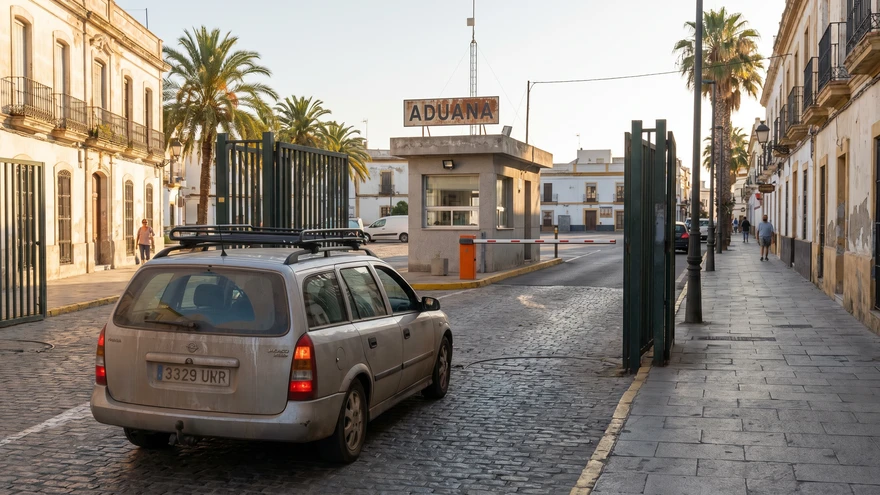
Do not attempt to drive your rental car across the border itself. Vehicle queues can run for hours, particularly in the late afternoon when everyone tries to leave at once, and many rental agreements restrict or void coverage once you cross into Gibraltar. Instead, look for a secure parking facility on the Spanish side, such as Parking Puerta de Gibraltar near Avenida Veinte de Abril, which sits within a five-minute walk of the pedestrian checkpoint. If you would rather have the car ready and waiting at the terminal the moment you land, booking a Rental car at Malaga Airport in advance avoids the queue at the counter.
Taking the Bus from Malaga (or Straight from the Airport)
Public transport on this route is more useful than most guides give it credit for. Avanza runs about nine buses a day between Malaga and La Linea, and several of the slower services make a stop at Malaga Airport itself, which means you can walk off your flight and board a bus to Gibraltar without ever going into the city.
Fares run roughly €16 to €18 each way, and journey times vary from the fastest express service at under 2 hours up to 3 hours for buses that stop in Torremolinos, Fuengirola, and San Pedro de Alcantara along the way. Buy tickets through the Avanza website or at the counter in Malaga's Maria Zambrano bus station, and take the earliest departure you can manage, ideally the 6:30 AM service, to give yourself a full day on the Rock.

Joining an Organized Day Tour
If you would rather skip the logistics altogether, several operators run full-day coach tours directly from Malaga that include the border crossing, a guided walk up the Rock, and free time on Main Street. A Guided Gibraltar day trip from Malaga handles the transport and border paperwork for you, which is a reasonable trade-off if you are traveling solo or only have one day in the region and do not want to manage the crossing yourself.
Crossing the Border: Passports, the Runway Walk, and What Changed in 2026
Whichever way you arrive, the actual crossing at La Linea works the same for everyone. EU nationals can cross with a valid national identity card or a passport, while UK citizens need a valid passport. Digital photos of your documents on a phone are not accepted; bring the physical booklet or card.
A UK-EU treaty governing Gibraltar's border entered into force in the middle of 2026, moving routine passport checks away from the road crossing and into a joint facility at Gibraltar's airport and port. In practice this means the walk across the frontier itself is faster than it used to be, though officers can still stop pedestrians for spot checks. Non-EU visitors such as Americans, Canadians, and Australians do not yet need any pre-travel authorization as of mid-2026, though the EU's ETIAS system is expected to launch later in the year, so it is worth applying as soon as it opens.
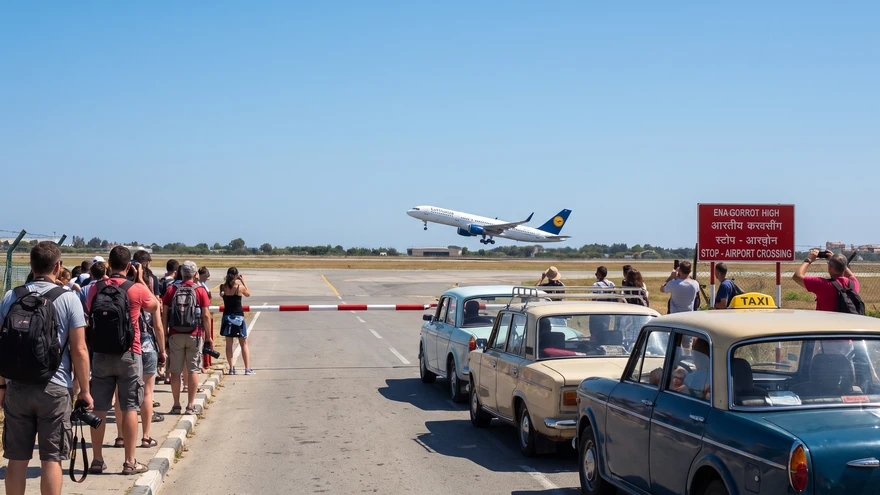
Once you clear the checkpoint on foot, you have to walk directly across the active runway of Gibraltar International Airport on Winston Churchill Avenue. When a flight is landing or taking off, barriers drop and foot traffic stops completely, usually for 15 to 30 minutes, which doubles as one of the more unusual photo opportunities of the whole trip.
Getting Around Gibraltar Without a Car
Gibraltar covers only about 6.8 square kilometers, so almost everything worth seeing is within walking distance or a short bus ride once you are past the border. The walk from the checkpoint into Casemates Square takes around 15 to 20 minutes on flat ground.
Red municipal buses cover routes out to Europa Point and other outlying spots, though service thins out on weekends and drivers often expect exact change if you have not bought a ticket in advance. Local taxis are a practical alternative for reaching trailheads or skipping the uphill walk toward the nature reserve gates, and with the cable car out of service, several taxi operators now run dedicated Rock tours that stop at the main viewpoints.
A Realistic One-Day Itinerary from Malaga
Morning: The Runway Walk and Main Street
Start by crossing the runway and heading straight into town. Main Street is lined with British pubs, red telephone boxes, and duty-free shops selling discounted alcohol and tobacco.
Pick up bottled water here, but pack it securely inside a closed bag before you head up the Rock. Carrying loose plastic bags or visible food is a mistake once the Barbary macaques are around, since they target anything that rustles.
Midday: The Upper Rock Nature Reserve
With the cable car closed, reaching the summit means either an official taxi tour that stops at the main viewpoints or hiking up on foot. Entry to the reserve costs £30 for adults and £22 for children aged 5 to 11, with younger children admitted free.
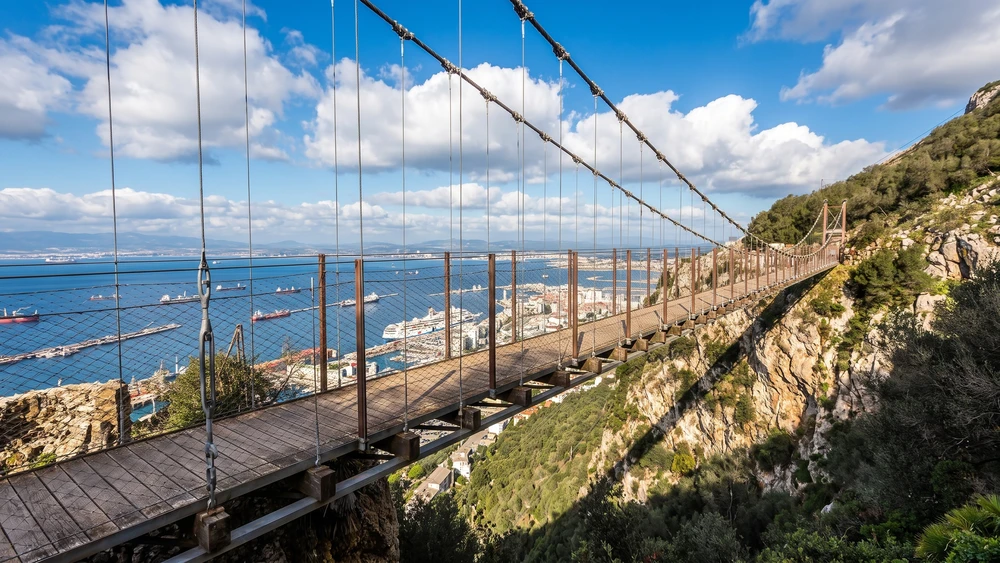
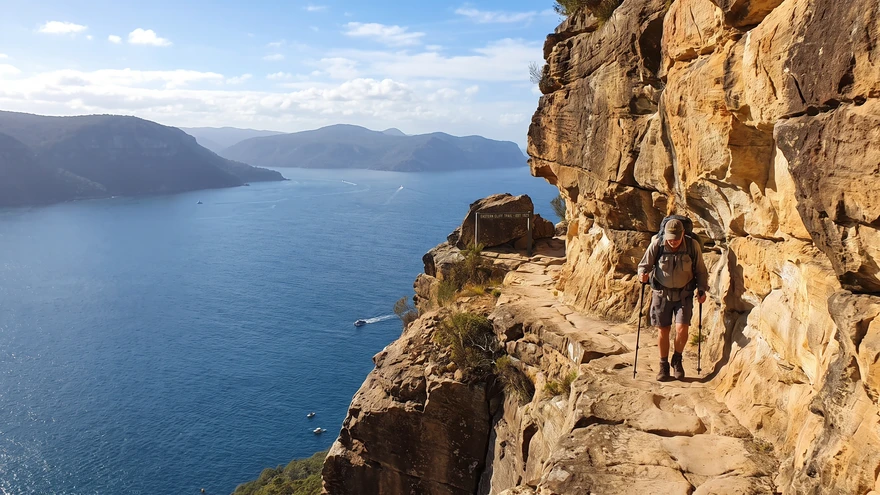
Fit hikers can tackle the Mediterranean Steps, a steep trail starting from Jews' Gate that climbs the eastern cliffs and delivers uninterrupted views across the Strait toward Morocco. Whichever way you go up, build in extra time; this is the one part of the day where the cable car closure genuinely changes the itinerary compared to how Gibraltar used to be visited.
Afternoon: St. Michael's Cave and Europa Point
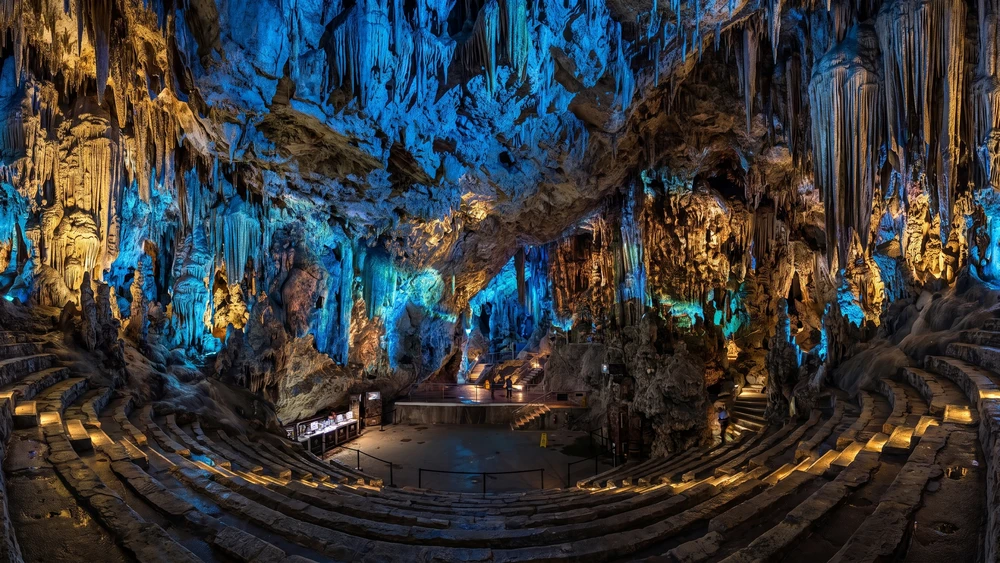
Your nature reserve route should include St. Michael's Cave, a limestone cavern filled with stalactites and stalagmites under a shifting light display. During the Second World War the cave was prepared as an emergency hospital, though it never actually treated combat casualties.
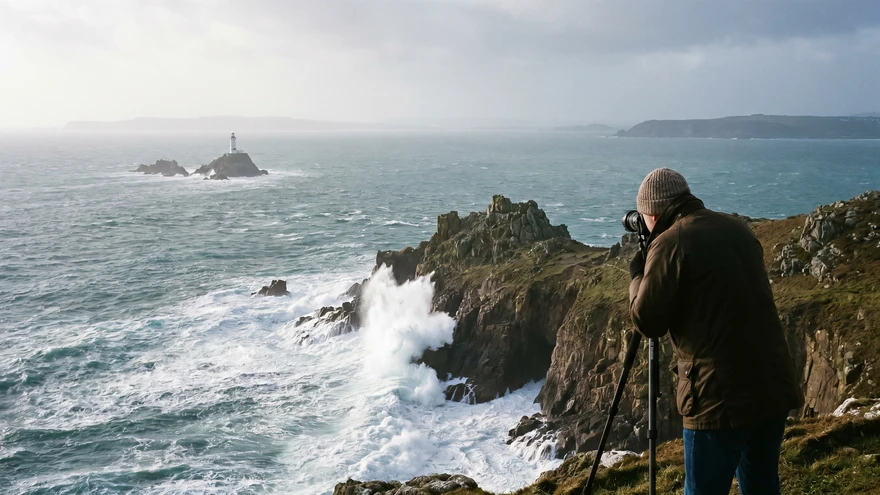
After descending back to town level, catch a local bus to **Europa Point**, the southernmost tip of the Rock, where the wind is often intense and the view stretches across the exact point where the Mediterranean meets the Atlantic.
Currency, Costs, and the Barbary Macaques
Gibraltar's official currency is the Gibraltar Pound, pegged one-to-one with the British Pound, and standard UK notes and coins are accepted everywhere. Merchants generally take Euros too, but the exchange rate applied at the till is almost always worse than what you would get from a card payment, so tap your credit card for most purchases and spend down any Gibraltar coins before crossing back into Spain, since they cannot be exchanged or spent once you leave.
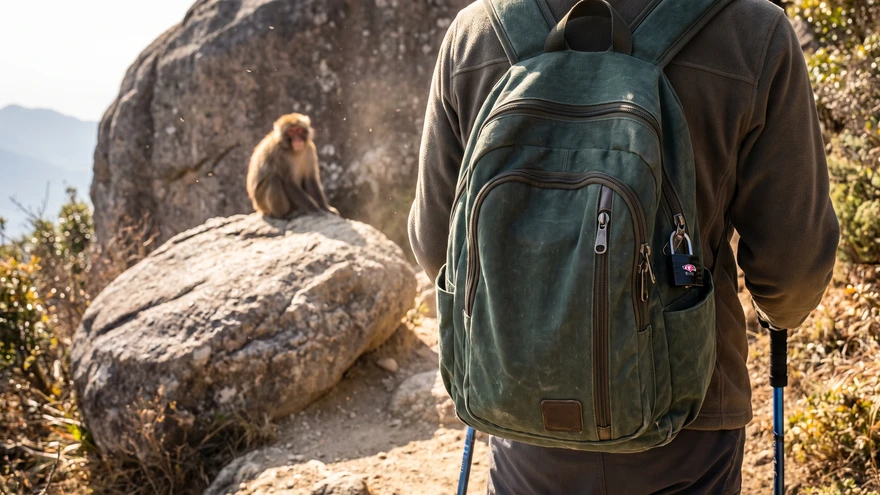
Gibraltar is home to Europe's only wild monkey population, the Barbary macaques, and they are wild animals rather than photo props. Feeding them is illegal and carries a fine of up to £4,000, and the macaques are intelligent enough to bite through water bottles or unzip an unattended backpack looking for food. Lock your bag securely before entering the reserve and keep a clear distance at all times.
Should You Combine Gibraltar with Marbella or the Costa del Sol?
Because the AP-7 and A-7 both run directly through Marbella, Puerto Banus, and Estepona on the way from Malaga to Gibraltar, this is one of the few day-trip routes where a genuine stopover makes sense without wrecking your schedule. A short break in Marbella's old town or a coffee stop in Puerto Banus on the return leg adds under an hour if you are driving and does not require backtracking, which is not really an option on the more direct inland route from Seville.
If you are set on doing Gibraltar and nothing else, stick to the earliest bus or the AP-7 to maximize your time on the Rock. If flexibility matters more than efficiency, building in a Costa del Sol stop on the way back is a realistic option that Malaga's location makes possible in a way most other jumping-off points cannot match.